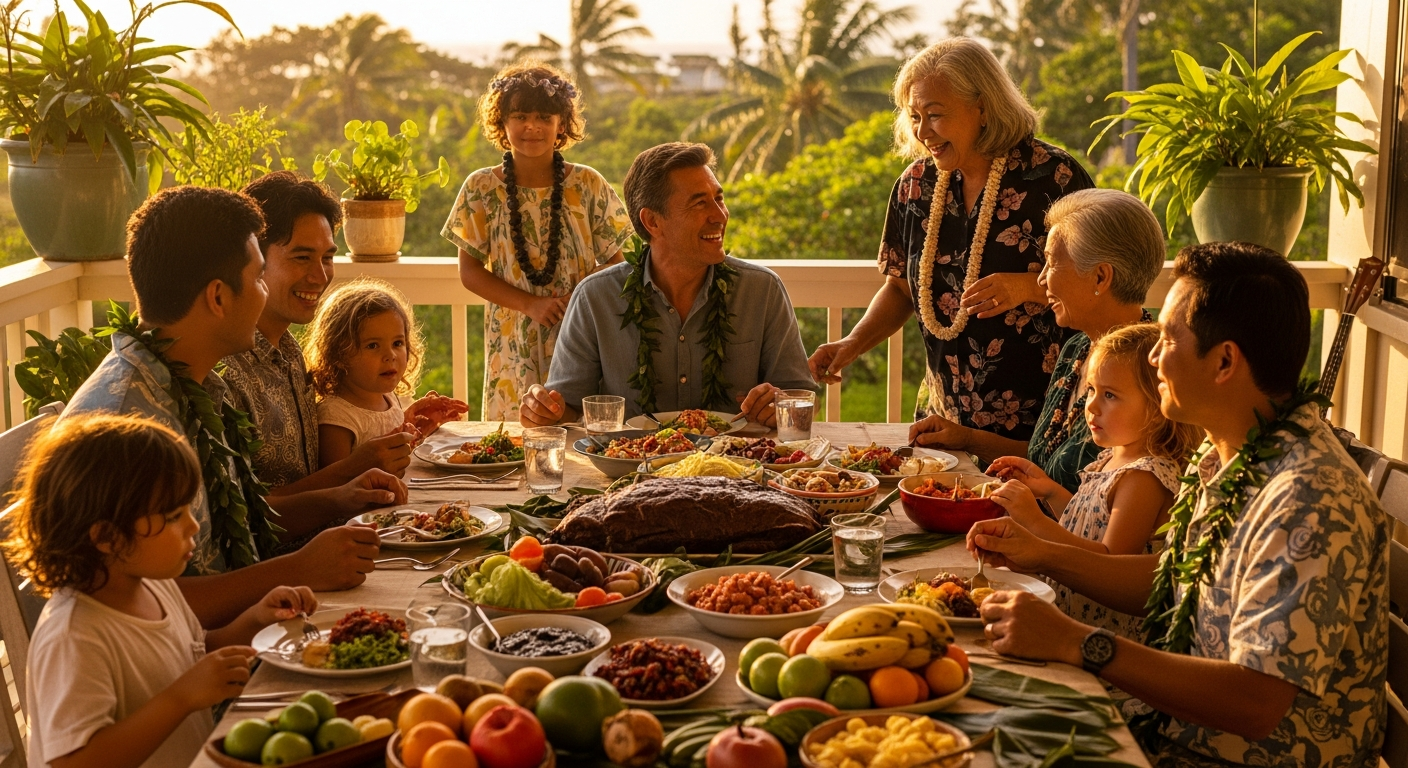
People often ask me why I named this blog “Curtis J Cooks” and not something with “Hawaiian” or “Aloha” in the title. The truth is, I feel like aloha should be shown, not just said.
More Than Hello and Goodbye
Visitors to Hawaii quickly learn that “aloha” means hello and goodbye. But that barely scratches the surface.
Aloha is:
Free: Hawaiian Cooking Starter Kit
Get 5 essential island recipes + a printable pantry checklist — everything you need to start cooking Hawaiian at home.
No spam, ever. Unsubscribe anytime.
- Love – Deep, genuine care for others
- Compassion – Understanding and kindness
- Respect – For people, land, and tradition
- Unity – Coming together as community
- Patience – Taking time to do things right
When my tutu cooked, she embodied aloha. Every dish was made with love and care. Sharing food was sharing aloha.
Aloha in Everyday Life
I see aloha spirit every single day, and it hits different when you start paying attention. It’s the uncle at the farmers market who throws in extra lilikoi because he knows you’re a regular. It’s the neighbor who drops off a foil pan of shoyu chicken “just because.” It’s the way strangers wave at each other on a back road in Waimea, no reason needed.
One memory that sticks with me — I was driving home from work on a Friday, stuck in traffic near Pearl City. My tire blew out. Before I even got out of the car, two guys pulled over. One had a jack, the other had cold water. They changed my tire, refused any money, and one of them said, “Eh brah, we all in this together.” That’s aloha. No thinking about it, no hesitation. You see someone who needs help, you help.
Another time, I was at a potluck in Kailua and realized I forgot to bring a dish. I was mortified. But this aunty I barely knew handed me a plate piled high and said, “You being here is enough.” I still think about that. Aloha is making people feel like they belong, no strings attached.

Aloha in the Kitchen
This spirit shows up in Hawaiian cooking in so many ways:
Sharing
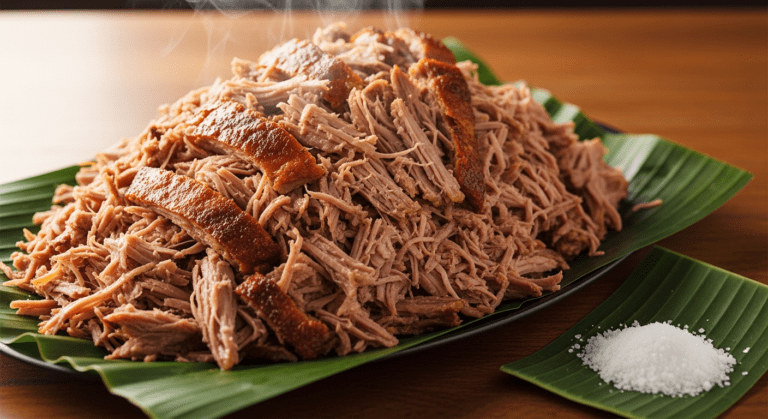
In Hawaii, we cook big. Not because we’re feeding armies, but because there’s always enough to share. Made too much kalua pig? Take some to the neighbors. Extra cookies? Bring them to work.
I can’t tell you how many times I’ve made a pot of chili or a big batch of spam musubi and just started texting people — “Eh, come over, I made too much.” That’s a lie, of course. I didn’t make too much. I made exactly the right amount, because the right amount always includes extra for somebody else.
Taking Time
Real Hawaiian food can’t be rushed. Kalua pig takes 16 hours. Poi needs to be pounded slowly. Aloha means being patient and present in the process.
Using Everything
Traditional Hawaiian cooking wastes nothing. Every part of the pig, every edible plant from the taro, every bit of fish. This respect for ingredients is aloha for the land.
Gathering
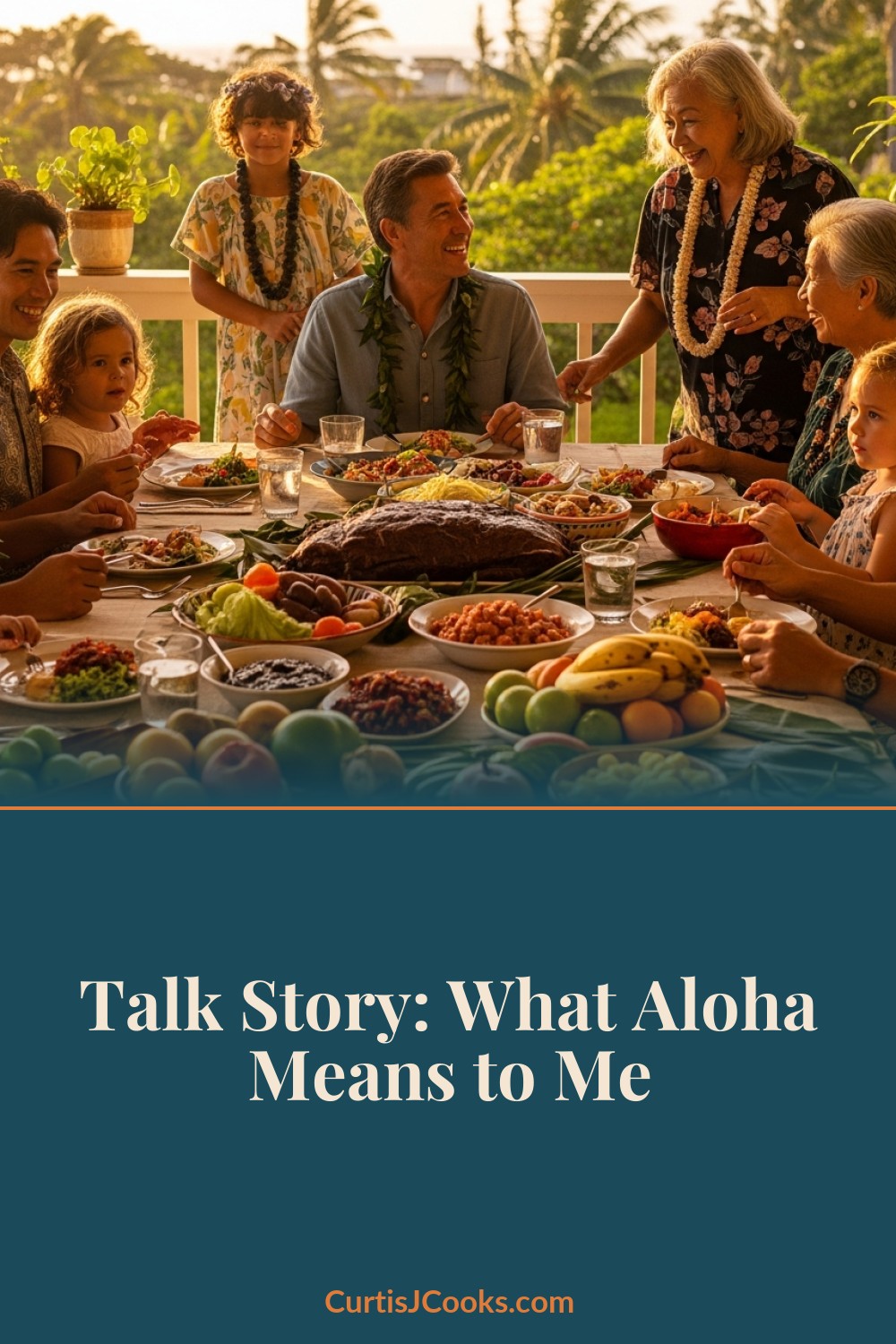
So much of Hawaiian food is meant to be eaten together. The luau, the plate lunch shared with coworkers, the poke party with friends. Food brings people together.
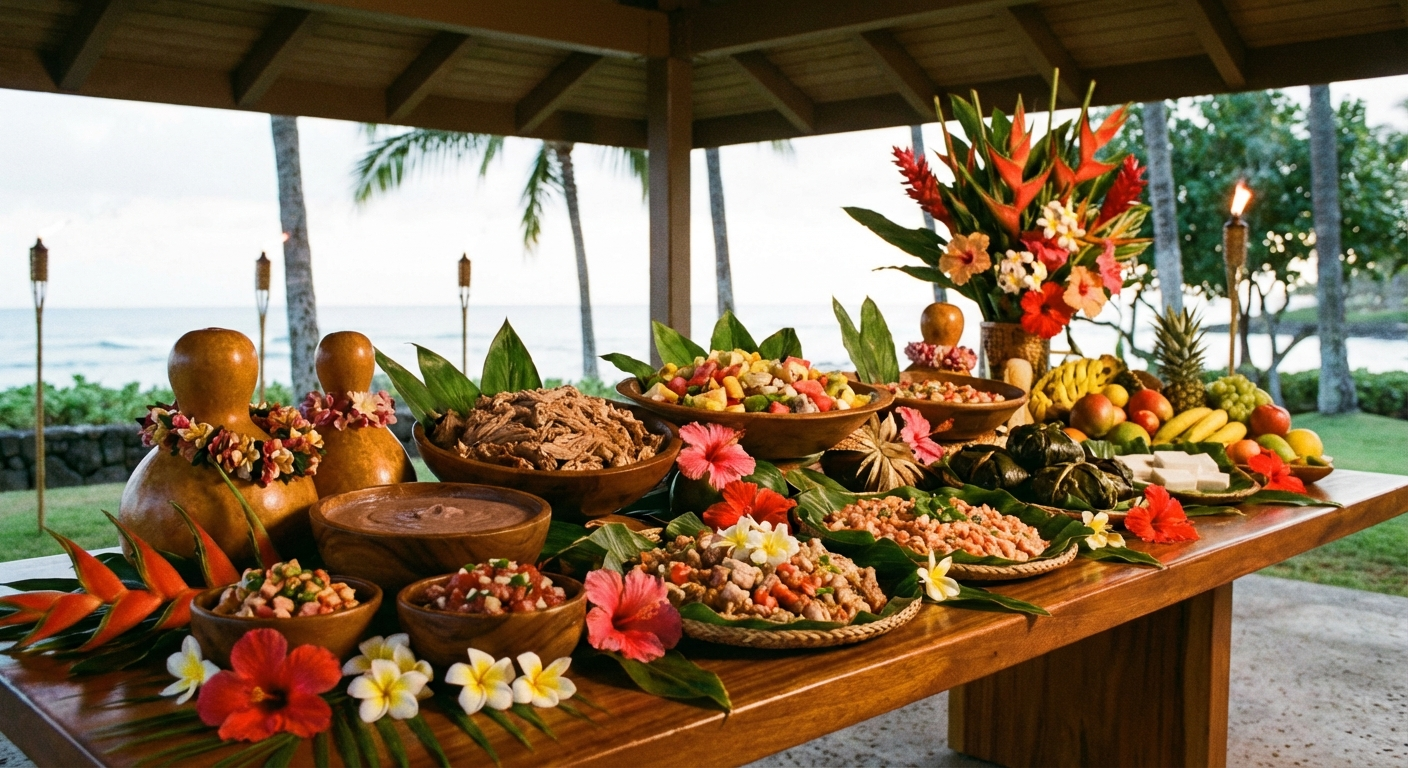
Sharing Food With Neighbors
If you grew up in Hawaii, you know the unwritten rule: when you cook something good, you make extra and you share. It’s not optional. It’s just what you do.
My mom used to send me down the street with foil-covered plates for three or four different neighbors every time she made a big meal. And those neighbors did the same for us. It was this beautiful, unofficial food exchange program that nobody organized but everybody participated in. One week you’d get Mrs. Tanaka’s teriyaki beef, the next week Uncle Joe’s smoked meat. You never knew what was coming, but it was always ono.
I carry that tradition forward. When I test recipes for the blog, my neighbors are always the first to try them. They’ve become my unofficial taste testers. And they’re honest, too — my neighbor Dave once told me my poke needed more sesame oil. He was right.
Living Aloha in the Kitchen
For me, living aloha in the kitchen means a few things. It means I don’t rush. Even on a busy weeknight, I try to be present with what I’m making. Smell the garlic as it hits the pan. Feel the rice between my fingers when I rinse it. Listen to the sizzle of spam on the griddle.
It means I cook with gratitude. Gratitude for the farmers who grew the taro, for the fisherman who caught the ahi, for my tutu who taught me that food is love in its purest form.
It also means I cook for others more than I cook for myself. The best meals I’ve ever made were the ones I gave away. A pot of chicken long rice for a friend who just had surgery. A batch of malasadas for the keiki next door. Mochiko chicken for the guys at the shop. When you cook with aloha, the food just tastes better. I really believe that.
What I Hope to Share
When you cook from this blog, I hope you feel more than just recipes. I hope you feel:
Connection – To Hawaiian culture and tradition
Joy – In the process of creating something delicious
Generosity – In sharing your food with others
Presence – In slowing down and savoring the moment
An Invitation
This blog is my way of sharing aloha with you. Every recipe comes with the spirit of my tutu’s kitchen, the traditions of the islands, and my genuine hope that it brings you happiness.
Cook these dishes for your family. Share them with friends. Pass them down to your children. That’s how traditions stay alive. That’s aloha in action.
Your Aloha
I’d love to know: what does aloha mean to you? How do you show love through food? What traditions do you carry forward in your own kitchen?
Share your thoughts in the comments. Let’s grow this ‘ohana (family) together.
Me ke aloha pumehana (with warm aloha),
Curtis