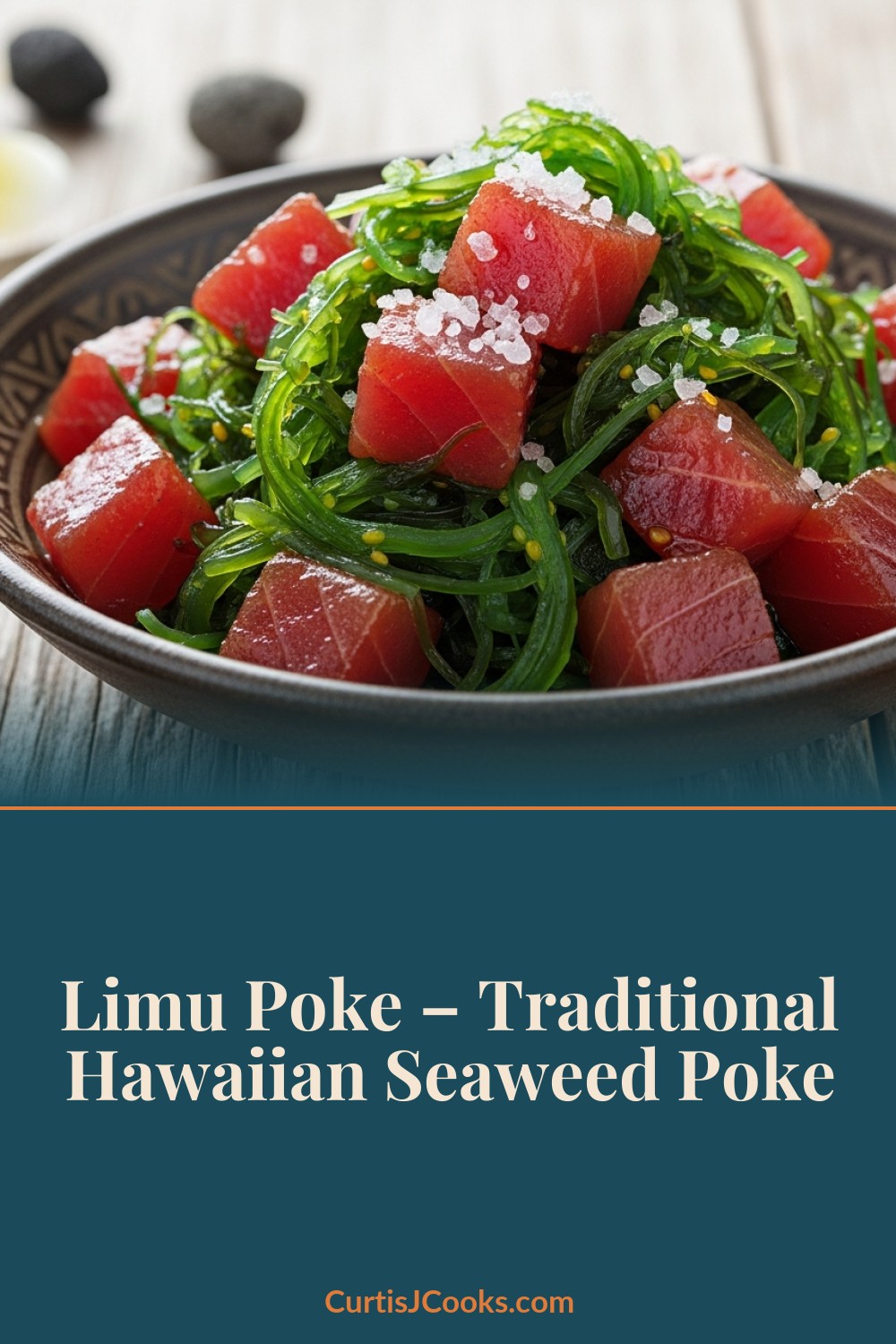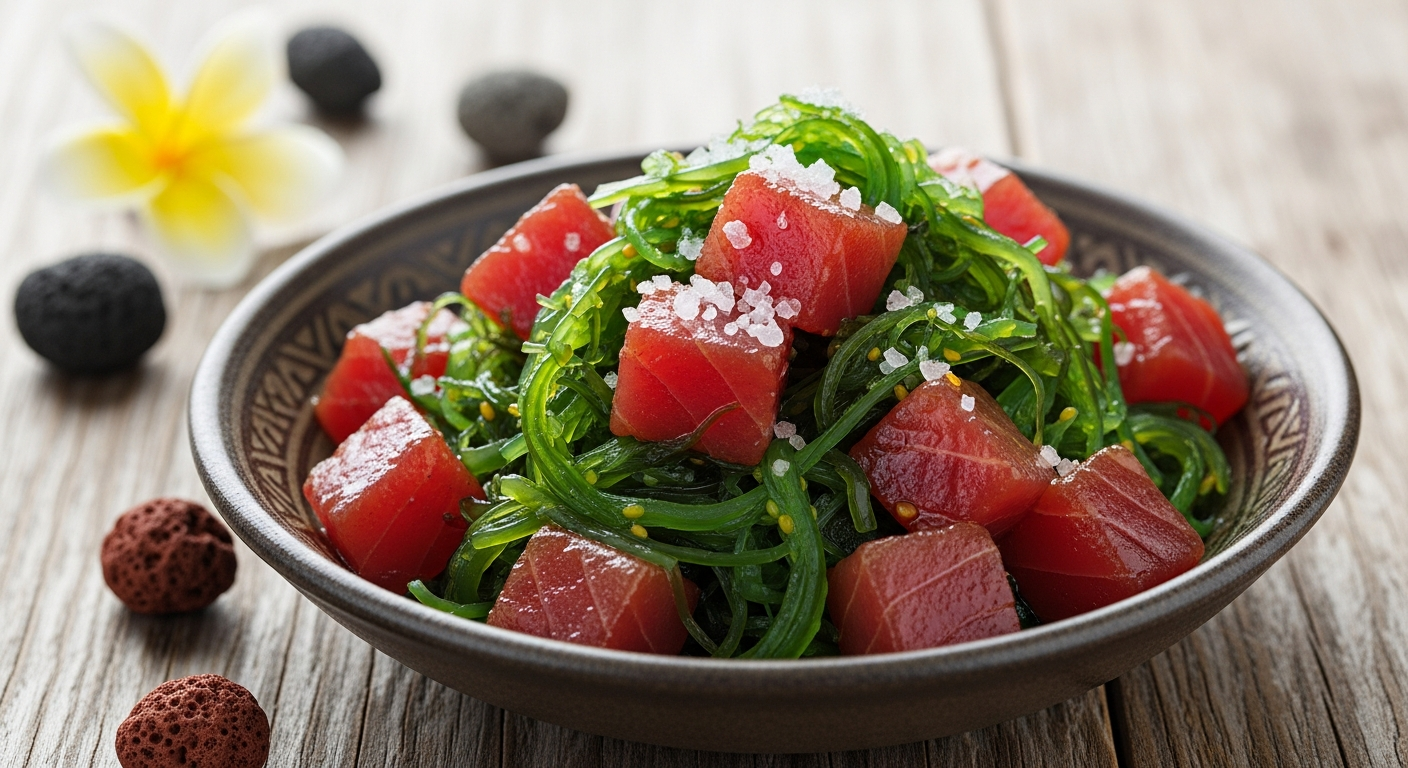
Before sesame oil and soy sauce, there was limu poke. This is the oldest style of Hawaiian poke, seasoned with just sea salt, limu (seaweed), and inamona (roasted kukui nut). It’s the taste of pre-contact Hawaii—clean, oceanic, and deeply connected to the land and sea.
Understanding Limu
Limu is the Hawaiian word for seaweed, and there are over 70 edible varieties found in Hawaiian waters. For poke, the most prized is limu kohu—a soft, reddish-brown seaweed with an intense, slightly spicy ocean flavor. Ogo (also called limu manauea) is more commonly available and works beautifully.
Limu isn’t just an ingredient; it’s a connection to Hawaiian gathering traditions. Families would harvest limu from their favorite spots, knowledge passed down through generations. Using limu in poke honors that heritage.
Free: Hawaiian Cooking Starter Kit
Get 5 essential island recipes + a printable pantry checklist — everything you need to start cooking Hawaiian at home.
No spam, ever. Unsubscribe anytime.
About Inamona
Inamona is roasted, mashed kukui nut (candlenut) mixed with sea salt. It adds a rich, slightly bitter, earthy flavor that’s irreplaceable in traditional poke. Finding inamona on the mainland can be tricky, but Hawaiian specialty stores and online retailers carry it. If you can’t find it, the poke is still delicious without it—but it’s worth seeking out for the authentic experience.
Ingredients
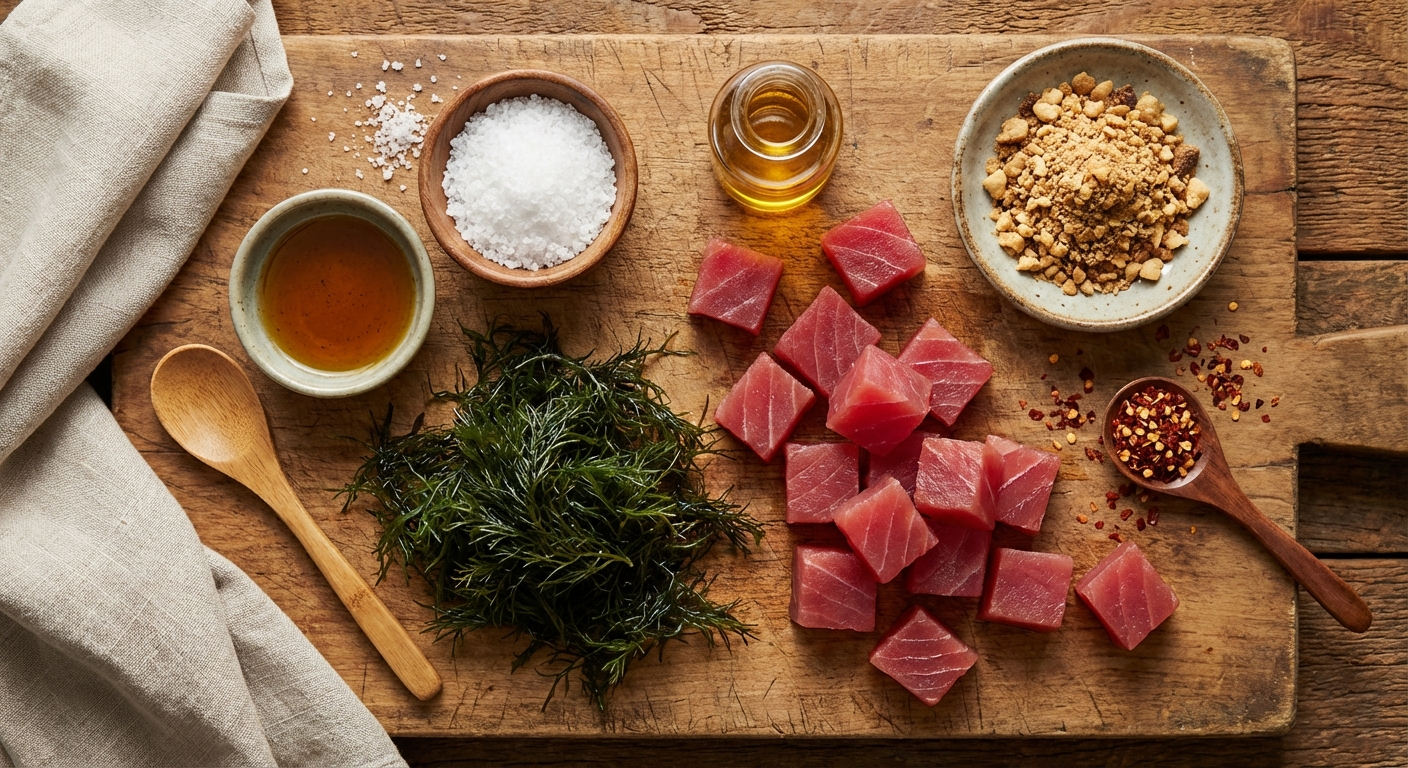
- 1 lb sushi-grade ahi tuna, cubed
- 1/4 cup fresh ogo (limu), rinsed and chopped
- 1-2 tablespoons inamona (or substitute toasted macadamia nuts, finely chopped)
- 1 teaspoon Hawaiian sea salt (alaea red salt preferred)
- 1/2 teaspoon sesame oil (optional, for modern version)
- 1/4 cup sweet onion, finely diced
- Pinch of red Hawaiian chili pepper flakes or cayenne
Instructions
- Prepare the limu: Rinse the ogo thoroughly in cold water to remove any sand or debris. Chop into small pieces.
- Season the fish: Place cubed ahi in a bowl. Sprinkle with Hawaiian sea salt and toss gently.
- Add the limu: Add the chopped ogo and diced onion to the fish.
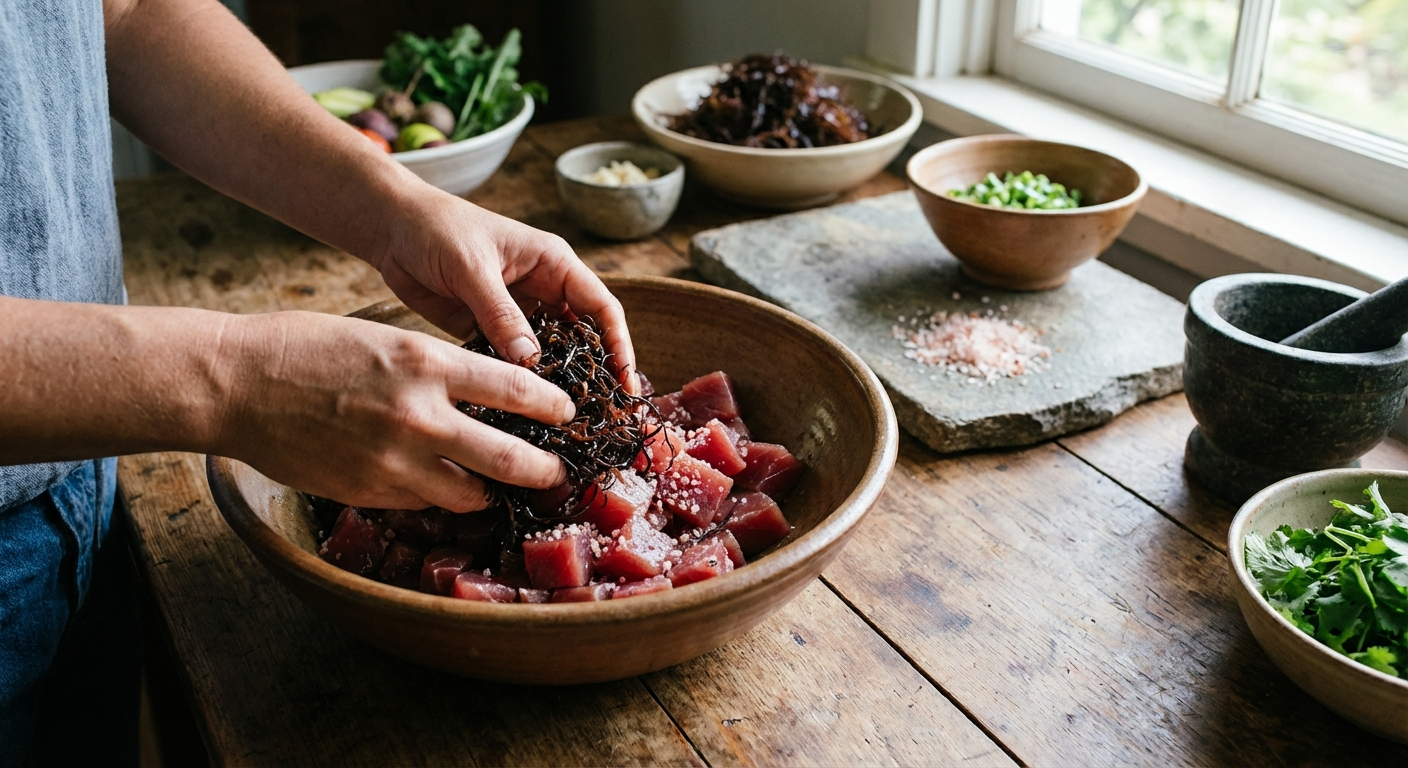
- Add inamona: Crumble the inamona over the poke. If using macadamia nuts, add them now.
- Season to taste: Add chili flakes and sesame oil if using. Toss gently to combine.
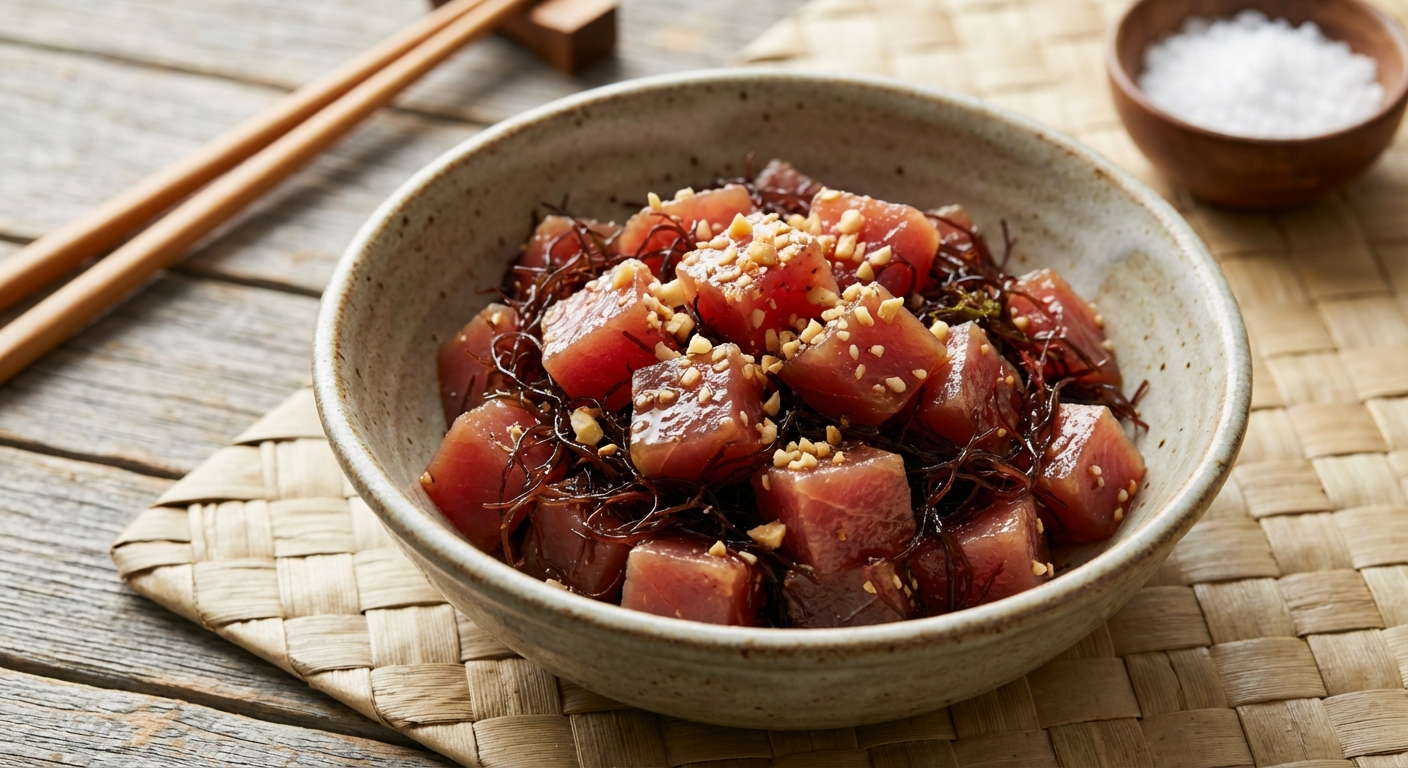
- Serve immediately: Traditional limu poke is best eaten right away while the seaweed is fresh and the fish is pristine.
Where to Find Ingredients
- Ogo/Limu: Asian grocery stores, Japanese markets, or fresh seafood counters. Often sold near the sushi supplies.
- Inamona: Hawaiian specialty stores, online retailers like Amazon or Hawaiian gift shops, or make your own from kukui nuts.
- Hawaiian sea salt: Alaea red salt adds color and minerals. Available at gourmet stores or online.
The Significance of This Poke
Making limu poke connects you to centuries of Hawaiian food tradition. This is how poke was eaten before global trade brought new ingredients to the islands. Each bite carries the essence of Hawaii’s relationship with the ocean—the salt, the seaweed, the fish, all from the same waters.
It tastes different from the poke most people know. It’s more subtle, more oceanic, more ancient. Give your palate a moment to adjust, and you’ll discover a depth of flavor that soy sauce and sesame oil, as delicious as they are, can sometimes mask.
This is poke in its purest form. E ‘ai kākou—let’s eat.
This recipe is part of our Complete Guide to Hawaiian Poke. Discover all our poke varieties!