
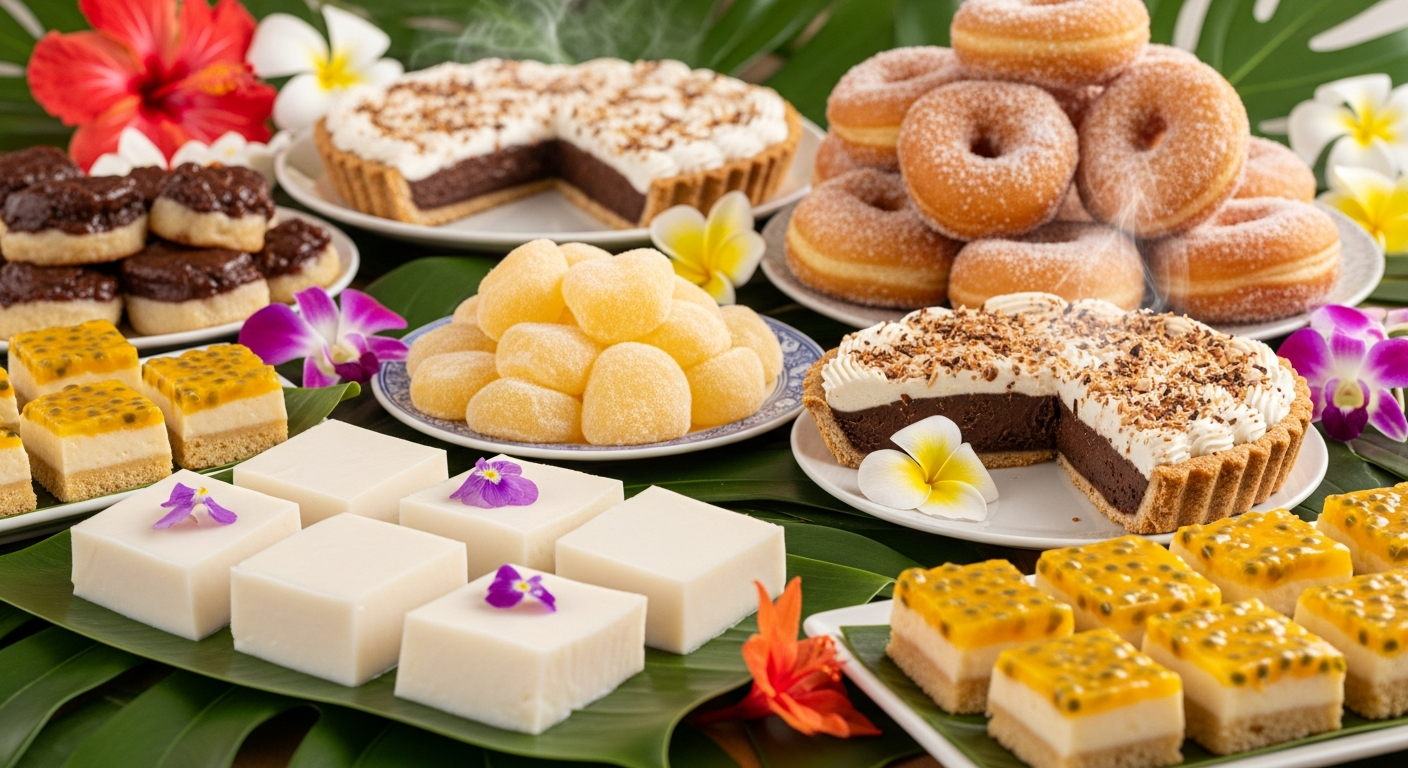
Walk into any local gathering in Hawaii—a baby luau, a graduation party, a simple Sunday potluck—and the dessert table tells you everything about these islands. You’ll find chocolate haupia pie sitting next to butter mochi, warm malasadas dusted in sugar beside a tray of lilikoi bars, and someone’s aunty cutting kulolo into squares while the keiki line up for shave ice. Japanese, Portuguese, Hawaiian, Chinese, Filipino—every culture that shaped these islands left its sweetest gift behind.
Growing up, I thought every family argued about whose butter mochi was the best. I thought every neighborhood had a malasada truck that showed up on Saturday mornings. I thought haupia was just what you ate at every single gathering, no exceptions. Turns out that’s uniquely Hawaiian—this collision of sweet traditions from across the Pacific that somehow became one beautiful dessert table. This guide covers every island sweet I grew up loving, with recipes you can make at home no matter where you live.
Haupia & Coconut Pudding Desserts
If there’s one dessert that defines Hawaiian gatherings, it’s haupia. These jiggly coconut pudding squares show up at every luau, every potluck, every party. The recipe is dead simple—coconut milk, sugar, and cornstarch—but the result is something magical. Firm enough to pick up with your fingers, soft enough to melt on your tongue, and coconutty enough to transport you straight to the islands.
Haupia is the foundation that spawned Hawaii’s most famous modern dessert: Chocolate Haupia Pie. Two distinct layers—rich chocolate pudding on the bottom, creamy haupia on top—all in a flaky or graham cracker crust, finished with whipped cream. Ted’s Bakery on the North Shore made it legendary, but every bakery on every island has their own version. My Valentine’s Day variation takes it up a notch for date night, but the classic version is the one I make most. If you’ve never tried it, start here—it’s the dessert visitors dream about long after leaving the islands.
For the richest haupia flavor, start with quality homemade coconut milk. The difference between canned and fresh is night and day—fresh coconut milk makes haupia that tastes like you’re eating it under a palm tree.
Mochi & Rice Flour Desserts
Japanese immigrants brought mochi-making traditions to Hawaii, and local bakers ran with them in ways nobody expected. The result is a category of chewy, coconutty, utterly addictive treats that you won’t find anywhere else.
Butter Mochi
Butter mochi is Hawaii’s answer to the brownie—except chewier, coconuttier, and genuinely addictive. Made with mochiko (sweet rice flour), coconut milk, eggs, and plenty of butter, it comes out of the oven with crispy golden edges and an impossibly chewy center. Every family has their own recipe, and the debates about whose is best can get heated at potlucks. My original butter mochi recipe is the one I grew up making, and it hasn’t failed me yet.
Mochi Ice Cream
Mochi ice cream is where Japanese technique meets Hawaiian tropical flavors. That thin, stretchy mochi wrapper around a ball of ice cream—it’s a texture combination that’s hard to describe but impossible to stop eating. Lilikoi, mango, haupia, green tea, ube… the island flavors take mochi ice cream places the original Japanese version never imagined. Making it at home is easier than you’d think.
Gau (Coconut Mochi Cake)
Gau is the Chinese New Year dessert that Hawaii adopted as its own. This dense, sticky coconut mochi cake is traditionally made for Lunar New Year celebrations—the sweetness symbolizes a sweet year ahead, and the sticky texture represents family staying together. In Hawaii, Chinese New Year is everybody’s celebration, and gau shows up in kitchens across every ethnic group from January through February.
Portuguese-Influenced Sweets
Malasadas
Malasadas might be the most beloved fried dough in the Pacific. Portuguese immigrants brought these egg-rich, yeast-raised doughnuts to the sugar plantations, and Hawaii never looked back. Unlike American doughnuts, malasadas have no hole—just pure, pillowy dough throughout, fried until golden and rolled in sugar while still warm. Leonard’s Bakery on Oahu made them famous worldwide, but making them at home means eating them when they’re at their absolute peak: still warm from the oil, sugar slightly melting into the surface.
Malasada Day (Shrove Tuesday) is a genuine event in Hawaii. Lines wrap around bakeries before dawn, and offices smell like sugar and fried dough all day long. Modern variations include cream-filled versions (haupia, chocolate, custard), but the original sugar-coated version is still king.
Tropical Fruit Desserts
When you live on islands surrounded by tropical fruit trees, desserts naturally follow the seasons. Mango season means mango bread in every kitchen. Lilikoi vines heavy with fruit mean lilikoi bars for the next potluck. Guava ripening on the tree means it’s time to bake a guava chiffon cake.
Lilikoi Bars
Lilikoi bars are Hawaii’s tropical twist on lemon bars, and honestly, they’re better. The passion fruit curd is intensely flavorful—tangy, fragrant, bright yellow—sitting on a buttery shortbread crust that crumbles just right. The aroma alone will transport you. If you can’t find fresh lilikoi on the mainland, frozen passion fruit pulp works beautifully. My original lilikoi bars recipe walks you through every step.
Mango Bread
Mango bread is what happens when mango season hits and every tree on the block is dropping fruit faster than anyone can eat it. Think banana bread’s tropical cousin—moist, fragrant, studded with ripe mango chunks. It’s the quick bread I bake most during summer, and it freezes beautifully if you somehow end up with extra (you won’t).
Guava Chiffon Cake
Guava chiffon cake is light, airy, and pink in the most beautiful way. Chiffon cakes have a special place in Hawaiian baking—the technique came from the mainland but the flavors are pure island. The guava gives it a floral sweetness that’s completely different from any other fruit cake you’ve had. This is the cake that shows up at birthday parties and baby showers.
Traditional Hawaiian Desserts
Kulolo
Kulolo is one of the oldest Hawaiian desserts—a dense, fudgy taro and coconut pudding that’s been made in these islands for centuries. Traditional kulolo was steamed in ti leaves in an underground imu (earth oven), and the modern version captures that same earthy, coconutty richness in your home oven. The texture is unlike anything else: dense, slightly sticky, deeply satisfying. If you want to understand Hawaiian food at its roots, kulolo is where you start.
Working with taro can be intimidating if you haven’t done it before. My taro prep guide covers everything from selecting good taro to handling it safely (raw taro contains calcium oxalate crystals—always cook it thoroughly).
Cookies & Baked Treats
Macadamia Nut Shortbread Cookies
Macadamia nut shortbread cookies are the Hawaiian holiday cookie. Buttery, crumbly, loaded with roasted macadamia nuts—they’re the cookies that get packaged in tins and shipped to family on the mainland every December. The macadamia nut adds a richness that regular shortbread can’t touch. These are also the cookies that disappear first from every cookie exchange, so double the batch.
Shave Ice – Hawaii’s Frozen Treasure
Shave ice is not a snow cone. I need you to understand this. A snow cone is crushed ice with syrup poured on top. Hawaiian shave ice is ice shaved so fine it’s like fresh snow, with syrup that saturates every crystal from top to bottom. The texture difference is everything—shave ice melts on your tongue while a snow cone crunches.
The classic setup: a mound of finely shaved ice drenched in tropical syrups (lilikoi, guava, li hing mui, coconut), with a scoop of vanilla ice cream on the bottom and sweet azuki beans tucked in there too. Matsumoto’s on the North Shore is legendary, but every island has its local spots where the lines are long and the ice is perfect.
Making shave ice at home requires two things: the right machine and the right syrups. My guide to the best shave ice machines covers everything from budget-friendly to commercial-grade options, and the homemade syrup guide shows you how to make tropical flavors that blow store-bought out of the water. Fresh lilikoi syrup alone is worth the effort.
Essential Dessert Ingredients
Hawaiian desserts share a core pantry that shows up again and again. Stock these and you can make nearly everything on this page. For sourcing tips and where to buy online, check out our Essential Hawaiian Ingredients Guide and the Hawaiian Pantry Essentials list.
- Mochiko (sweet rice flour) – The base for butter mochi, mochi ice cream, gau, and dozens of other treats. Mochiko brand from Koda Farms is the standard.
- Coconut milk (full-fat) – Used in haupia, butter mochi, kulolo, and countless other desserts. Go full-fat or go home. Better yet, make your own homemade coconut milk.
- Lilikoi (passion fruit) – Fresh, frozen pulp, or concentrate. Essential for lilikoi bars and shave ice syrups.
- Macadamia nuts – Hawaii’s signature nut. Raw or roasted for cookies, pie crusts, and garnishes.
- Taro (kalo) – For kulolo and other traditional desserts. See our taro prep guide before working with it.
- Guava – Fresh, frozen, or as nectar for cakes and syrups.
- Li hing mui powder – That sweet-salty-sour plum seasoning that goes on everything from shave ice to fresh fruit to candy.
If you’re building your Hawaiian baking arsenal, you can order many of these ingredients online. Our Hawaiian snacks and treats guide includes sourcing for key ingredients too.
Kitchen Gear for Hawaiian Desserts
You don’t need a fully stocked commercial kitchen, but a few pieces of equipment make Hawaiian desserts significantly easier:
- 9×13 baking pan – The workhorse for butter mochi, kulolo, and bar desserts. Every Hawaiian kitchen has one (or three).
- Heavy-bottomed pot – Essential for haupia and custard-based desserts that need even heating.
- Shave ice machine – If you’re serious about shave ice at home, check our machine guide.
- Deep fryer or heavy Dutch oven – For malasadas done right. Temperature control is everything with fried dough.
- Stand mixer – Makes chiffon cakes, cookie doughs, and malasada dough much easier.
For a complete rundown of kitchen tools, see our essential Hawaiian kitchen utensils guide and best kitchen appliances for Hawaiian cooking.
Hawaiian Desserts for Parties & Gatherings
Planning a Hawaiian backyard party or luau? The dessert table is where you can really shine. Here’s how locals build a spread:
- Always include haupia – It’s expected at any Hawaiian gathering, period. Cut into squares, arrange on a platter.
- One showstopper pie – Chocolate haupia pie is the crowd-pleaser that makes everyone ask for the recipe.
- One mochi dessert – Butter mochi cuts into squares, travels well, and tastes great at room temperature.
- One fruit dessert – Lilikoi bars, mango bread, or guava chiffon cake depending on season.
- Shave ice station – If it’s a hot day, set up a shave ice station with homemade tropical syrups. The keiki (and adults) will love it.
- Cookies for grazing – Macadamia shortbread cookies on a platter for people to grab between the main desserts.
Pair your dessert spread with tropical drinks—a haupia smoothie is basically a drinkable dessert that works as both. Serve everything alongside pupus and a full plate lunch spread for the complete experience.
Desserts by Occasion
Holiday & Celebration Desserts
- Christmas: Macadamia shortbread cookies, butter mochi, haupia
- Chinese New Year: Gau (sticky rice cake for good luck)
- Valentine’s Day: Chocolate haupia pie (the romantic version)
- Graduation parties: Full dessert spread—haupia, butter mochi, chocolate haupia pie, lilikoi bars
- Malasada Day (Shrove Tuesday): Malasadas, obviously
Easy Weeknight Desserts
- Butter mochi – Mix, pour, bake. Done in under an hour.
- Haupia smoothie – Five minutes, no baking required.
- Mango bread – Quick bread simplicity with tropical flavor.
Where to Find Hawaiian Desserts
Famous Bakeries & Shops
- Leonard’s Bakery (Oahu) – The malasada institution. Get there early.
- Ted’s Bakery (North Shore, Oahu) – Home of the original chocolate haupia pie.
- Liliha Bakery (Oahu) – Famous for coco puffs and chantilly cake.
- Matsumoto Shave Ice (North Shore, Oahu) – The shave ice pilgrimage destination.
- Two Ladies Kitchen (Hilo, Big Island) – Mochi so good people ship it worldwide.
- Punalu’u Bake Shop (Big Island) – Hawaiian sweet bread and malasadas.
Can’t make it to Hawaii? Many island treats are available to order online. Check our Hawaiian snacks and treats ordering guide for the best options shipped to your door.
Explore More Hawaiian Food
Dessert is just one piece of the Hawaiian food story. Dive deeper into island cooking with our complete guide collection:
- The Plate Lunch Guide – Hawaii’s iconic meal: protein, rice, mac salad, and the stories behind every classic
- The Complete Poke Guide – From traditional preparations to creative modern bowls
- Hawaiian Breakfast Guide – Spam musubi, loco moco, poi pancakes, and everything that starts a local morning
- Island Drinks Guide – Tiki cocktails, tropical smoothies, Kona coffee, and shave ice drinks
- Pupus & Appetizers Guide – The small bites and party starters of Hawaiian entertaining
- Essential Hawaiian Ingredients – Your complete guide to sourcing and using island pantry staples
For the cultural stories behind these foods, check out our Hawaiian Foods Bucket List, Must-Try Hawaiian Delicacies, and Traditional Hawaiian Flavors. And don’t miss Talk Story: The Luau for the history of Hawaii’s most famous celebration—where many of these desserts have their roots.