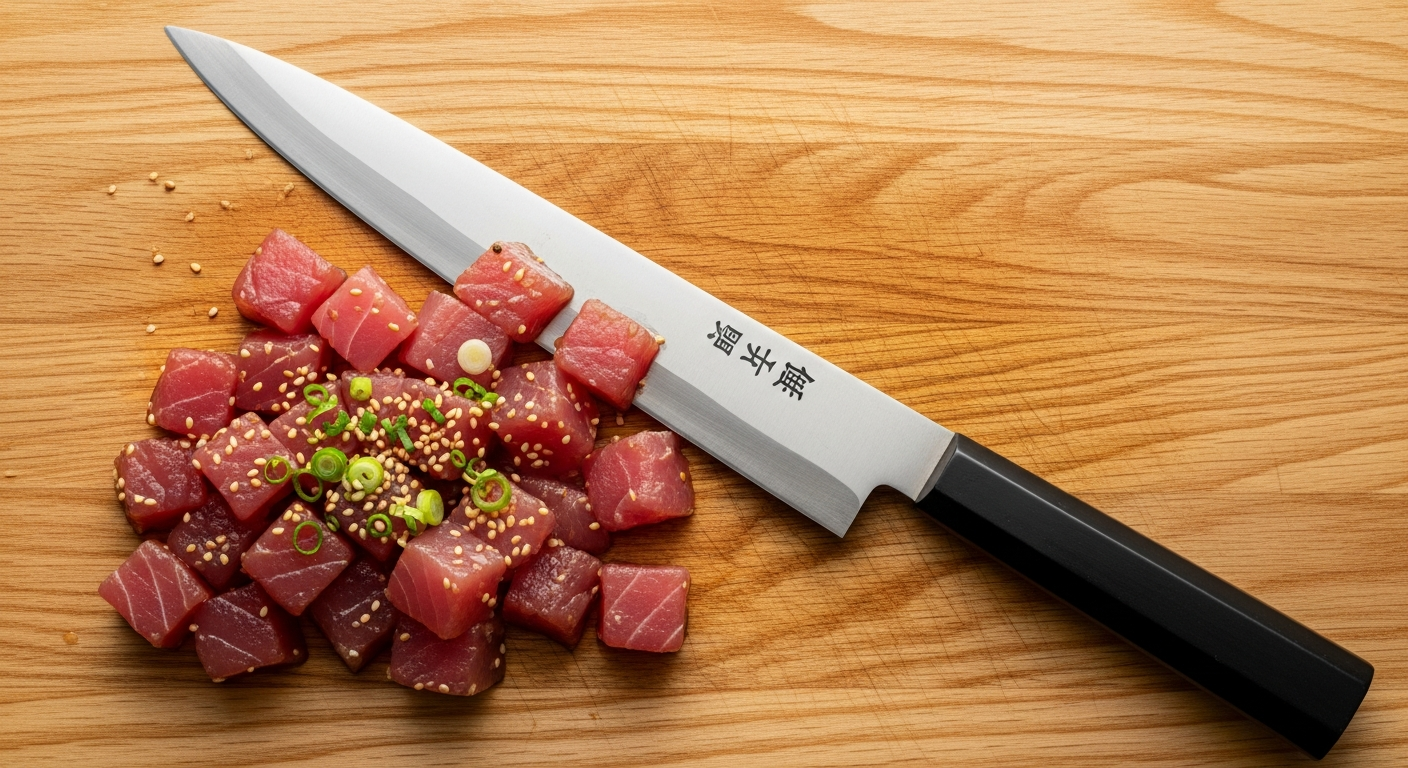
Why Your Knife Matters More Than You Think
If you’ve ever sliced into a beautiful piece of ahi and ended up with ragged, mushy cubes instead of those clean, glistening cuts you see at your favorite poke spot, I’m going to let you in on a secret: it’s probably not your technique. It’s your knife.
Growing up around Hawaiian fishing culture, I learned early that respecting the fish means more than just saying mahalo when you pull it from the water. It means honoring that catch all the way to the plate — and that starts with how you break it down and cut it. A dull or wrong knife tears through the delicate flesh, crushing cells, releasing moisture, and turning what should be silky, firm cubes of poke into something that falls apart in the bowl.
So let’s talk about the knives that will transform your fish preparation at home.
Free: Hawaiian Cooking Starter Kit
Get 5 essential island recipes + a printable pantry checklist — everything you need to start cooking Hawaiian at home.
No spam, ever. Unsubscribe anytime.
The Yanagiba: The Sashimi Knife
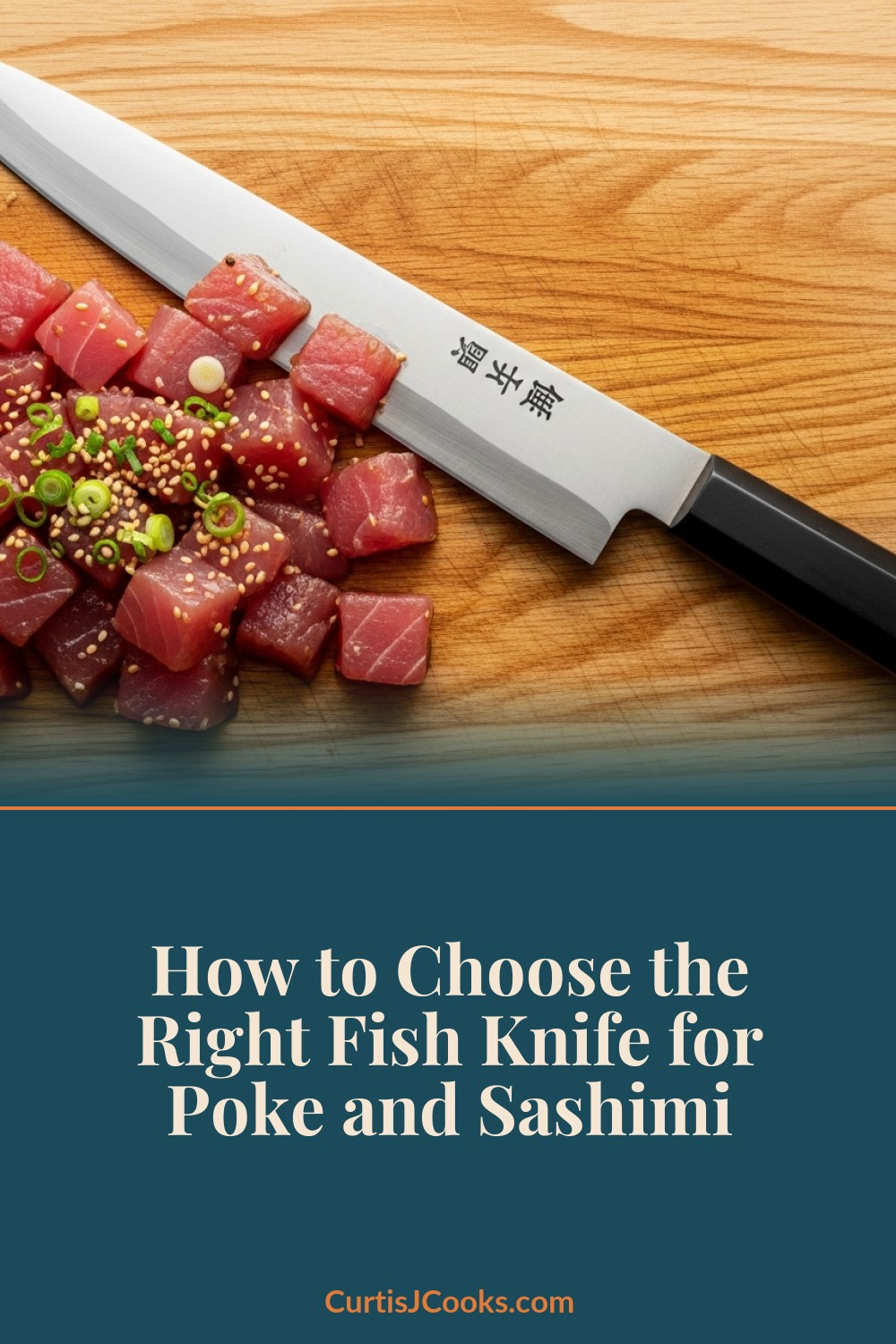
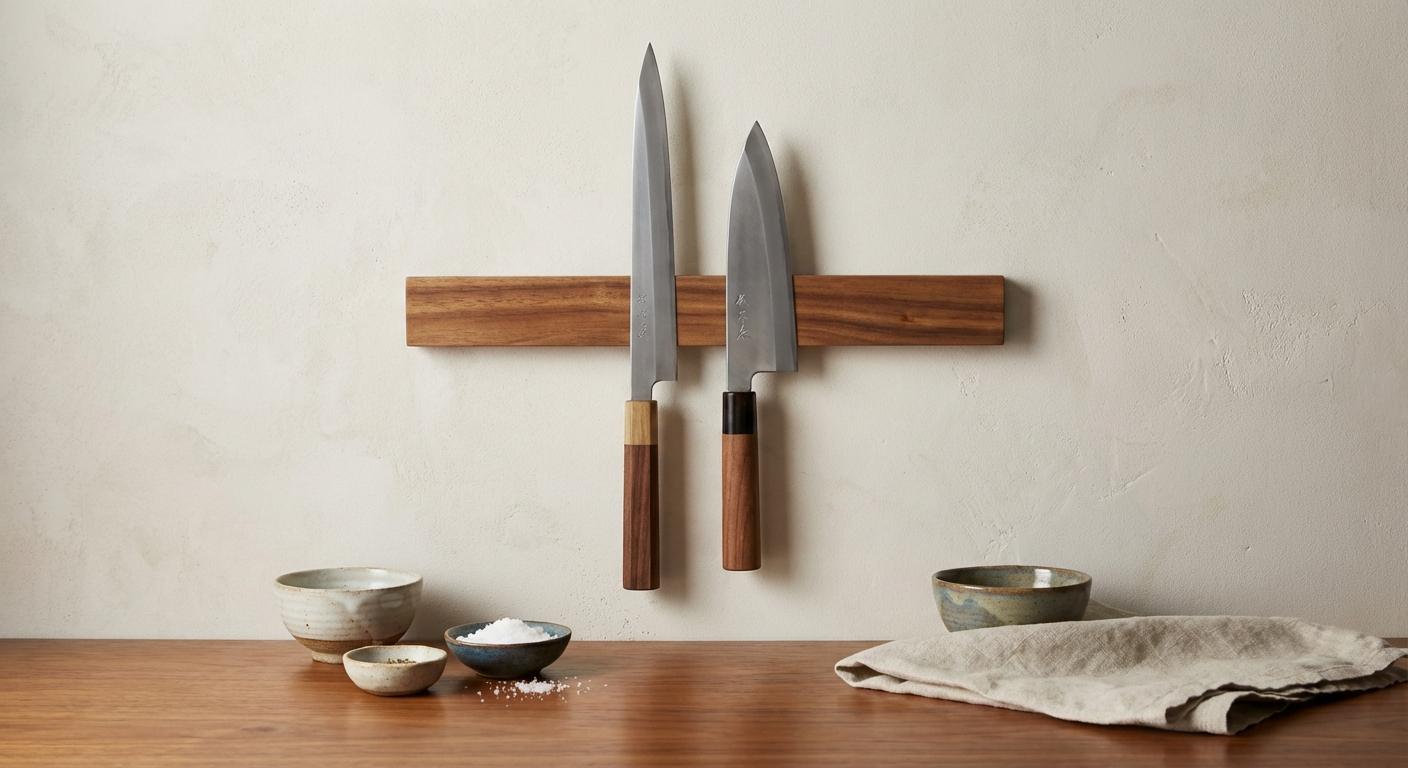
If you’re serious about making poke or sashimi at home, the yanagiba is the gold standard. This long, slender, single-bevel Japanese knife is designed to do one thing exceptionally well: slice raw fish in a single, smooth pull.
The magic of the yanagiba is in that single bevel — it’s sharpened on only one side. This means when you draw it through a block of ahi or salmon, you get an incredibly clean cut. The cells of the fish aren’t crushed. The surface stays smooth and almost glossy. That’s what gives great sashimi and poke its beautiful appearance and that melt-on-your-tongue texture.
What to Look For
A good yanagiba doesn’t have to cost a fortune, but there are a few things to consider:
- Length: Look for a blade between 9 and 12 inches. Longer blades let you make those smooth, uninterrupted pulls through the fish. A short blade forces you to saw back and forth, which defeats the whole purpose.
- Steel: High-carbon steel holds an incredible edge but requires more care. Stainless steel is more forgiving and easier to maintain. For most home cooks, a stainless or semi-stainless yanagiba is a great starting point.
- Handle: Traditional Japanese handles (wa-handles) are lightweight and comfortable for long prep sessions. Western-style handles work fine too — it comes down to what feels good in your hand.
If you’re making poke regularly — and living in Hawaii, that might be every week — a yanagiba will change your life. Those cubes will hold their shape, look beautiful, and have that perfect, clean bite.
The Deba: For Breaking Down Whole Fish
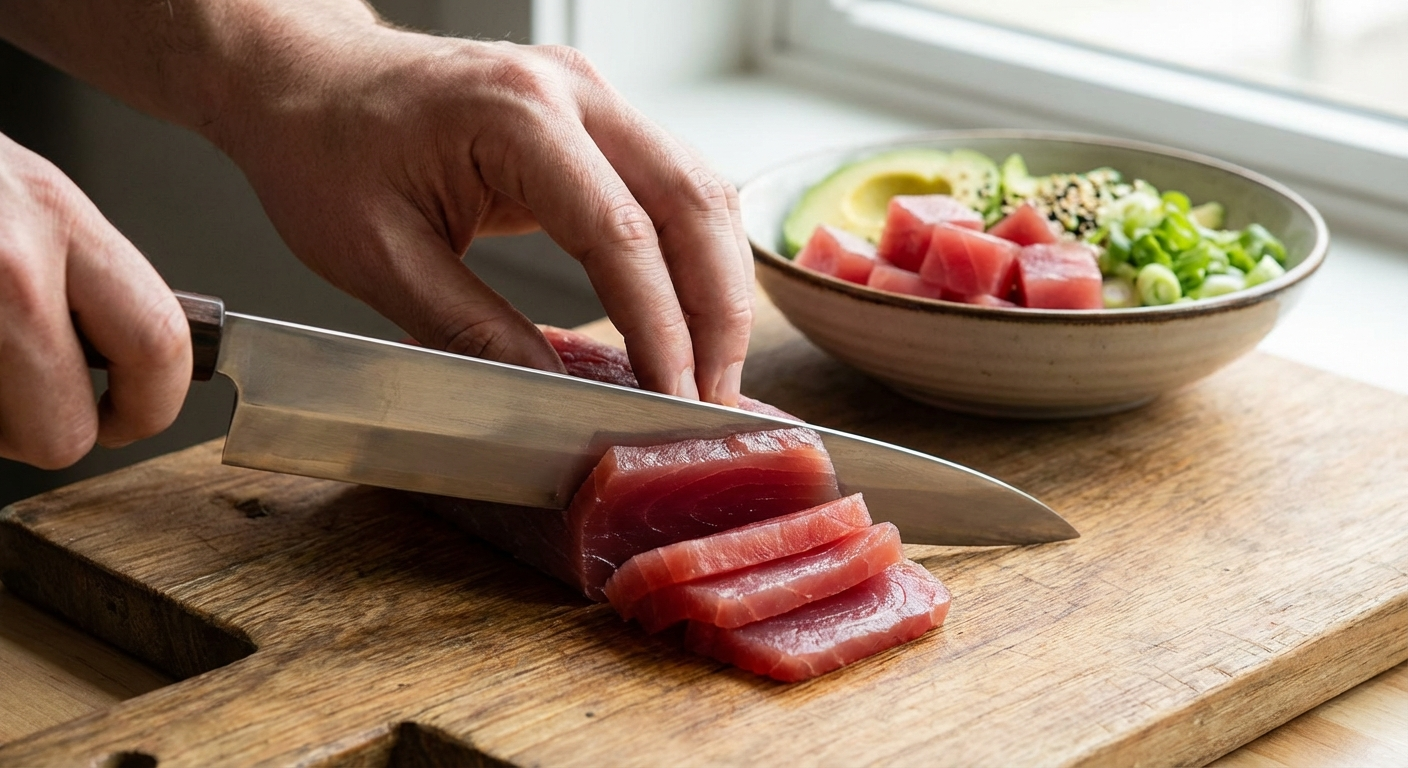
If you’re lucky enough to have friends who fish, or you hit the market and grab a whole fish, you need a deba. This is the heavy-duty workhorse of Japanese fish knives.
The deba is thick, sturdy, and built for the tougher jobs — removing heads, cutting through bones, and filleting whole fish. Think of it as the tool you reach for when your uncle brings over a cooler full of mahi mahi after a good day on the water and you need to break them all down.
What Makes the Deba Special
Unlike a Western chef’s knife, the deba is designed specifically for fish. Its thick spine gives you the weight and leverage to cut through bones without damaging the blade, while the sharp edge can still do delicate fillet work along the ribs. It’s also single-bevel, like the yanagiba, which gives you great control when separating flesh from bone.
A deba in the 6- to 7-inch range is versatile enough for most home cooks. It can handle everything from small reef fish to larger catches without feeling unwieldy.
A Word on Technique
With a deba, you let the weight of the knife do the work. You’re not forcing it through bone — you’re using precise, controlled strikes and leveraging the blade’s heft. It takes a little practice, but once you get the feel for it, breaking down a whole fish becomes almost meditative.
The Fillet Knife: The Versatile Everyday Option
Not everyone needs a full set of Japanese fish knives, and that’s okay. If you’re looking for one knife that can handle most fish tasks, a good fillet knife is your best friend.
A fillet knife has a thin, flexible blade that follows the contours of the fish, letting you remove skin, separate fillets from the bone, and trim away any bloodline or dark spots. It’s the kind of knife you’ll see in every fisherman’s tackle box in Hawaii for a reason — it just works.
Choosing a Fillet Knife
- Blade length: A 7- to 9-inch blade covers most fish you’ll encounter. Go shorter for smaller reef fish, longer for bigger pelagics.
- Flexibility: You want some flex in the blade so it can bend and follow the fish’s bone structure, but not so floppy that you lose control.
- Material: Stainless steel is the way to go for fillet knives. They’re exposed to a lot of moisture and fish oils, and stainless handles that environment much better than carbon steel.
A fillet knife won’t give you the same precision cuts as a yanagiba for sashimi or poke, but it’s incredibly practical for everyday fish prep. Many home cooks in Hawaii keep a fillet knife for the general work and a yanagiba for the final, presentation cuts.
Keeping Your Knives Sharp
Here’s the thing that ties all of this together: no matter which knife you choose, it has to be sharp. A dull fish knife is worse than useless — it’s actually damaging your food.
When you cut fish with a dull blade, you’re tearing and compressing the flesh instead of slicing cleanly through it. The result is mushy texture, faster oxidation, and poke that weeps liquid in the bowl instead of staying firm and fresh.
Basic Sharpening Tips
- Whetstones are the best way to maintain your fish knives. A 1000/3000 grit combination stone will handle both regular sharpening and finishing.
- Honing rods are great for quick touch-ups between full sharpenings. A ceramic rod works well for Japanese-style knives.
- Frequency: If you’re cutting fish weekly, a quick honing before each session and a full sharpening every month or two will keep your edge in great shape.
- Storage: Never toss your fish knives in a drawer. Use a knife guard, magnetic strip, or dedicated knife block. Edge-to-edge contact with other utensils will dull your blade fast.
My Recommendation for Getting Started
If you’re just starting to take your poke and fish prep seriously, here’s what I’d suggest: start with a good fillet knife and a yanagiba. The fillet knife handles the practical work — breaking down your fish, removing skin, trimming — and the yanagiba gives you those beautiful, clean cuts for poke cubes and sashimi slices.
As you get more into it, add a deba. Especially if you’re working with whole fish regularly, it’ll make that part of the process so much smoother.
At the end of the day, good fish deserves good knives. Whether it’s ahi from the auction, opah from a friend’s boat, or salmon from the market, the right blade lets the quality of that fish shine through in every bite. And in Hawaiian cooking, where fresh seafood is at the heart of so much of what we make, that’s everything.