The Tools That Make Hawaiian Cooking Feel Like Home
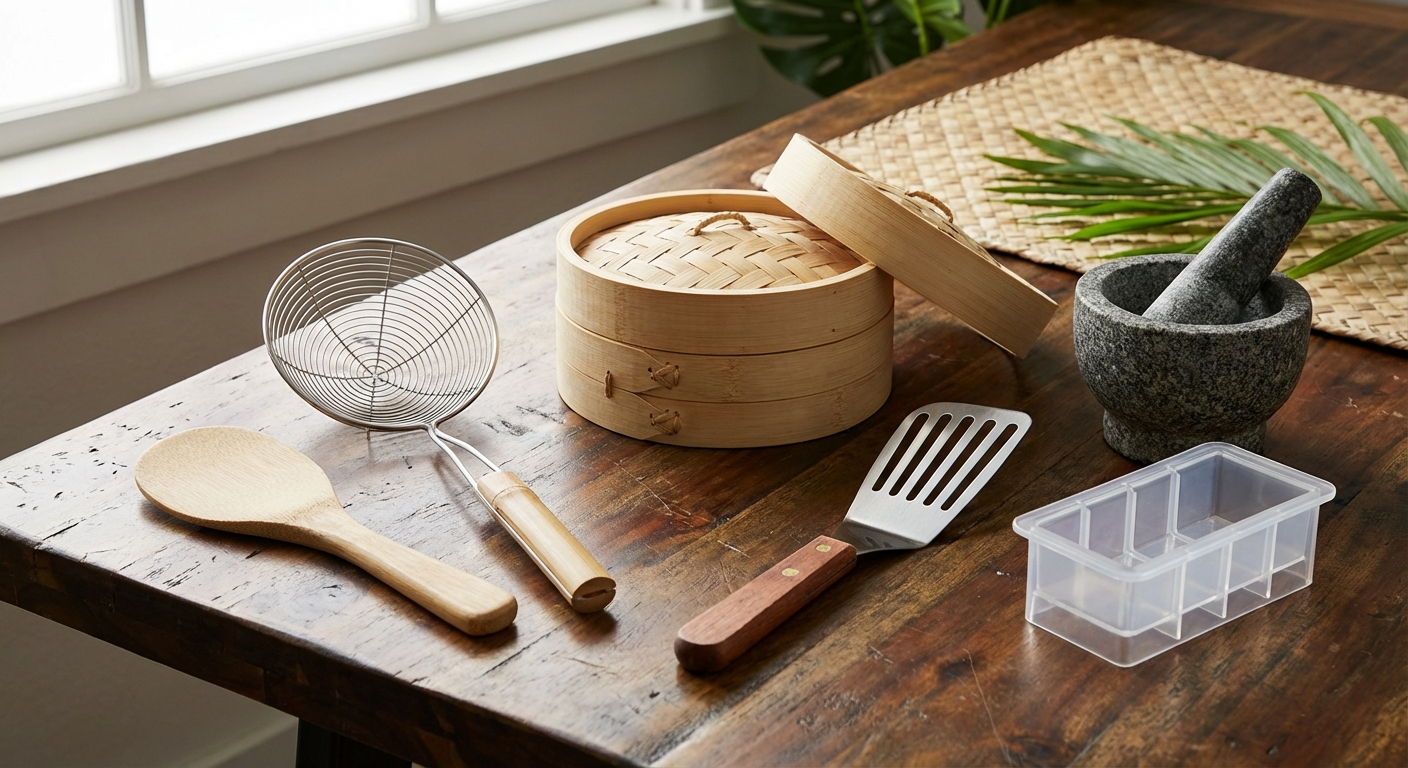
When people think about stocking a kitchen for Hawaiian cooking, they usually think about the big stuff — a good rice cooker, a sturdy pot for stews, maybe a grill for teriyaki. But there’s a whole world of smaller utensils and tools that can completely change your cooking game.
These are the things you’ll find tucked in the drawers and cabinets of kitchens across the islands. Some of them you might already own. Others might surprise you. But once you start using them, you’ll wonder how you ever made laulau, musubi, or shave ice without them.
1. Musubi Mold
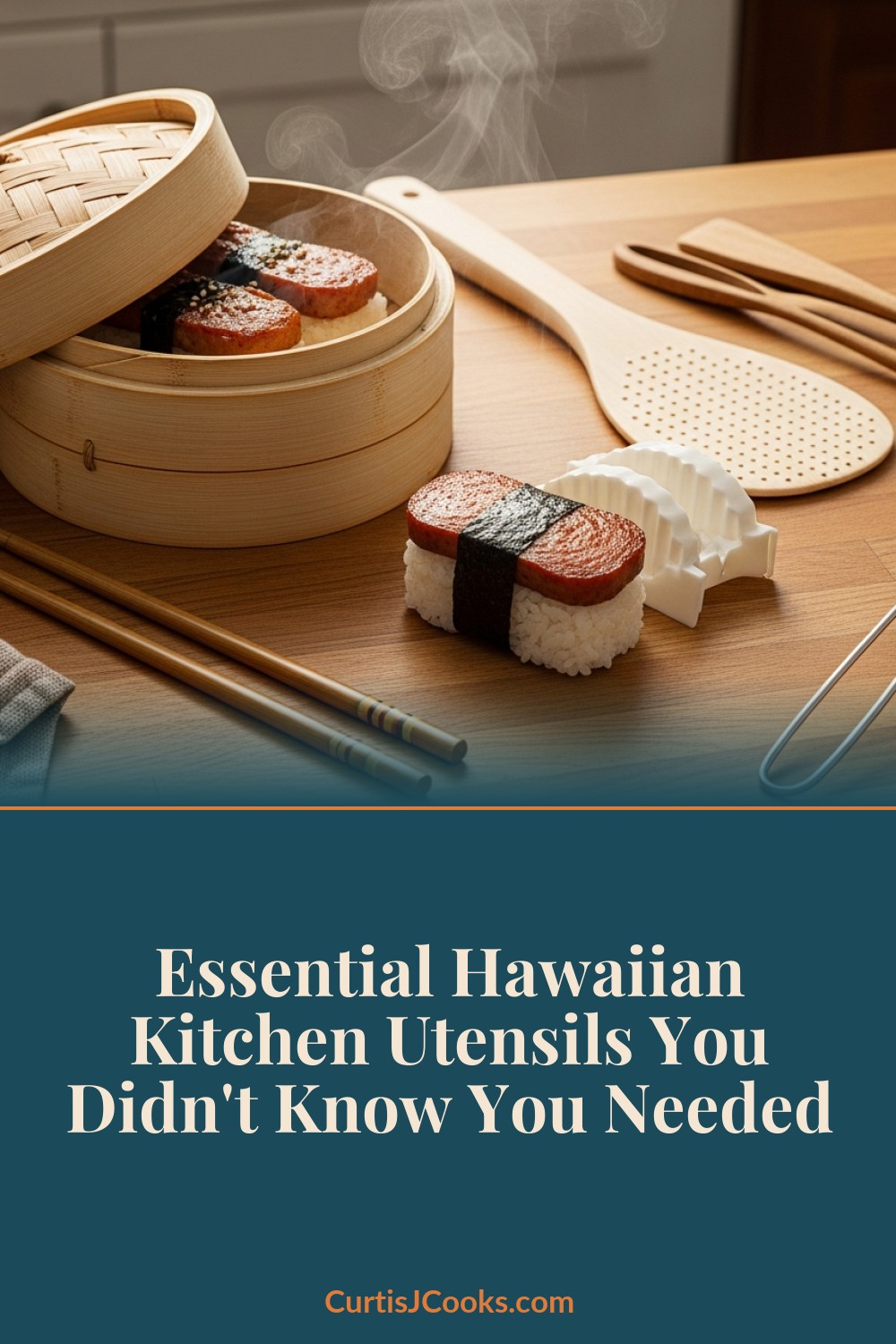
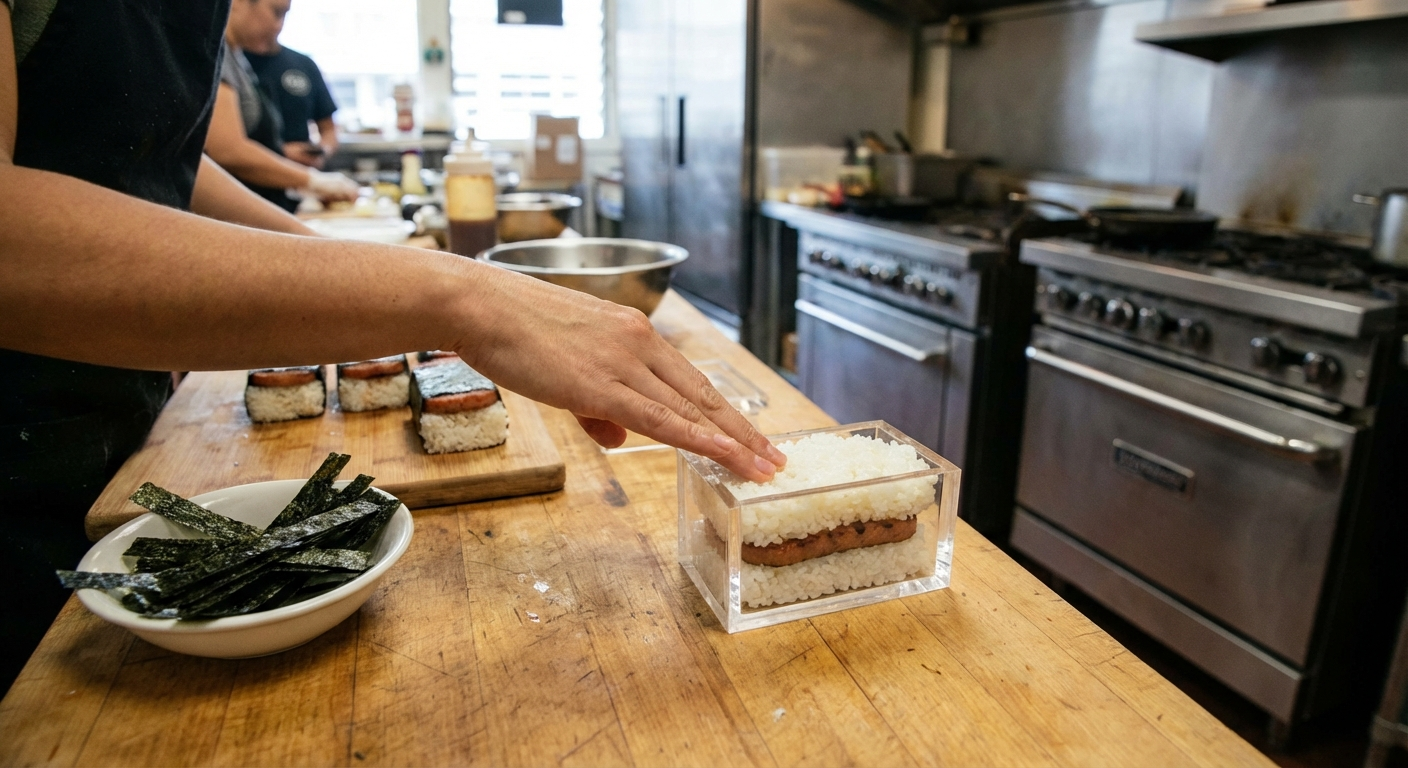
Let’s start with the most iconic. If you’ve ever tried to shape a Spam musubi by hand and ended up with a lopsided, falling-apart mess, you already know why this little acrylic mold exists.
Free: Hawaiian Cooking Starter Kit
Get 5 essential island recipes + a printable pantry checklist — everything you need to start cooking Hawaiian at home.
No spam, ever. Unsubscribe anytime.
A musubi mold (sometimes called a musubi press) is a simple rectangular form — basically the exact shape and size of a slice of Spam. You press your rice in, lay your Spam on top, wrap it with nori, and you’ve got a perfect musubi every single time. It costs just a few dollars and turns what used to be a frustrating process into something you can do assembly-line style for potlucks and lunch boxes.
If you’re making musubi for a crowd — and in Hawaii, you almost always are — this is non-negotiable.
2. Bamboo Steamer
A bamboo steamer is one of those tools that connects Hawaiian cooking to its deep roots in Chinese and other Asian cuisines. It’s essential for making manapua (char siu bao), those soft, fluffy steamed buns filled with sweet barbecue pork that are a cornerstone of local food culture.
The beauty of a bamboo steamer is its simplicity. It sits over a pot or wok of simmering water, and the bamboo absorbs excess moisture so your buns come out perfectly steamed — not soggy. You can stack multiple tiers to cook a big batch at once, which is exactly what you want when the family shows up expecting manapua.
Beyond manapua, it’s great for steaming fish (a classic Hawaiian preparation), dim sum, vegetables, and even reheating leftover rice without drying it out.
3. Mortar and Pestle (or Pohaku Ku’i ‘Ai)
In traditional Hawaiian cooking, the stone mortar and pestle — the pohaku ku’i ‘ai — was used to pound taro into poi. While most of us aren’t pounding our own poi from scratch these days, a good mortar and pestle is still incredibly useful in a Hawaiian kitchen.
Use it to grind roasted kukui nuts (inamona) into that rich, oily condiment that makes poke sing. Use it to crush and blend Hawaiian sea salt with dried chili pepper for a homemade alaea salt blend. Use it to make fresh spice pastes for curries and marinades. There’s something deeply satisfying about the hands-on, old-school nature of it.
A granite or lava stone mortar with some heft to it works best. You want weight and texture so ingredients grip against the surface instead of sliding around.
4. Ti Leaves
Okay, ti leaves aren’t exactly a “utensil” in the traditional sense, but they’re a kitchen tool that’s been used in Hawaiian cooking for centuries and they deserve a spot on this list.
Ti leaves are used to wrap laulau (pork and fish steamed in taro leaves), to line imu (underground ovens) for kalua pig, and to wrap everything from haupia to chicken for cooking. They add a subtle, earthy flavor and keep food moist during steaming or roasting.
If you have access to fresh ti leaves — and they grow all over Hawaii — keep a stash in your kitchen. You can also freeze them for later use. They’re the original Hawaiian parchment paper, and nothing beats the real thing.
5. Rice Paddle (Shamoji)
In a Hawaiian household, rice is life. It shows up at breakfast, lunch, and dinner. And if you’re still using a regular spoon or fork to scoop and serve your rice, you’re making things harder than they need to be.
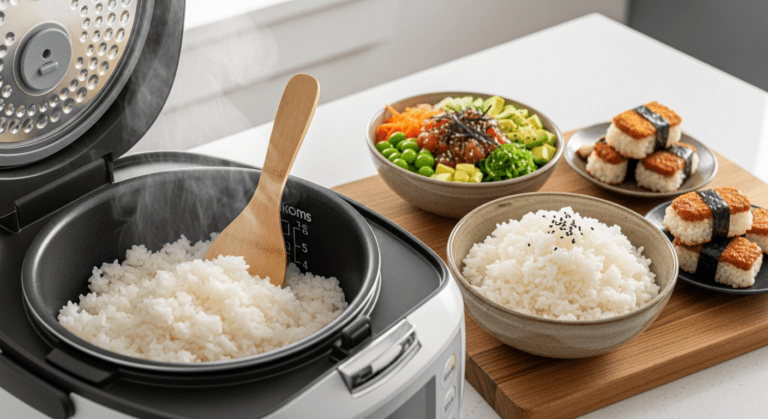
A shamoji — the flat, wide rice paddle that comes with most Japanese rice cookers — is designed to fluff and serve rice without crushing or compacting the grains. The non-stick versions with the textured bumps are especially good because rice doesn’t stick to them.
It seems like such a small thing, but once you’re using a proper shamoji, your rice stays fluffy and light instead of turning into a dense, sticky puck at the bottom of the bowl. And when you eat rice as much as we do, that matters.
6. Spider Strainer
If you do any deep frying — and Hawaiian cooking involves plenty of it, from malasadas to fried mochi to chicken katsu — a spider strainer is essential.
It’s that wide, flat mesh basket on a long handle that lets you scoop food in and out of hot oil quickly and safely. The open mesh design lets oil drain away fast, so your food stays crispy instead of sitting in a pool of grease.
A spider strainer is also fantastic for blanching vegetables, pulling noodles from boiling water, or skimming debris off the surface of soup stocks. It’s one of those tools that once you have it, you reach for it constantly.
7. Shave Ice Machine
This one might seem like a luxury, but hear me out. Shave ice is one of the defining treats of Hawaiian culture. It’s not a snow cone — the ice is shaved so fine that it’s almost fluffy, and it absorbs the syrup instead of having it all pool at the bottom.
Home shave ice machines have gotten really good and really affordable. A decent one lets you make authentic shave ice at home, topped with your favorite syrups, li hing mui powder, mochi balls, sweetened condensed milk, or azuki beans. It’s a game changer for family gatherings, kids’ parties, or just a hot afternoon at home.
If you want that true local-style shave ice experience without driving to the stand, this is worth the counter space.
8. Chopsticks as Cooking Tools
Most people think of chopsticks as eating utensils, but in Hawaiian kitchens — influenced by generations of Japanese, Chinese, and Korean cooking traditions — chopsticks are some of the most versatile cooking tools you can have.
Long cooking chopsticks (saibashi) are perfect for turning pieces of tempura or katsu in hot oil, arranging delicate foods, testing if oil is hot enough (dip the tip in — if it bubbles, you’re ready), picking up individual items from a pot, and mixing batters and sauces. They give you a level of precision and control that tongs and spatulas just can’t match.
Keep a pair of long wooden or bamboo cooking chopsticks near your stove. Once you start using them, you’ll reach for them more than you’d expect.
9. Mandoline Slicer
Hawaiian plate lunches and local-style meals often come with pickled vegetables, namasu (a Japanese-style vinegar cucumber salad), or thinly sliced onions and cabbage for garnish. Getting those paper-thin, uniform slices by hand is tough. A mandoline makes it effortless.
A simple Japanese-style mandoline (the flat, compact kind) is perfect for slicing cucumbers for namasu, shredding cabbage for katsu plates, cutting carrots and daikon for pickles, and prepping onions for lomi lomi salmon. Always use the hand guard — mandolines are incredibly sharp and will remind you of that fact if you get careless.
Building Your Hawaiian Kitchen, One Tool at a Time
You don’t need to run out and buy everything on this list at once. Start with the tools that match what you cook most. If you’re a musubi maker, get the mold. If you fry a lot, grab a spider strainer. If you’re steaming manapua, invest in a bamboo steamer.
The beauty of these utensils is that they’re mostly simple, affordable, and built to last. They’re the kind of things that get passed around families, picked up at Marukai or Don Quijote, and used until they’re worn smooth. They connect us to the cooking traditions that make Hawaiian food what it is — a mix of cultures, techniques, and aloha, all coming together on the plate. And when you pair these utensils with the right essential cookware, you’ll have everything you need to cook authentic Hawaiian food at home.