When the rain comes down sideways on the Windward side and the mountains disappear behind sheets of gray, there’s only one thing I want to eat: Portuguese bean soup. Big pot on the stove, the whole house smelling like sausage and tomatoes and something deeply, fundamentally comforting. My grandmother — my avó, though we just called her Grandma — made it every time the weather turned, which in Kaneohe meant she made it a lot. Her pot was enormous, dented, and older than anyone could remember, and the soup that came out of it was the best thing I’ve ever tasted.
Portuguese bean soup is one of those dishes that tells the story of Hawaii’s people. It came here with the Portuguese immigrants from the Azores and Madeira who arrived in the late 1800s to work the sugar plantations, and it never left. It became local. It became ours. Every family has their version — some use ham hocks, some use bacon, some swear by a particular brand of Portuguese sausage. My grandmother used linguiça from the Hilo store, and that smoky, garlicky flavor is what I still chase every time I make this soup.
There’s nothing fancy about Portuguese bean soup, and that’s exactly the point. It’s a working person’s meal — filling, nourishing, made with simple ingredients that stretch to feed a crowd. You put it on the stove and let it do its thing, and by the time it’s ready, you’ve got enough food to feed the whole family with plenty left over for tomorrow, when it tastes even better.
Free: Hawaiian Cooking Starter Kit
Get 5 essential island recipes + a printable pantry checklist — everything you need to start cooking Hawaiian at home.
No spam, ever. Unsubscribe anytime.
What Makes Portuguese Bean Soup Special
What sets Portuguese bean soup apart from other bean soups is the linguiça — that smoky, paprika-spiced Portuguese sausage that gives the broth its distinctive flavor. You can’t substitute it with Italian sausage or kielbasa and get the same result. The linguiça is the soul of this soup. It renders its fat into the broth, turning everything it touches a warm, ruddy orange, and that smoky sweetness infuses every bean, every potato, every strand of cabbage.
The other thing that makes this soup uniquely Hawaiian is the macaroni. Mainland Portuguese bean soup recipes don’t always include it, but here in Hawaii, the elbow macaroni is non-negotiable. It makes the soup heartier, starchier, more filling — which is exactly what plantation workers needed after a long day in the fields. Adding macaroni turns a soup into a meal, and that practical, generous spirit is at the heart of local cooking.
From the Azores to the Aloha State
Portuguese immigration to Hawaii began in the 1870s, when sugar plantation owners recruited workers from the Azores and Madeira islands. These families brought with them a rich culinary tradition built around simple, hearty ingredients — beans, sausage, bread, and the knowledge of how to turn very little into something wonderful. Sopa de feijão, the original bean soup, adapted to the ingredients available in Hawaii: local cabbage, island-grown potatoes, and the linguiça that Portuguese families began making here with local spices.
Over the generations, Portuguese bean soup became a staple of local cuisine, served at potlucks, church fundraisers, school cafeterias, and family dinner tables across every island. It sits alongside other Portuguese contributions to Hawaiian food culture — malasadas, sweet bread, and vinha d’alhos — as a reminder that Hawaii’s food is built on the traditions of everyone who came here and made it home.
Ingredients
Soup Base
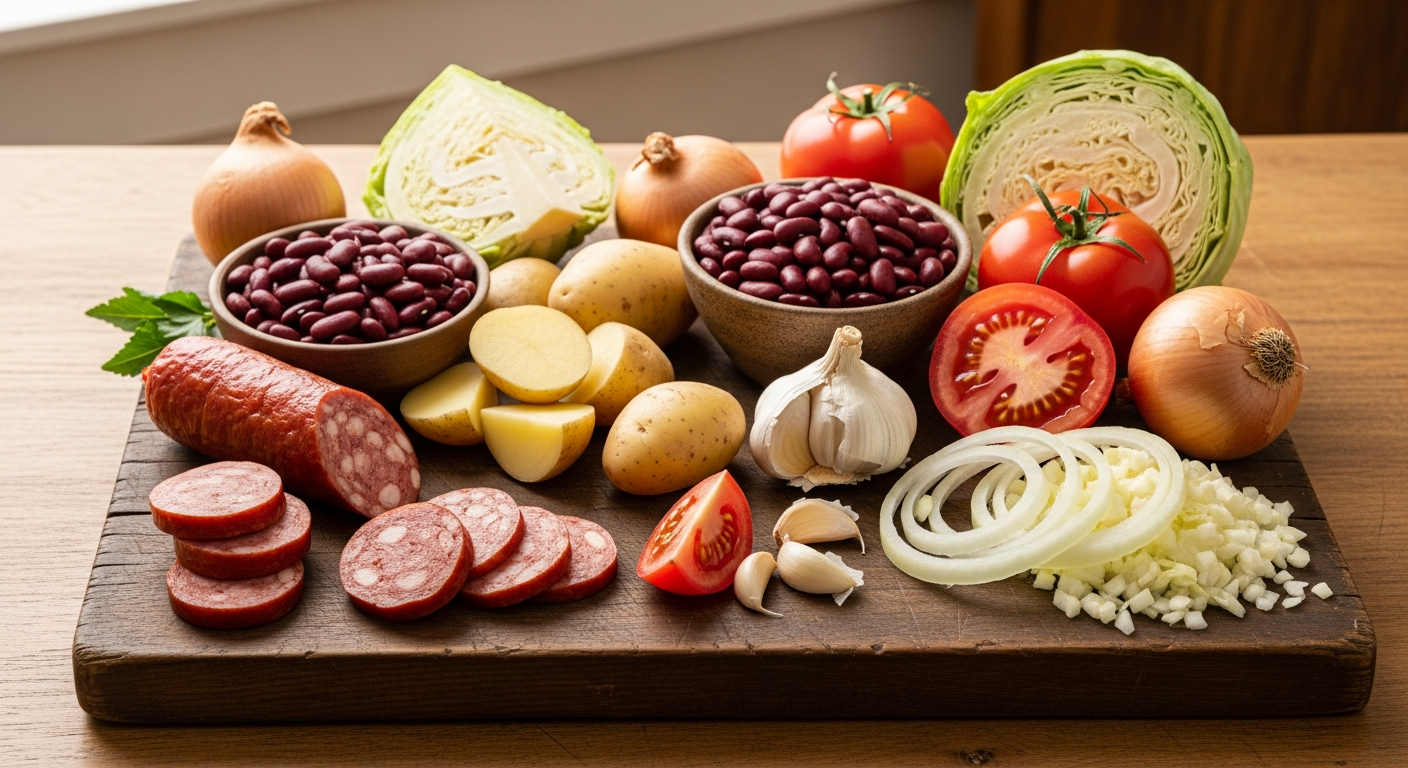
- 2 tablespoons olive oil
- 1 pound linguiça (Portuguese sausage), sliced into 1/4-inch rounds
- 1 large onion, diced
- 4 cloves garlic, minced
- 2 medium carrots, peeled and diced
- 3 stalks celery, diced
- 1 (15-ounce) can tomato sauce
- 1 (14.5-ounce) can diced tomatoes
- 8 cups beef broth (or water with ham hock)
- 2 bay leaves
Beans and Vegetables
- 2 (15-ounce) cans kidney beans, drained and rinsed (or 1 pound dried, soaked overnight)
- 3 medium russet potatoes, peeled and cubed
- 1/2 head green cabbage, chopped into bite-sized pieces
- 1 cup elbow macaroni
Seasoning
- 1 teaspoon salt, or to taste
- 1/2 teaspoon black pepper
- 1/2 teaspoon red pepper flakes (optional)
- 1 tablespoon apple cider vinegar
- 2 tablespoons fresh parsley, chopped
Instructions
Build the Soup Base
- Brown the sausage: Heat the olive oil in a large heavy-bottomed pot or Dutch oven over medium-high heat. Add the sliced linguiça and cook, stirring occasionally, until the edges are browned and the fat has rendered, about 5-6 minutes. The sausage should be caramelized and the bottom of the pot should have flavorful brown bits — that’s where the magic lives.
- Sauté the aromatics: Add the diced onion, garlic, carrots, and celery to the pot with the sausage. Cook, stirring frequently, until the onion is soft and translucent, about 5 minutes. Scrape up any brown bits from the bottom of the pot — all of that flavor is going into your broth.
- Add the tomatoes and broth: Pour in the tomato sauce, diced tomatoes, and beef broth. Add the bay leaves. Stir everything together and bring the soup to a boil over high heat.
Simmer and Build
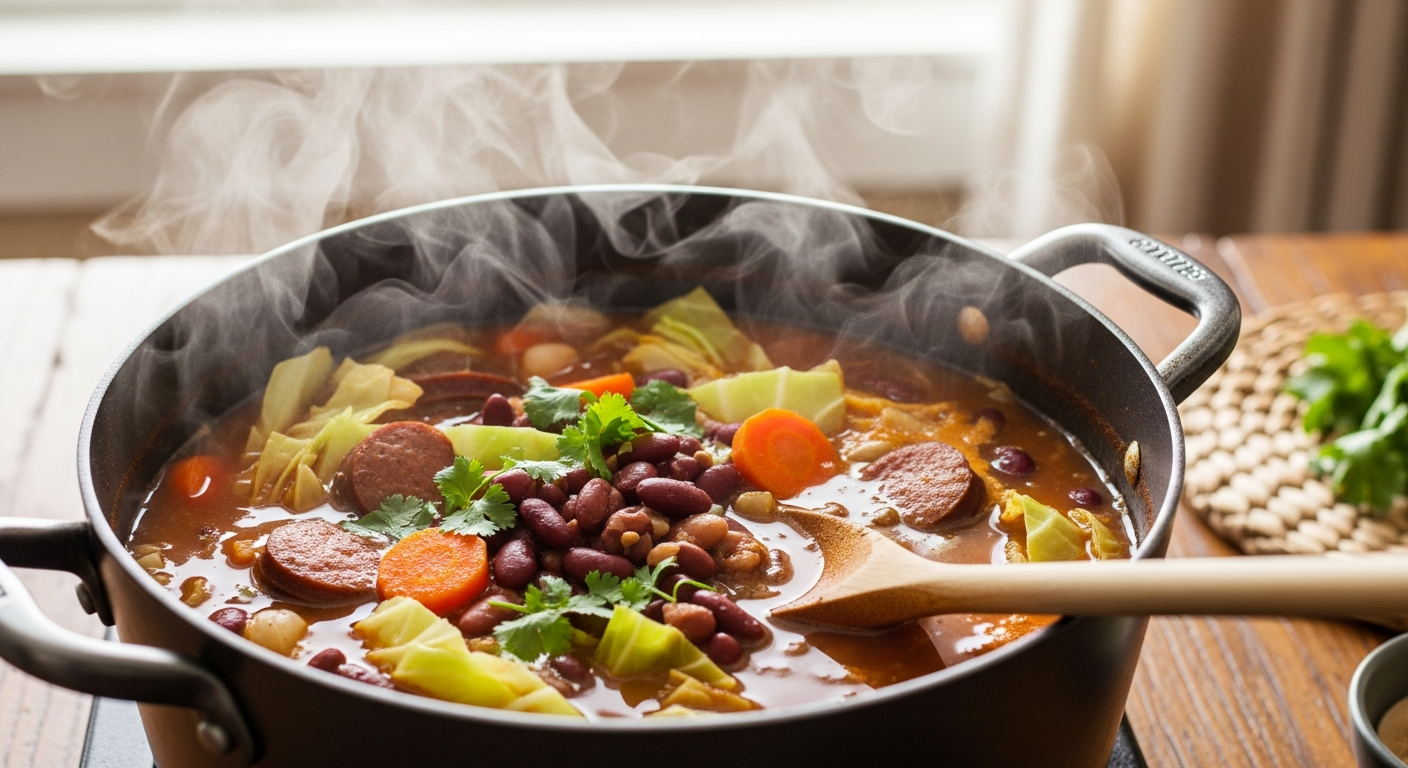
- Add the beans and potatoes: Once the soup is boiling, add the kidney beans and cubed potatoes. Reduce the heat to medium-low, cover the pot, and let it simmer for 25-30 minutes, or until the potatoes are tender and starting to break apart at the edges. Some of the potato will dissolve into the broth and thicken it naturally — that’s exactly what you want.
- Add the cabbage: Stir in the chopped cabbage. It will seem like a lot, but it cooks down significantly. Cover and simmer for another 10-15 minutes until the cabbage is tender but still has a little bite.
- Cook the macaroni: Add the elbow macaroni directly to the soup. Stir well to prevent sticking, and cook uncovered for 8-10 minutes, until the pasta is al dente. The macaroni will continue to absorb liquid as it sits, so the soup will thicken.
Season and Serve
- Season to taste: Remove the bay leaves. Stir in the salt, black pepper, red pepper flakes if using, and apple cider vinegar. The vinegar brightens everything up — don’t skip it. Taste and adjust the seasoning. The soup should be rich, savory, slightly smoky, and deeply satisfying.
- Rest the soup: If you have the patience, let the soup sit off the heat for 15-20 minutes before serving. This lets all the flavors come together and the broth thickens slightly as the macaroni and potatoes continue to absorb liquid.
- Serve hot: Ladle into big bowls and garnish with fresh parsley. Serve with crusty bread for dunking or over a scoop of white rice, local-style.

Tips
- Use real linguiça: Don’t substitute with Italian sausage or andouille. Linguiça has a specific smoky, garlicky, paprika-forward flavor that defines this soup. Look for it at your local Asian or specialty market — brands from Hawaii or the Azores are best.
- Cook the macaroni in the soup: Adding the pasta directly to the soup rather than cooking it separately lets it absorb all that flavorful broth. Just be aware that leftovers will be thicker as the macaroni soaks up more liquid. Add a splash of broth when reheating.
- It’s better the next day: Like all great soups, Portuguese bean soup improves overnight. The flavors meld, the broth thickens, and everything becomes richer. Make it a day ahead if you can.
- Freeze in portions: This soup freezes beautifully for up to 3 months. Portion it into containers and you’ve got instant comfort food for those rainy Windward side days.
- Add a ham hock for extra richness: If you want an even deeper, meatier broth, add a smoked ham hock at the beginning and let it simmer with the soup the entire time. Pull the meat off the bone before serving and stir it back in.
Serving Suggestions
In Hawaii, Portuguese bean soup is often served over a scoop of white rice — which might seem unusual for a soup, but trust me, it works. The rice soaks up that rich, smoky broth and turns every spoonful into something substantial. Alternatively, serve it with thick slices of crusty bread or Portuguese sweet bread for dunking.
For a full local-style meal, pair it with a simple green salad or some pickled vegetables to cut through the richness. Portuguese bean soup is also a staple at potlucks and gatherings — bring a big pot and watch it disappear. It feeds a crowd, it reheats like a dream, and everyone always wants the recipe. It’s comfort food in the same family as Oxtail Soup and Hawaiian Beef Stew — the kind of soul-warming dishes that make Hawaii’s rainy days something to look forward to.
More Island Comfort Recipes
Love hearty, warming comfort food? These recipes hit the same spot:
- Oxtail Soup – Hawaiian Style — Rich, beefy, and deeply satisfying — another Hawaii soup that warms you right down to your bones.
- Hawaiian Beef Stew — Tender chunks of beef in a savory tomato gravy, served over rice. Pure local comfort.
- Shoyu Chicken — Simple, flavorful, and perfect alongside a bowl of soup for a complete plate lunch spread.
Prep Time: 20 minutes
Cook Time: 1 hour 15 minutes
Total Time: 1 hour 35 minutes
Servings: 8-10