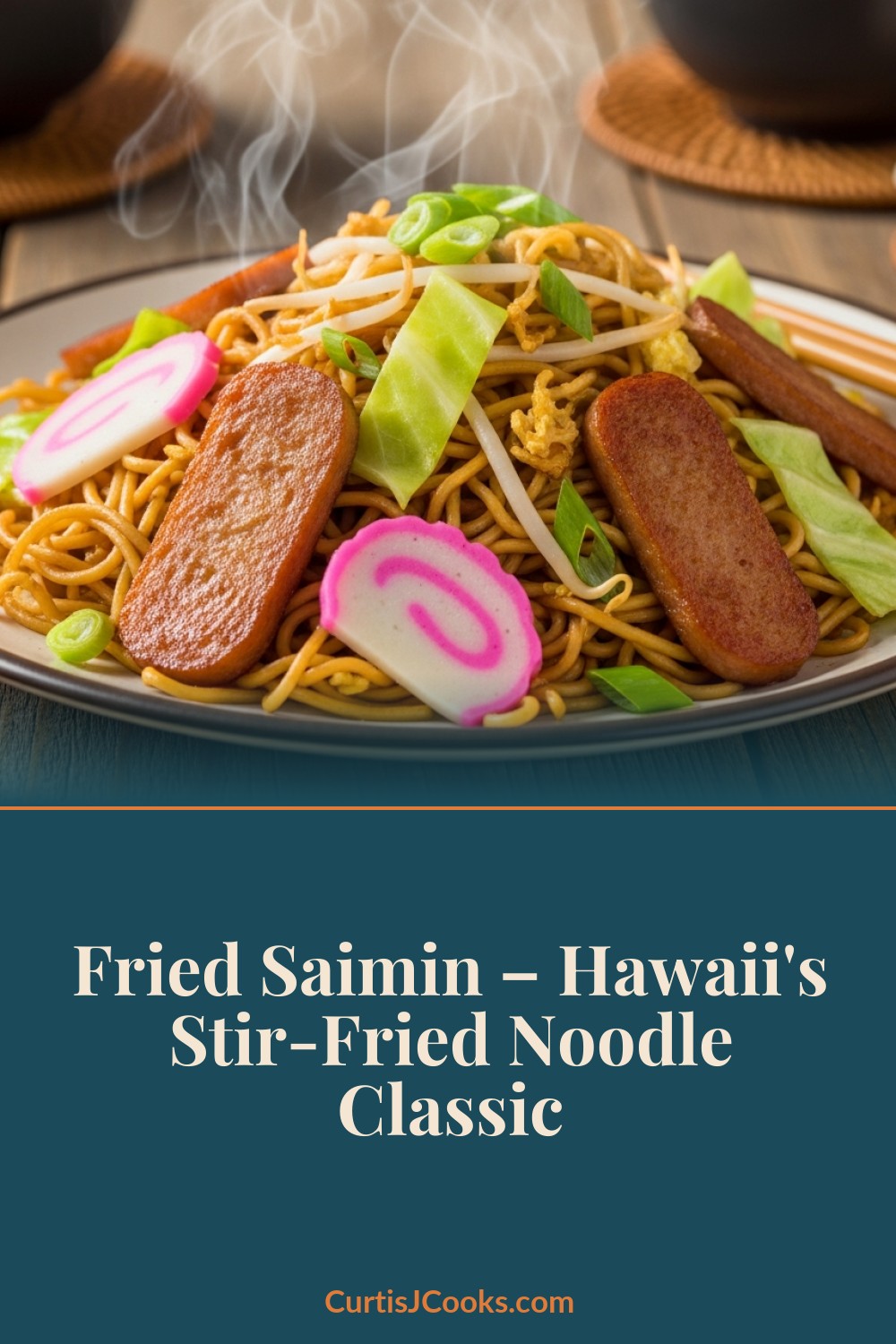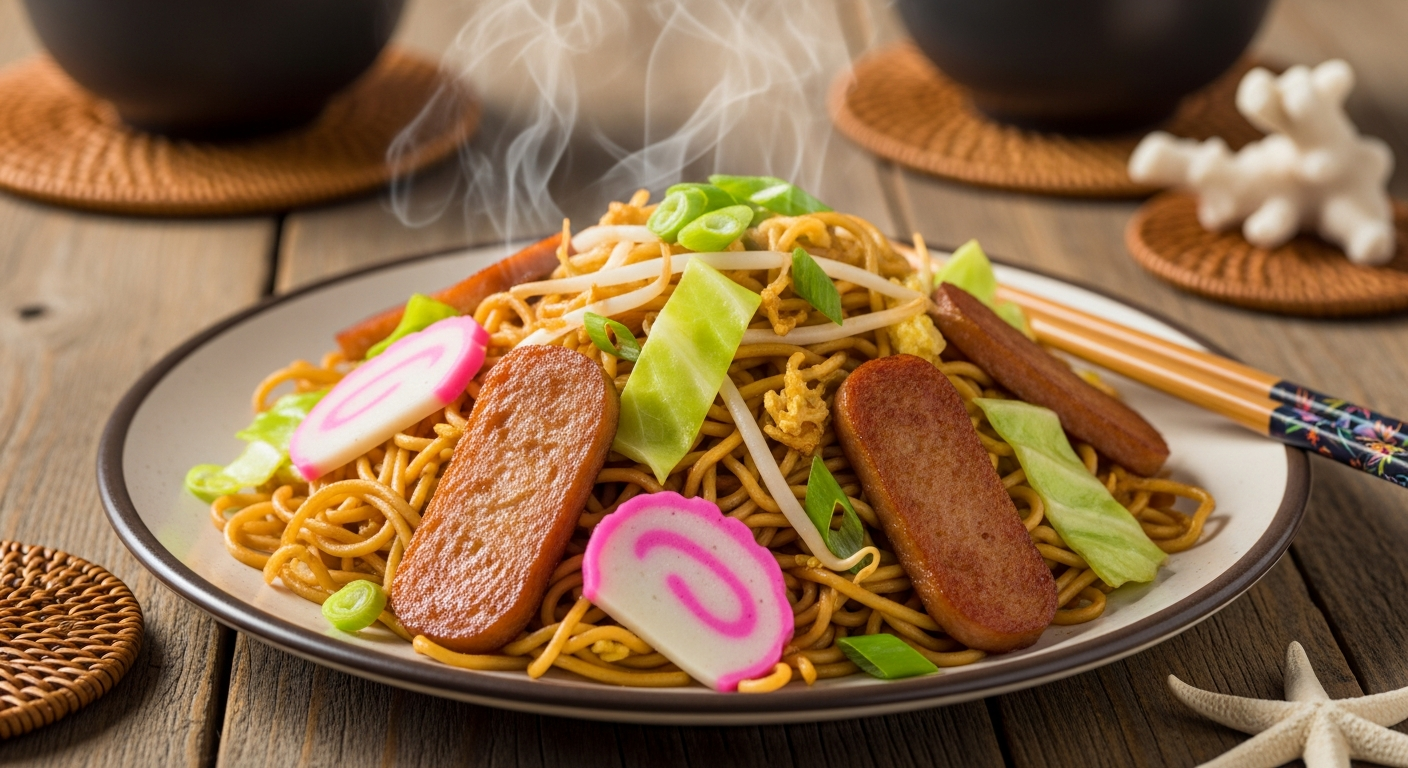
If you grew up in Hawaii, you know saimin. It’s the noodle soup that shows up at every football game concession stand, every Zippy’s late-night run, every mom’s kitchen when you were home sick from school. But here’s the thing most people don’t talk about enough — fried saimin. Take those same curly, springy wheat noodles, ditch the broth, and throw them in a screaming hot wok with Spam, cabbage, and a good hit of oyster sauce. What you get is something completely different but equally addicting — crispy edges, chewy centers, salty and savory with just a touch of sweetness from the sauce.
I first fell in love with fried saimin at this little diner near our place in Pearl City. My tutu used to pick me up from school and we’d stop there maybe once a week. She’d get the regular saimin with extra green onion, and I’d always go for the fried saimin because I loved how the noodles got all tangled up with crispy bits of Spam and those little pink half-moons of kamaboko. I’d squeeze a ton of shoyu on top and go to town. To this day, whenever I make fried saimin at home, I’m right back at that counter stool, feet dangling, watching the cook work the wok through the kitchen window.
The beauty of fried saimin is how fast it comes together. We’re talking fifteen minutes, maybe twenty if you’re taking your time. It’s the ultimate after-school snack, the perfect late-night meal when you don’t feel like cooking something complicated, and honestly one of the best ways to use up that half-pack of saimin noodles sitting in your pantry. This is local comfort food at its simplest and best.
Free: Hawaiian Cooking Starter Kit
Get 5 essential island recipes + a printable pantry checklist — everything you need to start cooking Hawaiian at home.
No spam, ever. Unsubscribe anytime.
What Makes Fried Saimin Special
Fried saimin is not chow mein. I know they look similar, but the noodle makes all the difference. Saimin noodles are uniquely Hawaiian — thinner than ramen, slightly curly, with a firm wheat chew that holds up beautifully to high-heat stir-frying. They were born right here in the islands, a product of the multicultural plantation camps where Japanese, Chinese, Filipino, and Portuguese workers all shared ingredients and techniques. The noodles pick up sauce without getting soggy, and they develop these amazing crispy spots where they press against the hot wok.
What really sets this dish apart from mainland stir-fried noodles is the combination of toppings. Spam and kamaboko together? That’s pure Hawaii. You won’t find that combination anywhere else in the world. Add in the crunch of fresh cabbage and bean sprouts, the bite of green onion, and that glossy oyster sauce coating, and you’ve got a dish that’s unmistakably local. It’s humble, it’s unpretentious, and it’s absolutely delicious.
Plantation Roots, Local Soul
Saimin itself is one of Hawaii’s greatest culinary inventions. It emerged in the plantation camps of the early 1900s, where workers from Japan, China, the Philippines, Korea, and Portugal all lived and cooked side by side. The noodles draw from Japanese ramen and Chinese wheat noodle traditions, while the toppings reflect the diverse tastes of the whole community. Fried saimin is a natural evolution — someone, somewhere, decided to skip the broth and toss those noodles in a wok instead. And thank goodness they did.
Today, fried saimin is everywhere in Hawaii. You’ll find it at drive-ins, diners, plate lunch shops, school cafeterias, and family potlucks. It sits right next to Spam musubi and mac salad as one of those dishes that every local kid grows up eating. And like a lot of local food, the beauty is in how adaptable it is — some people add char siu instead of Spam, some throw in whatever vegetables are in the fridge, some like it extra saucy while others prefer it dry and crispy. There’s no single “right” way to make it, which is what makes it so perfect.
Ingredients
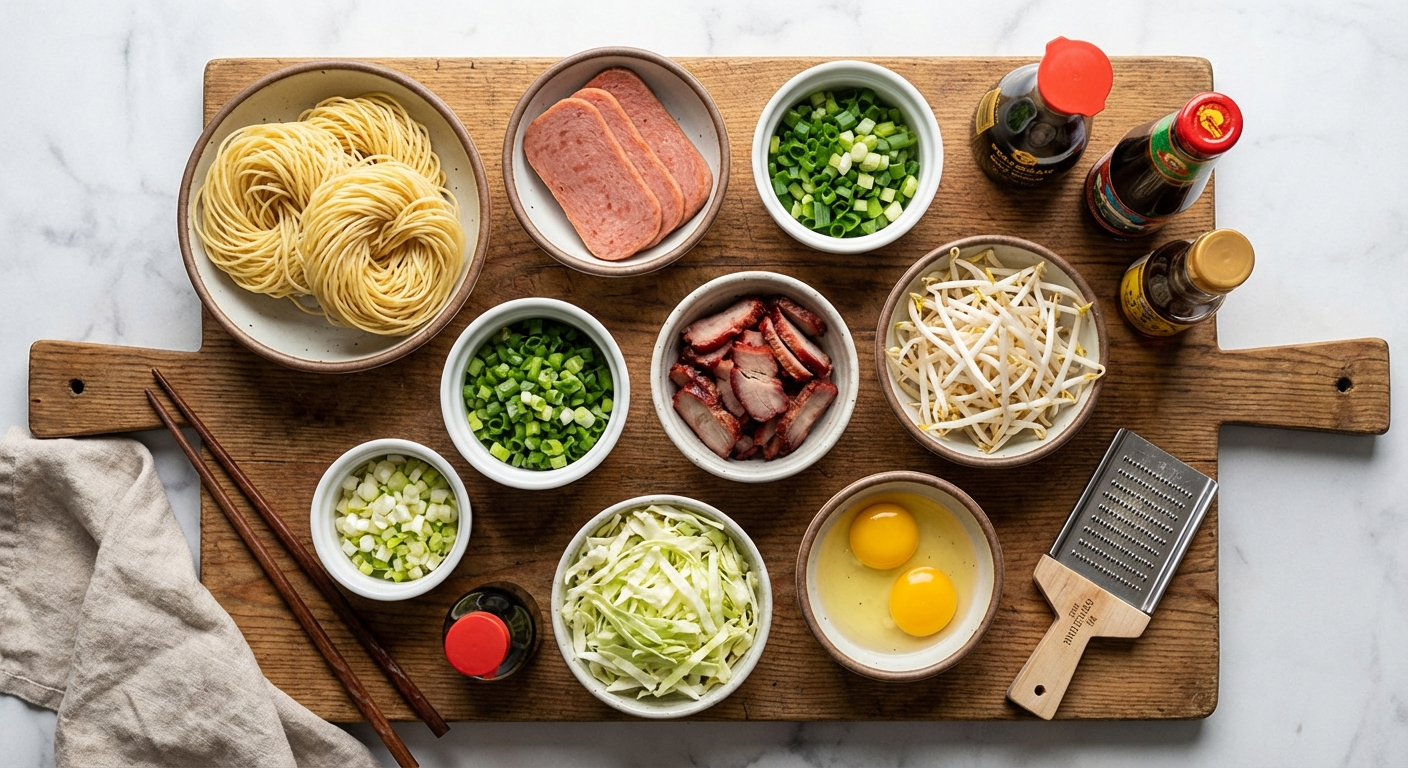
For the Noodles
- 2 packages (about 10 oz total) fresh saimin noodles
- 1 tablespoon vegetable oil (for tossing cooked noodles)
For the Sauce
- 2 tablespoons oyster sauce
- 1 tablespoon soy sauce
- 1 teaspoon sesame oil
- ½ teaspoon sugar
- ¼ teaspoon white pepper
For the Stir-Fry
- 3 tablespoons vegetable oil, divided
- 1 can (12 oz) Spam, cut into thin strips
- 3 cloves garlic, minced
- 2 cups green cabbage, thinly shredded
- 1 cup bean sprouts
- 4 stalks green onion, cut into 1½-inch pieces
- ½ cup kamaboko (fish cake), sliced into thin half-moons
- 1 egg, lightly beaten (optional)
Instructions
Prep the Noodles
- Cook the saimin noodles: Bring a pot of water to a rolling boil. Cook the saimin noodles for about 1 minute — just until they loosen up and separate. You want them slightly underdone since they’ll finish cooking in the wok. Drain well and toss with 1 tablespoon of oil to prevent sticking. Spread them out on a sheet pan if you have time — drier noodles fry better.
- Mix the sauce: Whisk together the oyster sauce, soy sauce, sesame oil, sugar, and white pepper in a small bowl. Set aside within arm’s reach of your stove.
Stir-Fry
- Crisp the Spam: Heat your wok over high heat until smoking. Add 1 tablespoon of oil and add the Spam strips in a single layer. Let them cook undisturbed for about 1 minute until the bottoms are golden and crispy. Flip and crisp the other side, about 45 seconds more. Remove the Spam to a plate — you want it nice and crispy, not rubbery.
- Scramble the egg (optional): If using egg, push any remaining oil to the center of the wok, pour in the beaten egg, and scramble quickly into small curds, about 20 seconds. Remove and set aside with the Spam.
- Cook the vegetables: Add another tablespoon of oil to the wok. Add the garlic and stir-fry for 10 seconds until fragrant. Add the shredded cabbage and cook for about 1 minute, tossing frequently, until it just starts to wilt but still has good crunch. Remove and set aside.
- Fry the noodles: Add the remaining tablespoon of oil to the wok. Add the saimin noodles and spread them across the surface. Let them sit without touching for 45 seconds to 1 minute — this is how you get those crispy charred bits that make fried saimin so good. Then toss and flip, letting the other side get some color too. Do this for about 2-3 minutes total.
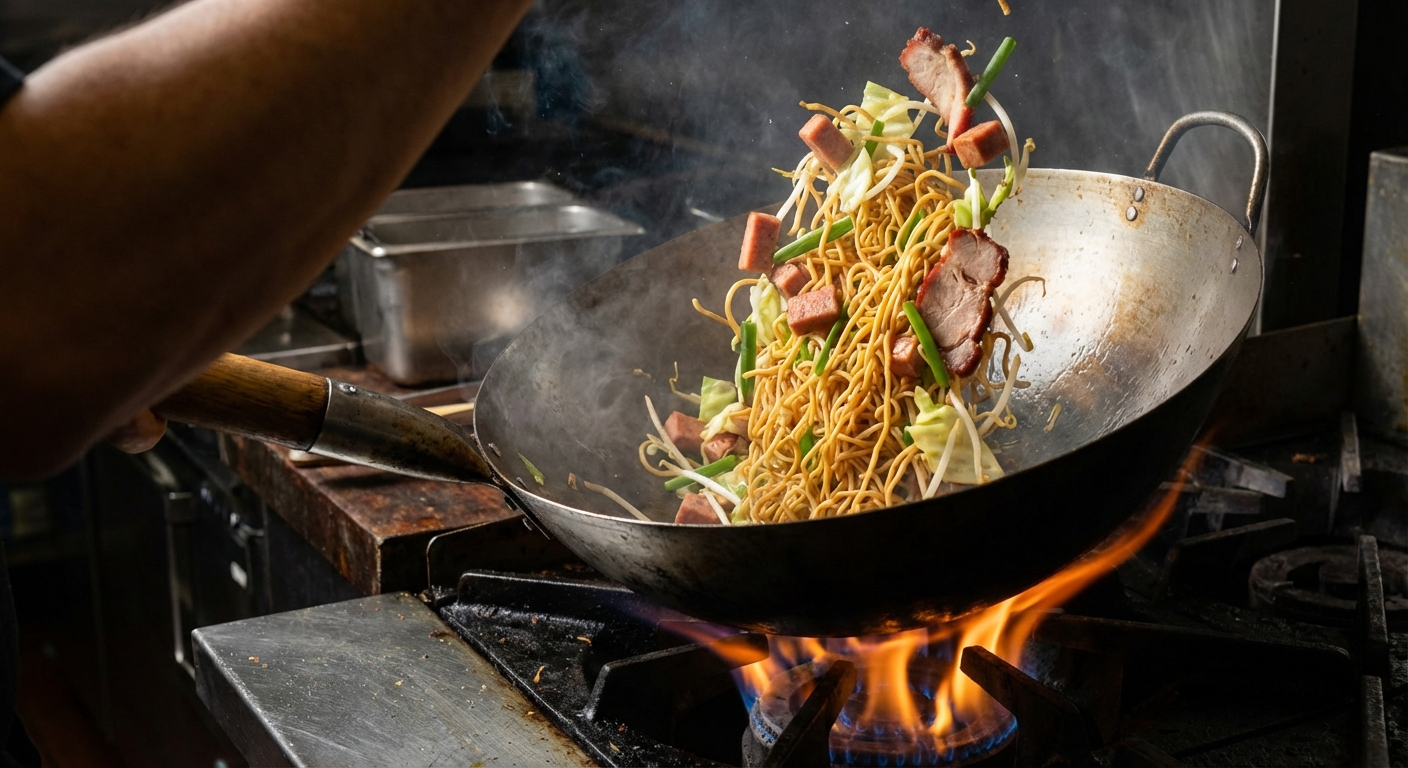
- Bring it all together: Pour the sauce over the noodles and toss to coat evenly. Add back the Spam, egg (if using), cabbage, bean sprouts, kamaboko, and green onions. Toss everything together vigorously for about 30-45 seconds until everything is heated through and well combined. The noodles should be glossy, slightly charred in spots, and coated in that savory sauce.
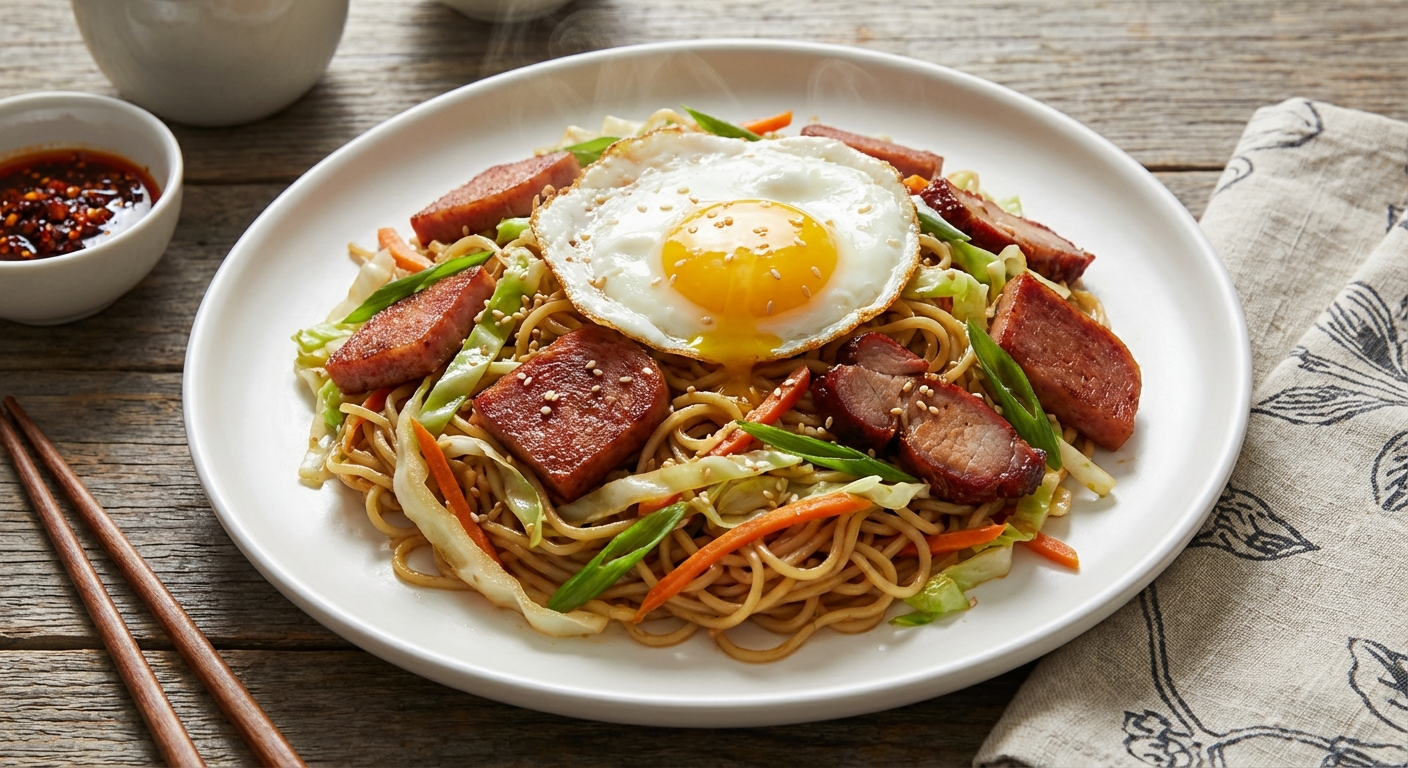
- Serve immediately: Pile the fried saimin onto plates and serve right away while the noodles are still hot and crispy. A drizzle of extra sesame oil on top never hurts.
Tips for Perfect Fried Saimin
- Dry your noodles: Excess water is the enemy of good fried noodles. After boiling, drain them thoroughly and ideally spread them on a sheet pan for a few minutes to let the surface moisture evaporate. Wet noodles steam instead of fry, and you’ll end up with a soggy mess instead of crispy perfection.
- Get your wok screaming hot: Just like with beef tomato or chow fun, high heat is essential. Your wok should be smoking before any food goes in. If you’re new to wok cooking, check out my guide on choosing the right wok to set yourself up for success.
- Don’t skip the kamaboko: Those little pink and white fish cake slices aren’t just for looks — they add a subtle sweetness and a bouncy texture that rounds out the dish. Look for them in the refrigerated section at any Asian grocery store, usually near the tofu.
- Crisp your Spam properly: Take the time to really get a golden crust on the Spam strips. Crispy Spam in fried saimin is a completely different experience than soft Spam. Patience here pays off big time.
- Use fresh saimin noodles if possible: Sun Noodle brand fresh saimin is the gold standard in Hawaii, and you can find it at many Asian grocery stores on the mainland too. In a pinch, thin dried ramen noodles (without the seasoning packet) work as a substitute, but the texture won’t be quite the same.
Serving Suggestions
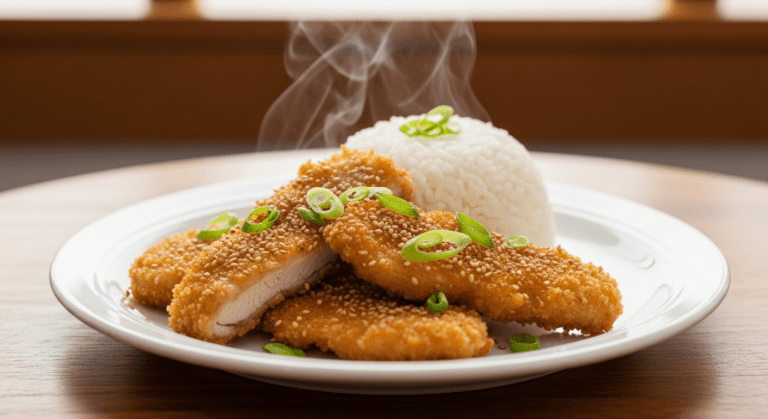
Fried saimin is fantastic on its own — just pile it up on a plate and go. But if you’re making it part of a bigger spread, it pairs beautifully with a couple of Spam musubi on the side, or serve it next to some chicken katsu for the ultimate local comfort plate. A side of steamed rice might seem redundant with noodles, but plenty of local folks eat noodles AND rice — no judgment here.
For toppings, set out some shoyu, chili pepper water, and furikake and let everyone customize their plate. A squeeze of fresh lemon or a drizzle of hot sesame oil adds a nice brightness that cuts through the richness. And honestly? Fried saimin is one of the best leftover lunches you’ll ever have — it reheats in a hot pan in about two minutes and somehow tastes even better the next day.
More Island Comfort Recipes
Love fried saimin? Here are more local favorites to add to your rotation:
- Spam Musubi — The ultimate Hawaii snack, and a natural partner for fried saimin.
- Saimin – Hawaii’s Beloved Noodle Soup — The broth version of these iconic noodles.
- Beef Tomato – Hawaii’s Chinese-Style Stir-Fry Classic — Master one wok dish, then master them all.
Prep Time: 15 minutes
Cook Time: 10 minutes
Total Time: 25 minutes
Servings: 4