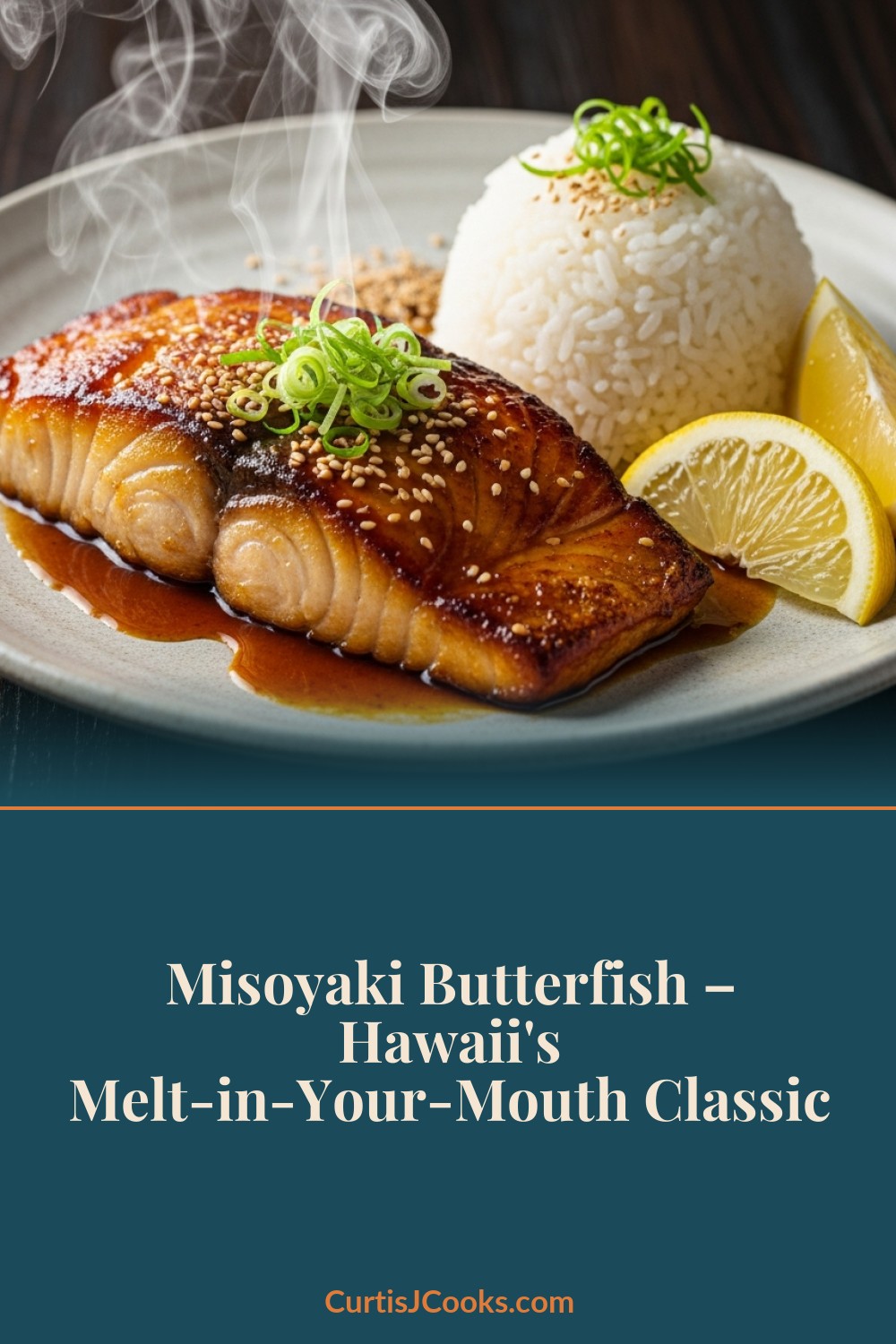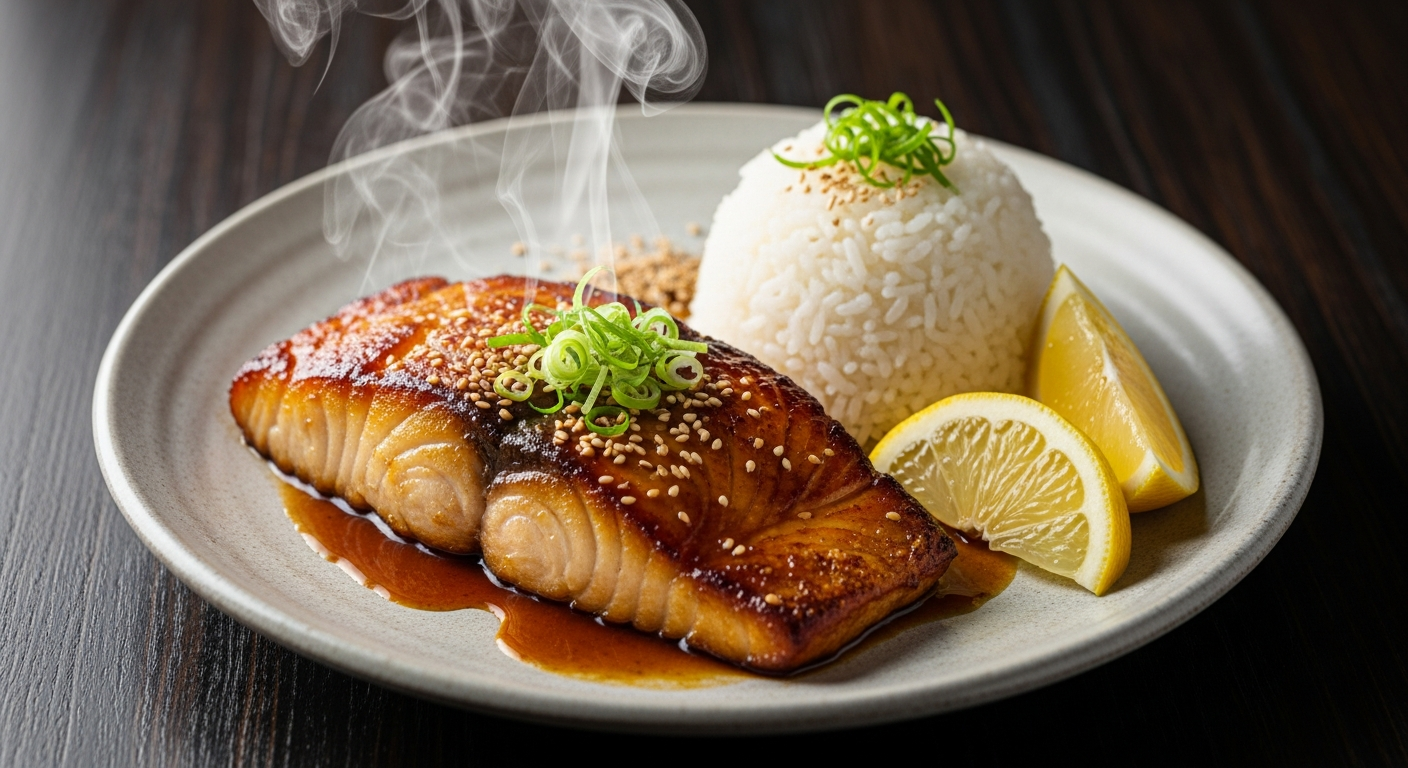
Some dishes stop you mid-bite. You close your eyes, your shoulders drop, and for a second the whole world is just that one perfect mouthful. That’s misoyaki butterfish. The first time I really understood what this dish was about, I was maybe twelve years old, sitting at a table at a little Japanese restaurant in Kaimuki — the kind of place with faded curtains and a handwritten specials board. My tutu ordered it for me. I remember cutting into that piece of fish and watching it just fall apart, barely holding itself together. One bite and I was gone. Sweet, savory, buttery, with those lacquered caramelized edges that tasted like someone had turned miso soup into candy. I looked up at my tutu and she just smiled, like she’d been waiting for that exact moment.
Misoyaki butterfish is one of those dishes that punches way above its weight. On paper, it’s simple — fish, miso, a few pantry staples for the marinade, some time in the fridge, and a few minutes under the broiler. But the result is something that feels like it belongs in a fine dining restaurant. The funny thing is, in Hawaii, you can find it at both. You’ll see it on the menu at high-end places in Waikiki right next to the $40 appetizers, and you’ll find it at your neighborhood plate lunch shop nestled between the chicken katsu and the loco moco, served on a styrofoam plate with two scoops rice and a scoop of mac salad. That’s the beauty of this island — great food doesn’t care about the setting.
This recipe is my go-to. The marinade takes about two minutes to stir together, the fish does its thing overnight in the fridge, and when you’re ready to eat, it’s just a quick broil away from one of the most impressive things you’ll ever pull out of your oven. Whether you’re making this for a Tuesday night dinner or for company, it delivers every single time.
Free: Hawaiian Cooking Starter Kit
Get 5 essential island recipes + a printable pantry checklist — everything you need to start cooking Hawaiian at home.
No spam, ever. Unsubscribe anytime.
What Makes Misoyaki Butterfish Special
It starts with the fish itself. Black cod — called butterfish in Hawaii, sablefish on the mainland — has an almost impossibly rich, silky texture. The fat content is high enough that it practically melts on your tongue, and it absorbs flavors like a sponge. When you marinate it in that sweet white miso mixture, the enzymes in the miso go to work on the proteins, tenderizing the fish even further while infusing it with deep umami flavor. Then under the broiler, the sugars in the mirin and the miso caramelize into those gorgeous dark, lacquered edges that shatter into sweetness against the pillowy flesh underneath.
The contrast is what makes it unforgettable — crispy-sweet exterior, melt-in-your-mouth interior, and a depth of umami that lingers long after the last bite. There’s a reason this dish has endured for generations in Hawaii. It’s perfect.
Japanese Tradition, Hawaiian Soul
Misoyaki is rooted in the Japanese tradition of marinating fish and meat in miso — a preservation technique that goes back centuries. When Japanese immigrants came to Hawaii to work the sugar plantations in the late 1800s and early 1900s, they brought this technique with them. Miso was one of the staples they could make or import, and marinating fish in it was a practical way to preserve the catch and add flavor. If you’re looking to stock your kitchen with miso and other island essentials, our Hawaiian pantry guide has everything you need to cook local.
Over time, Hawaii’s Japanese community refined the dish into what we know today. The word “misoyaki” itself tells the story — “miso” for the fermented soybean paste, “yaki” for grilled or broiled. The Hawaiian version tends to be sweeter than what you’d find in Japan, leaning into that island love of balancing savory with sweet. White miso (shiro miso) became the go-to because it’s milder and sweeter than red miso, and it creates that beautiful golden glaze when broiled. Black cod became the fish of choice because its rich, fatty flesh stands up to the bold marinade without falling apart. Today, misoyaki butterfish is a point of pride in Hawaii’s culinary identity — a dish that represents the refinement and elegance that Japanese culture brought to the islands’ food traditions.
Ingredients
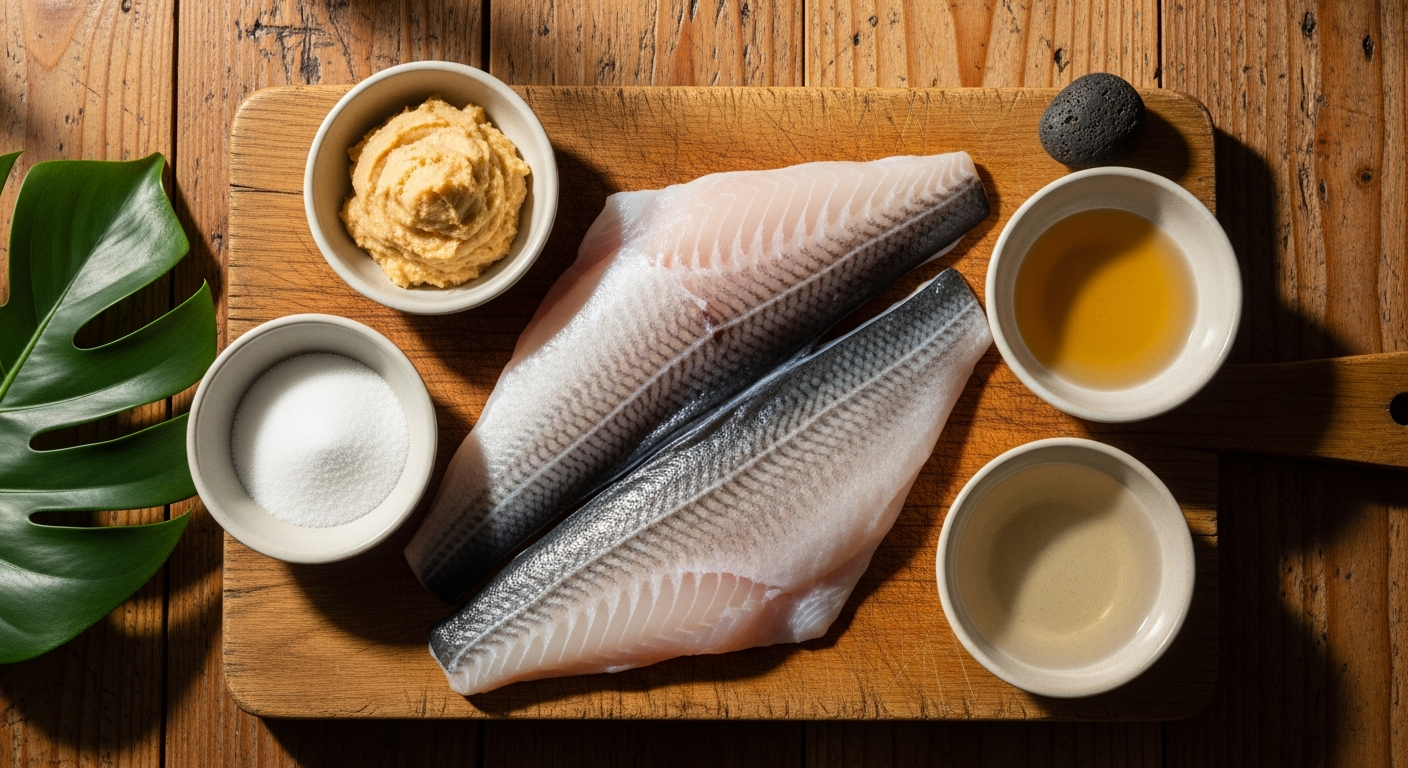
For the Miso Marinade
- 1/2 cup white miso paste (shiro miso)
- 3 tablespoons mirin
- 2 tablespoons sake
- 2 tablespoons granulated sugar
- 1 tablespoon soy sauce
- 1 teaspoon sesame oil
For the Fish
- 4 black cod (sablefish/butterfish) fillets, about 6 oz each, skin-on
- Cooking spray or oil for the baking sheet
For Serving
- Steamed short-grain white rice
- Thinly sliced green onions
- Toasted sesame seeds
- Pickled ginger (gari)
- Lemon wedges
Instructions
Make the Marinade
- Combine the marinade ingredients: In a medium bowl, whisk together the white miso paste, mirin, sake, sugar, soy sauce, and sesame oil until smooth and the sugar is fully dissolved. The mixture should be the consistency of a thick paste.
Marinate the Fish
- Coat the fillets: Pat the black cod fillets dry with paper towels. Place them in a shallow dish or zip-top bag. Spread the miso marinade generously over all sides of each fillet, making sure they’re completely coated.
- Refrigerate overnight: Cover the dish tightly with plastic wrap (or seal the bag) and refrigerate for at least 24 hours, and up to 48 hours. This is where the magic happens — the longer the fish marinates, the deeper the flavor penetrates and the more tender the flesh becomes. Don’t rush this step.
Broil the Butterfish
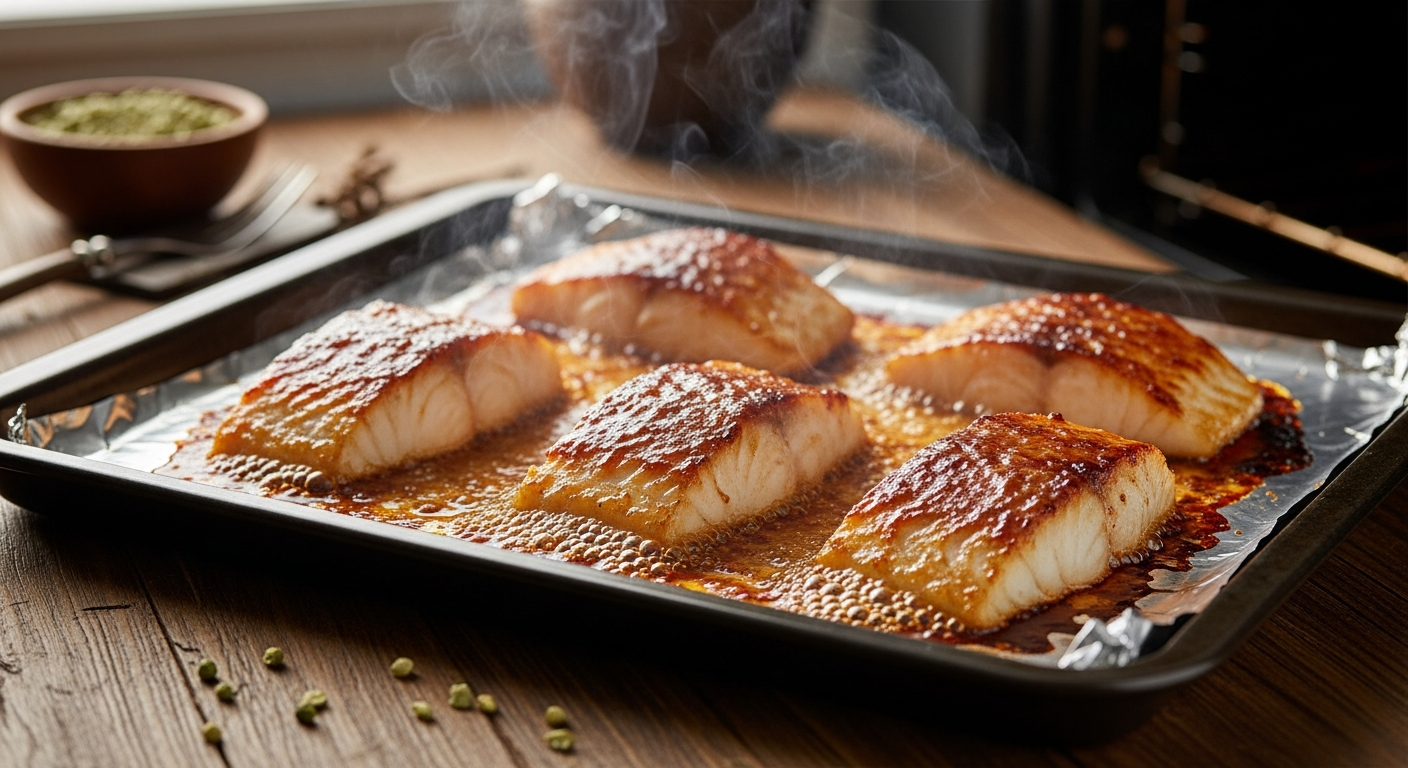
- Prep the fish: Remove the fillets from the fridge about 20 minutes before cooking to take the chill off. Gently scrape off most of the excess miso paste with your fingers or a spoon — you want a thin coating remaining, not thick globs. Too much paste will burn under the broiler before the fish cooks through.
- Set up for broiling: Position your oven rack about 6 inches from the broiler element. Line a baking sheet with aluminum foil and lightly coat with cooking spray or brush with oil. Place the fillets skin-side down on the prepared sheet.
- Broil until caramelized: Broil on high for 8-10 minutes, watching carefully. The miso glaze will bubble and caramelize, developing dark golden-brown spots. The fish is done when it flakes easily with a fork and the top has that gorgeous lacquered, slightly charred appearance. Every broiler is different, so keep an eye on it — you want caramelization, not carbon.
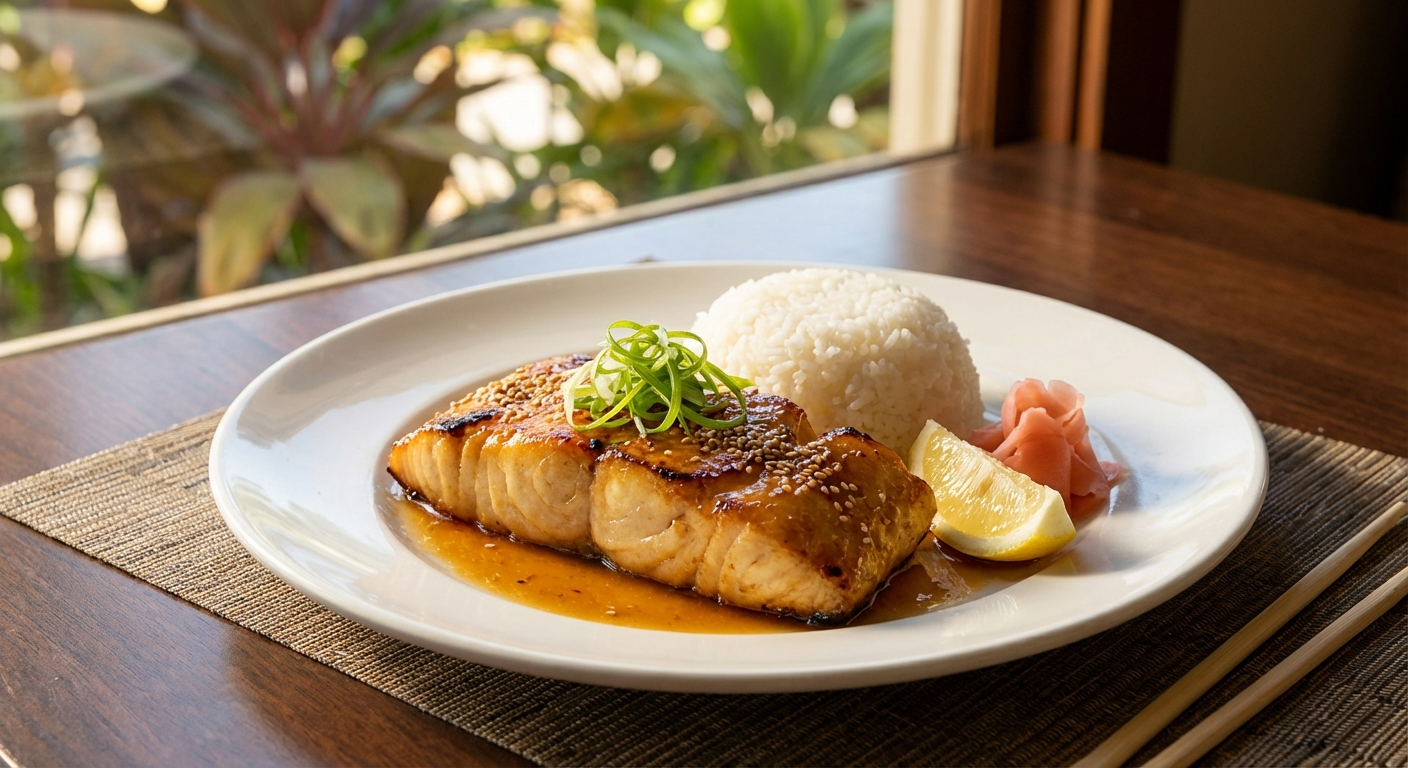
- Rest and serve: Let the fillets rest on the baking sheet for 2 minutes. Transfer to plates, garnish with sliced green onions and sesame seeds, and serve with lemon wedges on the side.
Tips for Perfect Misoyaki Butterfish
- Don’t skip the overnight marinade: I know it’s tempting to shortcut this, but the miso needs time to work its way into the fish. A minimum of 24 hours gives you the best flavor and texture. 48 hours is even better. Plan ahead — your future self will thank you.
- Scrape off the excess miso: This is the most common mistake people make. Too much miso paste left on the surface will burn and turn bitter under the broiler. You want just a thin, even coating — enough to glaze, not enough to char.
- Watch it like a hawk: Broilers run hot and fast. The difference between perfectly caramelized and burnt is about 60 seconds. Stay by the oven and check frequently once you see the glaze start to bubble and color.
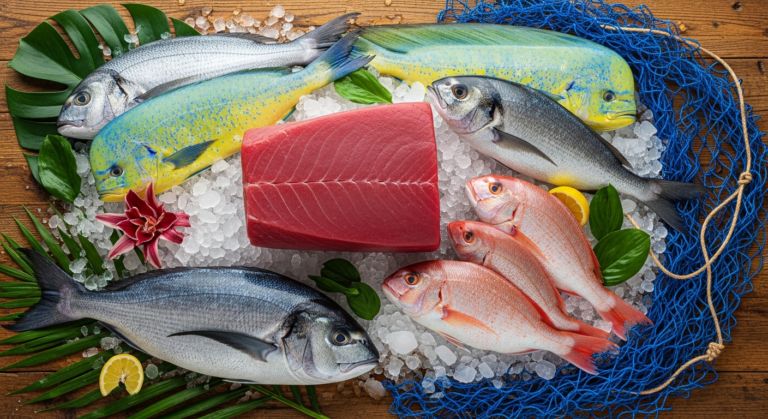
- Use real black cod: I know it’s not cheap, but the buttery richness of true black cod (sablefish) is what makes this dish legendary. Substitutions like regular cod or mahi mahi will work in a pinch, but the texture won’t be the same — those fish are leaner and won’t have that melt-in-your-mouth quality. If you’re using mahi mahi, try our Macadamia Nut Crusted Mahi Mahi instead — it’s built specifically for that fish and absolutely stunning.
- Room temperature matters: Letting the fish come to room temperature for 20 minutes before broiling ensures it cooks evenly. Cold fish straight from the fridge will be overdone on the outside and underdone in the center.
Serving Suggestions
Keep it simple and let the butterfish be the star. A big scoop of steamed short-grain rice is non-negotiable — you need it to soak up every bit of that sweet miso glaze. A side of lightly steamed vegetables — broccolini, snap peas, or bok choy — adds some green to the plate without competing for attention. For the full plate lunch experience, add a scoop of mac salad and some pickled ginger on the side. A squeeze of fresh lemon right before eating brightens everything up and cuts through the richness beautifully.
More Poke and Seafood Recipes
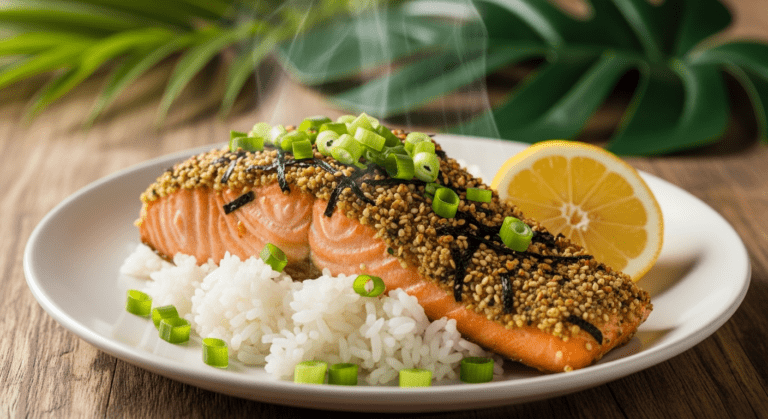
If this butterfish has you craving more seafood, you’ll love my Furikake Salmon — crispy nori-crusted salmon with a sweet shoyu glaze that’s ready in 20 minutes. For another crowd-pleaser, check out my Garlic Shrimp — buttery, garlicky, and inspired by those legendary North Shore shrimp trucks. And if you’re in the mood for something quick and satisfying on the meat side, my Shoyu Chicken uses a similar sweet-savory marinade philosophy that makes misoyaki butterfish so addictive.
Prep Time: 10 minutes (plus 24-48 hours marinating)
Cook Time: 10 minutes
Total Time: 20 minutes (plus marinating time)
Servings: 4