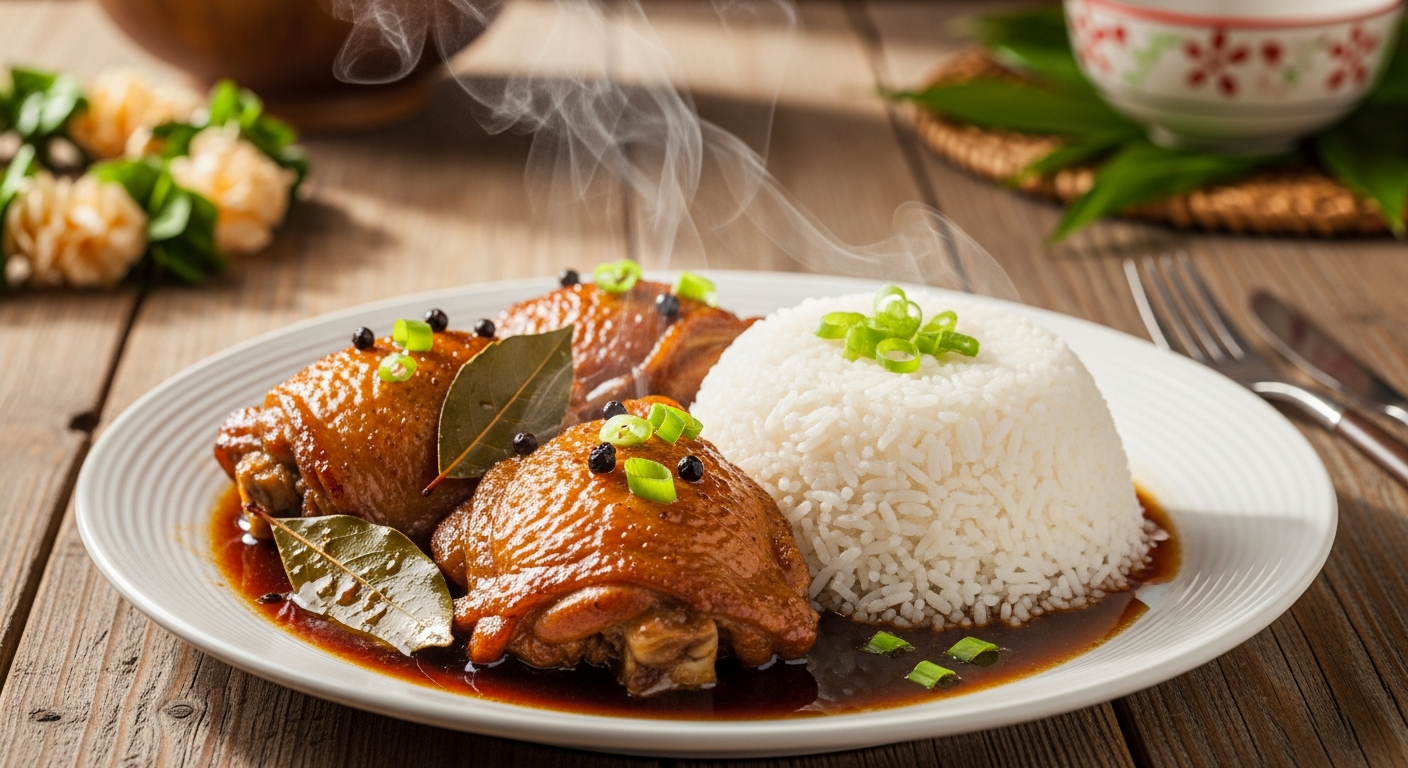
If you’ve ever been to a potluck in Hawaii, you’ve had chicken adobo. It’s the dish that shows up in the biggest pot, sits in the center of the table, and disappears first. Every Filipino aunty has her version — some like it swimming in sauce, some cook it down until the chicken is caramelized and almost dry, and every single one of them will tell you theirs is the best. And honestly? They’re all right. That’s the beauty of adobo.
Growing up in Hawaii, Filipino food was everywhere. My classmates in school, my neighbors on the street, the families at church — Filipinos are the largest ethnic group in Hawaii, and their food is woven into the fabric of local culture. I remember walking into my friend’s house in Waipahu after school and the smell hitting me before I even got through the door: garlic, vinegar, soy sauce, and bay leaves simmering low and slow. His lola would hand us plates of rice piled high with adobo, and we’d sit on the lanai eating until we couldn’t move. Those are the kind of food memories that stay with you forever.
I already shared my Pork Adobo recipe on the site, and now it’s time to give chicken adobo its moment. While the core technique is the same — braising meat in a soy-vinegar sauce — chicken adobo has its own personality. The chicken absorbs the sauce differently, the skin gets this incredible lacquered finish if you do it right, and the overall dish is a little lighter while still being pure comfort food.
Free: Hawaiian Cooking Starter Kit
Get 5 essential island recipes + a printable pantry checklist — everything you need to start cooking Hawaiian at home.
No spam, ever. Unsubscribe anytime.
What Makes Chicken Adobo Special
At its heart, adobo is the simplest kind of cooking: protein, acid, salt, aromatics, time. But the result is so much greater than the sum of its parts. The vinegar doesn’t just add tang — it tenderizes the chicken, breaks down the fibers, and creates a sauce that’s simultaneously sharp and mellow. The soy sauce brings depth and salinity. The garlic — and you need a lot of it — becomes sweet and soft as it braises. And those bay leaves and peppercorns add a fragrant, almost floral background note that ties everything together.
What makes chicken adobo different from the pork version is the texture and the way the chicken interacts with the sauce. Chicken thighs stay incredibly moist during the braise, and the skin — if you take the extra step to crisp it up at the end — becomes this sticky, glossy, almost candy-like layer of concentrated flavor. Pork adobo is rich and hearty; chicken adobo is a little more versatile, a little more everyday. It’s the version you make on a Wednesday night when you want something that fills the soul without weighing you down.
Filipino Food in Hawaii: A Deep Connection
Filipinos have been part of Hawaii’s story since the early 1900s, when workers were recruited from the Philippines to labor on the sugar and pineapple plantations. They brought with them a rich culinary tradition that has become inseparable from what we call “local food” today. Walk through any neighborhood in Waipahu, Kalihi, or Ewa Beach and you’ll find Filipino bakeries, turo-turo restaurants, and markets selling everything from lumpia wrappers to bagoong.
Adobo is the cornerstone of Filipino cooking — it’s often called the unofficial national dish of the Philippines. In Hawaii, it became a potluck essential, a plate lunch staple, and a weeknight go-to in homes across the islands. The great adobo debate — wet vs. dry, chicken vs. pork, dark soy vs. light — is a conversation that can last an entire party. Some families add coconut milk. Some use cane vinegar, others use white. Some brown the meat first; others just dump everything in the pot. There’s no single “correct” recipe, and that’s what makes adobo so personal. The recipe I’m sharing here is a classic wet-style chicken adobo with a finishing sear for crispy skin — the version I keep coming back to.
Ingredients
For the Adobo
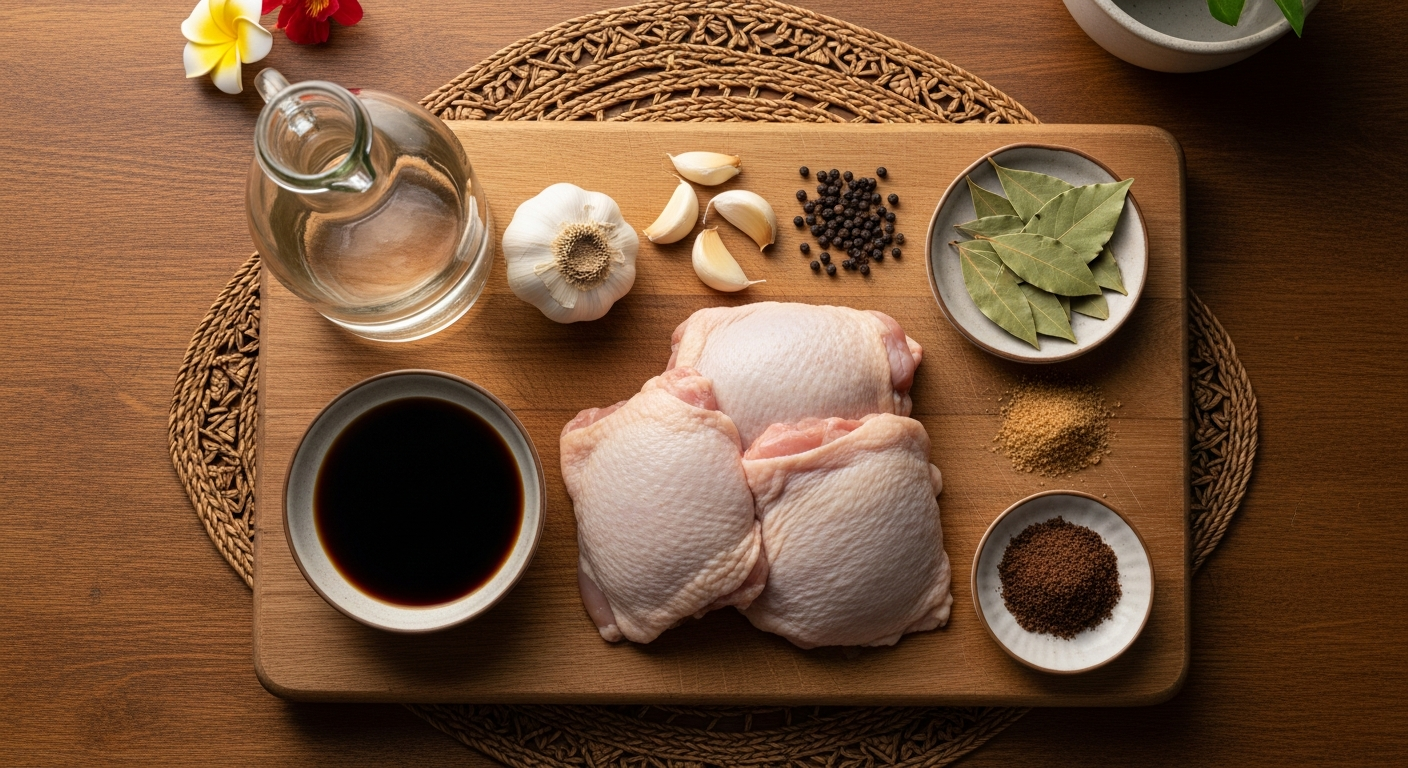
- 3 lbs chicken thighs, bone-in and skin-on (about 6-8 pieces)
- 1/3 cup soy sauce (shoyu)
- 1/3 cup white cane vinegar (or white distilled vinegar)
- 1 cup water
- 1 head garlic (about 10-12 cloves), peeled and crushed
- 3 bay leaves (dried)
- 1 tablespoon whole black peppercorns
- 2 tablespoons vegetable oil
- 1 tablespoon brown sugar (optional, for a slightly sweet sauce)
For Serving
- Steamed white rice (plenty of it)
- Sliced green onions
Instructions
Marinate the Chicken
- Combine the braising liquid: In a large bowl, mix together the soy sauce, vinegar, water, crushed garlic, bay leaves, peppercorns, and brown sugar (if using). Stir until the sugar dissolves.
- Marinate the chicken: Add the chicken thighs to the bowl and turn to coat every piece. Cover and marinate in the refrigerator for at least 30 minutes, or up to overnight for deeper flavor. If you’re short on time, even 15 minutes helps — but overnight is the move if you can plan ahead.
Braise the Chicken
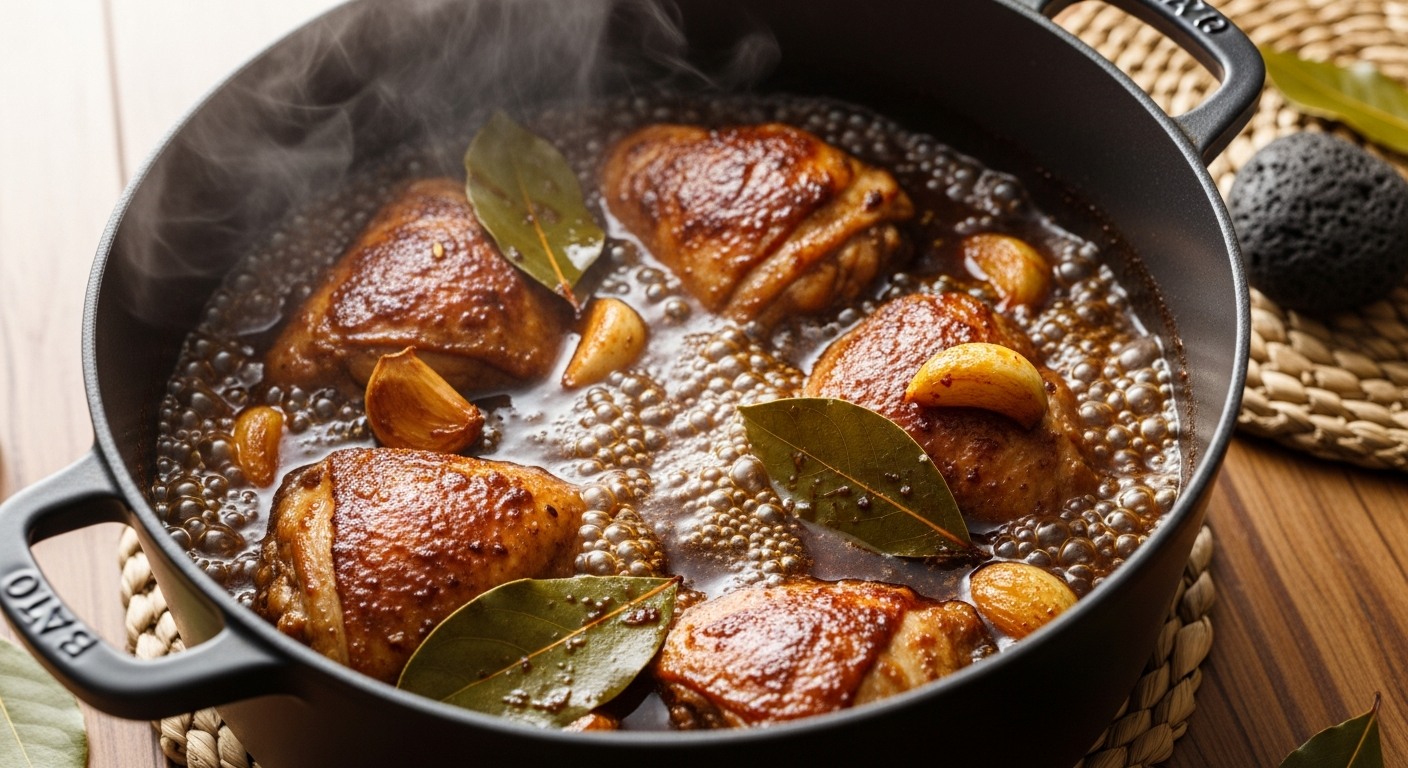
- Start the braise: Transfer the chicken and all of the marinade to a large, heavy-bottomed pot or Dutch oven. Arrange the chicken pieces skin-side down in a single layer as best you can. Bring the liquid to a boil over medium-high heat.
- Simmer low and slow: Once boiling, reduce the heat to low, cover the pot, and simmer for 30-35 minutes. Flip the chicken pieces halfway through. The chicken is done when it’s completely tender and cooked through — the meat should be nearly falling off the bone.
- Remove the chicken: Using tongs, carefully transfer the chicken pieces to a plate. Keep the braising liquid in the pot.
- Reduce the sauce: Turn the heat to medium-high and bring the braising liquid to a rapid simmer. Let it reduce for 5-8 minutes until it thickens slightly and the flavors concentrate. Taste and adjust — add a splash more soy sauce if you want it saltier, a bit of vinegar if you want more tang, or a pinch of sugar to balance. Remove the bay leaves.
Crisp the Skin (The Game-Changer)
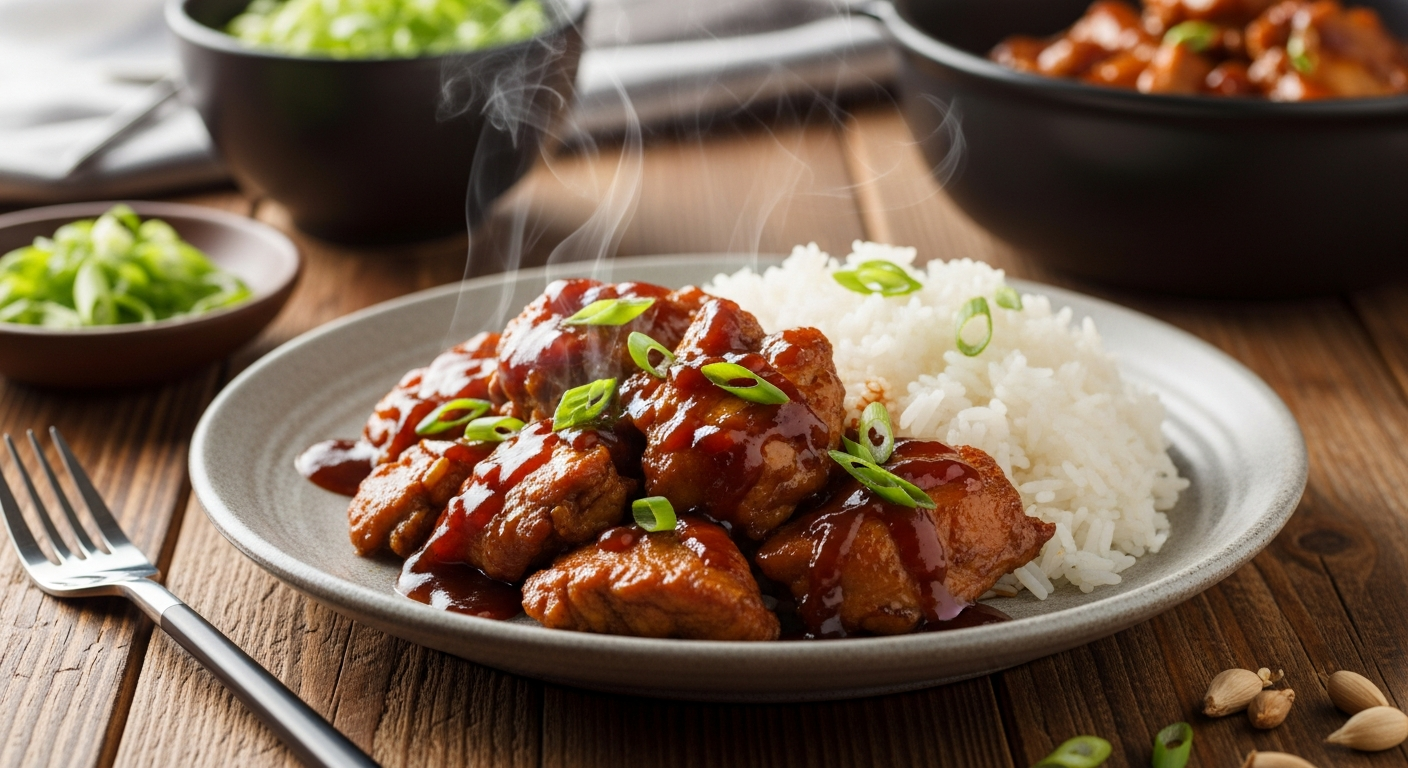
- Sear the chicken: Heat the vegetable oil in a large skillet over medium-high heat. Place the braised chicken pieces skin-side down and sear for 2-3 minutes until the skin is golden brown and crispy. This step is optional but highly recommended — the contrast between the crispy skin and the tender, saucy meat is everything.
- Glaze and serve: Return the seared chicken to the pot with the reduced sauce and turn the pieces gently to coat them in the glaze. Let everything warm through for a minute, then plate it up.
Tips for Perfect Chicken Adobo
- Use bone-in, skin-on thighs: Chicken thighs are non-negotiable here. They stay moist during the long braise where breasts would dry out, and the bone adds flavor to the sauce. Skin-on gives you the option for that crispy sear at the end, which is a game-changer.
- Don’t stir after adding vinegar: Here’s an old Filipino cooking tip — when the vinegar first hits the pot and starts heating up, don’t stir it. Let it come to a boil on its own. Stirring raw vinegar into the dish can make it taste harsh and overly sour. Once it boils, the acidity mellows out and everything comes together.
- The wet vs. dry debate: This recipe is a “wet” adobo with sauce for spooning over rice. If you prefer “dry” adobo, just keep reducing the sauce until it’s almost gone and the chicken is caramelized and sticky. Both versions are incredible — try both and pick your side.
- Vinegar matters: Filipino cane vinegar (sukang maasim) is the traditional choice and has a milder, slightly sweet acidity. White distilled vinegar works fine as a substitute. Apple cider vinegar will give you a fruitier note. Avoid balsamic or red wine vinegar — they’ll take the dish in a completely different direction.
- Make it ahead: Like most braises, adobo tastes even better the next day after the flavors have had time to meld. Make a big batch on Sunday, refrigerate it, and reheat portions throughout the week. The sauce will gel up from the collagen in the chicken — just warm it up and it’ll loosen right back up.
Serving Suggestions
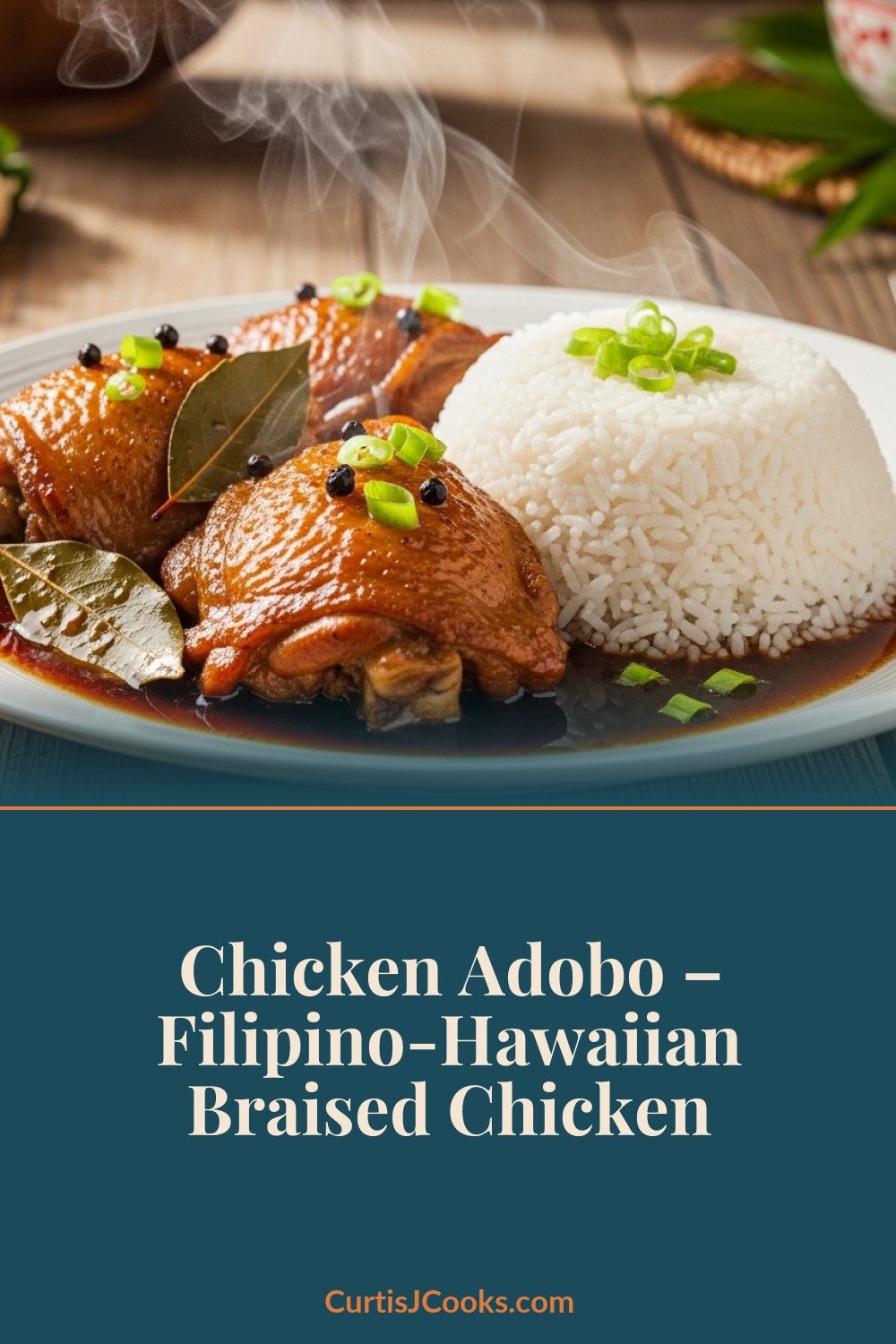
Chicken adobo needs rice the way the ocean needs the shore — it’s not complete without it. Scoop out a generous mound of steamed white rice, nestle the chicken pieces alongside it, and spoon that beautiful sauce all over everything. The sauce is the star here — it soaks into the rice and creates the most satisfying bites. Scatter some sliced green onions on top for a pop of freshness and color.
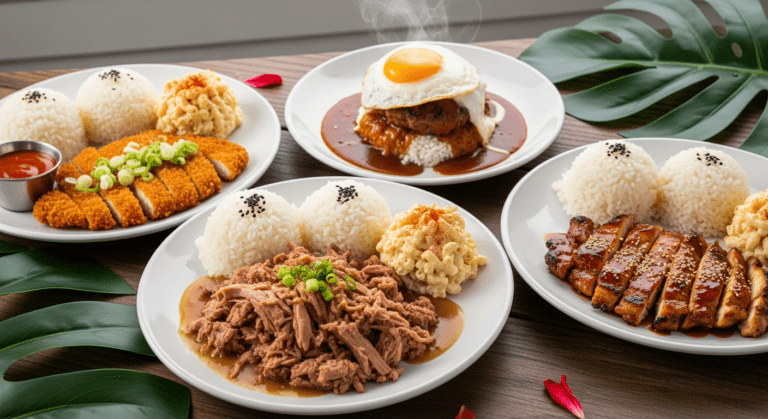
For a proper Filipino-Hawaiian plate, serve it alongside some steamed vegetables or a simple green salad with calamansi dressing. At a potluck, chicken adobo pairs perfectly with pancit, lumpia, and rice — the classic Filipino spread. You could also plate it up alongside mac salad and a scoop of Spam and rice for a local-style plate lunch combo that bridges Filipino and Hawaiian traditions on one plate.
More Island Comfort Recipes
Love braised, saucy, soul-warming dishes? Try these next:
- Pork Adobo — The pork version of this classic, with rich, melt-in-your-mouth braised pork belly and shoulder.
- Shoyu Chicken — Another local braised chicken favorite with a sweet soy glaze that’s pure Hawaiian comfort.
- Huli Huli Chicken — Sweet, smoky, grilled Hawaiian chicken that’s the ultimate backyard cookout recipe.
Prep Time: 15 minutes (plus marinating time)
Cook Time: 45 minutes
Total Time: 1 hour
Servings: 4-6