There’s a moment at the Honolulu Fish Auction — the United Fishing Agency auction down at Pier 38 — when they roll out the big-eye and yellowfin ahi and the room goes quiet. Buyers lean in, inspecting the color, the fat marbling, the firmness of the flesh. These fish came in overnight on longline boats that work the deep waters around the Hawaiian Islands, and the quality of what comes through that auction is some of the best on the planet. I’ve been lucky enough to watch that auction a handful of times, and every time it reminds me why ahi holds such a sacred place in Hawaii’s food culture. This isn’t just fish. This is the heartbeat of the islands.
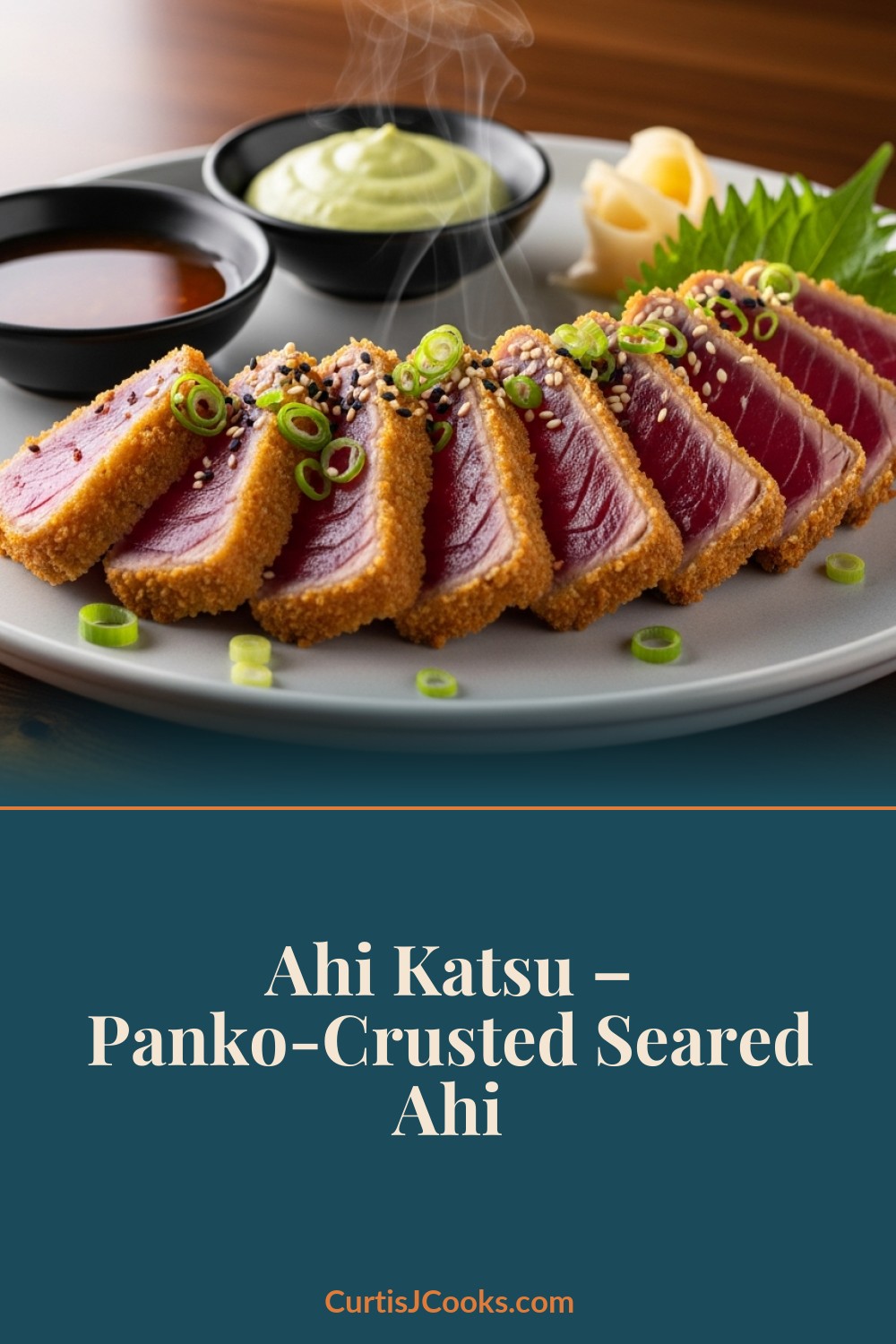
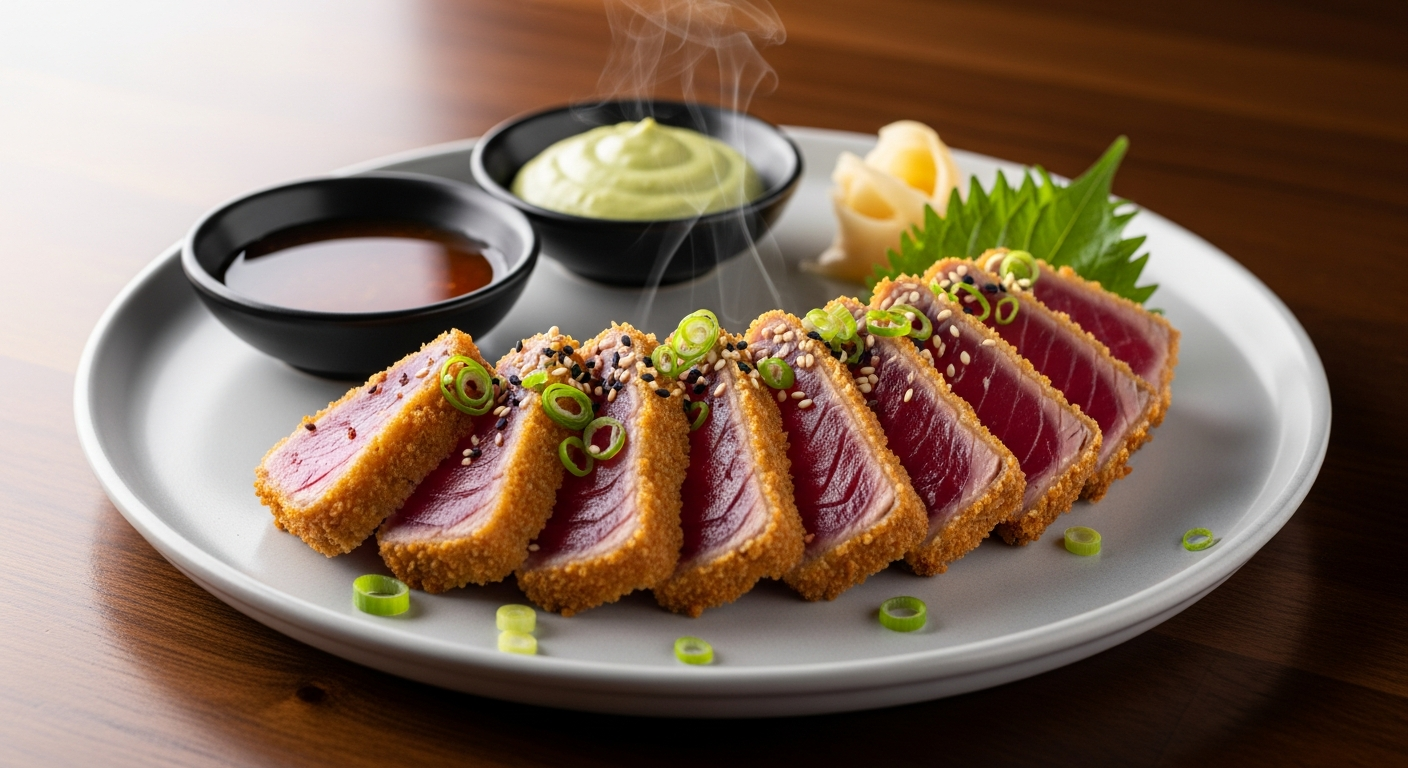
Ahi katsu is what happens when Japanese culinary technique meets Hawaii’s world-class tuna. The concept is simple — take a beautiful block of sashimi-grade ahi, coat it in a light layer of panko breadcrumbs, and fry it fast and hot so the outside turns golden and crispy while the inside stays cool, raw, and ruby-red. Slice it thick, fan it out on a plate, and serve it with ponzu and a spicy wasabi aioli. The first bite is pure magic: hot and cold, crispy and silky, the crunch of panko giving way to butter-soft raw tuna. It’s a study in contrasts, and it’s one of the most elegant pupus you can put on a table.
I first had ahi katsu at a little restaurant in Kaimuki — one of those neighborhood spots that doesn’t try to be fancy but puts out food that would rival any upscale dining room. It was on the pupu menu, and it changed how I thought about cooking ahi. Since then, I’ve made it for birthdays, holidays, dinner parties, and quiet weeknight dinners when I just want something beautiful. It never fails to impress, and the best part is, it takes less than fifteen minutes from start to plate.
Free: Hawaiian Cooking Starter Kit
Get 5 essential island recipes + a printable pantry checklist — everything you need to start cooking Hawaiian at home.
No spam, ever. Unsubscribe anytime.
What Makes Ahi Katsu Special
Ahi katsu is all about restraint and respect for the ingredient. The coating is thin — just enough panko to create a golden shell without overwhelming the delicate flavor of the tuna. The frying time is measured in seconds, not minutes. You want the panko to crisp and the very outermost layer of fish to turn opaque while the vast majority of the interior remains raw. When you slice into a perfectly cooked piece of ahi katsu, you should see a thin ring of cooked white around a gorgeous center of deep red.
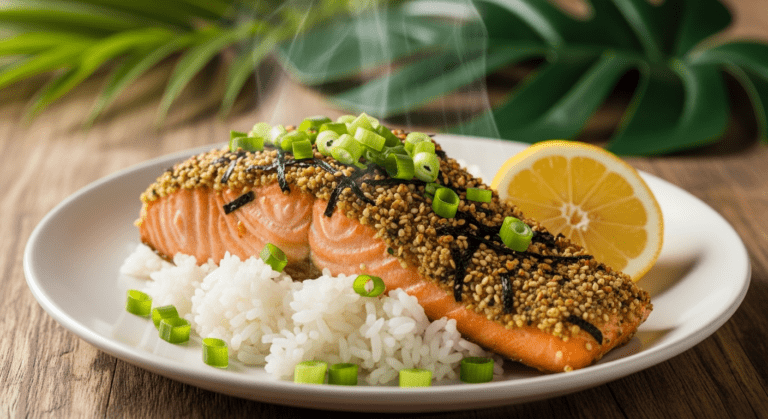
What sets this dish apart from a simple seared ahi is that textural contrast. Seared ahi gives you a caramelized crust, which is beautiful. But ahi katsu gives you a crispy, crunchy, audible crackle when you bite through it — and then that panko shatters into the cool, clean, almost sweet flavor of raw tuna. Add a dip in ponzu or a touch of wasabi aioli, and you’ve got a bite that’s complex, satisfying, and absolutely unforgettable. If you love that crispy-crust approach to fish, our Furikake Salmon takes a similar concept in a different direction, using nori and sesame for that signature Hawaiian crunch.
Where Japanese Craft Meets Hawaiian Waters
The “katsu” in ahi katsu comes from the Japanese word for cutlet — the same technique used to make tonkatsu (breaded pork cutlet) and chicken katsu. Japanese immigrants brought the katsu technique to Hawaii during the plantation era, and it became one of the most beloved cooking methods in local cuisine. Chicken katsu is a plate lunch staple across the islands. But somewhere along the way, some brilliant cook had the idea to apply that panko-crusted technique to raw ahi — frying it just long enough to crisp the coating without cooking the fish — and ahi katsu was born.
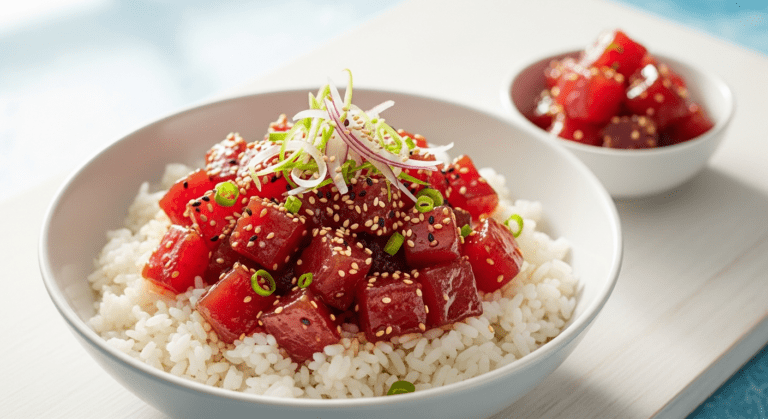
It’s a dish that could only have been invented in Hawaii, where Japanese precision meets the abundance of the Pacific Ocean. Hawaii’s ahi — both yellowfin and big-eye tuna — is considered among the finest in the world. The fish is caught by local longline fishermen, brought to the auction, and distributed to markets and restaurants within hours of hitting the dock. That freshness is everything when you’re serving fish raw in the center. Ahi katsu is a celebration of that quality, a dish that says, “This fish is so good, all it needs is a whisper of crunch and a splash of citrus.” For more on the deep tradition of enjoying ahi raw in Hawaii, read our Talk Story on the art of poke.
Ingredients
For the Ahi Katsu
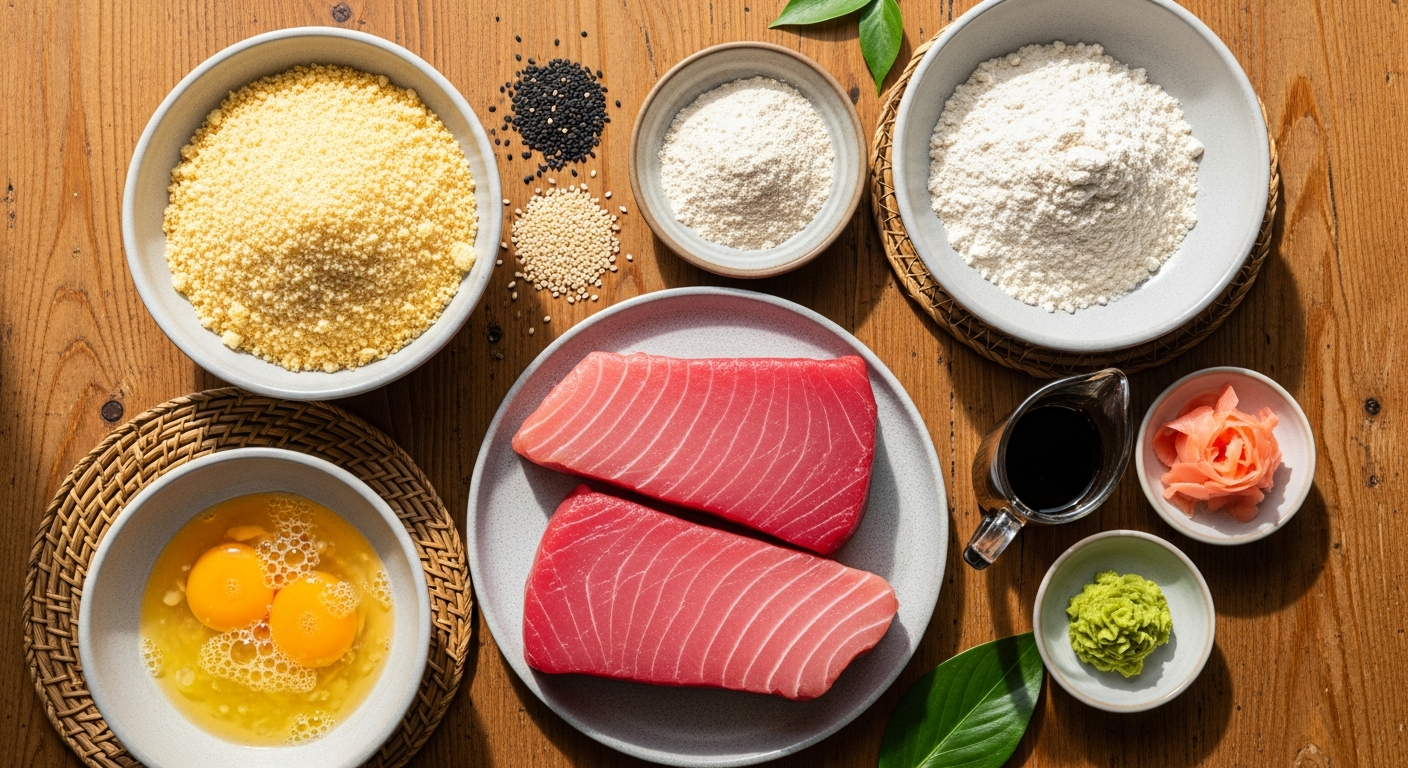
- 1 pound sashimi-grade ahi tuna (yellowfin or big-eye), cut into a block approximately 2 inches thick
- 1 cup panko breadcrumbs
- 1/2 cup all-purpose flour
- 2 eggs, beaten
- Salt and white pepper, to taste
- Vegetable oil for frying (about 1 inch deep in the pan)
For the Ponzu Dipping Sauce
- 1/4 cup soy sauce
- 2 tablespoons fresh lemon juice
- 1 tablespoon fresh lime juice
- 1 tablespoon rice vinegar
- 1 tablespoon mirin
- 1 teaspoon sugar
For the Wasabi Aioli
- 1/4 cup mayonnaise (Kewpie preferred)
- 1 to 2 teaspoons wasabi paste, to taste
- 1 teaspoon soy sauce
- 1/2 teaspoon fresh lemon juice
For Garnish
- 2 green onions, thinly sliced
- 1 teaspoon black sesame seeds
- Shiso leaves or mixed greens, for plating
- Pickled ginger (gari), for serving
Instructions
Prepare the Sauces
- Make the ponzu: In a small bowl, whisk together the soy sauce, lemon juice, lime juice, rice vinegar, mirin, and sugar until the sugar dissolves. Taste and adjust the balance of salty, sour, and sweet to your liking. Set aside. You can make this up to a day ahead and refrigerate it.
- Make the wasabi aioli: In another small bowl, mix the mayonnaise, wasabi paste, soy sauce, and lemon juice until smooth. Start with 1 teaspoon of wasabi and add more if you like the heat. This should have a gentle kick that builds slowly, not a punch to the sinuses. Set aside in the refrigerator.
Bread the Ahi
- Set up your breading station: Arrange three shallow bowls or plates in a line. Put the flour seasoned with a pinch of salt and white pepper in the first, the beaten eggs in the second, and the panko breadcrumbs in the third. This classic three-step breading process is the key to a coating that adheres properly and crisps evenly.
- Coat the ahi block: Pat the ahi block completely dry with paper towels. Season lightly with salt and white pepper on all sides. Dredge the entire block in flour, shaking off the excess. Dip into the beaten egg, letting the excess drip off. Finally, press the block firmly into the panko breadcrumbs, coating all sides evenly. Press the panko gently so it adheres well — you want a complete, even coating with no bare spots.
Fry the Ahi Katsu
- Heat the oil: Pour about 1 inch of vegetable oil into a heavy-bottomed skillet or cast-iron pan. Heat over medium-high to 375°F. Test the oil by dropping in a few panko crumbs — they should sizzle immediately and turn golden within seconds.
- Sear the ahi: Carefully place the panko-coated ahi block into the hot oil. Fry for 30-45 seconds per side, turning with tongs to cook all four sides. You’re looking for the panko to turn a deep, even golden brown while keeping the interior completely raw. This goes fast — don’t walk away from the pan. The total frying time should be about 2 minutes or less.
- Rest and slice: Remove the ahi katsu to a cutting board and let it rest for 30 seconds. Using a very sharp knife, slice the block crosswise into pieces about 1/2-inch thick. The interior should be a vivid ruby red with just a thin border of cooked white flesh around the edge. If the inside is more than barely cooked, reduce your frying time next round.
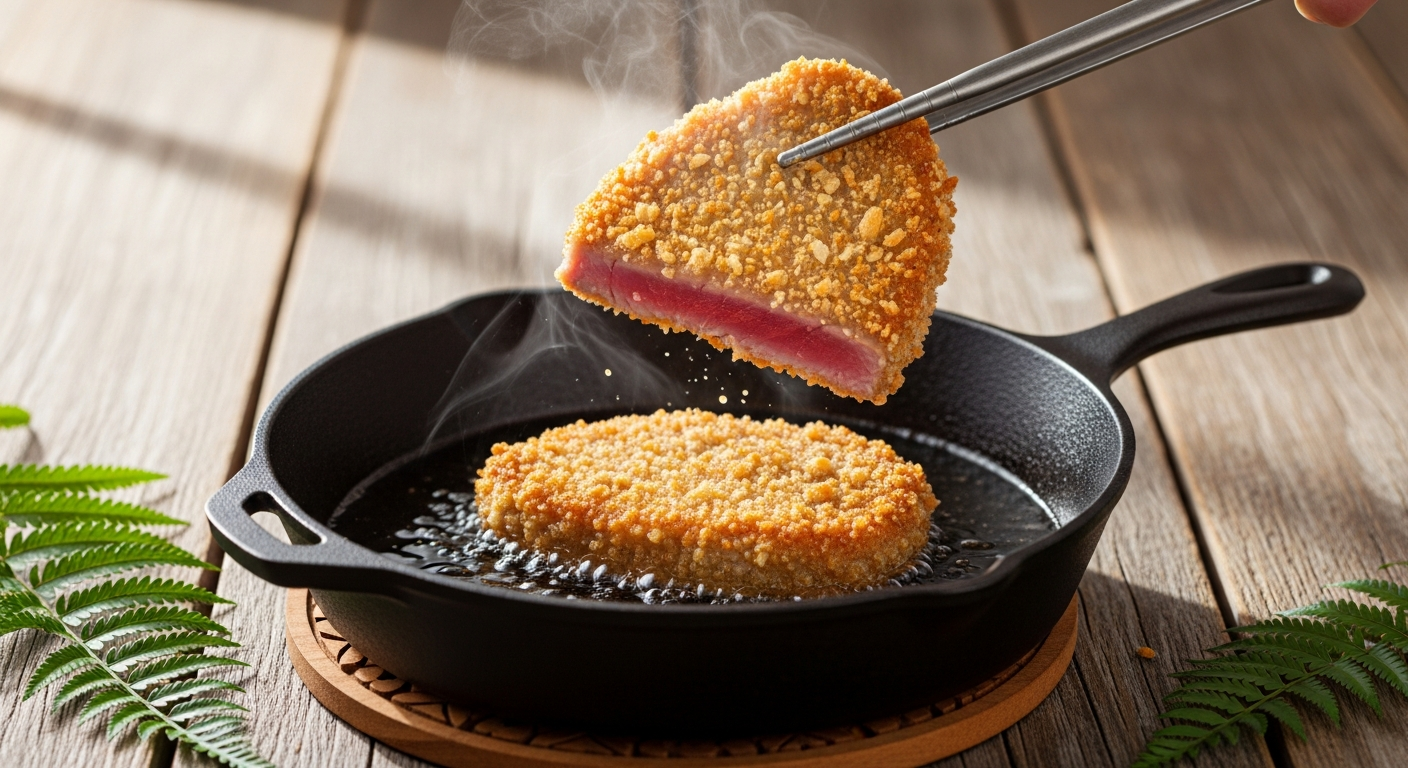
Plate and Serve
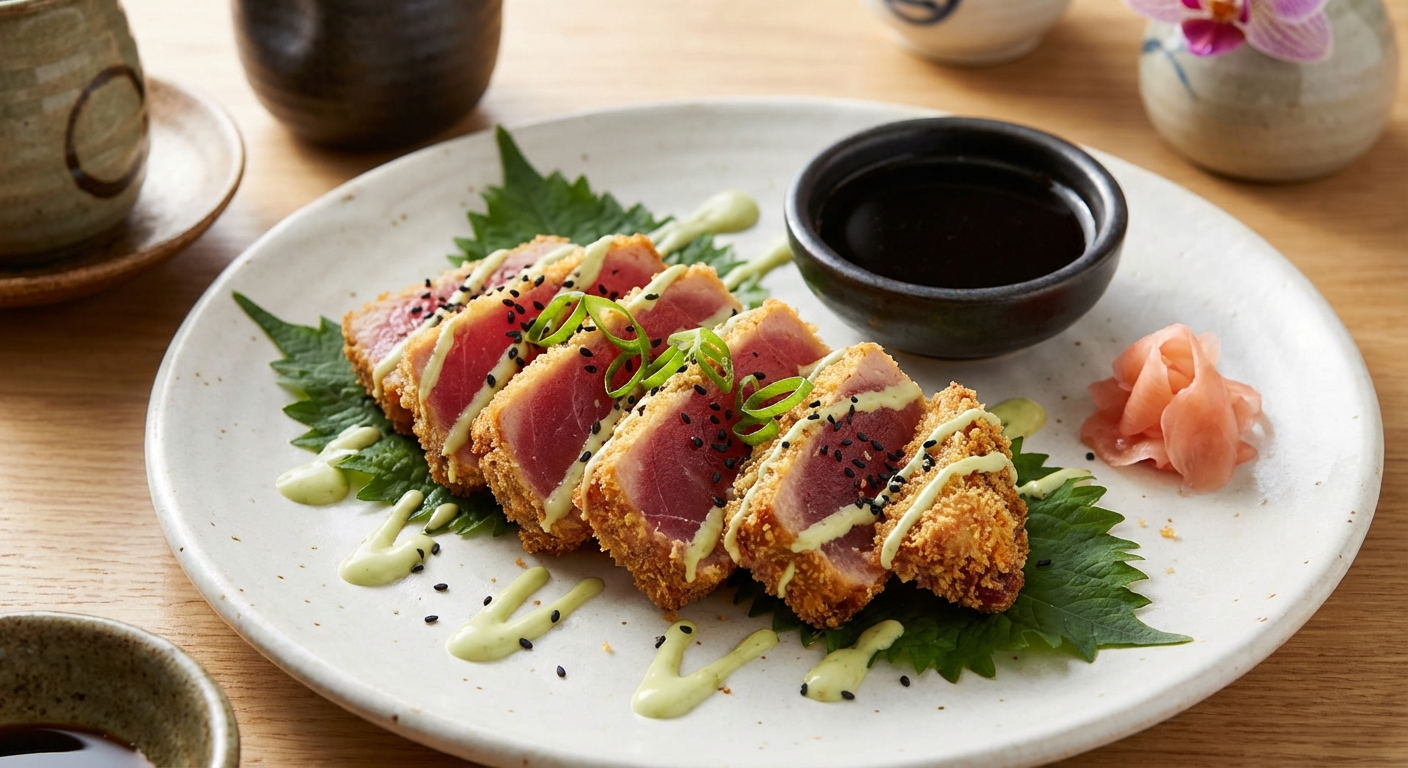
- Arrange the slices: Lay shiso leaves or mixed greens on a serving plate. Fan the ahi katsu slices across the greens, slightly overlapping. Drizzle lightly with ponzu and place a small mound of wasabi aioli on the side — or drizzle it artfully across the slices.
- Garnish and serve immediately: Scatter sliced green onions and black sesame seeds over the top. Add a small pile of pickled ginger on the side. Serve immediately while the panko is still crispy and the inside is still cool. This dish is at its absolute best in the first few minutes after frying.
Tips
- Buy the best fish you can find: Since the center of the ahi stays raw, quality is paramount. Look for sashimi-grade or “number one” grade ahi tuna. The flesh should be deep red (for yellowfin) or deep burgundy (for big-eye), firm to the touch, and smell like the ocean — clean and briny, never fishy. If you’re not near the coast, many reputable online fishmongers ship sashimi-grade tuna overnight on ice.
- Keep the tuna cold until the moment you fry: A cold block of ahi stays raw in the center more easily during frying. Take it out of the refrigerator just before you bread it. Some cooks even put the breaded block back in the fridge for 10 minutes before frying to ensure the interior stays as cold as possible.
- Use a very sharp knife for slicing: A dull knife will shred the panko crust and compress the delicate raw tuna. Use your sharpest knife — a Japanese yanagiba or a sharp chef’s knife — and cut with a single, smooth pulling motion rather than a sawing motion.
- Don’t overcrowd the pan: Fry one block at a time to keep the oil temperature stable. If you’re making ahi katsu for a crowd, bread multiple blocks and fry them one by one, slicing and plating each before moving to the next.
- Try it with different dipping sauces: Ponzu and wasabi aioli are classic, but ahi katsu is also incredible with a garlic-chili oil, a yuzu kosho mayo, or even just a squeeze of fresh lemon and a sprinkle of flaky Hawaiian sea salt.
Serving Suggestions
Ahi katsu is a showstopper pupu that belongs at the center of the table. Serve it as the opening act at a dinner party, alongside other island favorites like Ahi Poke and Poke Nachos for a seafood-forward spread that celebrates Hawaii’s incredible tuna. A chilled glass of crisp white wine or a cold Japanese lager is the perfect pairing.
For a more substantial meal, serve sliced ahi katsu over a bowl of hot white rice with a drizzle of ponzu, a scoop of white rice, and a simple green salad dressed with sesame vinaigrette. It also works beautifully as the protein in a poke bowl — the warm crispy panko against cool rice and fresh vegetables is a textural dream. However you serve it, remember that ahi katsu waits for no one. It’s best the moment it’s plated, when the panko is still crackling and the center is still gloriously raw.
More Poke and Seafood Recipes
Love ahi? Explore more ways to enjoy Hawaii’s favorite fish:
- Ahi Poke – Hawaiian Style — The classic that started it all. Fresh ahi cubed and dressed in soy sauce, sesame oil, and Hawaiian salt. Simple, perfect, timeless.
- Misoyaki Butterfish — Buttery black cod marinated in sweet white miso and broiled until caramelized. One of Hawaii’s most elegant seafood dishes.
- Lomi Salmon Taro Chips — Fresh lomi salmon served on crispy taro chips for the perfect party pupu that feeds a crowd.
- Ahi Tuna Poke Stacks — Fresh ahi layered with avocado and crispy wontons for a show-stopping island appetizer.
- Ahi Tuna Burger — Seared ahi on a sweet Hawaiian bun for when you want to take tuna beyond raw.
Prep Time: 15 minutes
Cook Time: 2 minutes
Total Time: 17 minutes
Servings: 4 as a pupu