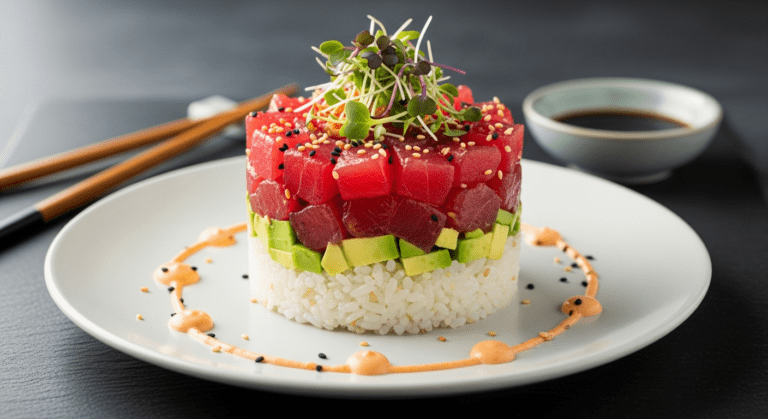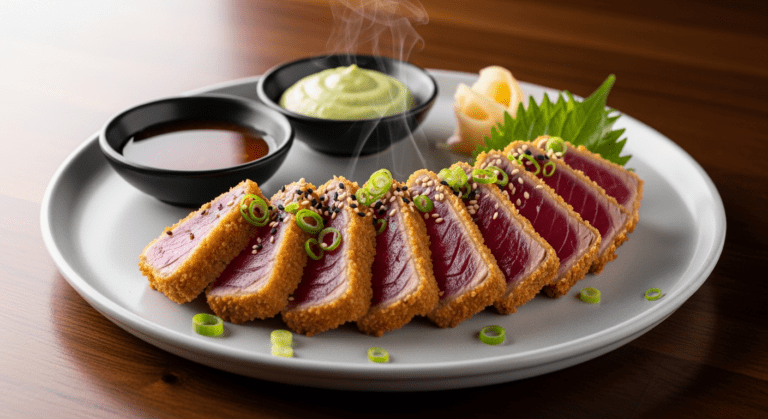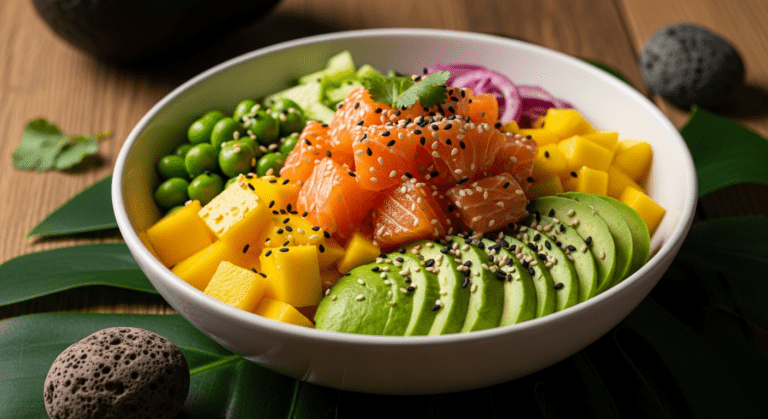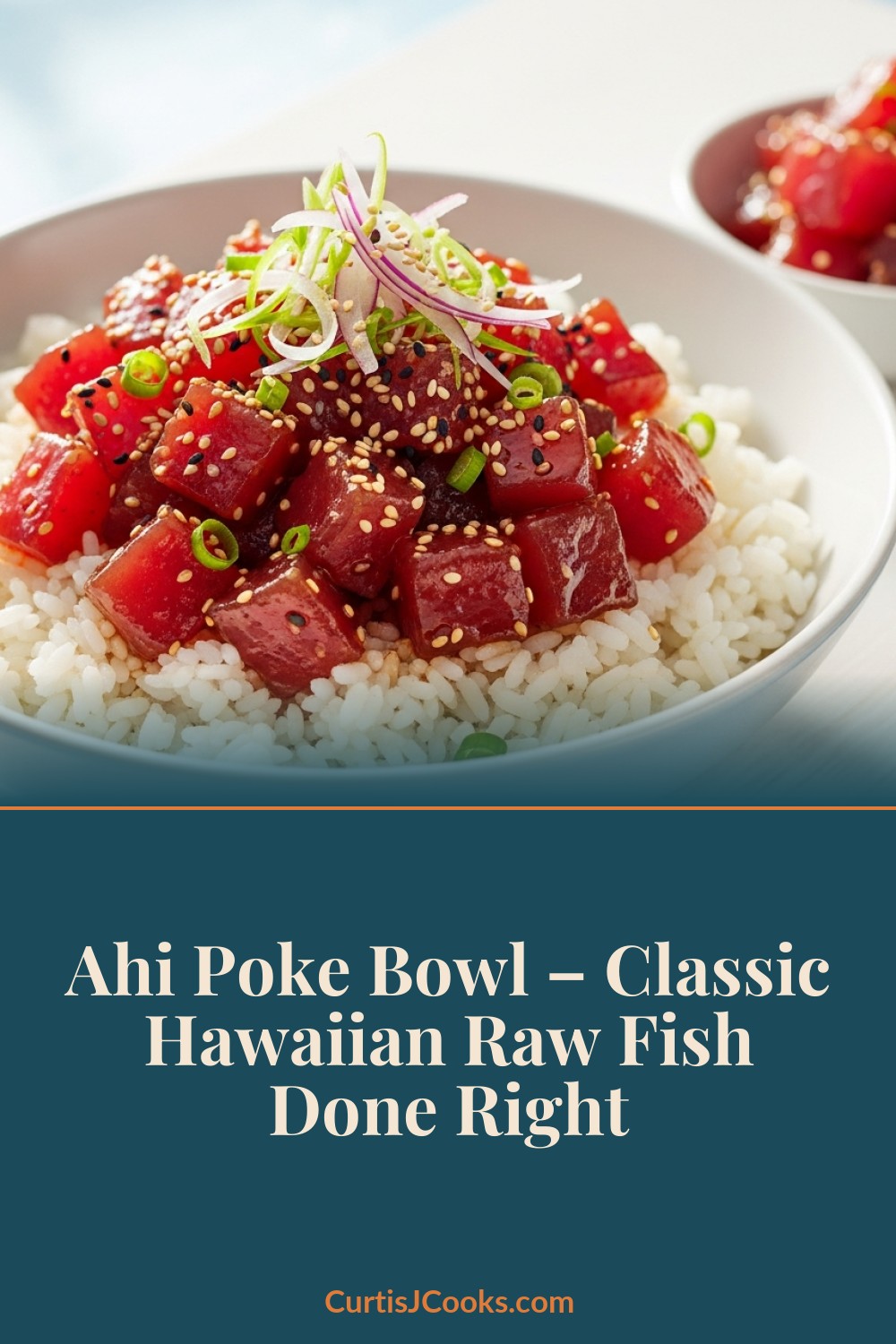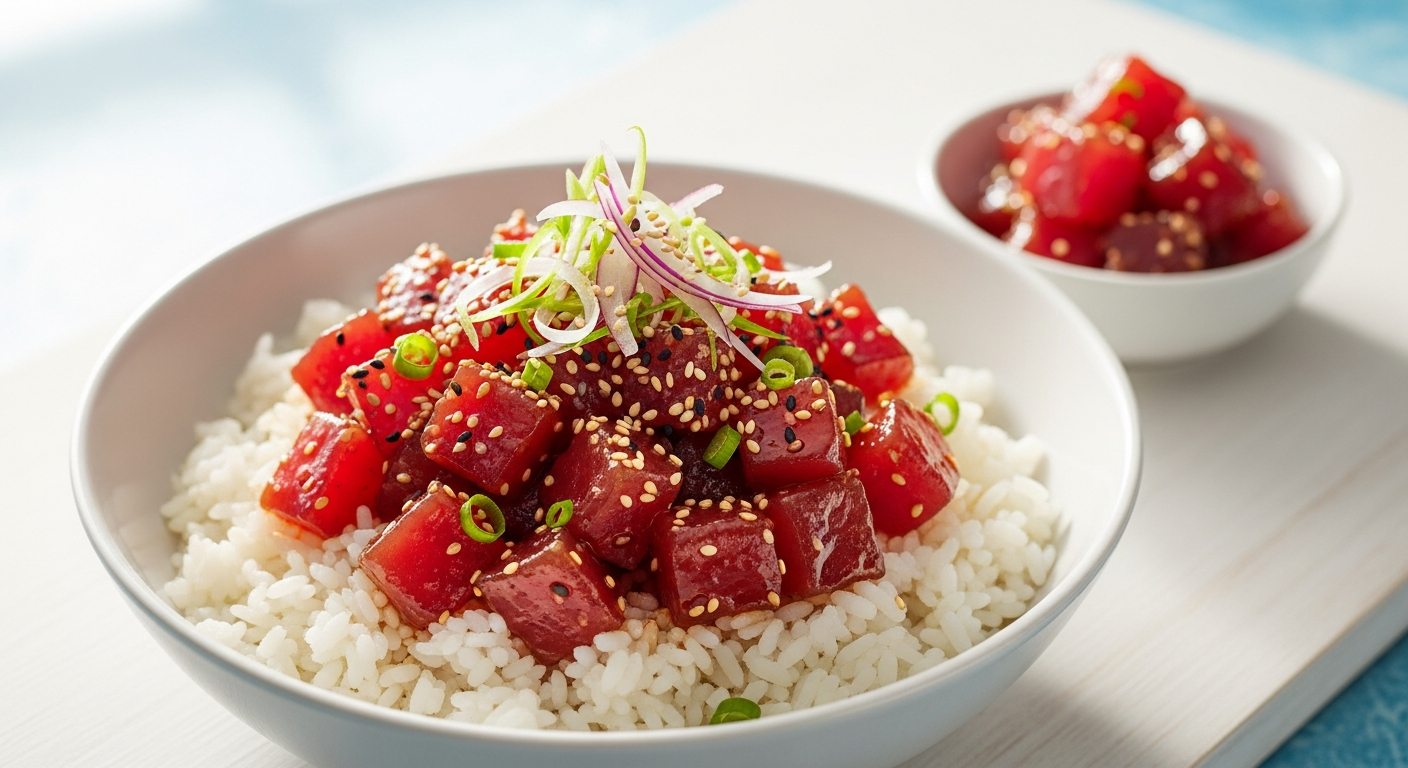
Poke is Hawaii’s gift to the world, and like most gifts from the islands, it’s generous, unpretentious, and better than anything you’ve had before. At its core, poke (pronounced “po-KAY”) is cubed raw fish — usually ahi (yellowfin tuna) — tossed with soy sauce, sesame oil, onions, and whatever else you feel like adding. That’s it. No cooking, no complicated technique, no fussy plating. Just incredibly fresh fish, a few simple seasonings, and the confidence to let great ingredients speak for themselves.
If you’ve only had poke from a mainland chain where they pile toppings on top of toppings until the fish is buried under mango, avocado, sriracha mayo, crispy onions, and edamame — I need you to forget all of that. Mainland poke bowls are fine, but they’re not poke. Real Hawaiian poke is about the fish. Everything else is supporting cast.
What Poke Actually Is
The word poke means “to slice” or “to cut crosswise” in Hawaiian, and it originally referred to any preparation of cut raw fish. Fishermen would slice up their catch on the boat, season it with whatever was on hand — sea salt, seaweed, kukui nut — and eat it right there. That’s the oldest form of poke, and it’s still the best: fresh fish, minimal seasoning, eaten immediately.
Free: Hawaiian Cooking Starter Kit
Get 5 essential island recipes + a printable pantry checklist — everything you need to start cooking Hawaiian at home.
No spam, ever. Unsubscribe anytime.
Over the decades, poke absorbed influences from every culture in Hawaii. Japanese immigrants contributed soy sauce and sesame oil. Korean influences brought in chili pepper flakes and gochujang. Chinese flavors like five-spice occasionally appear. The result is a dish that’s ancient Hawaiian in concept but thoroughly multicultural in execution — which is basically the story of all local food.
For a deeper dive into poke’s history and cultural significance, check out our Talk Story: The Art of Poke.
The Fish Comes First
Everything starts with the ahi. If your fish isn’t great, your poke won’t be either. Here’s what to look for:
- Sushi-grade or sashimi-grade ahi. This is non-negotiable for raw preparation. Buy from a fishmonger you trust, or the sushi counter at a good grocery store.
- Color: Deep ruby red, almost translucent. If it’s brown or dull, it’s not fresh enough for poke.
- Smell: It should smell like the ocean — clean, slightly briny. If it smells fishy, walk away.
- Texture: Firm to the touch, not mushy or slimy.
- Previously frozen is OK. Most “sushi-grade” fish has been flash-frozen to kill parasites. This is standard practice and doesn’t affect quality. In fact, for raw preparations, previously frozen fish is actually safer.
Yellowfin tuna (ahi) is the classic choice, but you can also use bigeye tuna, salmon (for a non-traditional but delicious version), or even fresh octopus (tako poke is a Hawaiian classic in its own right).
Two Classic Styles
In Hawaii, when you order poke at the fish counter, you’ll typically see two main styles:
Shoyu Poke (Soy Sauce Style)
The most popular style — ahi tossed with soy sauce, sesame oil, green onions, and sweet onion. This is what most people think of when they think of poke, and it’s the version I’m sharing below. It’s clean, umami-rich, and lets the fish shine.
Hawaiian-Style Poke
The oldest version — ahi with Hawaiian salt, limu (seaweed, usually ogo), kukui nut (candlenut, crushed), and Hawaiian chili pepper. No soy sauce, no sesame. This is the purist’s poke, the fisherman’s poke, and it’s beautiful in its simplicity. If you can find ogo seaweed and kukui nut, this is worth trying at least once.
Ingredients
Shoyu Ahi Poke
- 1 lb sushi-grade ahi tuna
- 3 tablespoons soy sauce
- 1 tablespoon sesame oil (toasted)
- 1 teaspoon rice vinegar
- 1/2 sweet Maui onion (or Vidalia), thinly sliced
- 2 green onions, thinly sliced
- 1 teaspoon toasted sesame seeds
- 1/2 teaspoon red pepper flakes or Hawaiian chili pepper flakes (optional)
- 1 teaspoon furikake (optional)
For Serving as a Bowl
- 2 cups cooked short-grain white rice (warm or room temperature)
- Sliced avocado (optional)
- Seaweed salad (optional)
- Pickled ginger (optional)
- Extra furikake for topping
Instructions
Cut the Fish
- Using a very sharp knife, cut the ahi into 3/4-inch cubes. The size matters — too small and the fish gets lost in the sauce, too big and the ratio of seasoning to fish is off. 3/4-inch is the sweet spot.
- Cut with clean, confident strokes. Don’t saw back and forth — that tears the fish and damages the texture. One clean pull per cut.
Mix the Poke
- In a medium bowl, combine the soy sauce, sesame oil, and rice vinegar. Stir to combine.
- Add the cubed ahi, sliced Maui onion, green onions, sesame seeds, and chili flakes if using.
- Gently fold everything together with a rubber spatula or your hands. Don’t stir aggressively — you want to coat the fish without mashing it.
- Taste and adjust seasoning. Need more soy? More sesame? A little more heat? Trust your palate.
Serve
- The local way: Eat it straight from the bowl with a fork. No rice, no toppings, just poke. This is how you eat it when you buy a pound from the fish counter at Foodland and eat it standing in the parking lot. Don’t judge — it’s the best way.
- As a poke bowl: Scoop rice into a bowl, top with the poke, and add any extras — avocado, seaweed salad, furikake, pickled ginger. Keep it simple. Three or four toppings max.
- Serve immediately. Poke is best eaten within 15-20 minutes of mixing. The soy sauce will continue to “cook” the fish if it sits too long, changing the texture from silky to firm.
The Rules of Great Poke
- The fish is the star. If you find yourself adding a dozen toppings, you’re compensating for fish that isn’t good enough. Great poke needs almost nothing.
- Don’t overdress. The soy sauce and sesame oil should coat the fish, not drown it. You should be able to taste the ahi through the seasoning.
- Use fresh ingredients. This is a raw dish with almost no cooking. Every ingredient is naked and exposed. Stale sesame oil, old onions, or mediocre soy sauce will show.
- Eat it cold. Poke should be chilled but not ice-cold. Straight from the fridge is perfect.
- Don’t make it too far ahead. Mix and serve. Poke that sits in the fridge overnight will still be edible but the texture changes significantly.
Where to Buy Fish on the Mainland
The hardest part of making poke at home outside Hawaii is finding good fish. Here’s where to look:
- Japanese and Asian grocery stores: H Mart, Mitsuwa, 99 Ranch, and similar stores usually have sushi-grade tuna.
- Whole Foods: Their fish counter often carries sushi-grade ahi.
- Local fishmongers: If you have a dedicated fish shop nearby, ask for sashimi-grade yellowfin tuna. Tell them you’re making poke and they’ll point you right.
- Online: Several companies ship flash-frozen sushi-grade ahi nationwide. It arrives frozen and thaws beautifully.
For more essential ingredients you’ll need for poke and other Hawaiian dishes, check out our Essential Hawaiian Pantry guide.
More Ways to Enjoy Ahi
- Ahi Tuna Poke Stacks — Elegant layered presentation that turns poke into a five-star appetizer.
- Ahi Tuna Burger on a Sweet Hawaiian Bun — Take ahi beyond the poke bowl with this seared tuna burger.
- Gourmet Poke Bowl — Level up with eel, spicy salmon, and mango for next-level island flavors.
Prep Time: 15 minutes | No Cook | Serves: 4