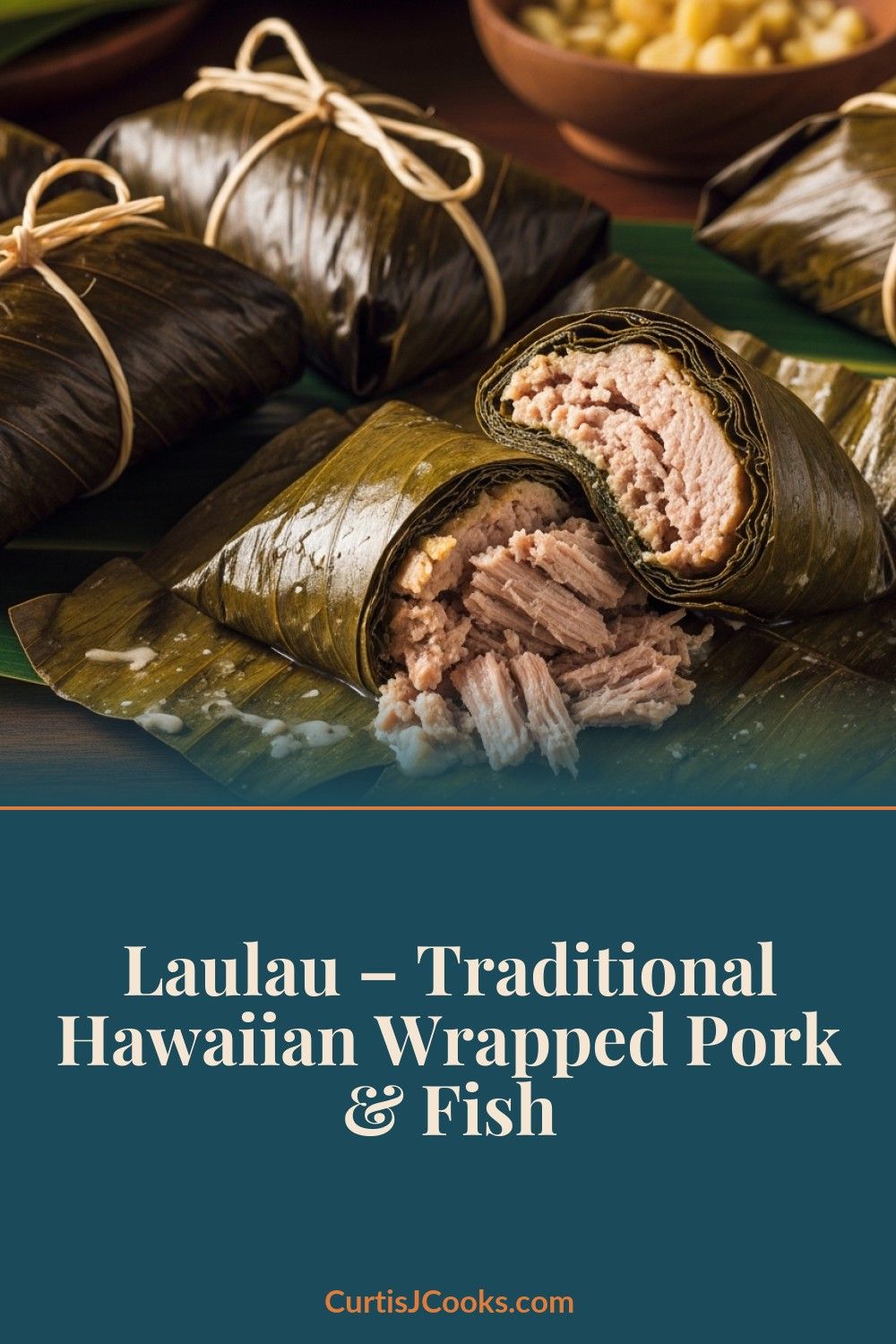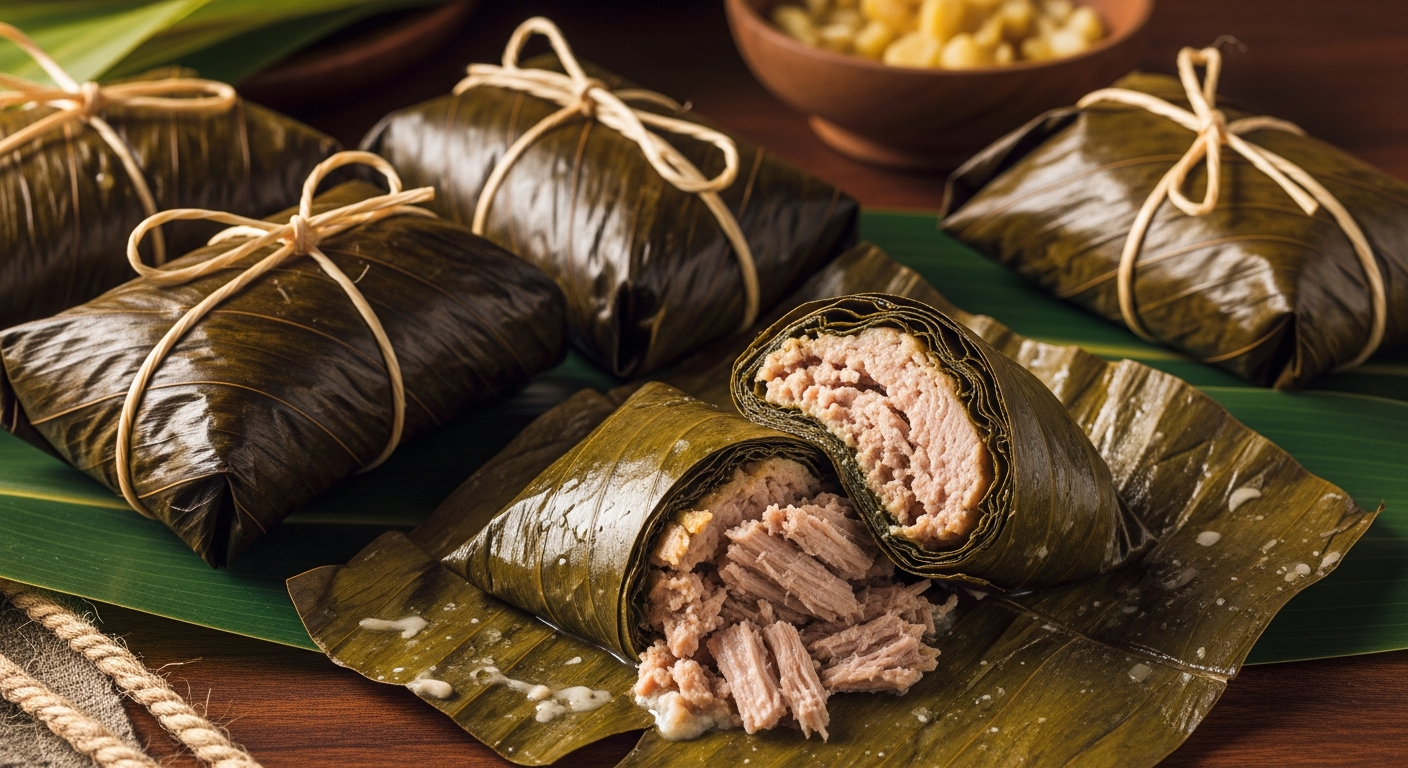
Laulau is one of the oldest and most traditional dishes in Hawaiian cuisine — and it’s one of the most beautiful. Cubes of salted pork and butterfish are wrapped in tender taro leaves, then wrapped again in ti leaves, creating a neat bundle that looks like a little green package. The bundle is steamed for hours until the taro leaves melt down into something silky and almost spinach-like, the pork is fall-apart tender, and the fish has dissolved into the meat, creating a rich, mineral, deeply savory flavor that’s unlike anything else in the world.
If kalua pig is the showpiece of the Hawaiian feast, laulau is its heart. It’s the dish that connects you most directly to the land — made from taro leaves grown in lo’i (irrigated paddies), wrapped in ti leaves pulled from the yard, filled with pork and fish from the ‘aina and the sea. Every ingredient has roots in this place, and the technique of wrapping and steaming is purely Hawaiian.
The Tradition
Laulau predates European contact with Hawaii. The ancient Hawaiians wrapped fish, pork, and taro tops in ti and banana leaves and cooked them in the imu alongside the kalua pig. The word lau means “leaf” in Hawaiian — so laulau essentially means “leaf leaf” or “wrapped in leaves,” which is exactly what it is.
Free: Hawaiian Cooking Starter Kit
Get 5 essential island recipes + a printable pantry checklist — everything you need to start cooking Hawaiian at home.
No spam, ever. Unsubscribe anytime.
The use of taro leaves is significant. Taro (kalo) is the most sacred plant in Hawaiian culture, considered the elder sibling of the Hawaiian people in the creation story. Every part of the taro plant is used: the corm (root) is pounded into poi, and the leaves are used for laulau. Using the whole plant reflects the Hawaiian value of not wasting anything the ‘aina provides.
Today, laulau remains a fixture at luaus, family gatherings, and Hawaiian food restaurants. Places like Highway Inn, Helena’s Hawaiian Food, and Young’s Fish Market in Honolulu are famous for their laulau, each with their own style and ratio of pork to fish. For more on the feast traditions where laulau takes center stage, read our Talk Story: The Luau.
Finding the Ingredients
The hardest part of making laulau at home is sourcing the leaves:
- Taro leaves (lu’au leaves): These are the inner wrapping and they become the edible, silky green layer around the meat. In Hawaii, they’re available at farmers’ markets and some grocery stores. On the mainland, check Asian and Pacific Islander markets. Important: Raw taro leaves contain calcium oxalate and must be thoroughly cooked (the long steaming takes care of this). Never eat them raw.
- Ti leaves: These are the outer wrapping — they don’t get eaten but they hold everything together and impart a subtle herbal flavor. In Hawaii, ti plants grow in every other yard. On the mainland, check florist shops, tropical plant nurseries, or Asian markets. In a pinch, you can substitute banana leaves or heavy-duty aluminum foil (less traditional but works).
- Butterfish (black cod): Traditional laulau uses salted butterfish, which dissolves into the pork during steaming and creates incredible richness. If you can’t find butterfish, any fatty white fish works — salmon is a good substitute.
Ingredients
- 2 lbs pork shoulder (butt), cut into 2-inch cubes
- 1/2 lb salted butterfish (black cod), cut into small pieces
- 2 tablespoons Hawaiian salt
- 1 large bundle taro leaves (about 36-40 leaves)
- 12-16 ti leaves
- Kitchen twine for tying
Instructions
Prepare the Ingredients
- Salt the pork: Season the pork cubes generously with Hawaiian salt. Let them sit in the fridge for at least 1 hour, or overnight for deeper seasoning.
- Prepare the butterfish: If using pre-salted butterfish, rinse lightly. If using fresh, sprinkle with a little Hawaiian salt. Cut into small pieces — about 1-inch chunks.
- Prepare the taro leaves: Wash thoroughly. Remove the tough center stem from each leaf by folding the leaf in half and pulling the stem away. Keep the leaves whole.
- Prepare the ti leaves: Wash and pat dry. If the leaves are stiff, pass them briefly over a gas flame or blanch in boiling water for 10 seconds to make them pliable. Remove the tough center rib by running a knife along each side of it.
Wrap the Laulau
- Take 4-5 taro leaves and stack them, overlapping to create a bed.
- Place 2-3 pieces of salted pork and 1 piece of butterfish in the center of the taro leaves.
- Fold the taro leaves up and around the meat, creating a tight bundle. The taro leaves should completely enclose the filling.
- Place the taro bundle in the center of 2 overlapping ti leaves.
- Wrap the ti leaves around the taro bundle — fold the sides in first, then roll up tightly like a burrito.
- Tie securely with kitchen twine to hold everything together.
- Repeat with remaining ingredients — this recipe should make about 6-8 laulau bundles.
Steam
- Set up a large steamer. If you don’t have a steamer big enough, you can use a large pot with a steamer rack or even a roasting pan with a rack and water in the bottom, covered tightly with foil.
- Arrange the laulau bundles in the steamer in a single layer (or stack them with parchment between layers).
- Steam for 4-6 hours. Yes, hours. This is a slow process and there’s no shortcut. The long steaming is what breaks down the taro leaves into that silky texture, renders the pork until it’s falling apart, and dissolves the butterfish into the meat.
- Check the water level periodically and add more boiling water as needed — don’t let the pot go dry.
- The laulau is done when the ti leaves are dark and soft, and you can feel that the bundle is very tender when you press it.
Serve
- Place a laulau bundle on each plate.
- Unwrap the ti leaves (don’t eat these — they’re just the wrapper).
- Eat the taro leaf wrapping along with the pork and fish inside. The taro leaves should be silky, tender, and almost melted into the meat.
- Serve with rice, poi, and lomi lomi salmon for a traditional Hawaiian plate.
Tips
- Don’t rush the steaming. Four hours is the minimum. Six is better. The difference between 3-hour and 5-hour laulau is the difference between tough taro leaves and silky ones.
- Pressure cooker shortcut: An Instant Pot or pressure cooker can reduce cooking time to about 2 hours on high pressure. The results are good, though purists prefer the traditional steaming method.
- The butterfish matters. It might seem like a small amount, but the fish fat melts into the pork during steaming and adds an incredible richness. Don’t skip it.
- Freeze extra: Laulau freezes well in their ti leaf wrapping. Steam from frozen, adding extra time — about 1-2 hours for frozen bundles.
- Collard green substitute: If you absolutely cannot find taro leaves, collard greens are the closest mainland substitute. They won’t taste identical, but the texture and cooking behavior are similar.
Prep Time: 45 minutes | Steam Time: 4-6 hours | Makes: 6-8 bundles