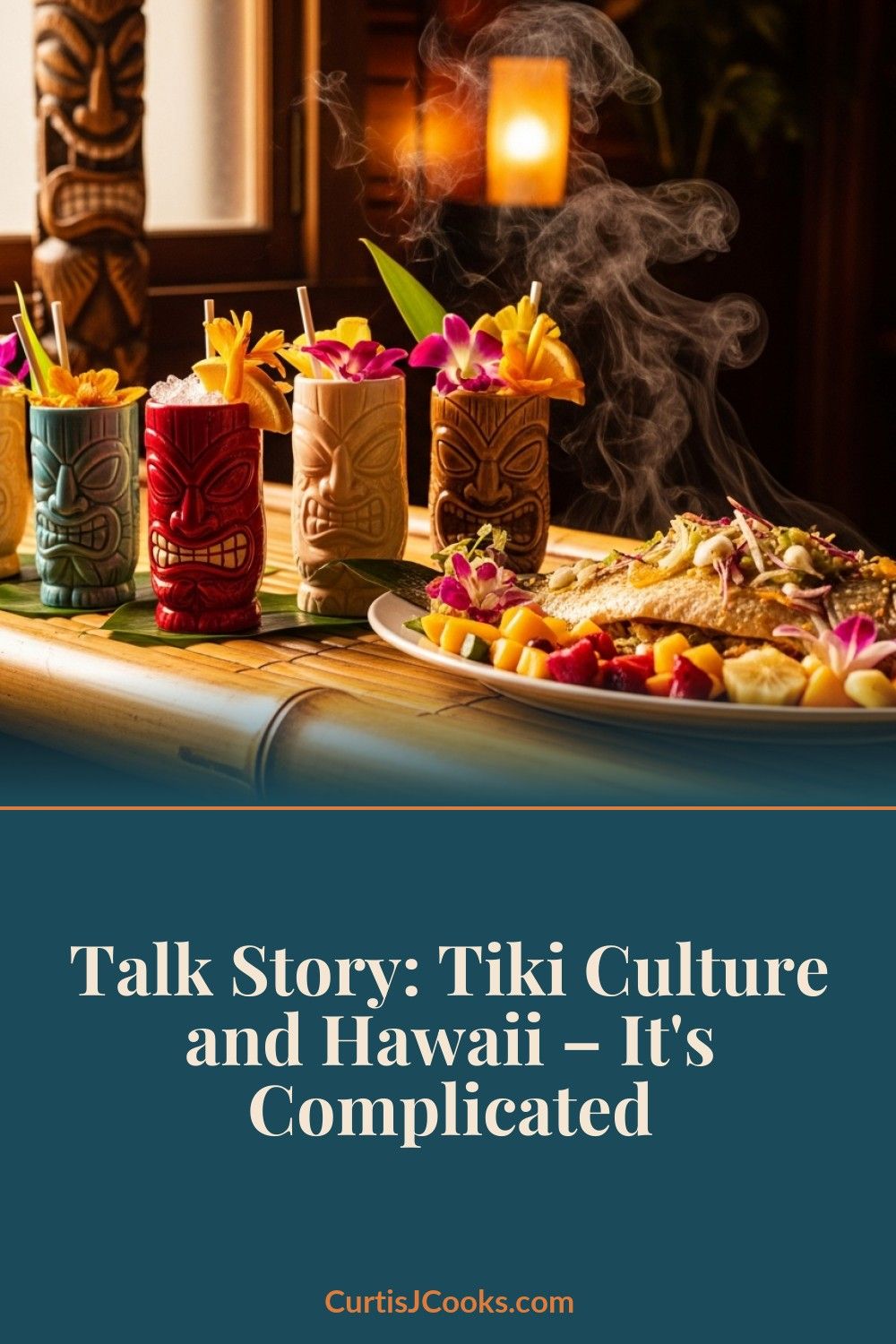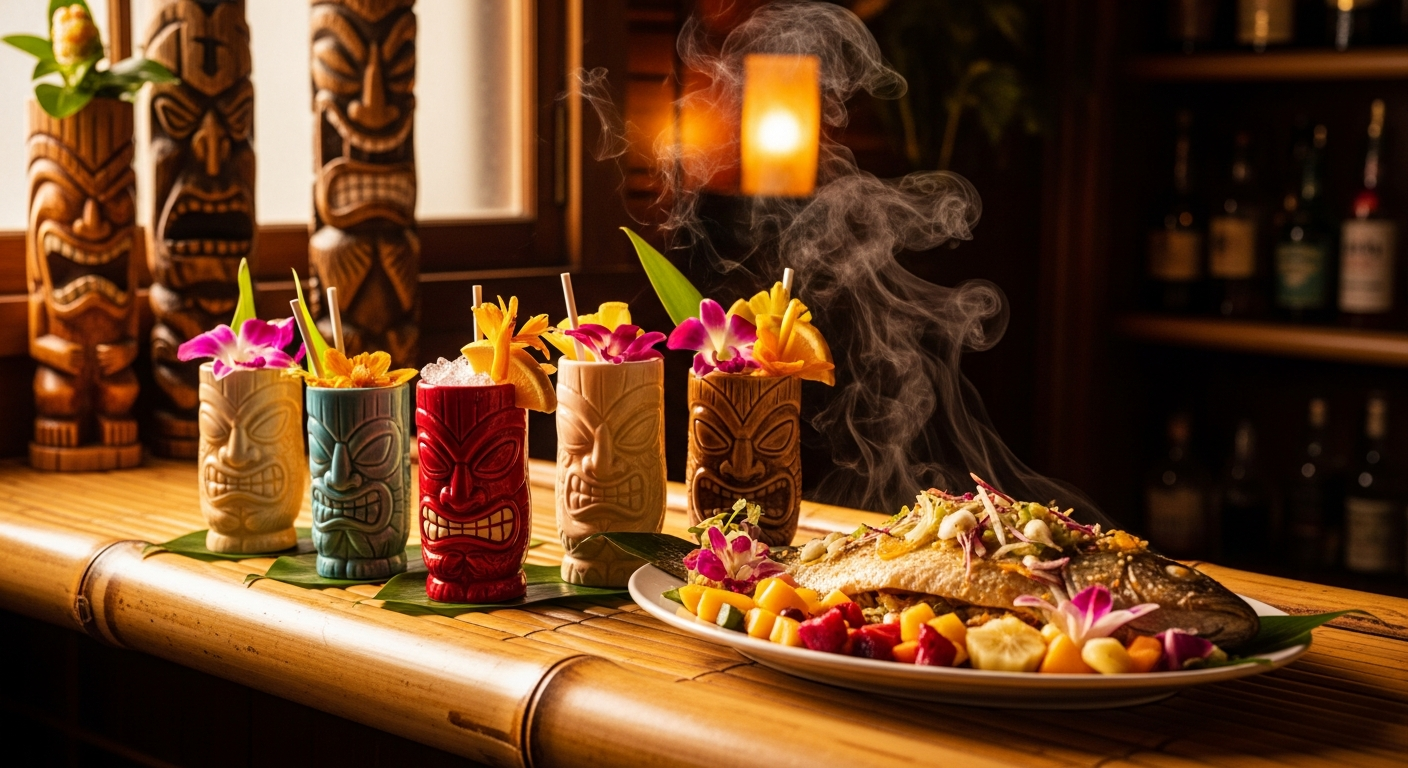
Here’s something that surprises a lot of people: tiki culture isn’t Hawaiian. The tiki bars, the carved wooden mugs, the rum drinks with tiny umbrellas, the fake thatched roofs and bamboo walls — none of that originated in Hawaii or any other Polynesian island. Tiki culture was invented by two white men in California in the 1930s and 1940s, and it’s been borrowing (some would say appropriating) from Pacific Island cultures ever since. The relationship between tiki culture and Hawaii is complicated, fascinating, and worth understanding — especially if you’re standing in a tiki bar drinking a Mai Tai and wondering where all of this came from.
The Invention of Tiki
Tiki culture begins with two men: Ernest Raymond Beaumont Gantt (who legally changed his name to Donn Beach) and Victor Bergeron (who called himself Trader Vic). In 1933, Donn Beach opened a small bar called Don the Beachcomber in Hollywood, California. He decorated it with Polynesian-inspired carvings, fishing nets, and palm fronds, played Hawaiian and Polynesian music, and served rum-based cocktails with exotic names and elaborate garnishes. It was an immediate hit — a tropical fantasy for Depression-era Americans desperate for escapism.
Victor Bergeron visited Don the Beachcomber, was inspired (to put it diplomatically), and opened Trader Vic’s in Oakland in 1934 with a similar tropical theme. The two restaurants spent decades competing, each claiming to have invented various cocktails (most famously the Mai Tai, which both claimed as their own). Together, they created an entire aesthetic — tiki — that would sweep America.
Free: Hawaiian Cooking Starter Kit
Get 5 essential island recipes + a printable pantry checklist — everything you need to start cooking Hawaiian at home.
No spam, ever. Unsubscribe anytime.
By the 1950s and 1960s, tiki bars had spread across the mainland. Every suburban American city had at least one restaurant with bamboo walls, tiki carvings, flaming drinks, and a menu of rum cocktails with names like Zombie, Fog Cutter, and Suffering Bastard. Tiki culture merged with post-war American optimism, the Space Age fascination with the exotic, and the new accessibility of air travel to Hawaii. It became a massive cultural phenomenon.
What Tiki Borrowed
Tiki culture is a mashup — it borrows freely from Hawaiian, Polynesian, Melanesian, Southeast Asian, Chinese, and Caribbean cultures, blending them into a single aesthetic that none of those cultures would recognize as their own. The carved tiki figures are loosely inspired by Polynesian religious carvings (ki’i in Hawaiian). The drinks use Caribbean rum. The décor includes Chinese fishing floats, Filipino woven textiles, and Indonesian batik. The food menus often featured Cantonese-American dishes alongside “Polynesian” platters.
For the people whose cultures were being borrowed from, this has always been complicated. The tiki figure — ki’i — has religious significance in Hawaiian and other Polynesian traditions. These weren’t decorative carvings; they represented gods, ancestors, and spiritual power. Seeing them reduced to drink mugs and restaurant decorations was (and is) troubling for many Native Hawaiians and Pacific Islanders.
At the same time, tiki culture introduced millions of Americans to tropical flavors, Polynesian aesthetics, and the idea of Hawaii as a desirable destination. It played a role — for better and worse — in shaping the mainland perception of Hawaii that eventually led to statehood in 1959 and the tourist economy that drives the islands today.
Tiki’s Rise, Fall, and Return
Tiki culture peaked in the 1960s and declined sharply in the 1970s. As the Vietnam War dragged on and cultural attitudes shifted, the exotic escapism of tiki felt tone-deaf. Tiki bars closed by the hundreds. The aesthetic became synonymous with kitsch — tacky, outdated, and culturally insensitive.
Then, starting in the late 1990s, tiki came back. A new generation of cocktail enthusiasts rediscovered the craftsmanship behind the drinks — the complex rum blends, the fresh juices, the homemade syrups. Bars like Smuggler’s Cove in San Francisco and Three Dots and a Dash in Chicago led a tiki revival that focused on the cocktails rather than the cultural caricature. The drinks were taken seriously as cocktails for the first time, and the results were revelatory — these weren’t just sweet rum punches. They were complex, balanced, beautifully crafted drinks.
The modern tiki revival has been more culturally conscious than the original wave, but the tension remains. Some Native Hawaiians and Pacific Islanders welcome the renewed interest in tropical drinks and flavors. Others point out that tiki culture continues to profit from Pacific Island imagery while the actual communities those images come from face economic hardship, cultural erasure, and the ongoing impacts of colonialism. Both perspectives are valid and worth sitting with.
Hawaii’s Own Cocktail Culture
Here’s the interesting thing: while tiki culture was being invented on the mainland using Hawaii as a backdrop, Hawaii was developing its own genuine cocktail culture — one rooted in real local ingredients, real local traditions, and real local bartenders.
Harry Yee at the Hilton Hawaiian Village created the Blue Hawaii and the Tropical Itch — real Hawaiian cocktails made by a real Hawaiian bartender. The Li Hing Mui Margarita uses a distinctly local ingredient. Okolehao, Hawaii’s own ti-root spirit, is being revived by local distillers. The cocktail scene in Honolulu today — at bars like Bar Leather Apron, Bevy, and Skulls — is world-class and distinctly Hawaiian, using local fruits, local spirits, and local sensibilities.
These drinks don’t need tiki trappings to be tropical. They’re tropical because they’re made in the tropics, with tropical ingredients, by people who live here. That’s the difference between borrowed exoticism and genuine place-based flavor.
How to Enjoy Tiki Drinks Respectfully
You don’t need to boycott tiki bars or feel guilty about ordering a Mai Tai. The drinks themselves are a legitimate and wonderful branch of cocktail culture, and many modern tiki bars are thoughtful about cultural representation. But a little awareness goes a long way:
- Know the difference between tiki and Hawaiian. Tiki is a mainland invention. Hawaiian culture is real, living, and belongs to Hawaiian people. They’re not the same thing.
- Appreciate the cocktails on their merits. The best tiki drinks — the Mai Tai, the Zombie, the Jungle Bird — are genuinely great cocktails that deserve respect as drinks, not as cultural tourism.
- Support Hawaiian businesses. When you can, buy Hawaiian spirits (like okolehao), use Hawaiian ingredients, and support Hawaiian bartenders and restaurants rather than mainland tiki chains.
- Be thoughtful about décor and imagery. There’s a difference between appreciating Polynesian art and reducing sacred cultural images to party decorations. When in doubt, ask yourself whether the culture being represented would recognize and welcome the representation.
- Learn the real stories. The history of the luau, the significance of poke, the cultural roots of Hawaiian food and drink — these stories are more interesting than any made-up tiki mythology.
The Best of Both Worlds
The good news is that you don’t have to choose between great tropical drinks and cultural respect. You can enjoy a Scorpion Bowl at a tiki bar AND learn about Hawaiian drinking traditions. You can make a Hawaiian Rum Punch at home AND understand that tiki mugs aren’t Hawaiian artifacts. You can love the drinks and respect the cultures they draw from. That’s not a contradiction — that’s just being a thoughtful person who happens to like rum.
The best cocktail culture, like the best food culture, is one that celebrates flavor while honoring the people and places that flavor comes from. Hawaii has plenty of both. You just have to know where to look.