This post contains affiliate links. If you purchase through these links, I earn a small commission at no extra cost to you. See my full disclosure.
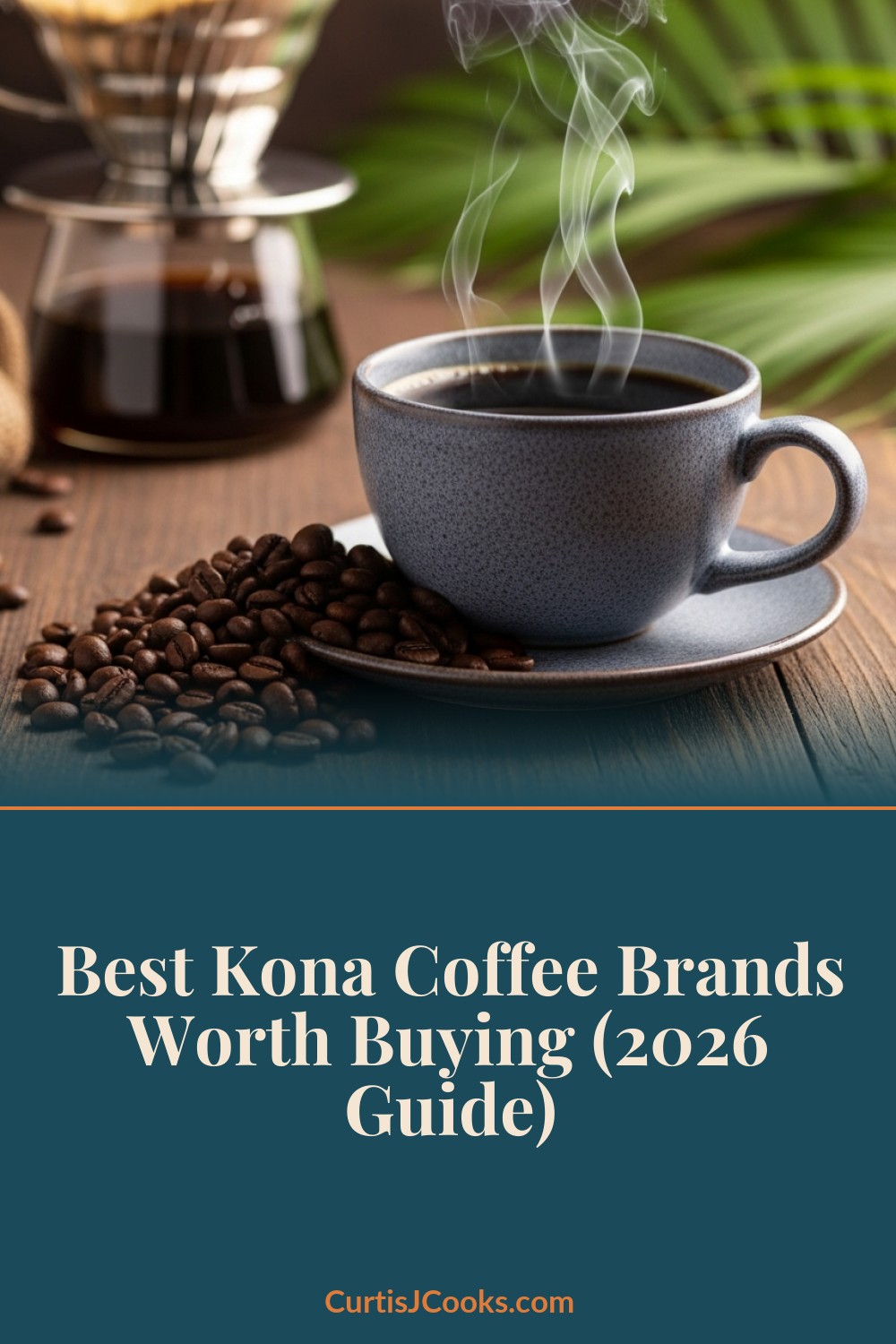
Kona coffee is one of the most prized (and most expensive) coffees in the world, grown on the slopes of Mauna Loa and Hualalai on the Big Island. The volcanic soil, elevation, and unique microclimate of the Kona Coffee Belt create beans with a smooth, complex flavor that’s unlike anything else.
It’s also one of the most counterfeited coffees in the world. “Kona blend” on a label usually means 10% Kona beans mixed with 90% cheap filler. Genuine 100% Kona coffee is worth seeking out — but you need to know what to look for.
Free: Hawaiian Cooking Starter Kit
Get 5 essential island recipes + a printable pantry checklist — everything you need to start cooking Hawaiian at home.
No spam, ever. Unsubscribe anytime.
I drink Kona coffee almost daily, both hot and iced local-style. For a deeper dive into the history and traditions behind the cup, check out my Hawaiian coffee culture guide. Here are the brands I keep coming back to.
What to Look For
Before spending $30+ on a bag, know these basics:
- “100% Kona” vs. “Kona Blend”: Only buy 100% Kona. Blends are legally required to contain just 10% Kona beans. The rest is filler.
- Grade: Kona coffee is graded by bean size and defect count. Extra Fancy is the top grade (largest beans, fewest defects), followed by Fancy, Number 1, Select, and Prime. Higher grades generally taste smoother and more complex.
- Roast date: Coffee is best within 2-4 weeks of roasting. Look for a roast date, not a “best by” date.
- Estate vs. cooperative: Single-estate coffees come from one farm, giving you a consistent, traceable flavor. Cooperatives blend beans from multiple farms — still good, but less distinctive.
Best Overall: Koa Coffee Estate Reserve
Koa Coffee consistently produces some of the best Kona coffee available. Their Estate Reserve is a medium roast that showcases everything great about Kona beans — smooth body, bright acidity, notes of brown sugar, nuts, and a hint of fruit. It’s won numerous awards and it earned every one.
Why I love it:
- Medium roast that highlights the bean’s natural character
- Incredibly smooth with no bitterness
- Roasted to order — arrives fresh
- Single estate for consistent quality
- Available in whole bean and ground
Best for: Daily drinking, pour-over, drip coffee, and iced Kona coffee
Grade: Extra Fancy
Price: ~$40–$50 per 8oz bag
Best Dark Roast: Greenwell Farms Private Reserve
Greenwell Farms has been growing Kona coffee since 1850 — they’re one of the oldest and most respected farms in the Kona district. Their Private Reserve dark roast brings out deep, chocolatey notes while maintaining that signature Kona smoothness. If you prefer a bolder cup, this is the one.
Why I love it:
- Rich, full-bodied with chocolate and caramel notes
- Dark roast without the burnt bitterness
- 165+ years of farming heritage behind every bag
- You can visit the farm if you’re on the Big Island
Best for: French press, espresso, those who prefer bold coffee
Grade: Extra Fancy
Price: ~$35–$45 per 8oz bag
Best Value: Buddha’s Cup Gold Label
Buddha’s Cup grows their coffee in the higher elevations of the Kona Coffee Belt, which produces a particularly complex flavor profile. Their Gold Label (Fancy grade) gives you about 90% of the quality of Extra Fancy beans at a lower price point. It’s the Kona coffee I recommend to people who want to try the real deal without going all-in on price.
Why I love it:
- Excellent quality-to-price ratio
- High-altitude grown for extra complexity
- Bright, citrusy notes with a smooth finish
- Certified organic options available
Best for: Anyone trying real Kona coffee for the first time
Grade: Fancy
Price: ~$28–$35 per 8oz bag
Best Peaberry: Kona Earth Peaberry
Peaberry beans are a natural mutation where only one round bean develops inside the coffee cherry instead of the usual two flat-sided beans. They make up only about 5% of the harvest and are prized for their concentrated, intense flavor. Kona peaberry is the luxury tier of an already luxury coffee.
Why I love it:
- Intense, concentrated Kona flavor
- Remarkably smooth and sweet
- The “single malt” of Kona coffees — a special occasion treat
- Rare and distinctive
Best for: Special occasions, coffee enthusiasts, gifts
Grade: Peaberry (special classification)
Price: ~$50–$65 per 8oz bag
Best for Cold Brew: Hula Daddy Kona Sweet
If you’re making iced Kona coffee or cold brew, Hula Daddy’s Kona Sweet is ideal. It’s a lighter roast with natural sweetness and fruity notes that absolutely shine when brewed cold. The flavor stays bright and complex even over ice, where darker roasts tend to taste flat.
Why I love it:
- Natural sweetness perfect for cold brew (no sugar needed)
- Bright, fruity flavor that pops in iced preparations
- Light roast preserves the bean’s unique character
- Award-winning year after year
Best for: Cold brew, iced coffee, pour-over
Grade: Extra Fancy
Price: ~$45–$55 per 8oz bag
Beyond Kona: Other Hawaiian Coffees Worth Trying
Kona gets all the attention, but Hawai’i grows excellent coffee on other islands too:
- Ka’u Coffee (Big Island): Grown in the Ka’u district south of Kona. Similar volcanic soil but a different microclimate creates coffee with more fruity, wine-like notes. Often less expensive than Kona. Ka’u coffee has won international competitions against coffees from around the world.
- Maui Mokka (Maui): A rare variety grown on the slopes of Haleakala. Small beans with an intensely chocolatey, almost mocha-like flavor. Very limited production.
- Waialua Coffee (O’ahu): Grown on the North Shore in the former Dole pineapple fields. Clean, mild flavor with herbal notes. It’s cool to drink coffee grown on O’ahu.
- Kaua’i Coffee: The largest coffee farm in Hawai’i. More commercially produced but still solid quality, and much more affordable than Kona. Good everyday Hawaiian coffee.
How to Brew Kona Coffee Right
You’re spending good money on these beans. Don’t waste them:
- Buy whole bean: Grind right before brewing for maximum freshness. Pre-ground Kona loses flavor within days.
- Use filtered water: Water makes up 98% of your coffee. Chlorinated tap water kills the nuance you’re paying for.
- Water temperature: 195-205°F — just below boiling. Too hot extracts bitterness, too cool underextracts.
- Don’t over-roast at home: If you’re home-roasting, Kona beans shine at medium roast. Going too dark masks the origin characteristics.
- Store properly: Airtight container, room temperature, away from light. Don’t refrigerate or freeze (unless long-term storage in vacuum-sealed bags).
My Recommendation
Koa Coffee Estate Reserve is the Kona coffee I keep on my counter. It’s consistently excellent, roasted to order, and makes a phenomenal cup whether hot or iced local-style. If you’ve never tried real 100% Kona coffee, this is the one to start with.
For gifts or special occasions, the Kona Earth Peaberry is a showstopper. And if you drink a lot of iced coffee (I do), keep a bag of Hula Daddy Kona Sweet around specifically for cold brew. You’ll never go back to Starbucks. Pair your morning cup with some fresh malasadas or a slice of butter mochi for the ultimate Hawaiian breakfast.