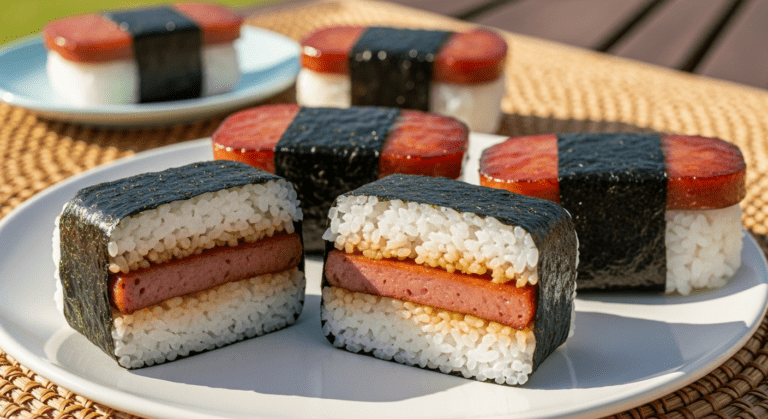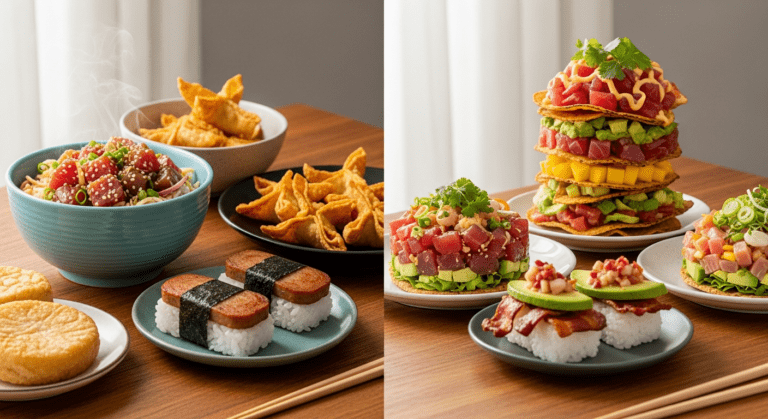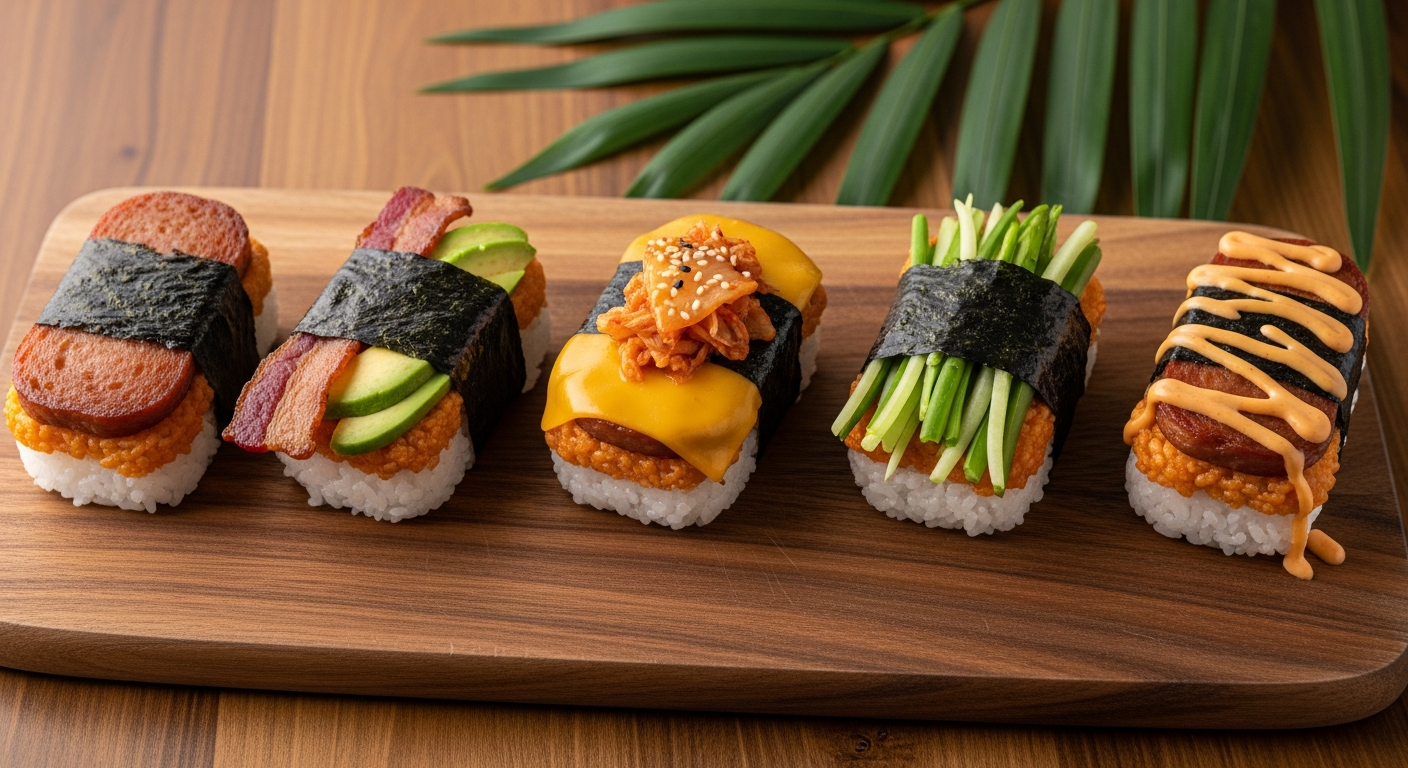
If you grew up in Hawai’i — or even just visited once — you know spam musubi. It’s the gas station grab, the beach day essential, the after-school snack that fueled an entire generation of island kids. Salty Spam, sticky rice, crispy nori. Three ingredients. Perfection.
But here’s the thing about perfection — it’s a launchpad, not a ceiling. Hawaiian food has always been about taking something great and making it your own. The original musubi is already a fusion of Japanese onigiri and American canned meat, born on the plantation when cultures collided over lunch. So when I see people getting creative with their musubi? That’s not messing with tradition. That’s honoring it.
I’ve been experimenting with musubi variations for years, and these five are the ones that earned a permanent spot in my rotation. Each one starts with the same classic base — Spam, rice, nori — and takes it somewhere new. If you want to learn more about how Spam became Hawai’i’s favorite meat, check out our deep dive into that tasty history.
Free: Hawaiian Cooking Starter Kit
Get 5 essential island recipes + a printable pantry checklist — everything you need to start cooking Hawaiian at home.
No spam, ever. Unsubscribe anytime.
The Classic Base (For All Variations)
Before we get into the variations, let’s lock down the foundation. Every great musubi starts here:
- 1 can Spam Classic (12 oz), sliced into 6 pieces
- 3 cups cooked short-grain sushi rice (still warm)
- 3 sheets nori, cut in half lengthwise
- 2 tablespoons soy sauce
- 1 tablespoon brown sugar
- Musubi mold (or use the Spam can with both ends removed — check out our guide to the best musubi makers)
The base method: Mix soy sauce and brown sugar. Pan-fry Spam slices 2-3 minutes per side until golden, then glaze with the soy-sugar mixture in the last minute. Set aside. Lay nori shiny-side down, place mold in center, press rice, add your fillings, press more rice, wrap, seal with water.
Now let’s get creative.
1. Veggie Spam Musubi (The Plant-Forward One)
This one’s for everyone who loves musubi but wants more greens in the mix — or for when you’re cooking for friends who don’t eat meat and you want to show them what island snacking is all about.
What makes it different:
- Swap regular Spam for Spam Lite (or go full vegetarian with OmniPork Luncheon — it’s shockingly good)
- Add a layer of sautéed spinach or kale (squeeze out the water first)
- Thin slices of Japanese cucumber for crunch
- A sprinkle of toasted sesame seeds on the rice
Why it works: The greens add freshness that cuts through the richness of the Spam (or plant-based alternative). The cucumber gives you that snappy texture contrast that makes each bite interesting. It’s still comfort food — it just won’t put you to sleep on the beach blanket.
Pro tip: If using the OmniPork version, glaze it exactly like regular Spam. The soy-sugar caramelization is what sells it.
2. Spicy Mayo Drizzle Musubi (The Crowd Pleaser)
If you’ve ever been to a poke shop on the islands, you know that spicy mayo makes everything better. Turns out it does the same thing to musubi.
What makes it different:
- Homemade spicy mayo: 3 tablespoons Kewpie mayo + 1 tablespoon sriracha + 1 teaspoon sesame oil + squeeze of lime
- Drizzle inside the musubi before wrapping (between the Spam and top rice layer)
- Add a layer of thinly sliced green onion
- Optional: a few drops of chili crisp for extra heat
Why it works: The creamy heat of the spicy mayo plays off the salty Spam like they were made for each other. The lime keeps it bright so it doesn’t get heavy. This is the one that disappears first at any party — I’ve watched it happen.
Pro tip: Use Kewpie mayo, not regular. The Japanese mayo is richer and tangier, and it emulsifies with the sriracha perfectly. You can find it at most Asian grocery stores or in the international aisle.
3. Teriyaki Egg Musubi (The Breakfast One)
Spam and eggs and rice is already a legendary Hawaiian breakfast — right up there with loco moco. This just puts it all in a portable nori wrapper.
What makes it different:
- Replace the soy-sugar glaze with teriyaki sauce (store-bought is fine, or make your own with equal parts soy sauce, mirin, and brown sugar)
- Add a thin fried egg — cook it in the Spam pan, break the yolk, press flat to fit the mold
- Sprinkle furikake generously on the rice
Why it works: This is the musubi you make on a Saturday morning when you want breakfast you can eat with one hand while scrolling your phone on the lanai. The teriyaki adds sweetness, the egg adds richness, and the furikake ties it all together with that nori-sesame umami. It’s Spam and eggs and rice — Hawaii’s holy trinity — in grab-and-go form.
Pro tip: Make the egg thin like a tamagoyaki. Thick eggs will make the musubi too tall to wrap properly. Beat the egg, pour it thin in the pan, let it set, fold it to mold-size.
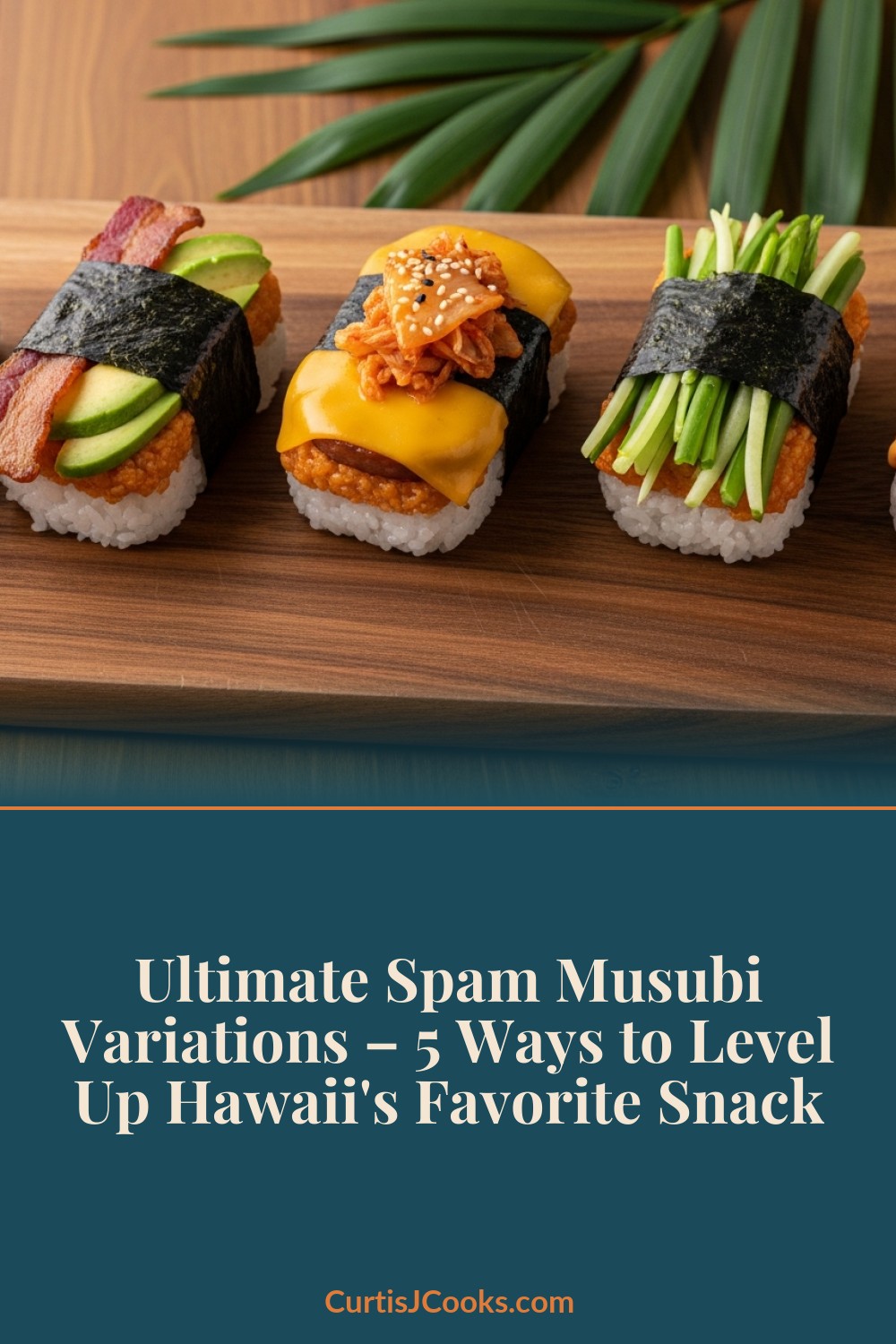
4. Bacon Avocado Musubi (The Indulgent One)
I already dedicated a whole post to this one because it deserves it. But if you want the quick version for your musubi spread, here it is.
What makes it different:
- Thick-cut bacon — cook it first, use the grease to fry the Spam
- Ripe avocado slices (firm enough to hold their shape)
- Optional sriracha mayo drizzle
- Rice vinegar in the rice for a subtle tang
Why it works: Smoky bacon + creamy avocado + salty glazed Spam is an unfair flavor combination. It’s rich, it’s indulgent, and it still somehow works wrapped in nori and rice. The one caveat: eat these fresh. The avocado doesn’t travel well, so this is a make-and-eat-now situation.
5. Kimchi Cheese Musubi (The Late-Night One)
Korean-Hawaiian fusion runs deep in island food culture. Korean families have been part of Hawai’i’s story since the early 1900s, and the flavors have been mixing ever since. This musubi pays respect to that history — and it’s absolutely addictive.
What makes it different:
- Chopped kimchi (squeeze out excess liquid) layered on the Spam
- A thin slice of sharp cheddar or American cheese (melted onto the Spam while it’s still hot in the pan)
- Drizzle of gochujang mayo (2 tablespoons Kewpie + 1 tablespoon gochujang)
- Optional: toasted sesame oil mixed into the rice
Why it works: The tangy, spicy kimchi cuts through the richness of the Spam and melted cheese. It’s the same reason Korean fried chicken works so well — that balance of heat, funk, and fat. This is the musubi you make at 10 PM when you’re craving something bold.
Pro tip: Use well-fermented kimchi (the funky, sour stuff at the bottom of the jar). Fresh kimchi is too mild for this — you need that aged flavor to stand up to the Spam and cheese.
Tips for Any Musubi Variation
- Wet your hands before touching the rice. Every single time. You’ll thank me.
- Don’t overstuff. It’s tempting to pile on the fillings, but if you can’t wrap the nori around it, you’ve gone too far. The nori should overlap with about an inch to spare.
- Warm rice, room temp Spam. If the rice is cold, it won’t stick together. If the Spam is screaming hot, it’ll wilt the nori. Let the Spam cool for a minute after frying.
- Wrap tight, cut clean. Let the musubi sit for 2-3 minutes after wrapping so the nori softens and seals. Use a sharp, wet knife to cut in half if serving as appetizers.
- Plastic wrap for travel. Wrap each musubi individually in plastic wrap for beach days, road trips, or potlucks. They’ll hold for 3-4 hours at room temperature (except the avocado one — eat that fast).
Which One Should You Make First?
If you’ve never gone beyond classic musubi, start with the Spicy Mayo Drizzle — it’s the smallest leap with the biggest payoff. If you’re already comfortable with variations, go straight to the Kimchi Cheese. It sounds wild but I promise you’ll be making it again next week.
And if you’re feeding a crowd, make all five. Set them up on a board, label each one, and let people try them all. It’s the most fun pupus spread you’ll ever put out. Need the right tools? Check out our spam musubi makers guide to gear up.
That’s the spirit of Hawaiian food right there — take something everybody loves and find five more reasons to love it. Now go make some musubi.