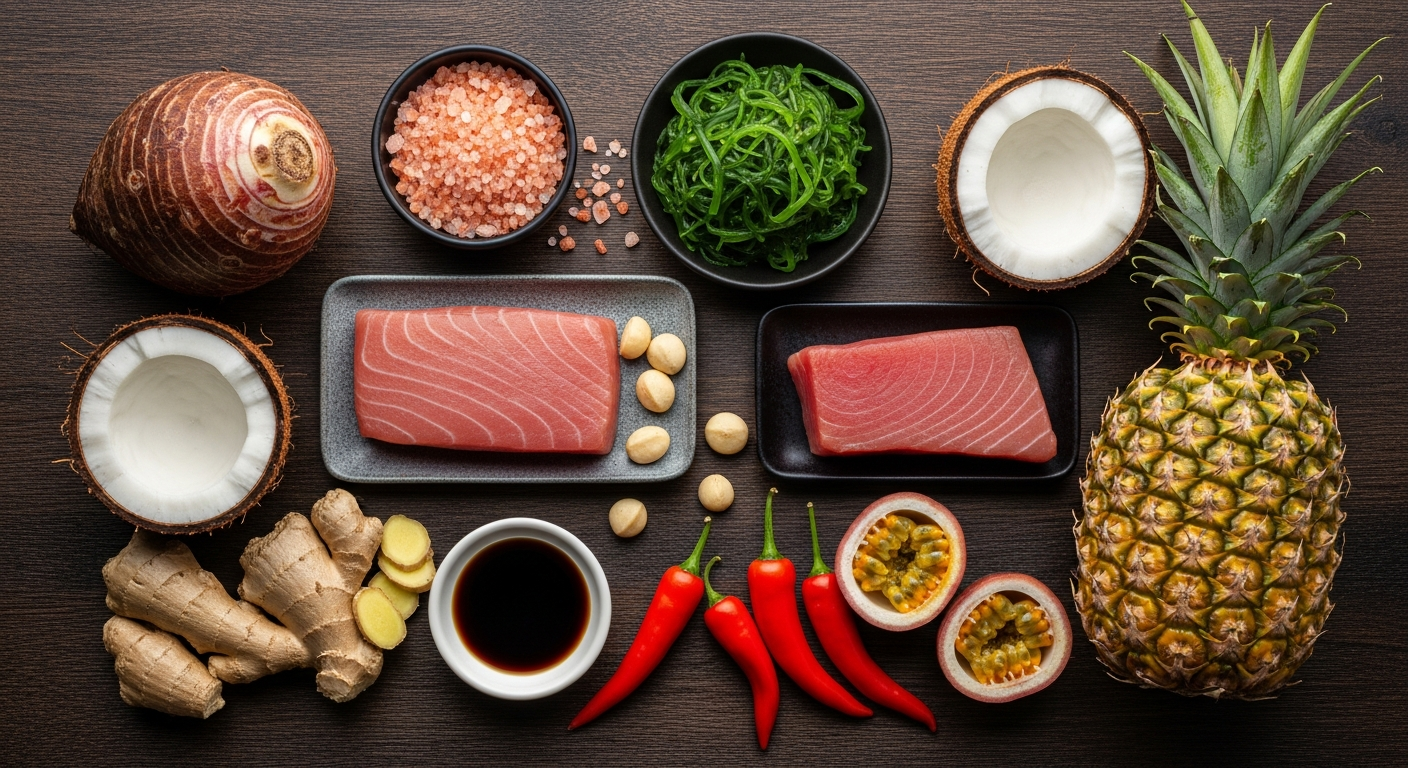
Hawaiian food doesn’t taste like anywhere else on earth. It’s not just the ingredients — though the ingredients matter — it’s the way they come together. Smoky and sweet. Salty and rich. Bright acid cutting through deep umami. These flavor combinations didn’t happen by accident. They’re the result of over a thousand years of Hawaiian cooking tradition, remixed by every culture that has made the islands home.
Understanding Hawaiian flavor means understanding the layers. Here’s a journey through the tastes that define the islands.
The Ancient Foundation: Earth, Sea, and Smoke
Before anyone else arrived, Native Hawaiians built a cuisine around what the islands gave them: taro, sweet potato, breadfruit, coconut, fish, and pig. The flavor profile was clean and elemental — starchy, smoky, and deeply connected to the land (ʻāina).
Free: Hawaiian Cooking Starter Kit
Get 5 essential island recipes + a printable pantry checklist — everything you need to start cooking Hawaiian at home.
No spam, ever. Unsubscribe anytime.
Taro – The Earthy Anchor
Taro (kalo) is the foundation of Hawaiian food and Hawaiian culture. The flavor is subtle — earthy, slightly nutty, with a starchiness that grounds everything around it. In poi form, it’s the canvas that every other flavor paints on. Fresh poi is mildly sweet. Let it sit a day and it develops a pleasant sourness that cuts through rich meats like kalua pig. Taro leaves (luau) cooked down in squid luau bring a deep, green, almost spinach-like richness that no other leaf can replicate.
Imu Smoke – The Taste of Celebration
The imu (underground oven) gives Hawaiian food its most distinctive flavor: a clean, wood-fired smokiness that penetrates everything cooked inside it. Kalua pig gets its entire identity from the imu — the combination of mesquite wood, banana leaves, and hours of slow heat creates a smoke flavor that liquid smoke can only approximate. When you taste that smokiness in Hawaiian food, you’re tasting a cooking method that’s been practiced for centuries.
Hawaiian Sea Salt – More Than Seasoning
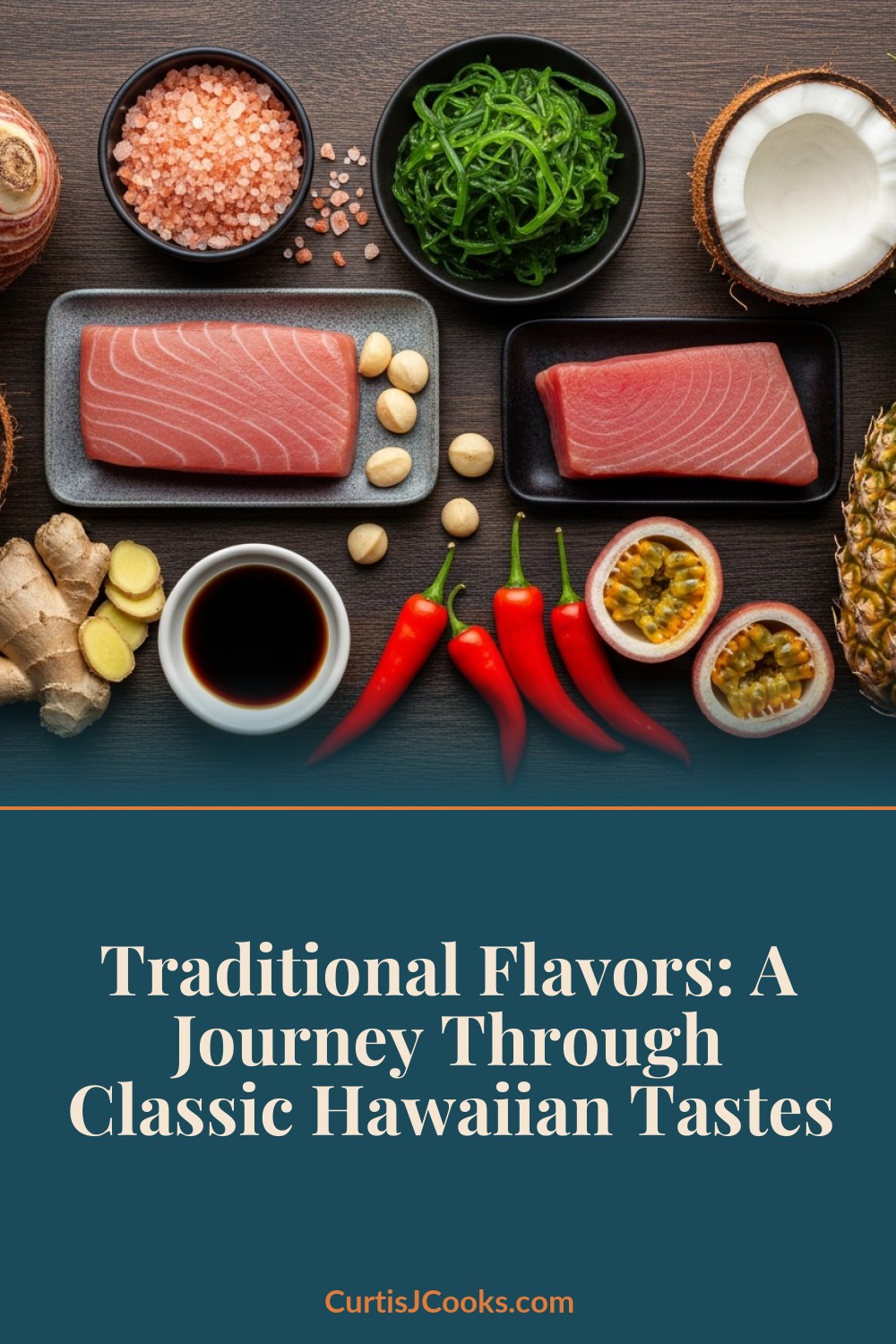
ʻAlaea salt — Hawaiian red clay sea salt — is the traditional seasoning of the islands. The red clay (ʻalaea) adds an earthy, mineral quality you won’t find in regular salt. It’s essential in traditional poke, in pipikaula, and in lomilomi salmon. The flavor is rounder and less sharp than table salt — it seasons without overwhelming.
The Ocean Layer: Brine, Umami, and Freshness
Hawaii is surrounded by ocean, and the sea defines its flavor just as much as the land does.
Limu – The Taste of the Reef
Limu (seaweed) is one of the most distinctive Hawaiian flavors. It brings a briny, slightly crunchy element to dishes like limu poke that nothing else can replicate. Different varieties — ogo, limu kohu, limu manauea — each bring a different intensity of ocean flavor. If you’ve only had poke without limu, you’re missing a dimension.
Raw Fish – Clean and Bright
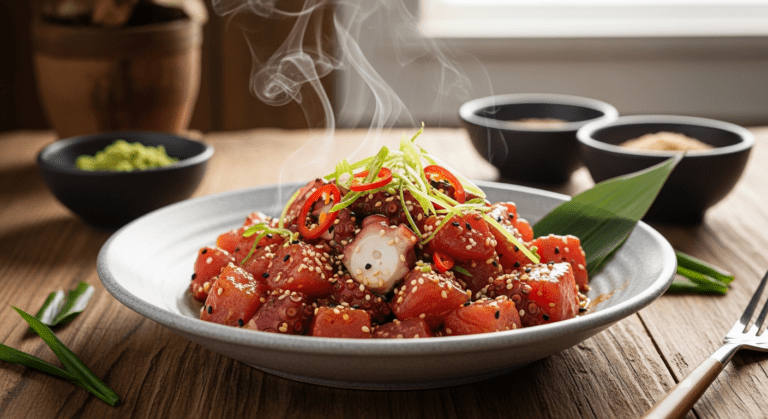
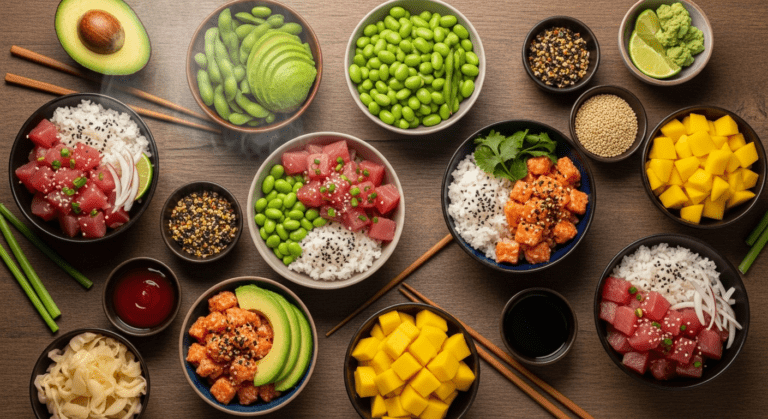
The Hawaiian tradition of eating raw fish predates the Japanese sashimi influence by centuries. Ahi poke is the most famous expression, but the principle is simple: the freshest fish, minimally dressed, where the quality of the catch speaks for itself. The flavor is clean, oceanic, and bright — a counterpoint to the rich, smoky, starchy elements of the rest of the table.
The Plantation Layer: Sweet Meets Savory Meets Heat
When workers from Japan, China, Korea, the Philippines, and Portugal arrived in the 1800s, Hawaiian flavor exploded. Suddenly soy sauce met coconut. Ginger met taro. Chili peppers met everything.
The Soy-Sugar-Sesame Trinity
Japanese and Korean immigrants brought what might be the most important flavor combination in modern Hawaiian food: soy sauce, sugar, and sesame. You taste it in teriyaki chicken, in kalbi short ribs, in shoyu chicken, and in every shoyu poke. Sweet, salty, nutty — it’s the flavor backbone of the plate lunch.
Vinegar and Garlic – The Filipino Gift
Filipino food brought a tangy, garlicky brightness to Hawaiian cooking. Chicken adobo and pork adobo — braised in vinegar, soy sauce, and garlic — introduced an acidic punch that balanced the richness of the Hawaiian table. That vinegar sharpness became a permanent part of the island palate.
Char Siu – The Sweet Smoke of Chinatown
Chinese immigrants brought char siu — roasted pork lacquered with honey, five-spice, and red bean curd. The flavor is sweet, slightly smoky, and deeply savory. It became so essential to Hawaii that it shows up everywhere: in manapua, on top of saimin, and as a plate lunch main.
Portuguese Sausage – Smoke and Spice for Breakfast
Portuguese immigrants brought their linguica sausage, which Hawaii adopted as “Portuguese sausage” and made a breakfast staple. Smoky, garlicky, with a gentle heat — Portuguese sausage and eggs is as Hawaiian as sunrise over Diamond Head.
The Modern Fusion: Where It All Comes Together
Today’s Hawaiian food is the sum of all these layers — and the best Hawaiian cooks know how to balance them instinctively.
A great plate lunch hits every note: the smoky richness of the protein, the clean starch of the rice, the creamy tang of mac salad, and the sweet-salty glaze that ties it all together. A backyard party spread moves from the bright acidity of poke to the deep smokiness of kalua pig to the sweet finish of butter mochi or chocolate haupia pie.
These aren’t random combinations. They’re the product of generations of people sharing food, trading recipes, and figuring out that taro and soy sauce and coconut and vinegar and smoke all belong on the same table.
That’s the journey of Hawaiian flavor — ancient roots, immigrant branches, and a canopy that covers everyone who sits down to eat.
Cook Your Way Through Hawaiian Flavor
Ready to taste these traditions for yourself? Start with the fundamentals:
- Make poi from scratch — the foundation of the Hawaiian table
- Make traditional ahi poke — the taste of the ocean
- Make kalua pig — the heart of the luau
- Make shoyu chicken — the plantation-era fusion
For the full guide to Hawaiian delicacies, check out Must-Try Hawaiian Delicacies. And for the complete plate lunch experience, see our Hawaii Plate Lunch Recipes guide.