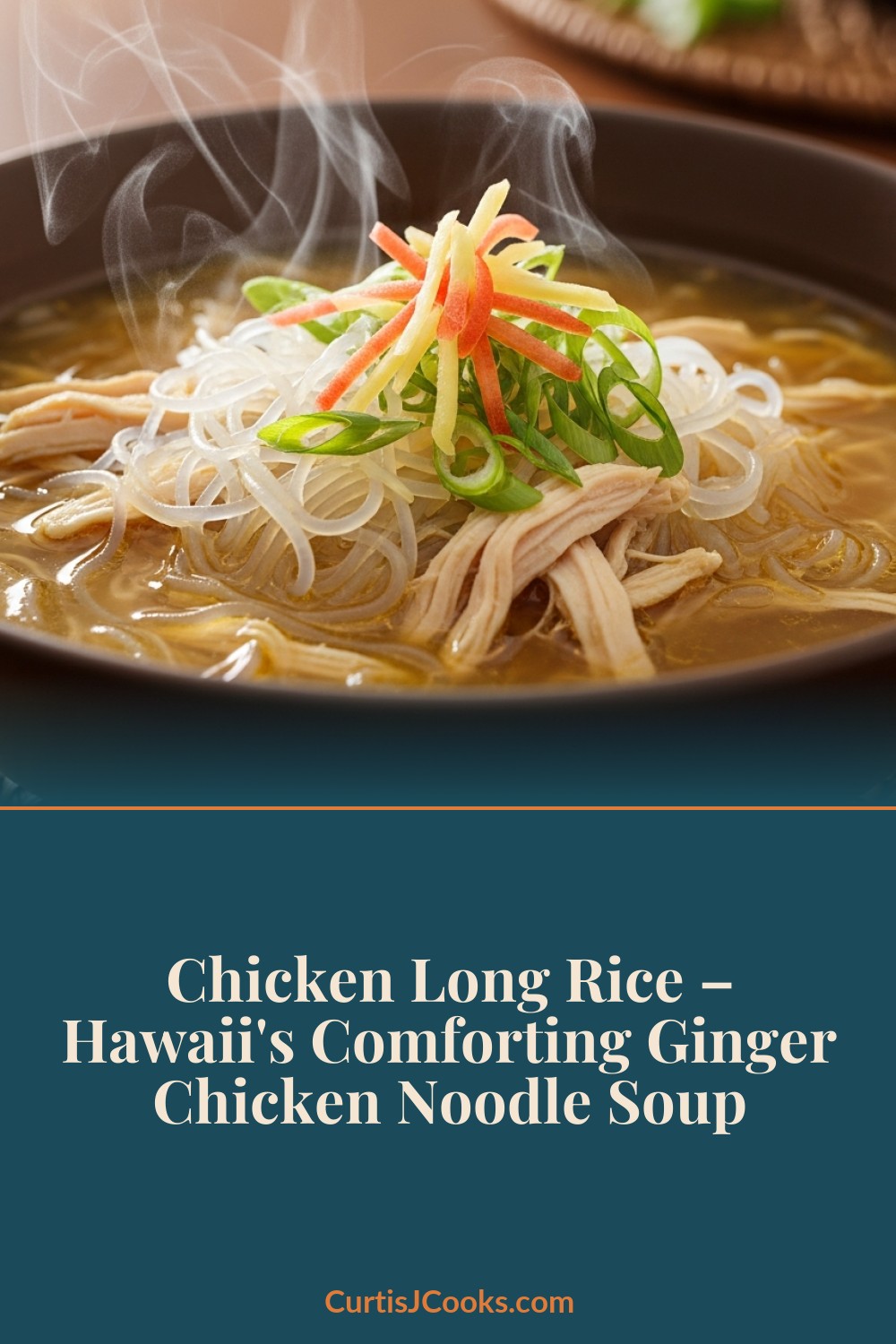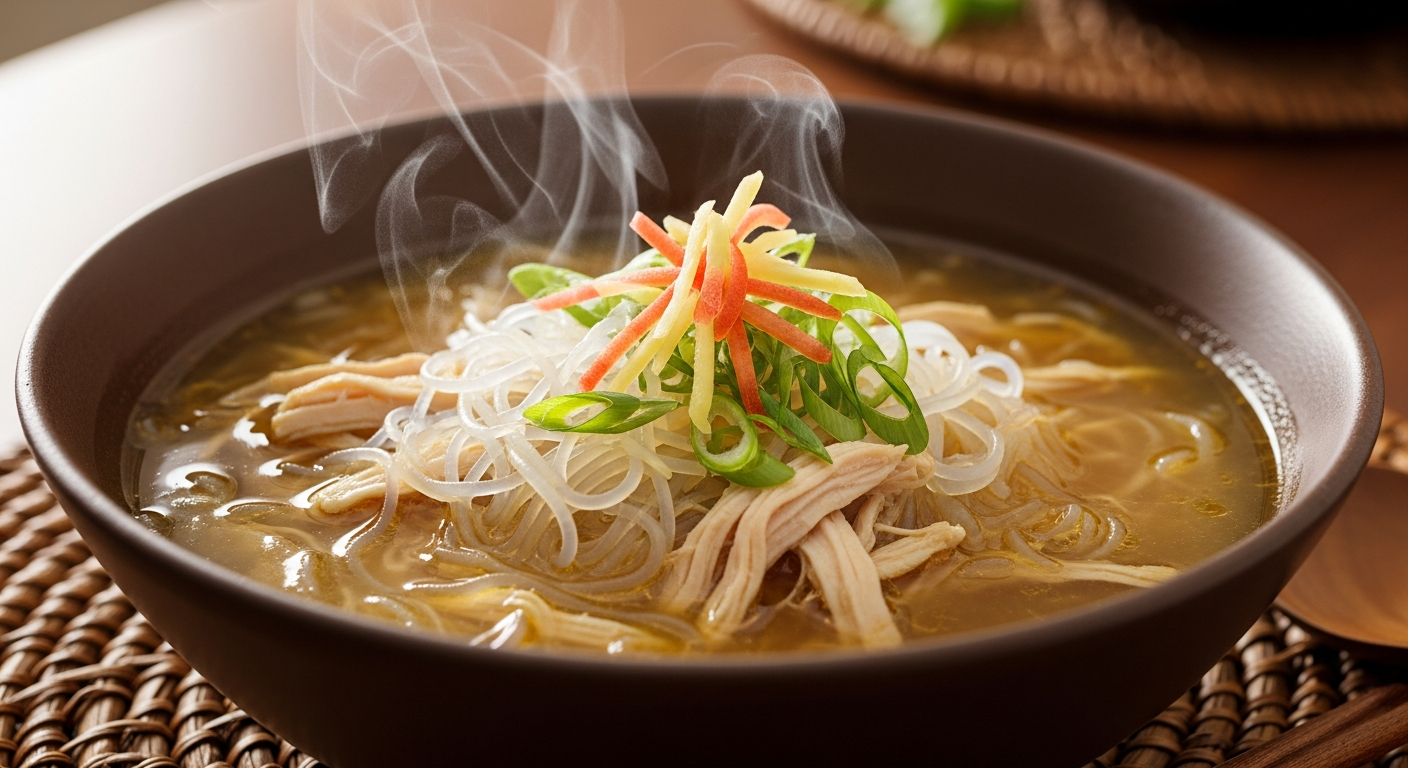
Every culture has its version of chicken noodle soup — the dish you make when someone’s sick, when the weather turns, when you just need something warm and good. In Hawaii, that dish is chicken long rice.
If you grew up in the islands, you know it from every luau, every potluck, every family gathering where someone’s auntie shows up with a giant pot and a ladle. It’s simple in the way that only truly great comfort food can be — chicken, ginger, broth, and slippery clear noodles that soak up all that goodness.
The name throws some people off. “Long rice” isn’t rice at all — it’s bean thread noodles, those translucent cellophane noodles made from mung bean starch. The locals started calling them long rice because the long, clear strands look like stretched-out rice noodles. The name stuck, and now if you say “long rice” in Hawaii, everybody knows exactly what you mean.
Free: Hawaiian Cooking Starter Kit
Get 5 essential island recipes + a printable pantry checklist — everything you need to start cooking Hawaiian at home.
No spam, ever. Unsubscribe anytime.
What Makes Chicken Long Rice Special
This isn’t fancy cooking. There’s no complicated technique, no long ingredient list, no special equipment. What makes it special is the ginger.
Good chicken long rice is built on a ginger-forward broth. You simmer bone-in chicken thighs with big coins of fresh ginger until the broth is golden and fragrant and the chicken is falling-apart tender. Then you shred the chicken, add the soaked noodles, and let everything come together in the pot for just a few minutes.
The bean thread noodles do something beautiful — they turn translucent and glassy, and they absorb the ginger-chicken broth as they cook. Every slippery strand is flavored all the way through. It’s different from any other noodle soup you’ve had.
A little soy sauce, a drizzle of sesame oil, a pile of green onions — that’s it. The simplicity is the whole point.
Ingredients
- 2 pounds bone-in chicken thighs
- 6 cups water
- 2 inches fresh ginger, sliced into coins
- 4 cloves garlic, smashed
- 2 tablespoons soy sauce
- 1 tablespoon sesame oil
- 1 teaspoon salt
- 2 bundles bean thread noodles (about 3.5 oz total)
- 3 green onions, cut into 2-inch pieces
- Fresh ginger, julienned (for garnish)
- Hawaiian sea salt to taste
Instructions
- Soak the noodles. Place the bean thread noodles in a bowl of warm water and soak for 15-20 minutes until softened. Drain and cut into manageable lengths with kitchen scissors. Set aside.
- Build the broth. Place chicken thighs, water, ginger coins, and smashed garlic in a large pot. Bring to a boil over high heat, then reduce to a gentle simmer. Skim any foam that rises to the surface.
- Simmer low and slow. Cook uncovered for 30-35 minutes until the chicken is tender and the broth is fragrant and golden. The longer you simmer, the deeper the flavor.
- Shred the chicken. Remove the chicken from the broth and set aside to cool slightly. Remove and discard the ginger coins. Once the chicken is cool enough to handle, pull it into bite-sized shreds, discarding skin and bones. Return the shredded chicken to the pot.
- Season the broth. Add the soy sauce, sesame oil, and salt. Taste and adjust — you want it savory but not overpowering. The ginger should be the star.
- Add the noodles. Add the drained bean thread noodles and green onion pieces to the pot. Simmer for just 3-5 minutes until the noodles are translucent and have absorbed some broth. Don’t overcook them — they’ll continue absorbing liquid as they sit.
- Serve. Ladle into deep bowls, making sure each serving gets plenty of noodles and chicken. Garnish with julienned ginger and a sprinkle of Hawaiian sea salt.
The Secret Is the Ginger
Don’t be tempted to reduce the ginger. Two inches of fresh ginger for six cups of water might seem like a lot, but that ginger-forward broth is what makes chicken long rice different from regular chicken noodle soup. It should hit you right away when you take the first sip — warm, slightly spicy, deeply aromatic.
For the garnish, julienned fresh ginger adds a bright, sharp bite that contrasts with the mellow cooked ginger in the broth. It’s a small thing that makes a big difference.
About the Noodles
Bean thread noodles go by a lot of names — glass noodles, cellophane noodles, crystal noodles, saifun. In Hawaii, they’re just “long rice.” You’ll find them in the Asian aisle of most grocery stores, usually in small bundled packages.
The timing matters with these noodles. If you add them too early, they’ll absorb all the broth and turn into a mushy, starchy mess. Add them in the last few minutes and serve soon after. They’ll continue absorbing broth even in the bowl, which is part of the charm — the last bites are the most flavorful.
If you’re making this ahead for a potluck, keep the soaked noodles separate and add them when you reheat. Add extra water too, because the noodles are thirsty.
When to Make Chicken Long Rice
In Hawaii, chicken long rice shows up everywhere:
- Luaus — it’s a standard item on the luau buffet, right alongside kalua pig, lomi salmon, and poi
- Potlucks — it transports easily and feeds a crowd. Perfect for your next Hawaiian backyard party
- Sick days — Hawaii’s answer to chicken noodle soup. The ginger is supposed to settle your stomach
- Cool evenings — even in Hawaii, there are nights when you want something warm and brothy
- Sunday dinners — alongside rice and whatever else is on the table
Serve It With
Chicken long rice is usually part of a bigger spread:
- Kalua Pig — the most classic pairing at any luau
- Lomi Lomi Salmon — cold and fresh against warm and brothy
- Spam Musubi — because there’s always spam musubi
- Hawaiian Beef Stew — double comfort food energy
- Squid Luau — for a truly traditional Hawaiian feast
- Steamed rice — always
For more Hawaiian comfort food classics, explore my Plate Lunch Guide and the full Hawaiian Ingredients Guide to stock your pantry with everything you need.
Tips
Bone-in thighs are essential. The bones give the broth body and richness that boneless chicken can’t match. Dark meat stays moist after simmering, where breast meat would dry out and get stringy.
Skim the foam. When the broth first comes to a boil, grayish foam will rise to the surface. Skim it off for a clean, clear broth.
Cut the noodles after soaking. Bean thread noodles are nearly impossible to cut dry — they’ll fly everywhere. Soak them first, then use kitchen scissors to cut them into 4-6 inch lengths. Nobody wants to wrestle with three-foot-long noodles.
Leftovers need extra water. The noodles keep absorbing liquid even in the fridge. When you reheat, add a cup of water to bring the broth back. The flavor will still be there.
Storage
Chicken long rice keeps in the fridge for 3-4 days. The noodles will absorb most of the broth overnight — just add water when reheating. It doesn’t freeze well because the noodles break down, but honestly, it never lasts long enough to need freezing.
]]>