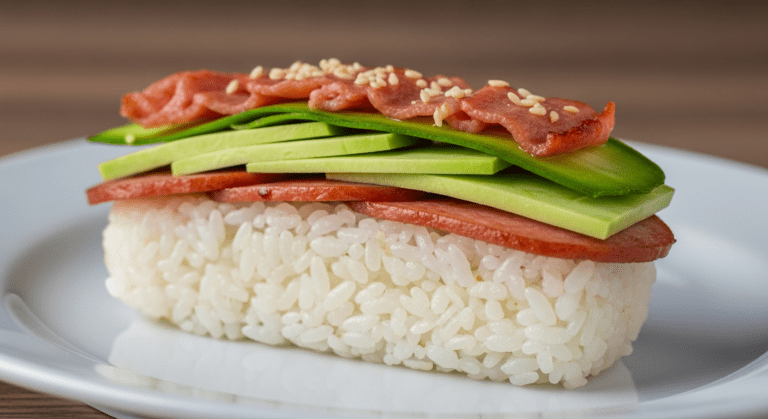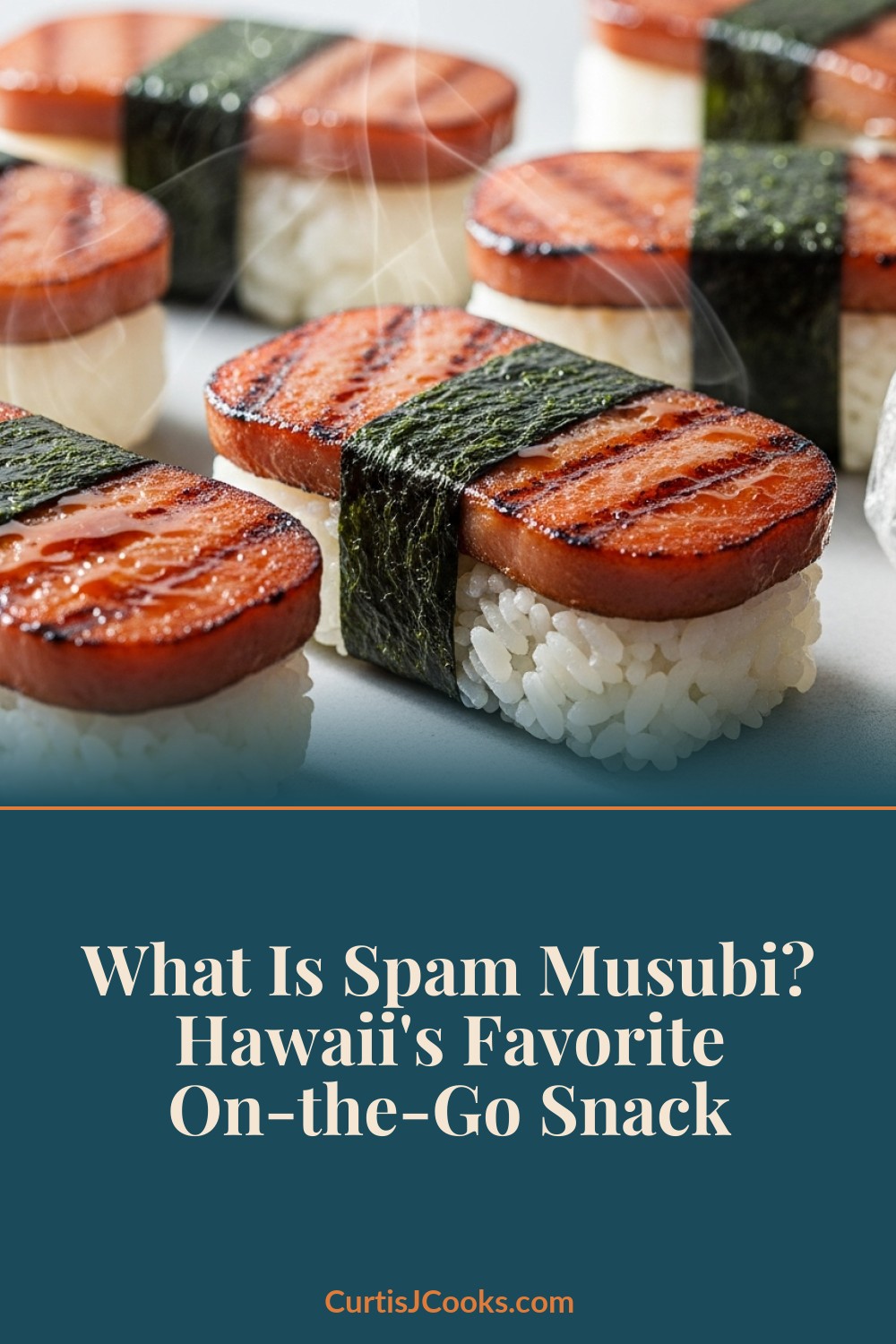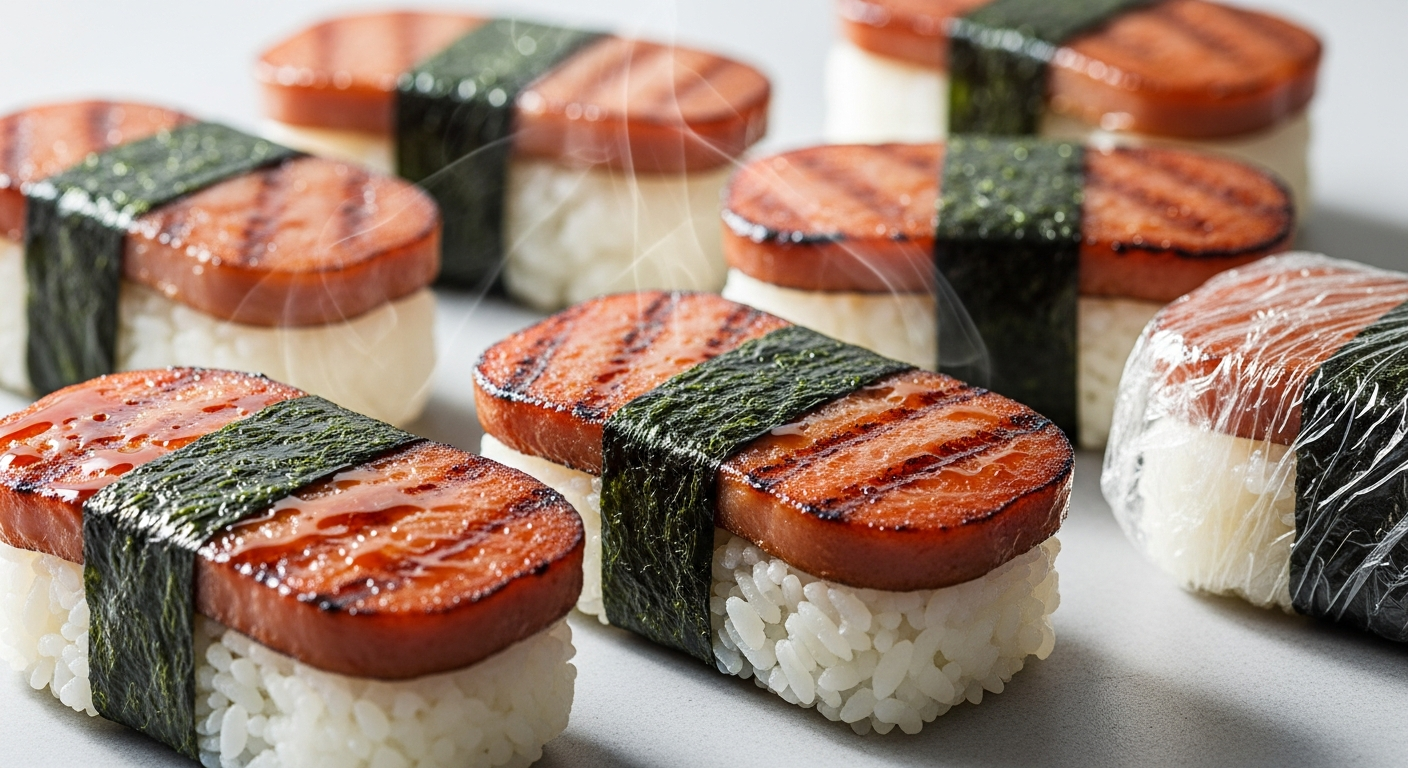
Spam musubi is Hawaii’s most ubiquitous snack — a slice of grilled Spam on top of a block of pressed sushi rice, wrapped with a strip of nori seaweed. It’s sold at every convenience store, gas station, and ABC Store in Hawaii, and it’s the thing locals grab when they need something filling, portable, and satisfying.
Think of it as Hawaii’s answer to the onigiri. It’s simple, it’s handheld, it travels well, and there’s no utensils required. Pop the plastic wrap, eat it in a few bites, and keep moving. That’s the whole idea.
Spam Musubi in 30 Seconds
It’s three ingredients: Spam, rice, and nori. The Spam is sliced from the can, pan-fried or grilled until caramelized (usually glazed with a soy sauce and sugar mixture), placed on a block of pressed sushi rice, and wrapped with a strip of roasted seaweed. Some versions add a slice of fried egg or furikake seasoning to the rice.
Free: Hawaiian Cooking Starter Kit
Get 5 essential island recipes + a printable pantry checklist — everything you need to start cooking Hawaiian at home.
No spam, ever. Unsubscribe anytime.
The genius is in its simplicity. The salty, caramelized Spam against the sticky rice and crisp nori creates a combination of textures and flavors that’s deeply satisfying. Sweet, salty, savory, and umami — all in a handheld package.
Why Hawaii Loves Spam
Hawaii consumes more Spam per capita than any other state — over 7 million cans a year. The love affair started during World War II, when the US military brought massive quantities of the canned meat to the islands. It was shelf-stable, high in protein, and cheap. After the war, it stayed.
Spam fit perfectly into Hawaii’s multicultural food culture. Japanese families incorporated it into rice dishes and bento boxes. Filipino families added it to stir-fries. Korean families used it in kimchi fried rice. Spam became a pantry staple that crossed every cultural line on the islands.
Today, Spam isn’t a punchline in Hawaii — it’s a legitimate ingredient that shows up on restaurant menus, in gourmet preparations, and at the annual Waikiki Spam Jam festival. And spam musubi is its crowning achievement.
The History
Spam musubi was reportedly created by Barbara Funamura, a Japanese-Hawaiian woman from Kauai, in the 1980s. She combined the Japanese concept of onigiri (rice balls) with the local love of Spam and created something entirely new — a dish that could only have been invented in Hawaii, where Japanese food culture and American military history collide.
From there, it spread to every island and every convenience store. Today, 7-Eleven locations in Hawaii sell more spam musubi than any other single item. It’s the unofficial snack food of the state.
How It’s Made
The traditional method uses a musubi mold (the empty Spam can works in a pinch):
- Slice the Spam. Cut a can of Spam into 8-10 even slices, about 1/4 inch thick.
- Fry the Spam. Pan-fry in a hot skillet until caramelized on both sides. Glaze with a mixture of soy sauce, sugar, and a splash of mirin. The glaze should get sticky and dark.
- Press the rice. Using a musubi mold (or the Spam can with both ends removed), press warm sushi rice into a compact block on top of a strip of nori.
- Add the Spam. Place a glazed Spam slice on top of the rice block.
- Wrap with nori. Fold the nori strip up and over the Spam and rice, sealing it into a neat package.
- Wrap in plastic. Wrap each musubi tightly in plastic wrap to hold its shape and keep it fresh.
For the complete recipe with detailed tips, see the full Spam Musubi Recipe.
Popular Variations
- Egg musubi: Add a thin fried egg between the Spam and rice. Extra protein, extra richness.
- Furikake musubi: Sprinkle furikake (Japanese rice seasoning) over the rice before adding the Spam. Adds nori flakes, sesame, and extra umami.
- Teriyaki Spam musubi: A thicker teriyaki glaze on the Spam for a sweeter, stickier version.
- Spicy musubi: Add sriracha or kimchi to the rice layer for a kick.
- Bacon-wrapped musubi: Wrap the whole thing in a strip of bacon before grilling. Over the top, but incredible.
Where to Find Spam Musubi
In Hawaii, spam musubi is literally everywhere:
- 7-Eleven and ABC Stores — the most common source, usually $2-3 each
- Gas stations — every gas station in Hawaii has a warmer with spam musubi
- Supermarkets — the deli counter at Foodland, Times, and Safeway always has them
- School cafeterias — it’s lunch for thousands of Hawaii kids every day
- Plate lunch spots — often available as a side at plate lunch counters
On the mainland, you’ll occasionally find it at Hawaiian restaurants or Asian grocery stores with prepared food sections. But the best spam musubi is the one you make at home — fresh, warm, and exactly how you like it.
Making Spam Musubi at Home
You need three things: a can of Spam, cooked sushi rice, and roasted nori sheets. A musubi mold helps but isn’t required — the empty Spam can with both ends cut off works perfectly as a mold.
The biggest tip: use warm, freshly cooked rice. Cold rice doesn’t press well and won’t stick together. And don’t skip the soy-sugar glaze on the Spam — it’s the difference between good and “why isn’t this as good as the ones in Hawaii.”
Full recipe and technique: How to Make Spam Musubi
Explore More Hawaiian Snacks and Pupus
- Spam Musubi Recipe — The complete step-by-step guide
- Hawaiian Pupus Guide — Every Hawaiian appetizer and snack
- Lomi Salmon on Taro Chips — A pupu that impresses
- Mochiko Chicken — Crispy fried chicken, potluck-style
- Coconut Shrimp — Crispy, golden, and tropical
- Best Hawaiian Snacks to Order Online — Crack seed, li hing mui, and island treats shipped to your door
- The Plate Lunch Guide — From snacks to full meals
- Hawaiian Pantry Guide — Stock up on Spam, furikake, nori, and more