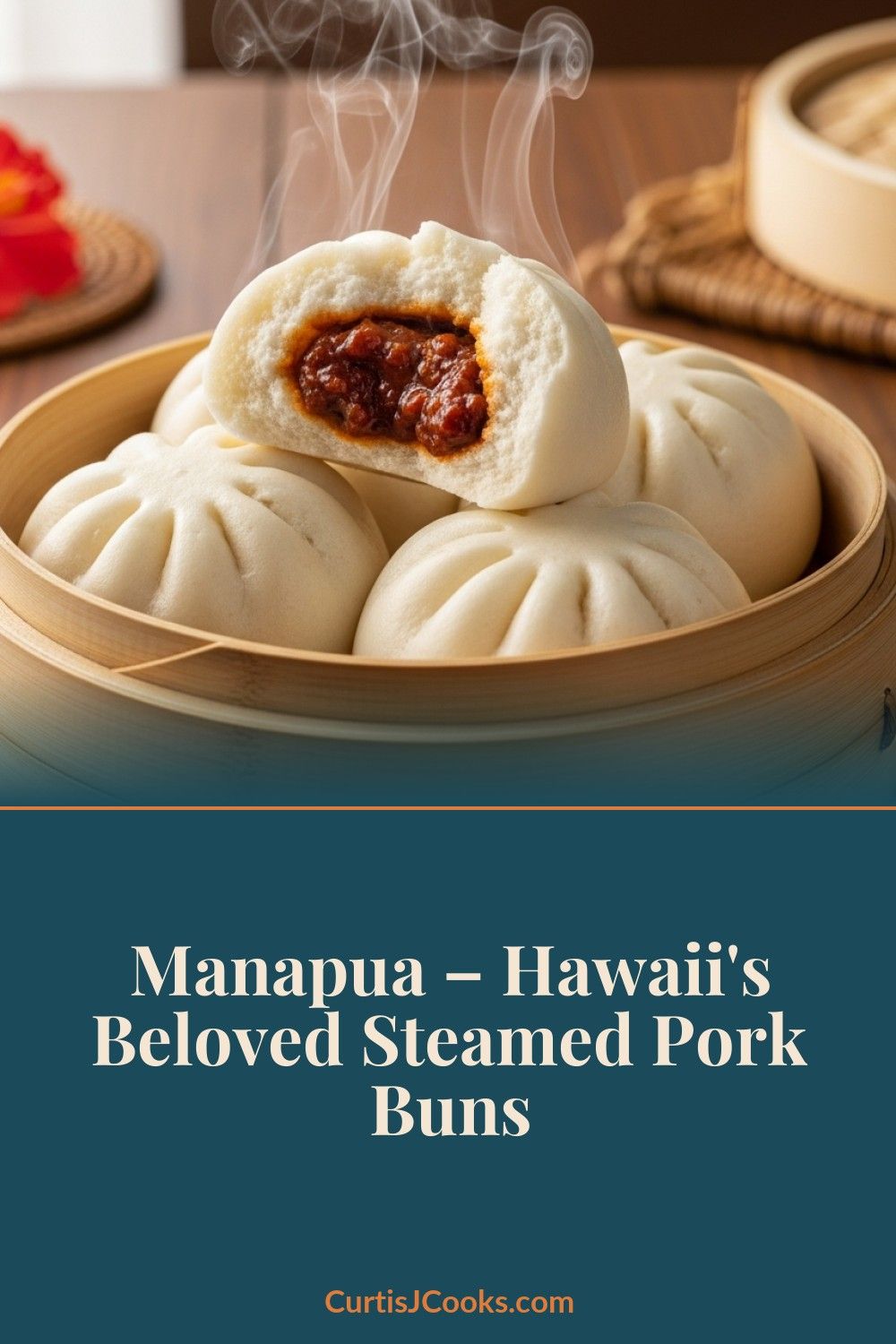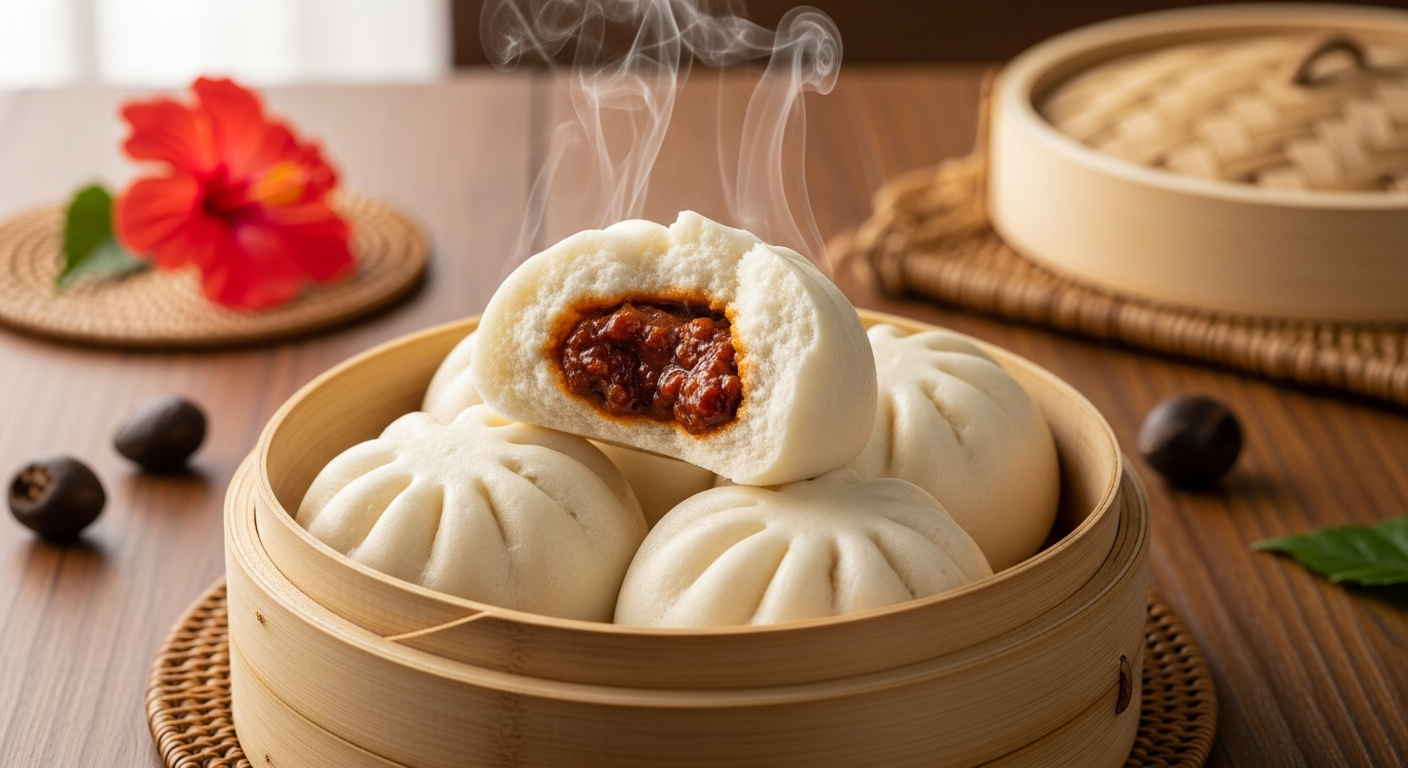
If you grew up in Hawaii, you know the sound — a truck rolling through the neighborhood, horn honking, and kids scrambling for loose change. That was the manapua man, and those soft, warm, pork-filled buns he carried were nothing short of magic. Manapua is Hawaii’s take on Chinese char siu bao, and after more than a century on the islands, it’s become something entirely its own.
Making manapua at home might seem intimidating if you’ve never worked with yeast dough before, but trust me — once you get the rhythm down, you’ll wonder why you waited so long. The pillowy steamed buns, the sweet and savory char siu filling, that first bite where steam escapes and all those flavors hit you at once — there’s really nothing else like it.
What Is Manapua?
At its core, manapua is a steamed bun filled with sweet barbecue pork. It’s Hawaii’s beloved version of char siu bao, the Cantonese steamed or baked bun that’s a dim sum staple around the world. But in Hawaii, manapua has taken on a life of its own — bigger than the typical dim sum version, with a slightly sweeter dough and a filling that leans into that distinctly local char siu flavor.
Free: Hawaiian Cooking Starter Kit
Get 5 essential island recipes + a printable pantry checklist — everything you need to start cooking Hawaiian at home.
No spam, ever. Unsubscribe anytime.
The name itself tells the story. “Manapua” comes from the Hawaiian phrase mea ʻono puaʻa, which translates roughly to “delicious pork thing.” That’s about as honest and accurate a food name as you’ll ever find. Over time, the phrase got shortened to manapua, and it stuck.
A Little History: The Manapua Man
Manapua arrived in Hawaii with Chinese immigrants in the mid-1800s who came to work the sugar plantations. They brought their culinary traditions, including char siu bao, and as Chinese-owned bakeries and restaurants took root in Honolulu’s Chinatown, the buns became a local fixture.
But the real legend is the manapua man — vendors who loaded up trucks (and before that, carts) with freshly steamed buns and drove through neighborhoods selling them door to door. For generations of kids growing up in Hawaii, the manapua man was as exciting as the ice cream truck on the mainland, maybe more so. You’d hear that horn, grab your dollar bills, and race outside. The tradition has faded some over the years, but the love for manapua hasn’t dimmed one bit.
Baked vs. Steamed Manapua
In Hawaii, you’ll find both baked and steamed manapua, and people have strong opinions about which is better. Baked manapua has a golden, slightly glazed exterior with a bread-like texture — it’s what you’ll find at most 7-Elevens across the state. Steamed manapua, on the other hand, has that classic pillowy-soft, white exterior that practically melts in your mouth.
This recipe focuses on the steamed version, which is closer to the traditional char siu bao style and, in my opinion, the more satisfying experience. There’s something about tearing open a perfectly steamed bun and finding that glistening, sweet pork filling inside that just can’t be beat.
All About the Char Siu Filling
The filling is where the magic happens. Good manapua filling should be sweet, savory, and slightly sticky — a concentrated hit of char siu flavor in every bite. We’re using diced char siu pork (if you have leftover homemade char siu, even better) combined with oyster sauce, soy sauce, sugar, and sesame oil, then thickened with a cornstarch slurry so it holds together inside the bun.
The key is making the filling ahead of time and letting it cool completely before you start assembling. Warm filling will make the dough sticky and hard to work with, and nobody wants that. A couple of hours in the fridge firms it up perfectly.
Tips for Perfect Manapua
Let the Dough Rise Properly
Don’t rush the rise. The dough needs a full hour in a warm spot to double in size, and then another 30 minutes after you’ve assembled the buns. This double rise is what gives manapua that light, fluffy, cloud-like texture. If your kitchen is cold, put the dough in the oven with just the light on — the gentle warmth is perfect.
Don’t Overfill
It’s tempting to stuff as much filling as possible into each bun, but 1 to 2 tablespoons is the sweet spot. Too much filling and you won’t be able to pinch the dough closed properly, which means it’ll burst open during steaming. A good seal is everything.
Steam Technique Matters
Line your steamer with parchment paper squares under each bun to prevent sticking. Make sure your water is at a full rolling boil before you put the buns in, and don’t lift the lid during steaming — the sudden temperature drop can cause the buns to deflate. When they’re done, crack the lid slightly and let them rest for a minute before removing.
Manapua in Local Culture
Manapua isn’t just a snack in Hawaii — it’s woven into the fabric of daily life. Char Hung Sut in Chinatown has been turning out manapua since the 1940s, and locals will wait in line out the door for their famous steamed buns. Royal Kitchen is another Honolulu institution that’s been at it for decades. And yes, the 7-Eleven manapua — the baked version sitting under a heat lamp — is its own category of comfort food that every local knows well.
You’ll find manapua at potlucks, football tailgates, after-school snacks, and late-night cravings. It’s the kind of food that brings people together, and making it from scratch at home is a way to keep that tradition alive.
Ready to Make Your Own?
Everything you need is in the recipe card below. Give yourself a relaxed afternoon — put on some music, work the dough, prep the filling, and enjoy the process. The moment you pull those steamed buns out and see them puffed up, perfectly white, and filled with sweet char siu — you’ll feel like a kid chasing the manapua truck all over again.