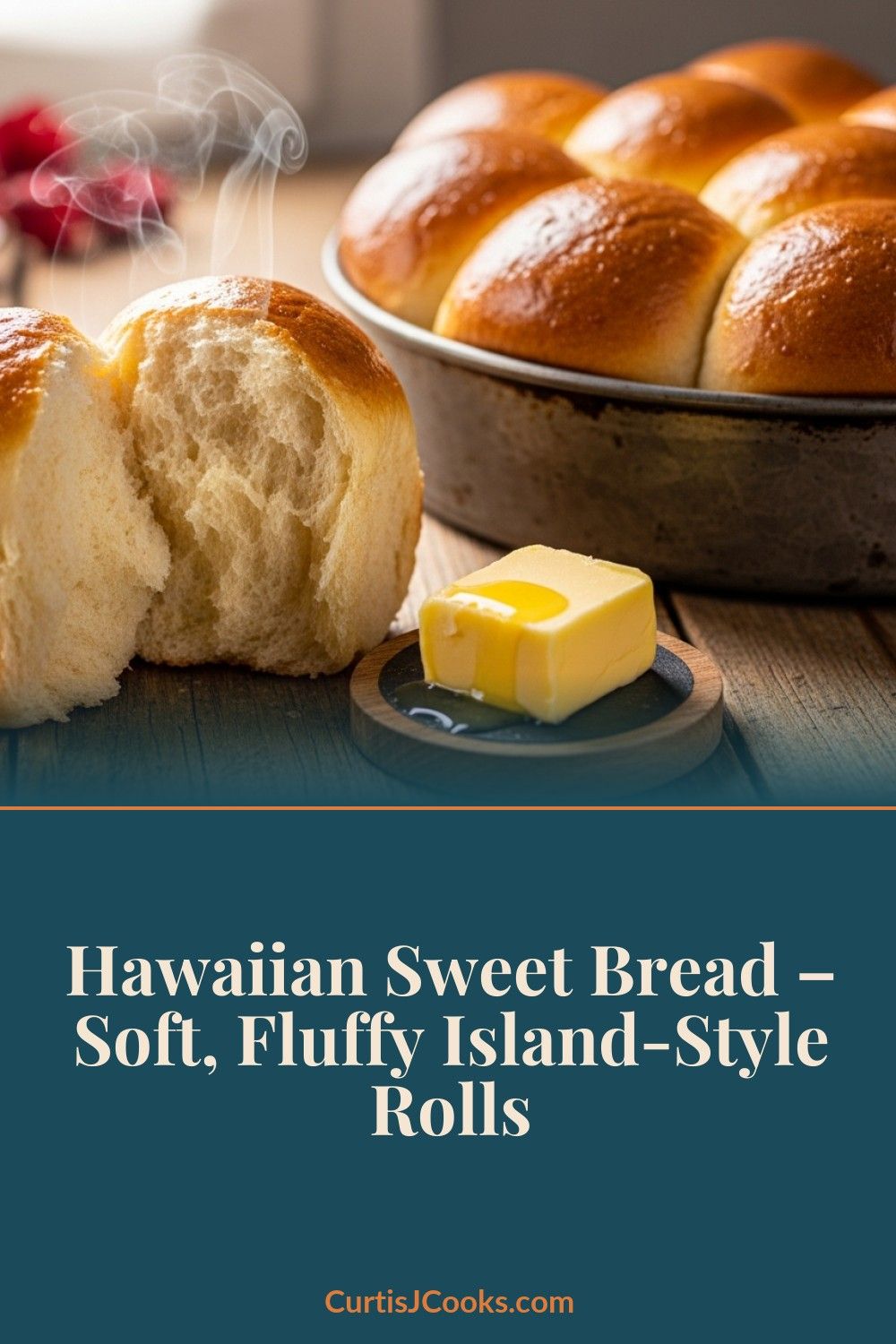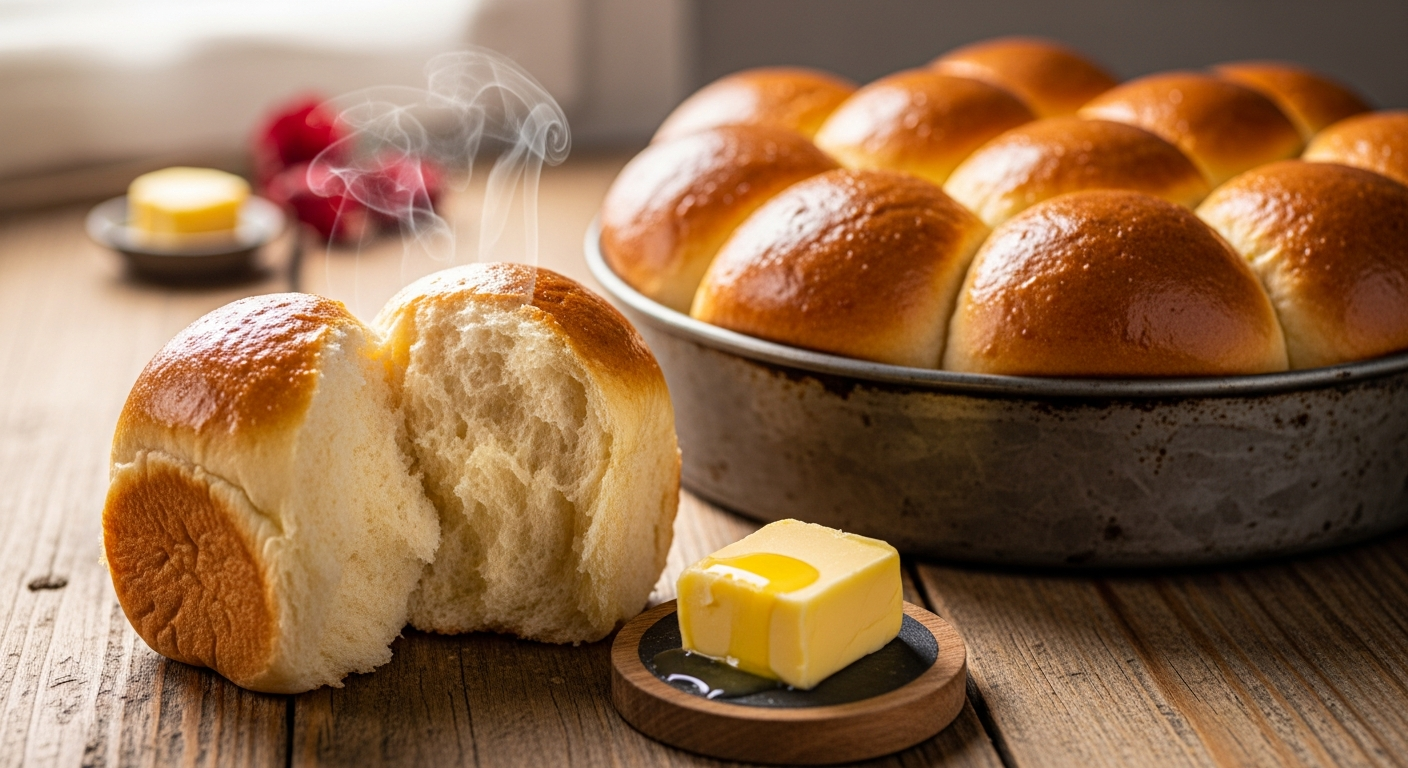
There’s a reason Hawaiian sweet bread has become one of the most beloved breads in America — and it all started in a small bakery in Hilo, Hawaii. These soft, pillowy, golden rolls have a subtle sweetness and a tender crumb that makes them absolutely irresistible. Whether you’re tearing one apart at the dinner table, using them for sliders, or just eating one warm with a pat of butter, Hawaiian sweet bread is pure comfort.
The store-bought versions are fine in a pinch, but making them from scratch? That’s a whole different experience. The aroma that fills your kitchen, the way the dough feels in your hands, the moment you pull those golden rolls out of the oven — it’s worth every minute.
What Is Hawaiian Sweet Bread?
Hawaiian sweet bread is a soft, enriched bread with a slightly sweet flavor and an incredibly tender texture. What sets it apart from other sweet breads is the combination of ingredients that give it its distinctive character: eggs and butter for richness, pineapple juice for a subtle tropical tang, and vanilla for warmth and depth.
Free: Hawaiian Cooking Starter Kit
Get 5 essential island recipes + a printable pantry checklist — everything you need to start cooking Hawaiian at home.
No spam, ever. Unsubscribe anytime.
The result is a bread that’s not quite dessert but definitely more than just a dinner roll. It occupies this perfect middle ground — sweet enough to eat on its own, but versatile enough to pair with savory dishes. The texture is what really gets people. It’s pillowy soft with a fine, cotton-like crumb that practically melts in your mouth.
The Portuguese Connection
To understand Hawaiian sweet bread, you need to go back to the late 1800s when Portuguese immigrants from Madeira and the Azores arrived in Hawaii to work on the sugar plantations. They brought with them their culinary traditions, and one of the most important was pão doce — Portuguese sweet bread.
Pão doce was a rich, egg-based bread traditionally baked for holidays and celebrations. In Portugal and the Azores, it was (and still is) a cherished part of Easter and Christmas traditions. When Portuguese families settled in Hawaii, they continued baking their sweet bread, and it quickly became beloved by the broader community.
Over time, the recipe adapted to its new island home. Bakers started incorporating local ingredients like pineapple juice, which added a subtle tropical brightness that distinguished it from its European ancestor. The bread became a staple at local gatherings, church potlucks, and family celebrations. Eventually, it stopped being “Portuguese sweet bread” in the local vocabulary and became simply “Hawaiian sweet bread.”
The King’s Hawaiian Story
You can’t talk about Hawaiian sweet bread without mentioning Robert Taira. In the 1950s, Taira opened Robert’s Bakery in Hilo on the Big Island, where he perfected his version of the sweet bread. His recipe was so popular that he eventually launched the King’s Hawaiian brand, which moved to the mainland in 1977 and became a national phenomenon.
Today, King’s Hawaiian rolls are in practically every grocery store in America. They’ve introduced millions of people to the concept of Hawaiian sweet bread. But here’s a little secret that locals know: the homemade version is even better. There’s no preservative aftertaste, the texture is softer, the flavor is more nuanced, and you can control exactly how sweet you want them. Once you make them from scratch, those plastic bags from the store just don’t hit the same.
Why Homemade Is Worth the Effort
I won’t lie to you — making bread from scratch takes time. Between mixing, kneading, and two rises, you’re looking at about three hours from start to finish. But the actual hands-on work is maybe 30 minutes. The rest is just waiting while the yeast does its thing. And the payoff is absolutely worth it.
Here’s what you get with homemade that you’ll never get from a package:
Freshness. There is nothing — nothing — like a Hawaiian sweet roll straight from the oven. The outside has just the slightest crisp, the inside is impossibly soft, and the whole thing is warm and fragrant. It’s a completely different experience from room-temperature packaged bread.
Control. You can adjust the sugar to your liking. You can add more vanilla or a touch of coconut extract. You can make them bigger or smaller, bake them in a round pan for a pull-apart loaf, or shape them into individual rolls. The recipe is your starting point, not your limit.
Pride. Let’s be honest — pulling a pan of homemade Hawaiian sweet bread out of the oven and watching your family’s eyes light up? That feeling is unbeatable.
Tips for Perfect Hawaiian Sweet Bread
Eggs and Butter Are Non-Negotiable
These are what make the bread rich and tender. Three eggs give the dough its golden color and soft crumb. The melted butter adds richness and helps keep the bread moist for days. Make sure your eggs are at room temperature so they incorporate smoothly into the dough.
Pineapple Juice Is the Secret Weapon
This is what makes Hawaiian sweet bread taste Hawaiian. The pineapple juice adds a subtle tang that balances the sweetness and gives the bread its distinctive flavor. Use real pineapple juice (canned is fine), and make sure it’s warm — about 110 degrees F — so it doesn’t kill the yeast. The sugars in the juice also help feed the yeast, giving you a better rise.
Don’t Over-Knead
Knead the dough for 8 to 10 minutes — enough to develop the gluten so the bread has structure, but not so much that it becomes tough. The dough should be smooth, elastic, and slightly tacky when it’s ready. If it’s sticking to your hands, resist the urge to add too much extra flour. A slightly sticky dough makes for softer bread.
Let It Rise Fully
Don’t rush the rise. The first rise should take about 1 hour in a warm spot — the dough should double in size. The second rise, after shaping, takes about 45 minutes. If your kitchen is cool, turn your oven on to 200 degrees F for a couple of minutes, turn it off, and use that as your proofing spot. A good rise means lighter, fluffier rolls.
What to Do with Hawaiian Sweet Bread
These rolls are incredibly versatile. Here are some of my favorite ways to use them:
Dinner rolls. The classic. Serve them warm with butter alongside any meal — they’re especially great with soups and stews.
Sliders. Hawaiian sweet bread makes the best slider buns. The sweetness pairs perfectly with pulled pork, kalua pig, or teriyaki chicken.
French toast. Day-old Hawaiian sweet bread makes absolutely incredible French toast. The bread soaks up the egg mixture beautifully, and the built-in sweetness means you can go easy on the sugar.
Bread pudding. Cube up any leftover rolls and use them for bread pudding. The richness of the bread gives you a head start on a decadent dessert.
Just with butter. Sometimes the simplest approach is the best. A warm roll, a pat of good butter, and nothing else. That’s a perfect moment right there.
Recipe: Hawaiian Sweet Bread Rolls
Find the full recipe card below with ingredient measurements, step-by-step instructions, and nutrition information. If you make these, I’d love to see how they turn out — leave a comment or share a photo!