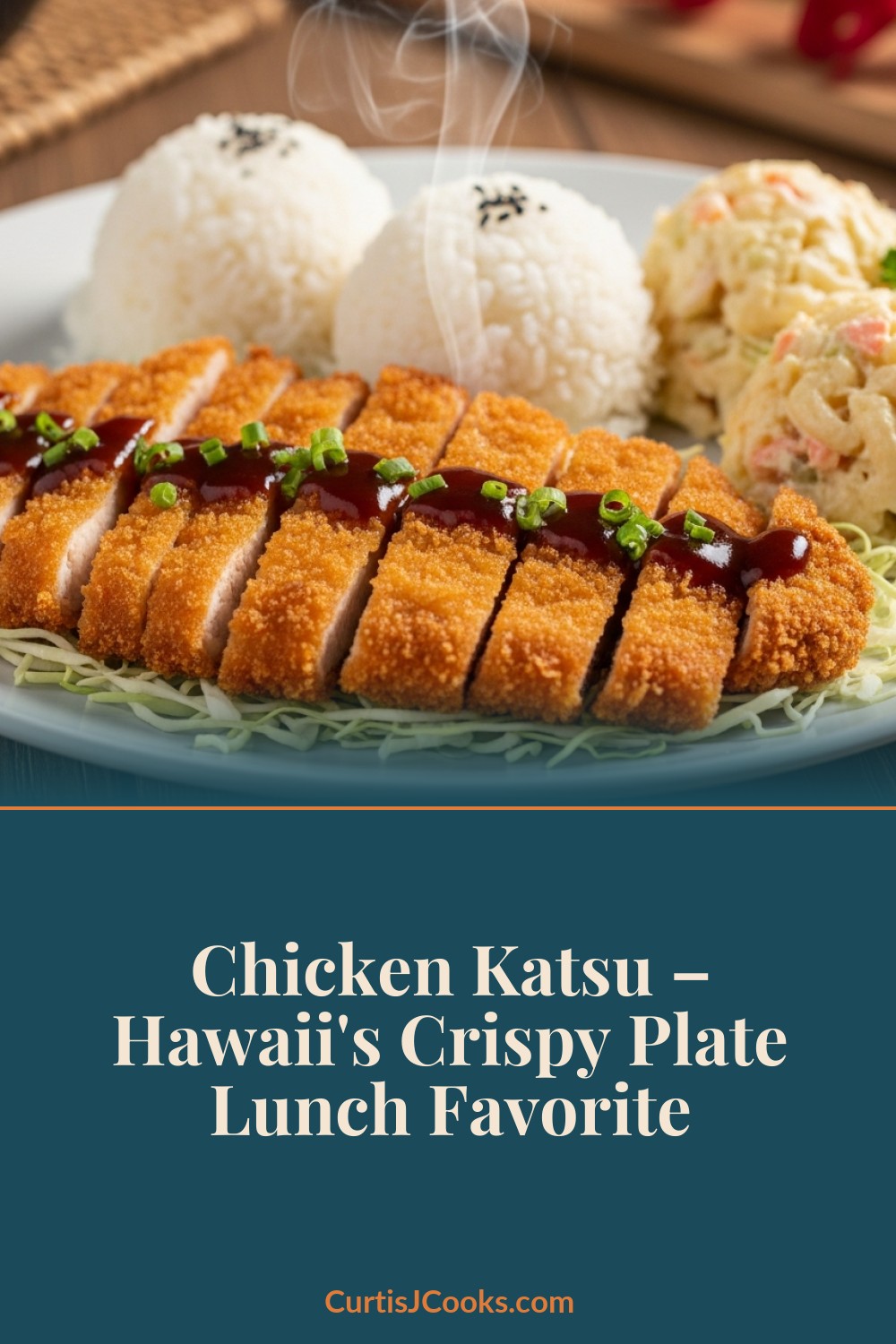
Ask anyone in Hawaii what they want for lunch and there’s a solid chance the answer is chicken katsu. It’s one of those dishes that transcends restaurants, generations, and even neighborhoods — from the plate lunch spots in Kalihi to the cafeterias in Kailua, chicken katsu is everywhere, and for good reason. Crispy panko crust, juicy chicken, and that tangy-sweet katsu sauce drizzled over the top — it’s comfort food at its absolute best.
The beautiful thing about chicken katsu is how simple it really is. No complicated marinades, no obscure ingredients, no hours of prep. Just good technique, hot oil, and a solid breading station. Once you nail it at home, you’ll have a weeknight dinner that the whole family will request on repeat.
What Is Chicken Katsu?
Chicken katsu is a panko-breaded, deep-fried chicken cutlet — Japan’s answer to the European schnitzel, filtered through more than a century of Hawaiian plate lunch culture. The word “katsu” comes from the Japanese katsuretsu, itself borrowed from the English “cutlet.” It arrived in Hawaii with Japanese immigrants and quickly became one of the most beloved items on the plate lunch menu.
Free: Hawaiian Cooking Starter Kit
Get 5 essential island recipes + a printable pantry checklist — everything you need to start cooking Hawaiian at home.
No spam, ever. Unsubscribe anytime.
What sets katsu apart from other fried chicken is the panko breadcrumbs. Unlike regular breadcrumbs, panko is flaky, airy, and creates an incredibly crispy, shattering crust that stays crunchy even after sitting for a bit. That crunch factor is non-negotiable — it’s what makes katsu, katsu.
The King of the Plate Lunch
If you had to crown a single plate lunch item as the most popular in Hawaii, chicken katsu might just take the title. It edges out even the legendary loco moco and kalua pork for sheer ubiquity. Every plate lunch spot has it. Every local diner has their version. School cafeterias serve it. It shows up at potlucks, bento boxes, and family dinners.
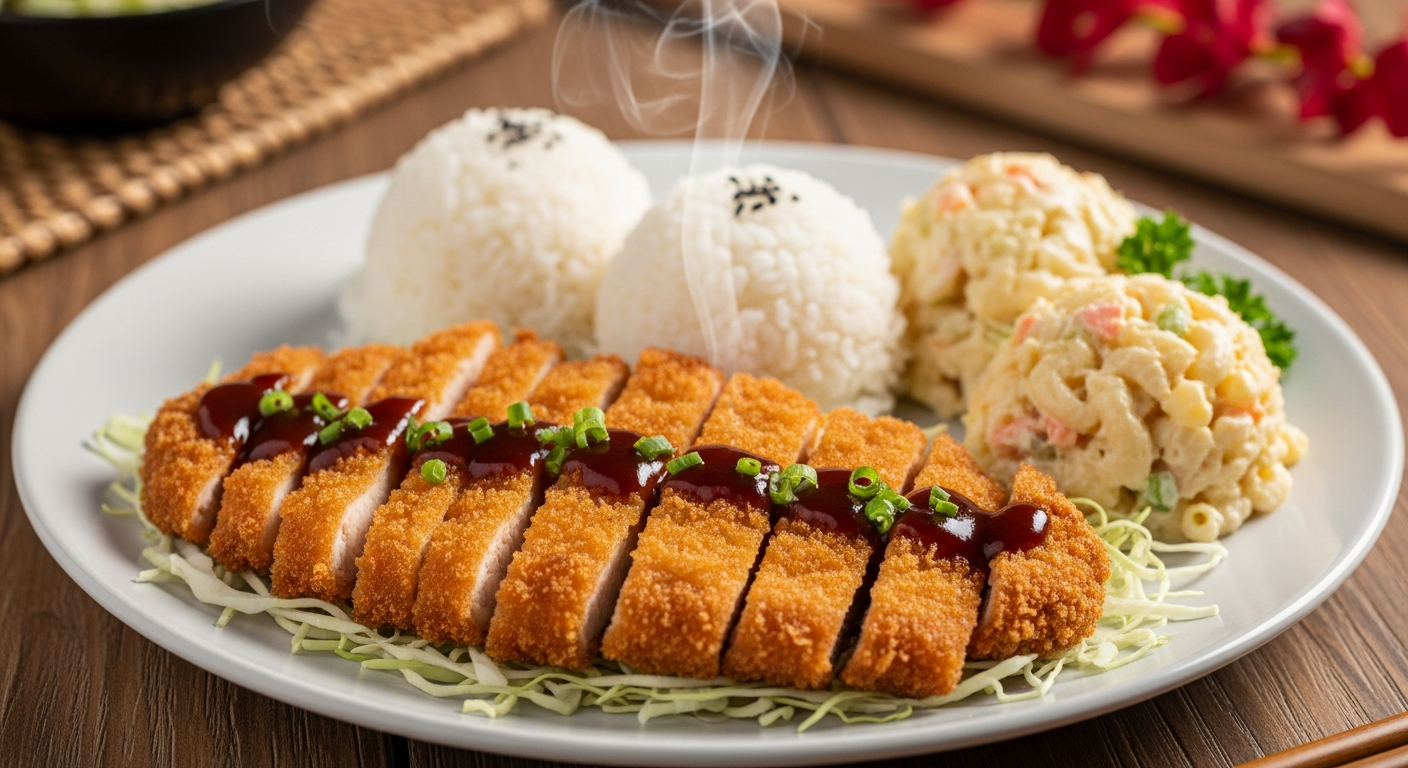
Part of the appeal is that it plays well with everything on the plate. The crispy cutlet sits next to a mound of white rice, a scoop of creamy mac salad, and a bed of shredded cabbage. Each element does its job — the rice soaks up the sauce, the mac salad adds richness, and the cabbage provides a fresh crunch that balances the fried chicken. It’s a plate lunch symphony, and chicken katsu is the lead instrument.
The Katsu Sauce
Let’s talk about katsu sauce, because this is where a lot of mainland folks get confused. Katsu sauce (also called tonkatsu sauce) is not ketchup, and it’s not BBQ sauce — though it borrows flavors from both. It’s a tangy, slightly sweet, Worcestershire-forward condiment with depth and complexity that elevates the fried chicken from great to unforgettable.
You can absolutely buy bottled tonkatsu sauce (Bull-Dog brand is the classic), but making it at home takes about two minutes and tastes even better. The base is ketchup and Worcestershire sauce, with soy sauce for umami, a little sugar for sweetness, and a touch of Dijon mustard for that subtle kick. Whisk it together and you’re done. Some people add a squeeze of lemon or a dash of garlic powder — make it your own.
The Three-Station Breading Technique
Getting that perfect katsu crust comes down to the three-station breading method, and doing it right every time. Here’s the setup:
Station 1: Flour. A light dusting of all-purpose flour gives the egg something to grip onto. Shake off the excess — you want a thin, even coat, not clumps.
Station 2: Egg. Beaten eggs create the glue that holds the panko in place. Make sure every surface gets coated.
Station 3: Panko. Press the chicken firmly into the panko breadcrumbs. Really press it in there — you want full, even coverage with no bare spots. The more panko that sticks, the crunchier your katsu will be.
One tip: use one hand for the dry stations (flour and panko) and the other hand for the wet station (egg). This keeps you from ending up with breaded fingers instead of breaded chicken.
Tips for the Crispiest Chicken Katsu
Pound Your Chicken Evenly
This is the step most people skip, and it makes a huge difference. Pound each breast to an even 1/2-inch thickness using a meat mallet or rolling pin. Even thickness means even cooking — no dry edges and raw centers. If the breast is very thick, butterfly it first, then pound it flat.
Oil Temperature Is Everything
350 degrees Fahrenheit is your target. Too hot and the panko burns before the chicken cooks through. Too cool and the chicken absorbs oil and gets greasy instead of crispy. Use a thermometer if you have one. If not, drop a pinch of panko into the oil — if it sizzles immediately and floats, you’re good to go.
Drain on a Wire Rack
Skip the paper towels. A wire rack set over a sheet pan lets air circulate underneath the chicken, keeping the bottom just as crispy as the top. Paper towels trap steam and make the crust soggy on the underside.
Slice Before Serving
Always slice the katsu into strips before plating. It makes it easier to eat, shows off that beautiful golden crust and juicy interior, and looks way more impressive. Cut on a slight diagonal for the classic presentation.
Building the Full Plate Lunch
Chicken katsu is incredible on its own, but the full plate lunch experience is what really makes it sing. Here’s how to build it:
- Two scoops rice — medium grain, sticky, fresh from the rice cooker
- One scoop mac salad — creamy, a little tangy, made the day before so the flavors meld
- Shredded cabbage — raw, crisp, piled high as a bed for the katsu
- Katsu sauce — drizzled over the chicken or served on the side for dipping
That’s the plate. Simple, satisfying, and absolutely iconic. Whether you’re recreating a Zippy’s plate lunch or building your own version at home, this is Hawaii on a plate.
Let’s Get Cooking
The full recipe is below — chicken katsu, homemade katsu sauce, and everything you need to build the perfect plate lunch at home. It comes together fast, it’s hard to mess up, and I guarantee it’ll become a regular in your dinner rotation. Grab your panko and let’s go.