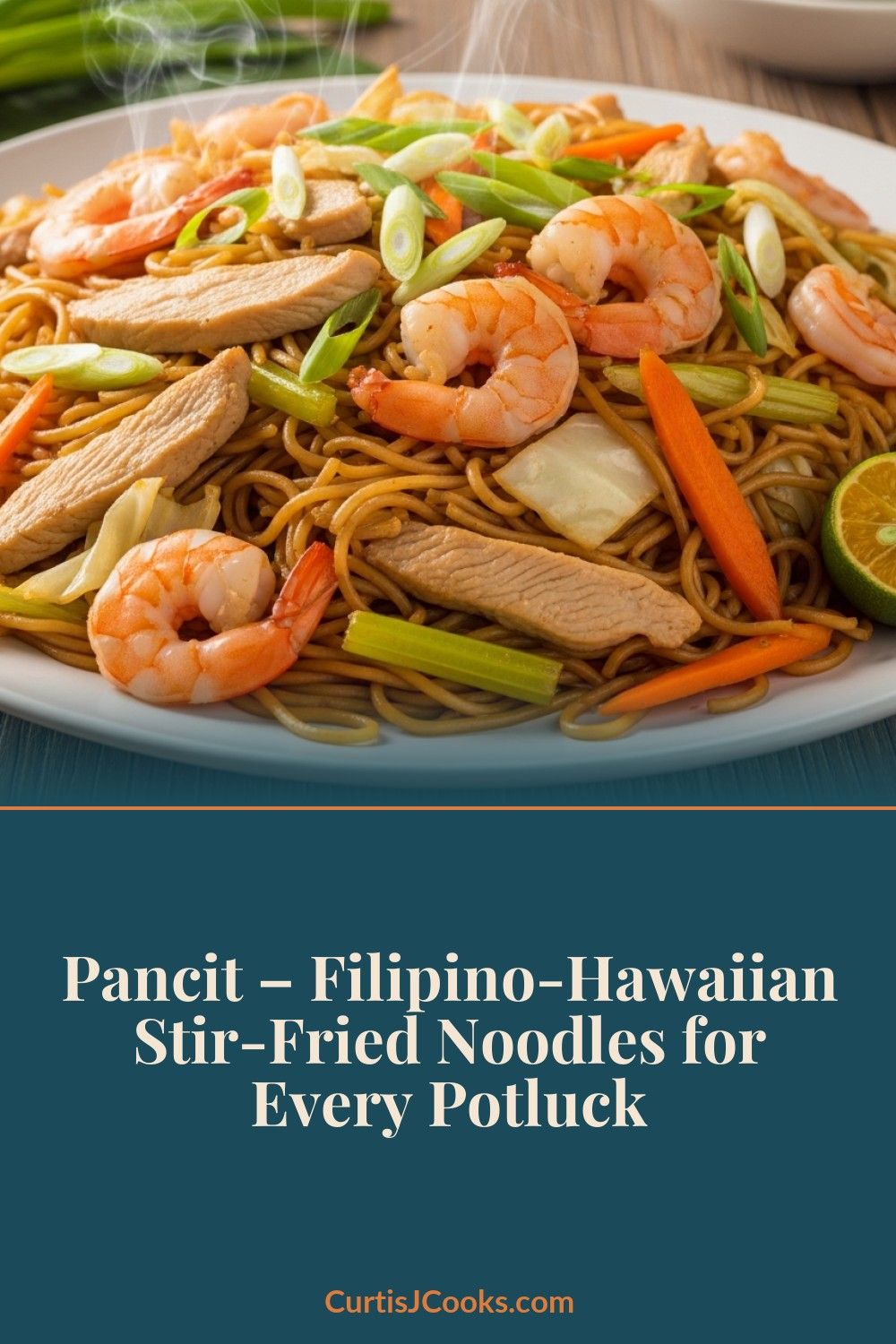
At every Hawaiian potluck, there are certain dishes you can count on seeing. The mac salad. The kalua pig. The rice. And right there in the middle of the table, in a big foil pan that’s already half-empty — pancit. Filipino stir-fried noodles, loaded with vegetables and protein, glistening with soy sauce and garlic, and finished with a squeeze of calamansi. It’s comfort food, celebration food, and everyday food all in one, and it’s as Hawaiian as it is Filipino.
What Is Pancit?
Pancit (sometimes spelled “pansit”) is the Filipino term for noodles, and it covers a huge family of noodle dishes from across the Philippines. The version you’ll find at Hawaiian potlucks is almost always pancit bihon, made with thin rice stick noodles, or pancit canton, made with egg noodles. Many cooks in Hawaii make a combination of both — called pancit bihon canton — getting the best of both worlds: the silky chew of rice noodles and the heartier bite of egg noodles.
The dish is simple at its core: noodles stir-fried with vegetables, protein, soy sauce, and broth. But like all great simple dishes, the magic is in the technique and the balance of flavors. Good pancit has noodles that are tender but not mushy, vegetables that still have a little crunch, and a savory-umami depth that keeps you reaching for more.
Free: Hawaiian Cooking Starter Kit
Get 5 essential island recipes + a printable pantry checklist — everything you need to start cooking Hawaiian at home.
No spam, ever. Unsubscribe anytime.
Long Noodles, Long Life
In Filipino culture, pancit is more than just a tasty noodle dish — it’s a symbol of long life. The long noodles represent longevity, which is why pancit is considered essential at birthday celebrations. You’ll hear the older generation say you should never cut the noodles before serving because cutting them cuts short the celebrant’s life. Whether or not you’re superstitious, it’s a beautiful tradition, and it means pancit shows up at every birthday party in Hawaii without fail.
This belief has made pancit one of those dishes that carries real emotional weight. When your auntie makes pancit for your birthday, she’s not just feeding you — she’s wishing you a long, full life. That’s the kind of love that’s stirred into every bite.
From the Plantation to the Potluck Table
Like so many Filipino dishes that became Hawaiian staples, pancit made its way to the islands with the plantation workers who arrived in the early 1900s. Filipino immigrants — called “sakada” — came to Hawaii to work the sugar cane and pineapple fields, and they brought their culinary traditions with them. Over generations, those traditions merged with the multicultural fabric of Hawaiian food culture.
Today, pancit sits right alongside laulau, spam musubi, and chicken long rice at the potluck table. It’s not thought of as “Filipino food” by most locals — it’s just local food. Hawaiian food. Our food. The beauty of Hawaiian food culture is this blending of traditions, and pancit is one of the most delicious examples of it.
The Noodles Matter
The noodles you choose will shape the whole dish. Here’s what you need to know:
- Bihon (rice stick noodles) — These are thin, translucent rice noodles that cook up silky and tender. They absorb sauce beautifully and have a lighter texture. This is the most traditional choice for Hawaiian-style pancit.
- Canton (egg noodles) — Thicker and chewier, with a more wheat-forward flavor. They hold up well to vigorous stir-frying and add a heartier quality to the dish.
- The mix — Use both. Seriously. Half bihon, half canton gives you the best of both worlds and it’s how many local families make it.
The critical rule: Soak your noodles in warm water to soften them — don’t boil them. Boiled rice noodles turn to mush in the pan. You want them pliable but still slightly firm, because they’ll finish cooking in the wok with the sauce and broth.
The Beauty of Customization
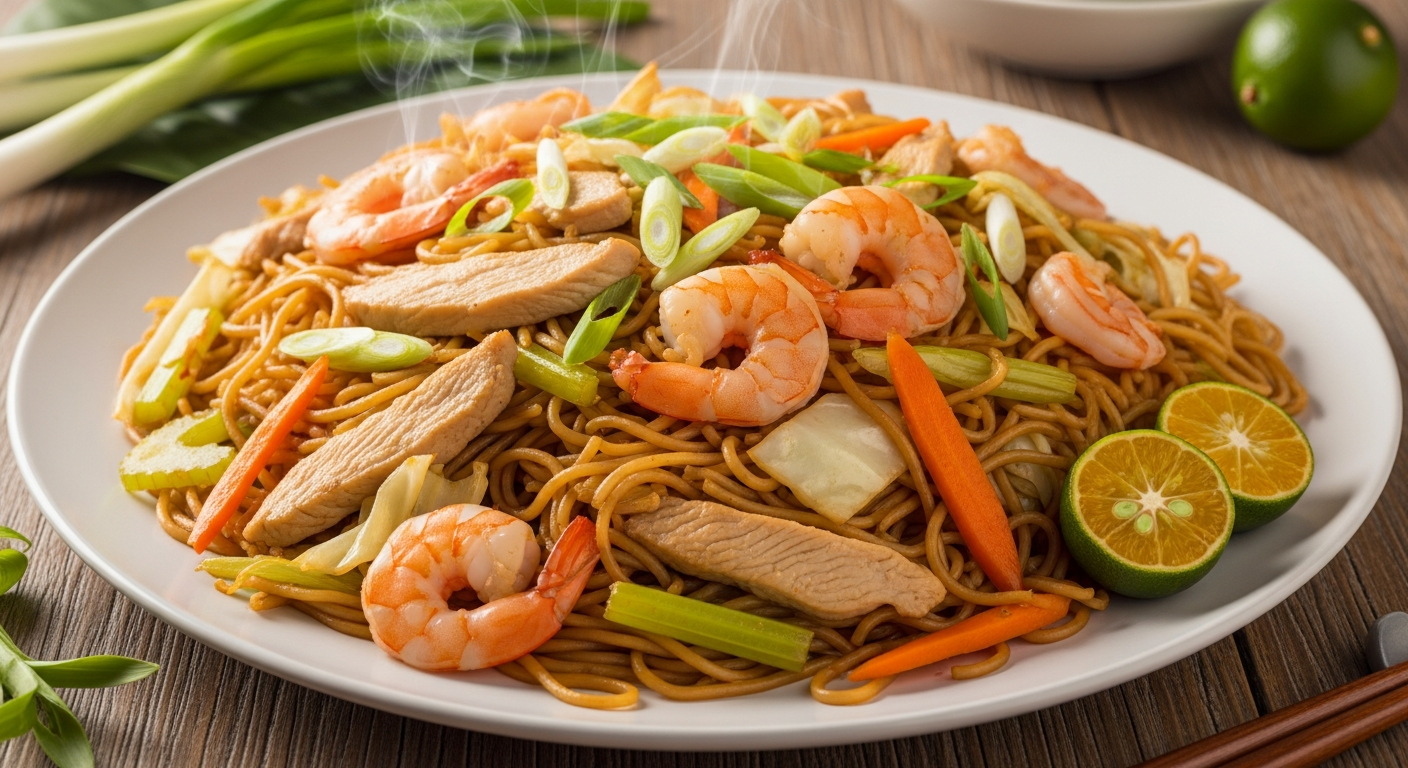
One of the reasons pancit is so perfect for potlucks is that it’s endlessly customizable. The version in this recipe uses chicken and shrimp, but you can adapt it to whatever you have:
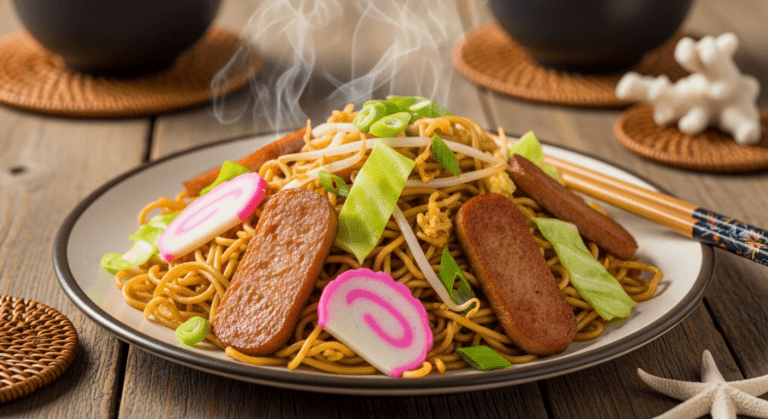
- Protein: Pork, chicken, shrimp, Chinese sausage (lap cheong), spam, tofu, or any combination
- Vegetables: Cabbage, carrots, and celery are the classic base, but add snap peas, green beans, bean sprouts, bell peppers, or bok choy
- Make it your own: Some families add a splash of oyster sauce, others use fish sauce, some go heavier on the soy. There’s no single “right” way — the right way is however your family makes it
This adaptability is what makes pancit such a practical dish. Got leftover roast chicken? Throw it in. Found some nice shrimp on sale? Perfect. It’s a dish that works with you, not against you.
Tips for the Best Pancit
Prep Everything Before You Start
Pancit comes together fast once the wok is hot. You do not want to be mincing garlic while your noodles are overcooking. Get all your vegetables cut, your protein sliced, your sauces measured, and your noodles soaked before you turn on the heat. This is a stir-fry, and stir-frying waits for no one.
High Heat Is Your Friend
Cook over the highest heat your stove can manage. You want that wok hei — that slight smoky char that comes from food hitting screaming-hot metal. It’s what gives restaurant stir-fries their edge, and it makes a world of difference with pancit.
Don’t Skip the Calamansi
That squeeze of calamansi (or lemon, if you can’t find calamansi) at the end is not optional. It’s the brightness that pulls the whole dish together — cutting through the richness of the soy and oyster sauce and waking up every flavor in the pan. If you can find calamansi at your local Asian grocery store, grab a bag. The flavor is more floral and complex than lemon, and it’s the authentic finish.
Serving Pancit
At a Hawaiian potluck, pancit is typically served at room temperature straight from the foil pan, and it’s delicious that way. But if you’re serving it at home as a main dish, eat it hot from the wok with calamansi or lemon wedges on the side, a sprinkle of green onions on top, and maybe some crushed chicharrones (pork cracklings) for extra crunch.
You can serve it as a side alongside other Filipino or Hawaiian dishes — pair it with chicken adobo, lumpia, and steamed rice for a full-on Filipino-Hawaiian feast. Or let it stand alone as a satisfying main dish for a weeknight dinner. Either way, you’re going to want to make a big batch, because pancit at room temperature the next day? Still incredible. Some would say even better.
Make this pancit for your next gathering, and watch it disappear. Then make it again for your birthday, because remember — long noodles, long life.