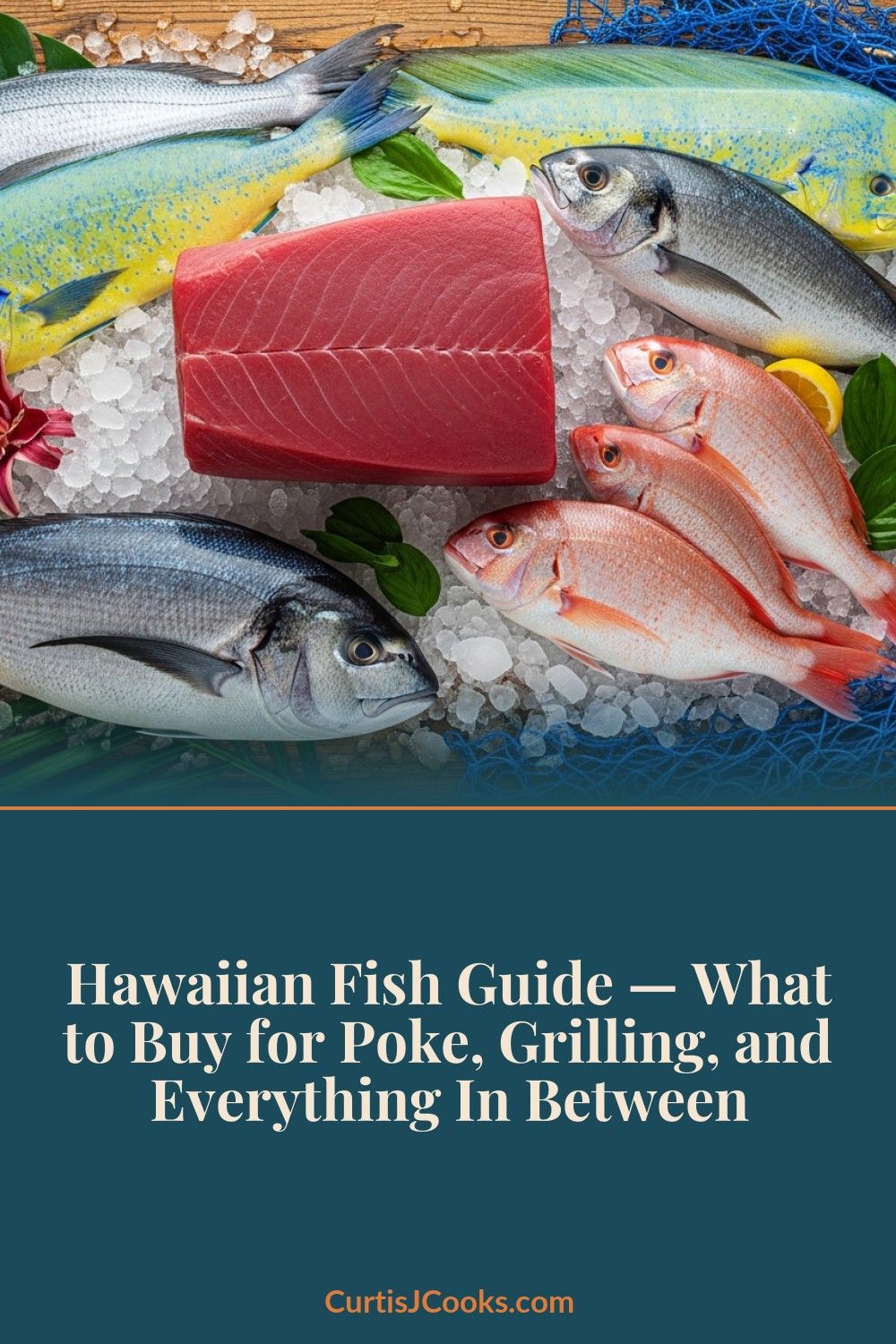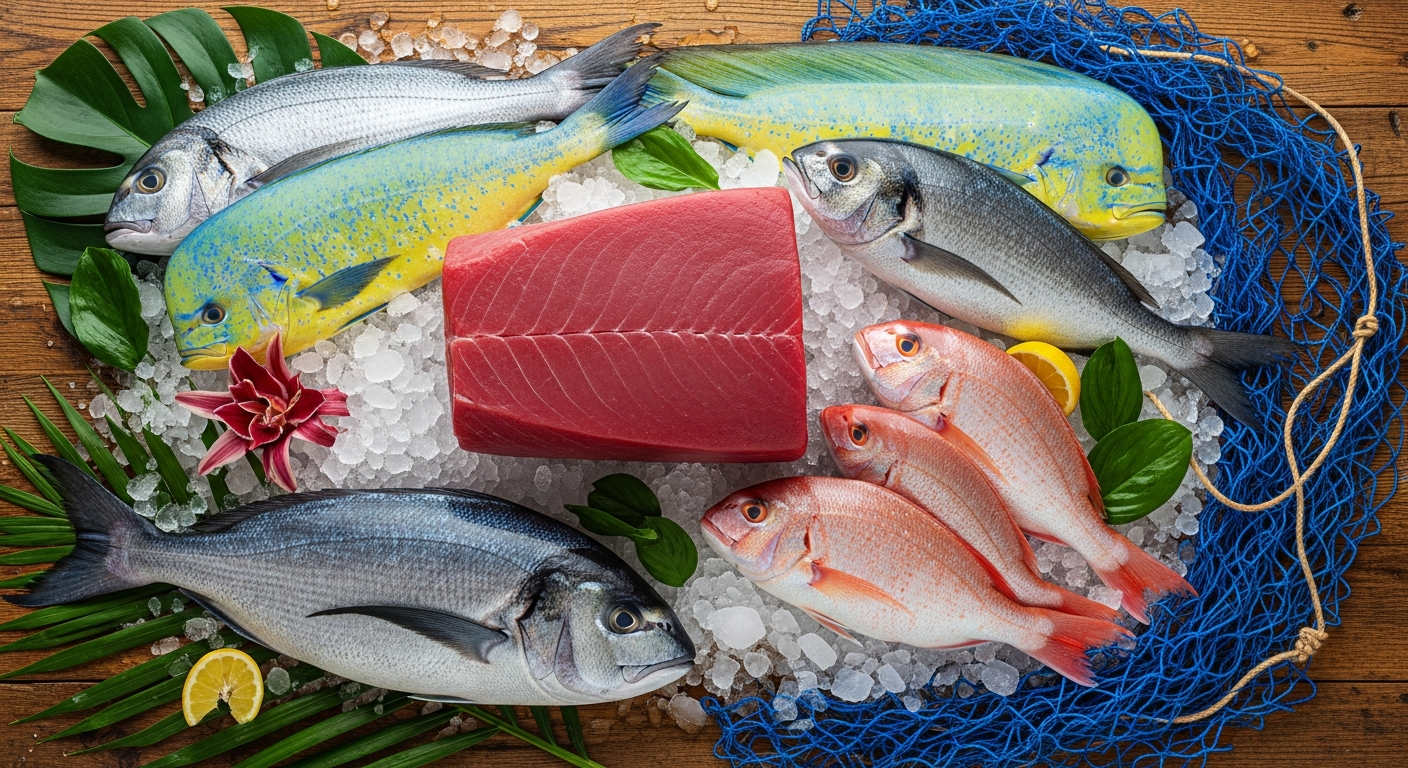
Walk into any fish market in Hawaii and you’ll hear names that don’t show up on mainland menus: ahi, aku, onaga, opakapaka, monchong. Each one has a story, a season, and a reason locals reach for it. Knowing these fish — how they taste, how to cook them, and which ones are worth the splurge — is the difference between cooking Hawaiian food and understanding it.
This guide covers the fish you’ll encounter most in Hawaiian cooking, from the everyday workhorses to the celebration splurges. Whether you’re making poke bowls, grilling for a backyard party, or pan-searing a weeknight dinner, you’ll know exactly what to reach for.
Ahi (Yellowfin and Bigeye Tuna)
The icon. When most people think of Hawaiian fish, they think of ahi. There are two species sold under this name: yellowfin (ahi shibi) and bigeye (ahi). Bigeye is the premium choice for poke and sashimi — higher fat content, richer flavor, deeper red color. Yellowfin is leaner and more common, excellent for searing.
Free: Hawaiian Cooking Starter Kit
Get 5 essential island recipes + a printable pantry checklist — everything you need to start cooking Hawaiian at home.
No spam, ever. Unsubscribe anytime.
- Flavor: Clean, meaty, mildly sweet. Bigeye is richer and more buttery; yellowfin is leaner and firmer.
- Texture: Silky when raw, firm and steak-like when seared.
- Best for: Poke (raw), searing, tataki, katsu. This is the fish for your classic poke bowl, poke stacks, and ahi katsu.
- Sustainability: Varies by fishery. Look for pole-and-line or troll-caught from Hawaii or the Western Pacific.
Aku (Skipjack Tuna)
The original poke fish. Before ahi became the default, aku was what Hawaiian fishermen cubed up on the boat with sea salt, limu, and kukui nut. It’s smaller, darker, and more intensely flavored than ahi — and significantly cheaper.
- Flavor: Stronger, more assertive “tuna” taste than ahi. A bit briny.
- Texture: Slightly softer and more delicate than ahi when raw.
- Best for: Traditional-style poke (shoyu or Hawaiian salt and limu), dried fish (jerky-style preparations), and tataki.
- Sustainability: Generally considered a good choice. Fast-growing and abundant when responsibly fished.
Mahi Mahi (Dolphinfish)
The crowd-pleaser. Mahi mahi is the most versatile fish in Hawaii. It’s mild enough for people who say they “don’t like fish,” firm enough to grill without falling apart, and affordable enough for a Tuesday dinner.
- Flavor: Mild, slightly sweet, very clean. Almost neutral — takes marinades and sauces beautifully.
- Texture: Firm, moist flakes. Holds together on the grill.
- Best for: Grilling, pan-searing, fish tacos, blackened preparations. A staple at backyard parties.
- Sustainability: Fast-growing, generally a responsible choice. Look for US-caught when possible.
Ono (Wahoo)
The sleeper hit. The Hawaiian name means “delicious” — and it delivers. Ono is a fast, powerful game fish with firm, white flesh that’s leaner than mahi but just as versatile.
- Flavor: Mild, clean, slightly sweet. More delicate than mahi mahi.
- Texture: Very firm, almost steak-like. Dense and satisfying.
- Best for: Grilling (holds up beautifully), pan-searing with butter, ceviche, smoked preparations.
- Sustainability: Not heavily fished in Hawaii. A solid choice when available.
Opah (Moonfish)
The chef’s favorite. Opah is one of the most unique fish in the ocean — a massive, disc-shaped deep-water fish with multiple textures in different parts of its body. The belly is rich and fatty (almost salmon-like), the loin is lean and firm, and the cheeks are prized.
- Flavor: Rich, mildly sweet, with a buttery quality. The closest comparison is a cross between tuna and swordfish.
- Texture: Varies by cut — silky belly, firm loin, tender cheek.
- Best for: Pan-searing, sashimi (especially the belly), grilling the loin, smoking. Beautiful in a miso glaze preparation.
- Sustainability: Caught as bycatch in longline fisheries. Not heavily targeted, but availability varies.
Onaga (Red Snapper / Long-tail Snapper)
The celebration fish. Onaga is the fish you bring to New Year’s, weddings, and baby luau. In Hawaiian and Japanese culture, its red color symbolizes good luck and prosperity. It’s also genuinely one of the best-tasting fish in Hawaiian waters.
- Flavor: Delicate, sweet, almost floral. Complex and refined.
- Texture: Tender, moist, fine-flaked. Melts on the tongue.
- Best for: Steaming whole (Chinese-Hawaiian style), baking, sashimi. Pairs with light sauces that don’t overpower it. A natural fit alongside Lunar New Year dishes.
- Sustainability: A deep-water bottomfish with limited catch. Pricey and seasonal — buy it when you see it.
Opakapaka (Pink Snapper)
The elegant all-rounder. Opakapaka is onaga’s more accessible cousin. It’s a deep-water snapper with delicate pink flesh and a refined flavor that stands on its own with minimal seasoning.
- Flavor: Clean, sweet, mildly nutty. More delicate than mahi, less rich than opah.
- Texture: Soft, flaky, moist.
- Best for: Baking, steaming, poaching, light pan-searing. Don’t overpower it — let the fish speak.
- Sustainability: A managed deep-water species. Seasonal availability.
Monchong (Sickle Pomfret)
The underrated gem. Monchong is a deep-water fish that most visitors have never heard of, but locals and chefs love it. It has a rich, buttery flavor that punches above its price point.
- Flavor: Rich, buttery, slightly sweet. More flavor than mahi, less intense than ahi.
- Texture: Firm, dense, almost meaty. Holds up to high heat.
- Best for: Grilling, broiling, pan-searing. Excellent with a Hawaiian seasoning rub.
- Sustainability: Deep-water bycatch, not heavily targeted. Availability varies by season.
A’u (Swordfish and Marlin)
The steak of the sea. A’u refers broadly to billfish — swordfish (shutome) and various marlins (kajiki, nairagi). These are big, meaty fish with dense flesh that cooks more like a steak than a fillet.
- Flavor: Swordfish is mild and slightly sweet. Marlin is stronger and more savory, with a richer taste.
- Texture: Dense, firm, and meaty. No flaking — it cuts like a steak.
- Best for: Grilling (the #1 use), smoking, pan-searing thick steaks. Marlin is also dried for fish jerky.
- Sustainability: Varies significantly by species and fishery. Nairagi (striped marlin) from Hawaii is a reasonable choice; some swordfish populations are overfished.
How to Buy Fresh Fish (Even on the Mainland)
You don’t need to live on O’ahu to get good fish for poke. Here’s how to shop smart anywhere:
- Find a real fish counter. Supermarket pre-packaged fish sits in styrofoam for days. A dedicated fishmonger or a store with a proper counter lets you see, smell, and ask questions about the fish.
- Ask what came in today. The freshest fish is the fish that arrived most recently. Don’t be shy — fishmongers respect the question.
- Use your nose. Fresh fish should smell like the ocean — clean and briny. A strong “fishy” smell means it’s old.
- Check the eyes and gills (whole fish). Eyes should be clear and bright, not cloudy. Gills should be red, not brown or gray.
- Look for firm flesh. Press gently with a finger — it should spring back. If it leaves a dent, keep looking.
- For poke specifically: Ask for saku blocks (pre-trimmed tuna blocks) and specify you’re eating it raw. Good fishmongers will steer you to the right product. Check our fish cutting guide for how to break it down at home.
- Online options: Companies like Catalina Offshore and Honolulu Fish Co. ship sashimi-grade fish overnight. It’s not cheap, but the quality is excellent.
Sustainability: Choosing Responsibly
Hawaiian fishing culture has always been about respect for the ocean. Ancient Hawaiians practiced kapu (restriction) systems to prevent overfishing certain species during spawning seasons. That same mindset applies today:
- Choose pole-and-line or troll-caught over longline when possible — less bycatch, more selective.
- Look for Hawaii-caught fish — the Hawaii longline fishery is one of the most regulated in the world.
- Eat seasonally. Deep-water bottomfish like onaga and opakapaka have restricted seasons in Hawaii for a reason. Respect the closures.
- Diversify your choices. Don’t eat ahi every week. Try monchong, aku, or opah to spread the demand across species.
- Check Monterey Bay Aquarium’s Seafood Watch for current ratings on specific fish and fisheries.
Quick Reference: Which Fish for What
| Fish | Best Raw? | Best Cooked Method | Price Range | Try It In |
|---|---|---|---|---|
| Ahi (Bigeye) | Yes — premium | Seared rare | $$$ | Poke, sashimi, katsu |
| Ahi (Yellowfin) | Yes | Seared, grilled | $$ | Poke bowls, tuna burgers |
| Aku | Yes | Tataki, dried | $ | Traditional poke |
| Mahi Mahi | No | Grilled, blackened | $$ | Fish tacos, plate lunch |
| Ono | Ceviche only | Grilled, pan-seared | $$ | Grilled fish plates |
| Opah | Belly only | Pan-seared, smoked | $$ | Miso-glazed preparations |
| Onaga | Yes | Steamed, baked | $$$$ | Celebrations, New Year’s |
| Opakapaka | Yes | Steamed, poached | $$$ | Light, elegant dishes |
| Monchong | No | Grilled, broiled | $$ | Weeknight grilling |
| A’u (Swordfish) | No | Grilled as steaks | $$ | Steak-style grilling |
Start Cooking
Now that you know your fish, put that knowledge to work. Start with the most popular Hawaiian seafood recipes: our Classic Ahi Poke Bowl for the raw preparation, North Shore Garlic Shrimp for cooked seafood, or Furikake Salmon for a quick weeknight option. And if you need help learning how to cut fish for poke, we’ve got a guide for that too.