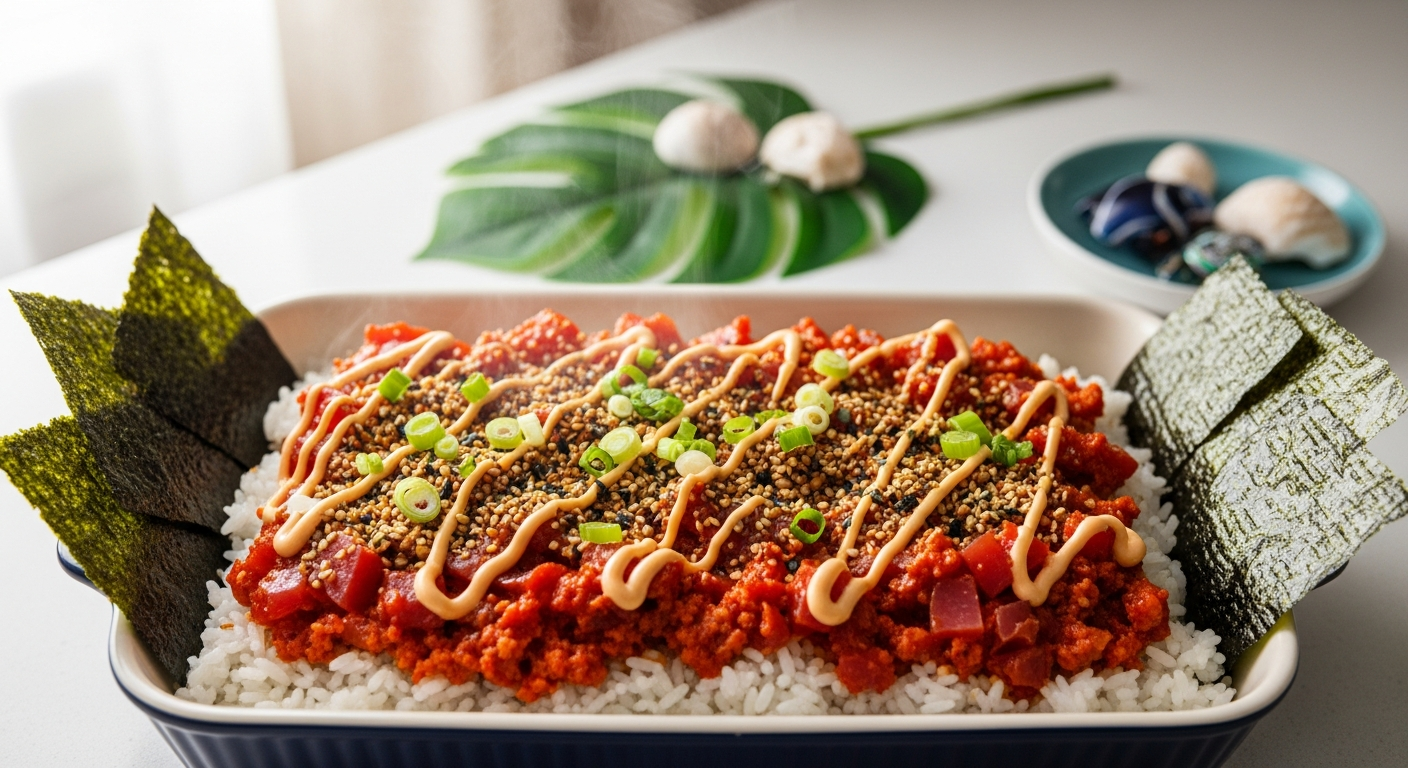
Sushi bake went from TikTok trend to Hawaiian potluck staple in record time — and honestly, it makes perfect sense. Take everything people love about a spicy ahi roll, spread it in a baking dish, warm it up, and let everyone scoop their own with sheets of nori. It’s pupu meets casserole, and it’s become the dish that shows up at every gathering alongside the mac salad and the spam musubi.
Most sushi bake recipes online use imitation crab or cooked salmon. Those are fine. But in Hawaii, we have access to some of the best ahi tuna in the world, and a spicy ahi sushi bake is a completely different experience. The tuna stays tender and just barely warms through, the sriracha mayo gets melty and rich, and the furikake on top crisps up in the oven. It’s everything a spicy ahi poke bowl dreams of being when it grows up.
Why Sushi Bake Took Over Hawaii
Hawaii was always going to adopt sushi bake. Think about it — the islands already had every element in place. Locals grow up eating sushi, poke, rice for every meal, and furikake on everything. A casserole that combines all of those things and feeds a crowd? That’s not a trend — that’s destiny.
Free: Hawaiian Cooking Starter Kit
Get 5 essential island recipes + a printable pantry checklist — everything you need to start cooking Hawaiian at home.
No spam, ever. Unsubscribe anytime.
The sushi bake also fits perfectly into Hawaiian potluck culture. It travels well, serves a crowd from a single dish, and everyone can customize their own scoop with different toppings. It sits right at home on a table next to fried wontons, mochiko chicken, and a bowl of hurricane popcorn.
The Ahi Advantage
Using fresh ahi instead of imitation crab or canned salmon is what makes this version special. Here’s why:
- Flavor — fresh ahi has a clean, meaty richness that imitation crab can’t touch
- Texture — the tuna stays silky and tender when barely warmed through, not rubbery
- It’s Hawaiian — ahi is the fish of the islands, and using it connects this modern dish to the poke tradition
Use sashimi-grade ahi tuna from a trusted fishmonger. Since the fish only gets gently warmed (not fully cooked), freshness matters. Check our Hawaiian Fish Guide for tips on sourcing quality ahi.
Building the Layers
A sushi bake has three layers, and each one matters:
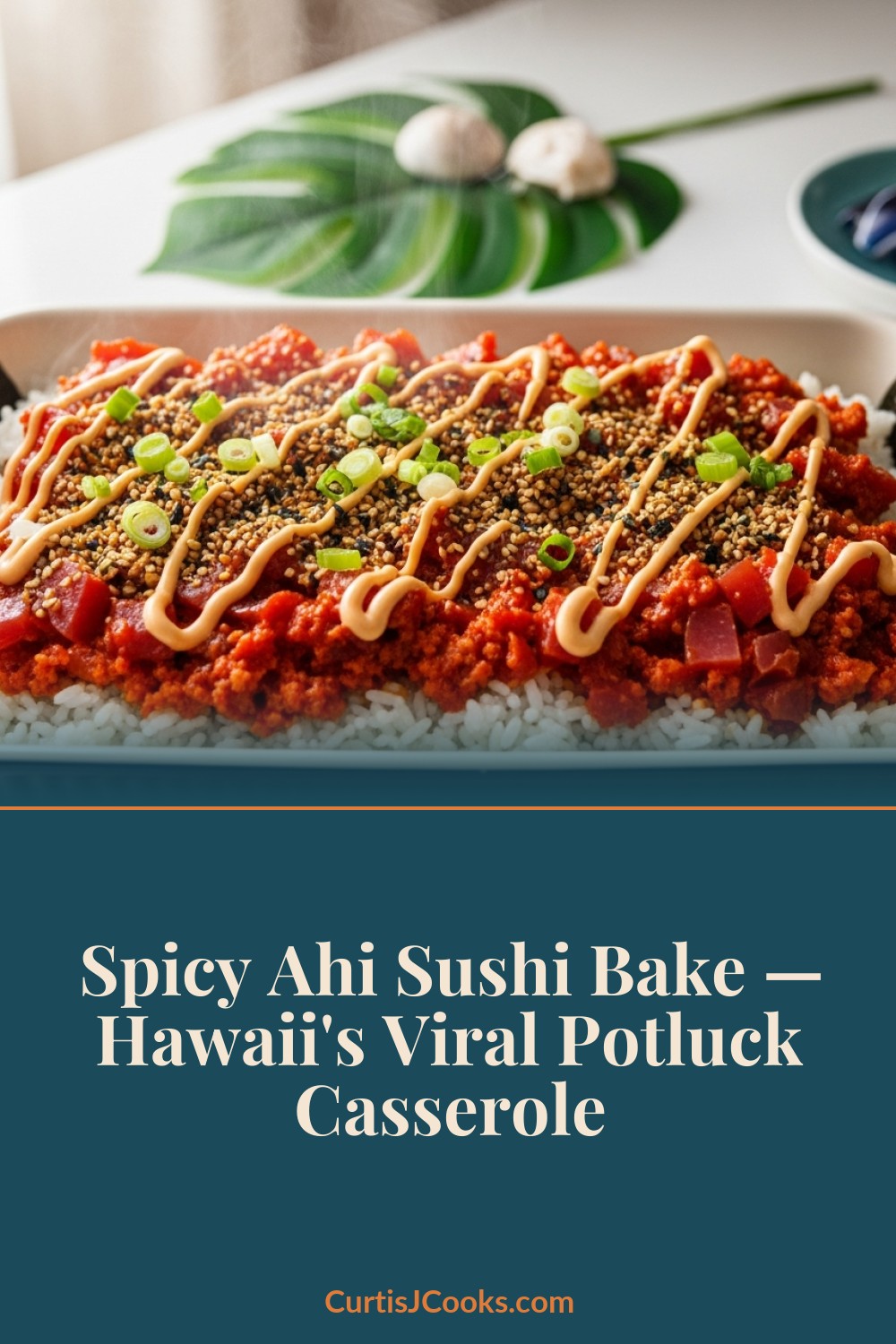
Layer 1: Seasoned Sushi Rice
The foundation. Short-grain sushi rice seasoned with rice vinegar, sugar, and salt — the same way you’d make rice for hand rolls. Spread it in an even layer on the bottom of your baking dish. Some people mix in a little kewpie mayo for extra creaminess. Press it down gently — you want it compact enough to scoop but not brick-dense.
Layer 2: Spicy Ahi
The star. Diced fresh ahi tossed with sriracha mayo (kewpie mayo + sriracha), sesame oil, and a splash of shoyu. Spread it over the rice in an even layer. The ahi will gently warm in the oven without fully cooking — you want it just barely heated through, still pink and tender in the center.
Layer 3: Furikake Topping
A generous shower of furikake over the top, plus extra drizzles of sriracha mayo and a scatter of sliced green onions. The furikake toasts slightly in the oven and adds that essential umami crunch.
The Nori Scoop Technique
This is what makes sushi bake fun. Instead of plating individual portions, you set out a stack of full-size nori sheets cut in half next to the baking dish. Everyone tears off a piece, scoops up a spoonful of the warm sushi bake, and wraps it up — like a DIY hand roll.
The warm, creamy filling against the crisp, salty nori is addictive. Some people add extra toppings to their scoop: sliced avocado, pickled ginger, a dab of wasabi, or a drizzle of eel sauce. That’s the beauty of it — everyone customizes.
Tips for the Best Sushi Bake
- Don’t overbake — 10-15 minutes at 400°F is all you need. You’re warming it through, not cooking the fish. The ahi should still be pink and tender.
- Season the rice well — under-seasoned rice is the #1 sushi bake mistake. Taste your rice after adding the vinegar mixture. It should be slightly tangy and lightly sweet.
- Use kewpie mayo — Japanese kewpie mayo is richer and more savory than regular mayo. It’s what gives the spicy layer that creamy, umami depth. Find it at any Asian grocery store or in your supermarket’s international aisle.
- Make it ahead — assemble the full dish, cover tightly with foil, and refrigerate for up to 4 hours before baking. Add the furikake topping right before it goes in the oven so it stays crispy.
- Use a 9×13 dish — this size feeds 8-10 people comfortably. For a smaller batch (4-6), use an 8×8 dish and halve the recipe.
- Toast the nori — if your nori sheets have gone a bit soft, pass them briefly over an open flame or warm them in a dry pan for a few seconds. Crisp nori makes all the difference.
Serving at a Party
Sushi bake is the ideal party dish because it’s essentially self-serve. Set up a station with:
- The warm sushi bake in its dish with a serving spoon
- A stack of halved nori sheets
- Small bowls of toppings: sliced avocado, pickled ginger, wasabi, eel sauce, extra sriracha mayo
- Shoyu for drizzling
People will stand around this dish all night. Make a double batch — trust me.
Variations
- Salmon sushi bake — substitute cooked and flaked salmon for the ahi. Bake 5 minutes longer since the salmon is already cooked.
- Crab sushi bake — the original viral version using imitation crab mixed with kewpie mayo. Crowd-pleasing and budget-friendly.
- Spicy salmon + ahi combo — half and half for the best of both worlds
- Poke bake — use your favorite poke seasoning (shoyu, sesame oil, kukui nut) instead of the sriracha mayo for a more traditional Hawaiian flavor
More Potluck Favorites
- Hawaiian Pupus Guide — Every island appetizer and how to build the perfect spread
- Ahi Tuna Poke Stacks — The elevated poke presentation
- Poke Nachos — Another fusion pupu that disappears fast
- How to Set Up a Poke Bar — The ultimate interactive spread
- Traditional Hawaiian Foods Explained — Your complete guide to island cuisine