Every visitor to Hawaii eventually asks the same question: what do people here actually eat for breakfast? They’re expecting something exotic — tropical fruits on a surfboard-shaped plate, maybe a coconut cracked open on the beach. The reality is way better than that, and way more interesting.
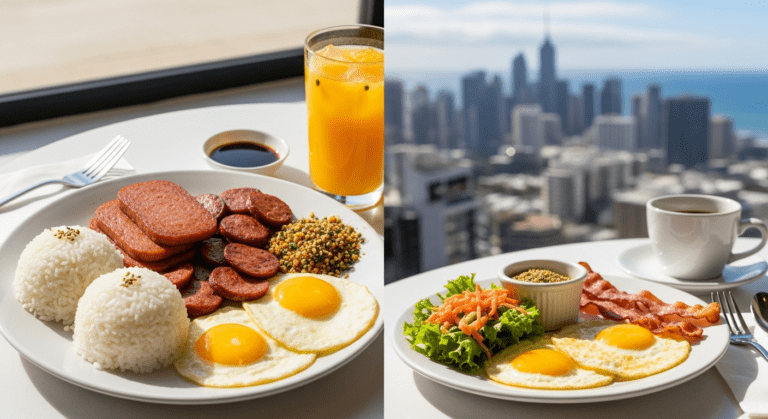
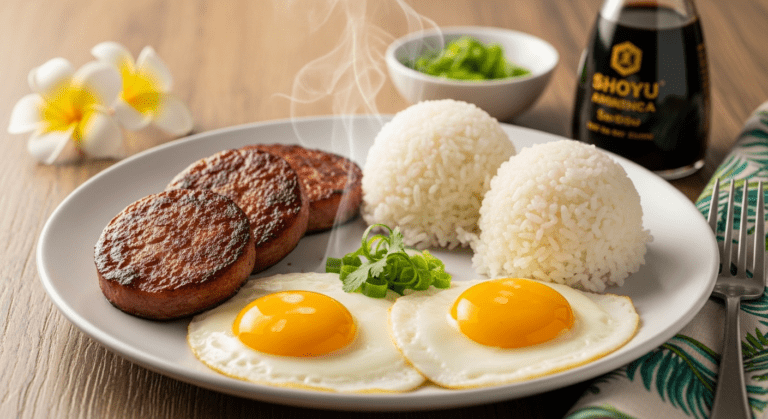
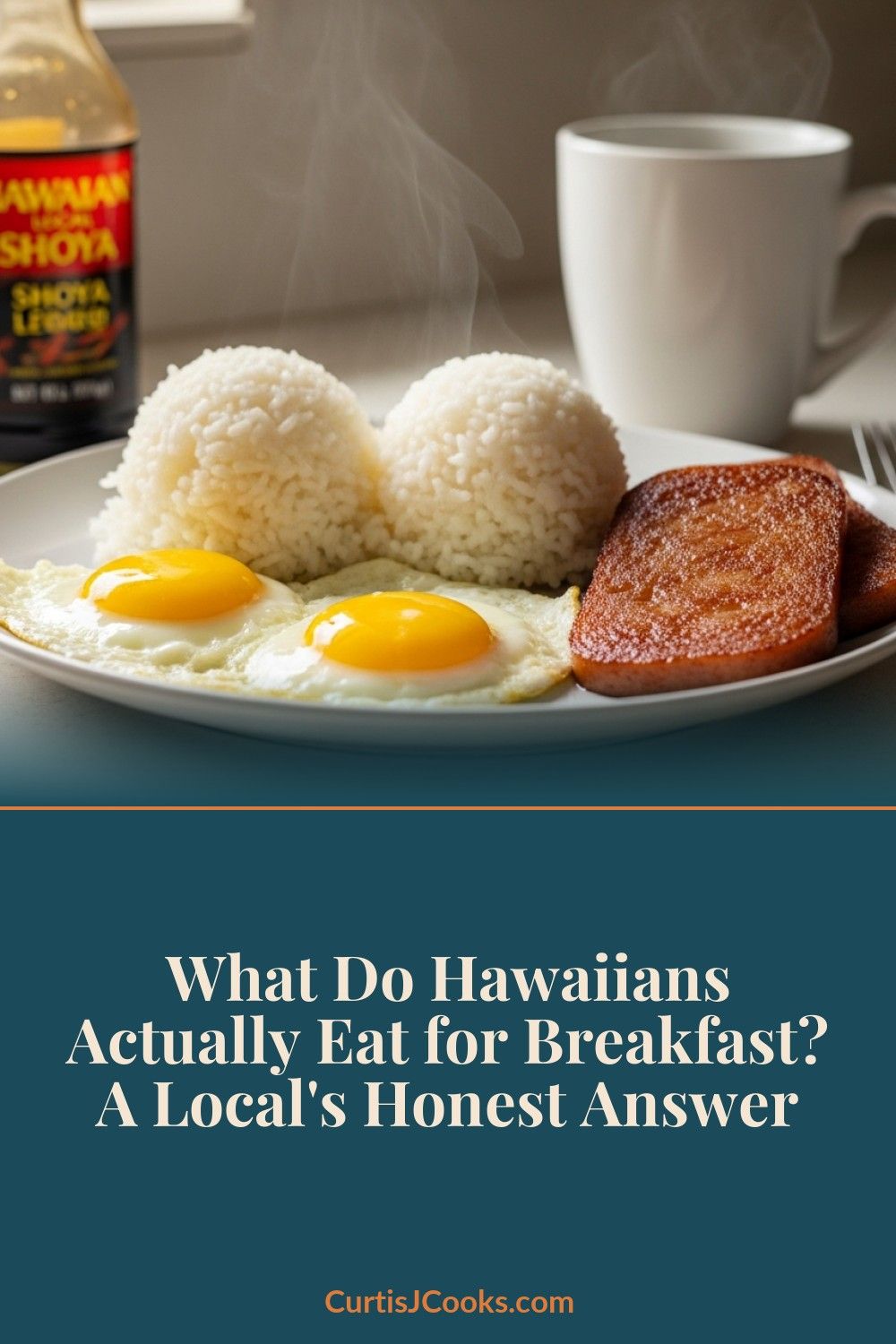
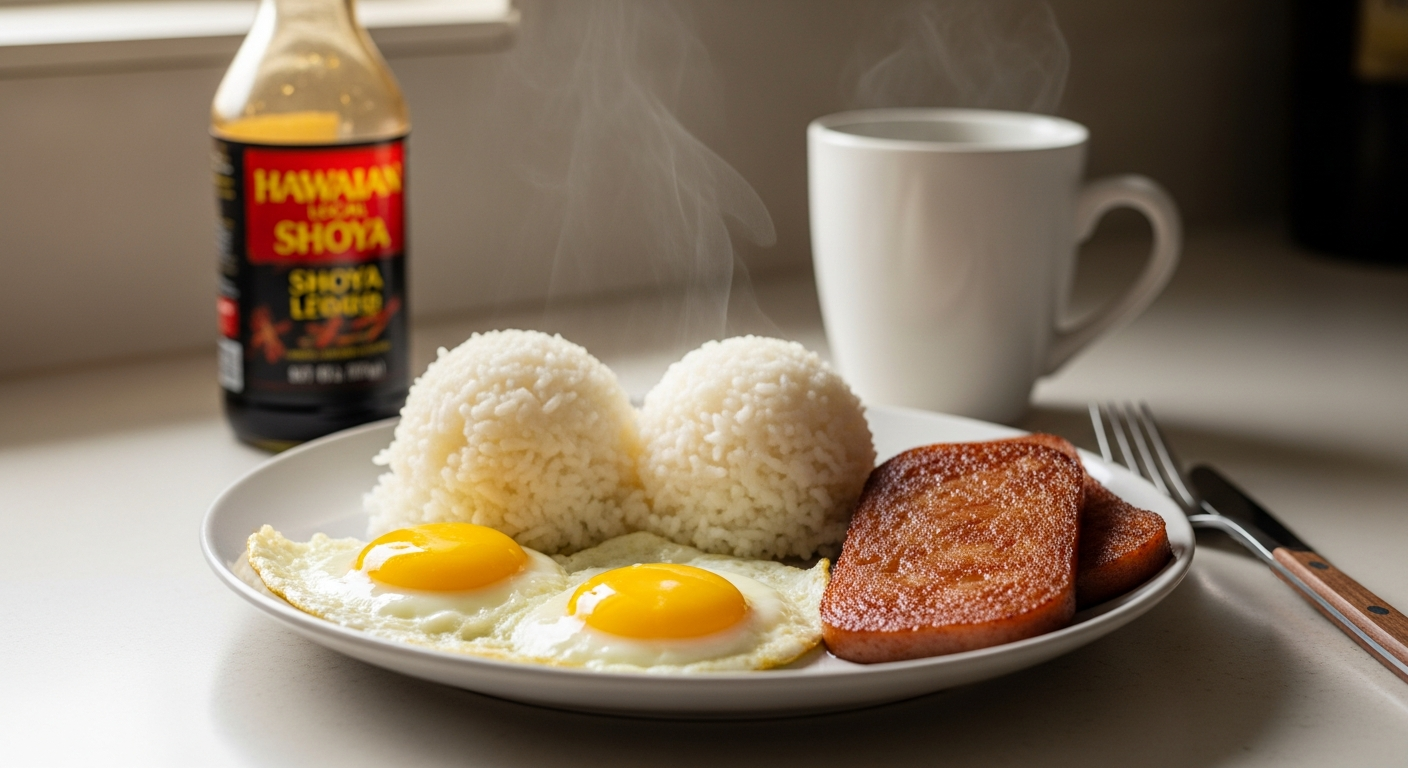
Hawaiian breakfast is built on rice, eggs, and a protein. That’s the formula. It doesn’t change much whether you’re in a million-dollar Kahala home or a studio apartment in Kalihi. The specific protein rotates — Spam, Portuguese sausage, kalua pig, Vienna sausage, corned beef hash — but the foundation stays the same. Two scoops rice. Eggs over easy. Something salty and savory on the side.
If that sounds simple, it is. That’s the whole point. Hawaiian breakfast isn’t trying to impress anyone. It’s trying to fuel you through a long day, and it does that better than any avocado toast ever could.
Free: Hawaiian Cooking Starter Kit
Get 5 essential island recipes + a printable pantry checklist — everything you need to start cooking Hawaiian at home.
No spam, ever. Unsubscribe anytime.
The Weekday Morning: Quick, Hot, No Nonsense
On a Tuesday morning in a local household, breakfast happens fast. The rice cooker was set on a timer the night before — that’s the single most important move. By the time anyone’s awake, the rice is done and the kitchen smells faintly of steam.
From there, it’s a ten-minute operation. A can of Spam gets sliced and thrown into a hot pan. While it’s crisping up, eggs go into another pan — over easy, because the runny yolk mixing into the rice is non-negotiable. Scoop the rice, plate the Spam, slide the eggs on top. Add a splash of shoyu if you like. Breakfast is ready before the coffee’s done brewing.
Some mornings it’s Portuguese sausage instead of Spam. Some mornings it’s leftover kalua pig from the weekend, crisped up in a skillet. Some mornings it’s just Spam and eggs with rice for the fourth day in a row, and nobody complains because it’s that good.
The point is: nobody’s agonizing over what to make. The decision tree has about three branches, and they all end with rice on a plate.
The Weekend Morning: When There’s Time to Cook
Weekends are different. The rice cooker still goes on, but now there’s time to actually stand at the stove and enjoy it.
A full weekend breakfast might include two or three proteins — Spam and Portuguese sausage, or a loco moco with all the fixings. Someone might make a batch of acai bowls if there’s frozen acai in the freezer. The French press comes out for Kona coffee instead of the drip machine.
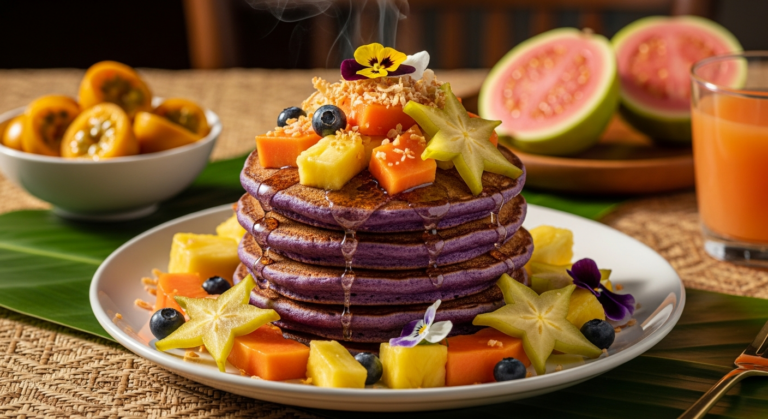
Weekend mornings are also when sweet breakfasts happen. Sweet bread French toast with coconut syrup. Poi pancakes that turn the batter purple. Taro waffles if someone’s feeling ambitious. But even on sweet breakfast days, there’s usually rice on the table too. Old habits don’t break.
The biggest weekend breakfasts happen when family comes over. That’s when the kitchen turns into a production line — someone on rice, someone on eggs, someone slicing Spam, someone setting out the shoyu and hot sauce and furikake. These aren’t formal meals. Everyone plates their own food, eats standing up or sitting wherever there’s space, and goes back for seconds.
What’s Always in a Local Kitchen
If you opened the fridge and pantry of any local household on any given morning, you’d find most of these:
- Rice — Calrose medium-grain, 20-pound bag minimum. The Hawaiian pantry starts and ends here
- Spam — Classic, Low Sodium, or both. Hawaii consumes more Spam per capita than anywhere on earth
- Eggs — At least two dozen. Eggs with everything
- Portuguese sausage — Redondo’s or Gouvea’s. Slightly sweet, mildly spicy, completely different from mainland breakfast sausage
- Furikake — The rice seasoning that mainlanders don’t know about yet. Nori, sesame, dried fish flakes — it goes on everything
- Shoyu — Not “soy sauce.” Shoyu. Aloha Shoyu is the local brand
- Vienna sausage — The canned kind. Don’t judge until you’ve tried it pan-fried with eggs
- POG juice — Passion Orange Guava. The breakfast drink of Hawaii since the 1970s
Notice what’s missing from that list: cereal, bagels, yogurt, granola, pancake mix. These exist in Hawaii, obviously, but they’re not what most local families reach for on a regular morning. The breakfast tradition here runs on a completely different track.
What the Kids Eat
Kids in Hawaii eat the same breakfast adults do, just smaller portions. There’s no separate “kid’s breakfast” category. A five-year-old in Waipahu is eating rice, eggs, and Spam on a school morning. That’s normal.
The packed breakfast is where it gets interesting. Spam musubi is the ultimate grab-and-go breakfast — a block of rice with a slice of Spam, wrapped in nori. Kids eat these on the bus, at the bus stop, walking to class. It’s Hawaii’s answer to the breakfast burrito, except better because it fits in one hand and doesn’t fall apart.
School cafeterias serve local-style breakfast too. Rice is always an option. You’ll see shoyu packets next to the ketchup. It’s just how things work here.
What’s Changed (And What Hasn’t)
Hawaiian breakfast has evolved, but the core hasn’t moved. Rice, eggs, and a protein — that formula has been running since the plantation era, and it’s not going anywhere.
What has changed is the addition of lighter options. Acai bowls weren’t a thing twenty years ago; now every neighborhood has a spot that makes them. Smoothies with haupia and tropical fruit are a newer addition. Some younger locals have adopted avocado toast, usually with a local twist like furikake or chili pepper water on top.
But these additions haven’t replaced anything. They’ve just added more options. The family that eats acai bowls on Monday is still eating Spam and eggs on Wednesday. The guy drinking a green smoothie at the gym was probably eating Portuguese sausage and rice two hours earlier.
The biggest shift is probably coffee culture. Older generations drank Kona coffee black or with cream. Younger locals are more likely to hit a specialty coffee shop. But even that hasn’t fully replaced the drip machine — it’s just added another layer.
What You Won’t Find
A few things that are common on the mainland but rare at a Hawaiian breakfast table:
- Toast — Rice replaced toast decades ago. You might see it at a hotel breakfast buffet, but not in a local home
- Bacon — It exists, but Spam and Portuguese sausage dominate. Bacon is a mainland protein
- Cold cereal — Kids might eat it occasionally, but it’s not the default
- Oatmeal — Almost never. If you want something warm and starchy in the morning, that’s what rice is for
- Pancake stacks — Mainland-style pancake breakfasts are a restaurant thing, not a home cooking thing. The exception is poi pancakes, which are Hawaiian through and through
- Orange juice — POG or nothing. Mainland OJ tastes flat once you’ve had passion-orange-guava
The Bottom Line
Hawaiian breakfast isn’t complicated. It’s rice, eggs, and something savory — almost every single morning. The genius is in the consistency and the quality of those simple elements: properly cooked rice with the right stickiness, eggs with runny yolks, Spam with crispy caramelized edges.
If you’re visiting Hawaii, skip the hotel breakfast buffet at least once and find a local diner. Order the Spam and eggs plate. Get rice, not toast. Ask for shoyu on the side. That’s the real Hawaiian breakfast experience — not a fruit plate shaped like a palm tree, but a $8 plate of food that’ll keep you going until dinner.
And if you want to recreate it at home, our complete Hawaiian breakfast guide has every recipe you need, from the everyday classics to the weekend showstoppers. Start with the rice. Everything else follows from there.