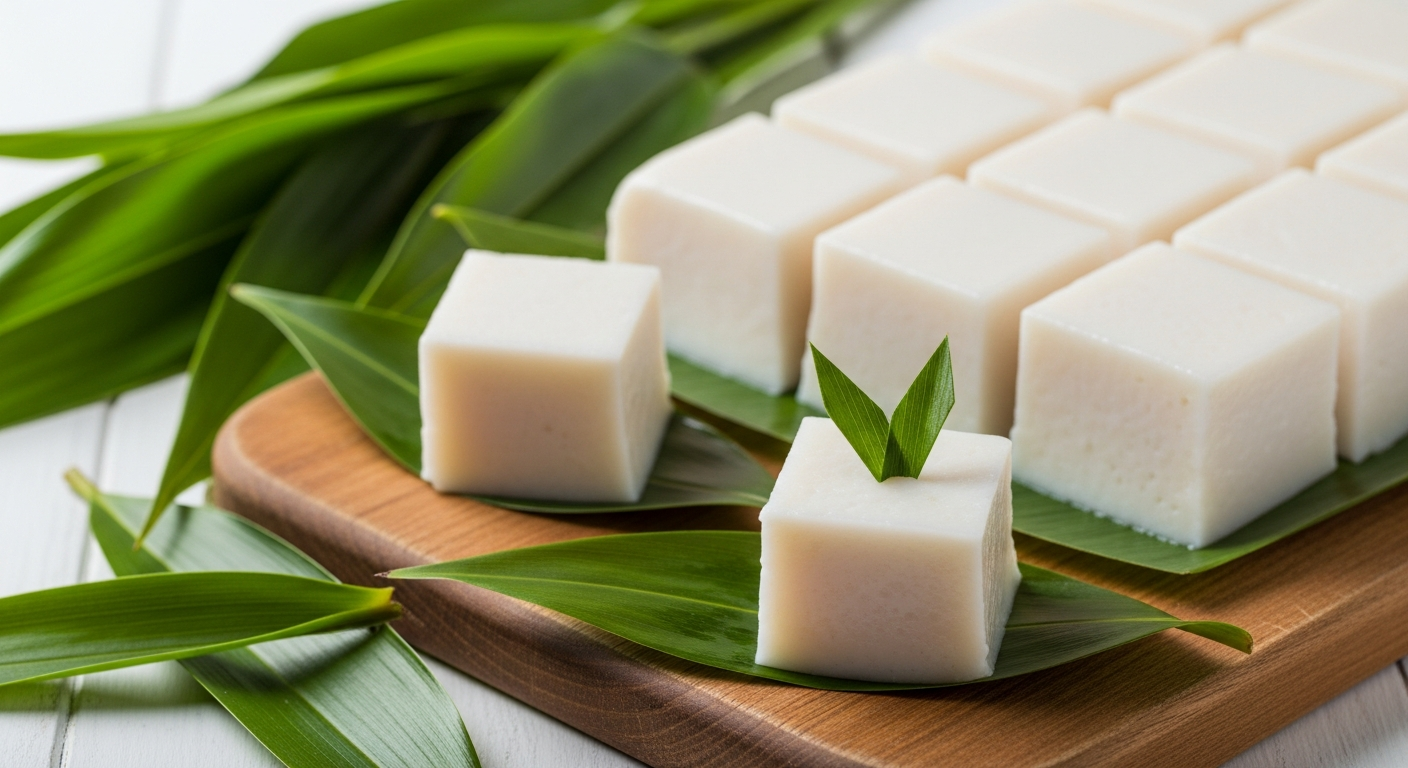
Haupia is a traditional Hawaiian coconut pudding — firm enough to cut into squares, smooth enough to melt on your tongue, and simple enough that it’s been made the same way for generations. If you’ve been to a luau, a Hawaiian potluck, or a graduation party anywhere in the islands, you’ve had haupia. It’s as essential to the dessert table as rice is to the dinner plate.
But haupia is more than just a coconut dessert. It’s one of the oldest foods in Hawaiian cuisine, with roots that stretch back to ancient Polynesia.
What Haupia Tastes Like
Haupia tastes like pure coconut — not the artificial coconut flavor you get from candy or sunscreen, but the real, creamy sweetness of fresh coconut milk. The texture falls somewhere between Jell-O and fudge: it holds its shape when you pick up a square, but it’s soft and yielding when you bite into it. It’s not overly sweet, which is part of its charm. The coconut flavor does all the work.
Free: Hawaiian Cooking Starter Kit
Get 5 essential island recipes + a printable pantry checklist — everything you need to start cooking Hawaiian at home.
No spam, ever. Unsubscribe anytime.
Served cold, haupia has a clean, refreshing quality that balances out a heavy plate of kalua pig and rice. That’s exactly the point — Hawaiian meals are built around contrast, and haupia is the cool, sweet finish to a rich, savory spread.
The History of Haupia
Haupia goes back centuries. The original version was made with coconut milk thickened with pia, a Polynesian arrowroot that Hawaiian families cultivated in their garden plots. There was no sugar, no cornstarch, no refrigeration. The coconut provided all the sweetness, and pia gave it structure.
Ancient Hawaiians served haupia at feasts and celebrations. It was one of the few sweet foods available, since sugarcane was chewed raw and honey didn’t exist in pre-contact Hawaii. Coconut palms grew along the coastlines, and taro dominated the upland gardens, so coconut-based dishes were associated with coastal communities and gatherings.
When Western contact brought sugar and eventually cornstarch to the islands, haupia adapted. Cornstarch replaced pia as the thickener (pia became harder to find), and sugar was added to boost the sweetness. But the core of the dish — coconut milk, set firm, cut into blocks — stayed the same.
Today’s haupia would be recognizable to a Hawaiian cook from 200 years ago. The method changed, but the dish didn’t. That kind of continuity is rare in any food tradition.
How Haupia Is Made
Traditional haupia uses just four ingredients: coconut milk, sugar, cornstarch, and water. That’s it. You heat the coconut milk with sugar, whisk in cornstarch dissolved in water, and stir until it thickens. Pour it into a pan, let it set in the fridge, and cut it into squares.
The whole process takes about 15 minutes of active cooking. There’s no baking, no eggs, no dairy. It’s naturally gluten-free and vegan — not because anyone designed it that way, but because those ingredients simply weren’t part of the original recipe.
The key is using full-fat coconut milk. Light coconut milk won’t set properly and the flavor will be thin. Some families use two cans of coconut cream for an even richer result. The ratio of cornstarch to liquid determines whether your haupia is soft and wobbly or firm enough to pick up with your fingers — most locals prefer it on the firmer side.
If you want to try making it yourself, my haupia recipe breaks down the technique step by step.
Where You’ll Find Haupia in Hawaii
Haupia shows up everywhere in the islands:
- Luaus — It’s a standard dessert at every commercial and backyard luau. You’ll get it as small squares on a ti leaf or in a little cup.
- Plate lunch shops — Many offer haupia squares as a side dessert for a dollar or two.
- Bakeries — This is where haupia gets creative. Hawaiian bakeries use haupia as a filling, a topping, and a layer in cakes and pies.
- Potlucks and parties — Someone always brings a pan of haupia. It’s the dish that requires almost no effort but always disappears first.
- Graduation parties and baby luaus — Haupia is as expected as the congratulations banner.
Haupia Variations and Modern Twists
While plain haupia squares remain the classic, Hawaiian cooks and bakers have built an entire family of desserts around the haupia concept:
Chocolate Haupia Pie
This is arguably the most famous haupia variation — a two-layer pie with a chocolate pudding base and a haupia layer on top, finished with whipped cream in a flaky crust. Ted’s Bakery on the North Shore of Oahu made it iconic, but every bakery in Hawaii has their own version. My chocolate haupia pie recipe captures that classic two-layer magic.
Haupia Cake
A chiffon or white cake layered with haupia filling and covered in whipped cream. It’s the birthday cake of choice for many local families and a staple at Hawaiian wedding receptions.
Haupia Mochi
Soft mochi (glutinous rice cake) filled with haupia. The chewy exterior and creamy coconut interior make it dangerously addictive.
Haupia-Topped Desserts
Haupia sauce or soft haupia gets drizzled over shave ice, brownies, cheesecake, and malasadas. Anywhere you’d put whipped cream, haupia works.
Flavored Haupia
Some modern versions add ube (purple yam), mango, lilikoi (passion fruit), or matcha to the base. Purists will argue it’s not really haupia anymore, but it’s delicious all the same.
Haupia vs Other Coconut Desserts
Haupia sometimes gets compared to other coconut desserts from around the Pacific and Asia, but it’s distinct:
- Haupia vs Coconut Panna Cotta — Panna cotta uses gelatin and cream; haupia uses cornstarch and coconut milk only. Haupia is firmer and more opaque.
- Haupia vs Tembleque (Puerto Rico) — Very similar concept, but tembleque uses cinnamon and is served differently. They’re cousins.
- Haupia vs Maja Blanca (Philippines) — Maja blanca includes corn kernels and sometimes cheese. Similar coconut base, different execution.
- Haupia vs Coconut Jelly — Coconut jelly (common in Asian desserts) uses agar or gelatin for a bouncier texture. Haupia’s cornstarch base gives it a creamier, more pudding-like feel.
Nutrition
Haupia is a coconut-based dessert, so it carries the nutritional profile of coconut milk — moderate calories, high in saturated fat from coconut oil, and relatively low in sugar compared to most Western desserts. A typical square (about 2 inches) has roughly 120-150 calories.
It’s naturally dairy-free, gluten-free, and vegan. For anyone with common food allergies, haupia is one of the safest desserts at a Hawaiian gathering. The only allergen concern is tree nut sensitivity — while coconut is technically a drupe (not a true tree nut), some people with tree nut allergies react to it.
How to Pronounce Haupia
It’s pronounced how-PEE-ah. Three syllables, emphasis on the middle. The “au” makes an “ow” sound (like “ouch”), and the “ia” at the end is a quick “ee-ah.”
You’ll sometimes hear mainland visitors say “HAW-pee-ah” or “how-PY-ah” — close, but not quite. If you say “how-PEE-ah” with confidence, you’ll sound like you know what you’re talking about.
Why Haupia Matters
In a world of elaborate, Instagram-worthy desserts, haupia is the opposite — four ingredients, no decoration, no plating tricks. It sits on a table in a pan and gets cut into plain white squares. And yet it’s the dessert that every local reaches for first.
That says something about Hawaiian food values. The best dishes aren’t the fanciest — they’re the ones that taste like home, that connect you to the people who made them before you, and that show up reliably at every gathering that matters. Haupia does all of that with four ingredients and fifteen minutes.
It’s coconut milk, set firm, cut into squares. It’s been that way for centuries, and it’ll be that way for centuries more.