My auntie used to make this every Sunday after church at her house in Kalihi. The smell hit you at the carport — soy sauce, ginger, and that sweet garlic smell that meant the pot had been going for an hour. She’d serve it over rice with two scoops mac salad, and the sauce was so thick it clung to every piece of chicken. That’s the version I’m giving you here — the real shoyu chicken recipe that sits and braises until the meat is fall-apart tender and the sauce turns glossy and sticky.
This isn’t the quick teriyaki stir-fry you see on mainland cooking sites. This is the slow-cooked, deep-flavored version that shows up at every plate lunch counter worth its salt. It’s the kind of dish that tastes even better the next day, when the sauce has had time to work its way into every fiber of the chicken.
What Is Shoyu Chicken?
Shoyu is the Japanese word for soy sauce, and shoyu chicken is exactly what it sounds like — chicken braised in a sweet-savory soy sauce until it’s tender enough to pull apart with chopsticks. It’s one of Hawaii’s most popular plate lunch dishes, right up there with chicken katsu and kalua pork.
Free: Hawaiian Cooking Starter Kit
Get 5 essential island recipes + a printable pantry checklist — everything you need to start cooking Hawaiian at home.
No spam, ever. Unsubscribe anytime.
Here’s where people get confused: shoyu chicken and teriyaki chicken are not the same thing. Teriyaki is a mainland invention — quick-cooked, grilled, usually made with bottled sauce. Hawaiian-style shoyu chicken is a braise. You brown the chicken, build the sauce in the same pan, and let everything simmer together until the chicken is tender and the sauce has reduced to a thick glaze that coats every piece.
The other key difference is texture. Chicken katsu is all about that crispy panko crust. Shoyu chicken is the opposite — soft, tender, saucy. Both are essential Hawaii comfort food, but they couldn’t be more different in how they’re cooked.
This dish came to Hawaii through Japanese plantation workers, and like everything else in the islands, it evolved into something distinctly local. The sauce is sweeter than traditional Japanese cooking, the garlic and ginger are more pronounced, and it’s always served over rice with mac salad on the side.
The Ingredients You’ll Need for Shoyu Chicken Recipe
The sauce is the entire point of this dish. Get the proportions right, and you’ll have that sticky, glossy glaze that makes shoyu chicken what it is.
Aloha Shoyu is the local brand everyone in Hawaii uses. It’s saltier and less sweet than Kikkoman, which is what you’ll find on the mainland. Either works, but if you’re using Kikkoman, cut back on the sugar slightly or the sauce will be too sweet. The key is balancing the salt, sweet, and umami so none of them dominate.
Mirin is Japanese sweet rice wine, and it’s what gives the sauce that subtle sweetness and shine. Don’t skip it. If you can’t find mirin, substitute with a tablespoon of sugar dissolved in two tablespoons of sake or dry white wine, but real mirin is better.
Brown sugar adds depth and helps the sauce caramelize as it reduces. White sugar works, but brown gives you a richer flavor. Some people use honey — that works too, but it changes the character of the sauce.
Fresh ginger is non-negotiable. Powdered ginger tastes like a different ingredient entirely. You want that sharp, bright flavor that only comes from the fresh root. Grate it or slice it thin — either way, it needs to infuse the sauce.
Garlic should be fresh, minced or thinly sliced. At least four cloves. This is not a dish for garlic powder.
Chicken thighs — bone-in, skin-on — are the only way to do this right. Breasts dry out. Boneless thighs work if that’s all you have, but you lose the richness that comes from cooking with the bone. The skin crisps up during the browning step, then softens as it braises, adding flavor to the sauce.
How to Make Shoyu Chicken
Start by browning the chicken. Heat a large, heavy-bottomed pot or deep skillet over medium-high heat. Pat the chicken thighs dry — moisture is the enemy of browning. Season with salt and pepper, then sear them skin-side down until the skin is golden and crispy, about 5-6 minutes. Flip and brown the other side for another 3-4 minutes. You’re not cooking the chicken through here — you’re building flavor. Remove the chicken and set it aside.
Pour off all but about a tablespoon of the rendered fat. Add the garlic and ginger to the hot pan and cook for 30 seconds, just until fragrant. You’re looking for that moment when the smell hits you and you know it’s ready — not before, or it’ll taste raw, and not after, or it’ll burn.
Add the soy sauce, mirin, brown sugar, and a cup of water. Stir to dissolve the sugar, scraping up any browned bits from the bottom of the pan. Those bits are flavor. Bring the sauce to a simmer, then return the chicken to the pot, skin-side up. The sauce should come about halfway up the sides of the chicken.
Reduce the heat to low, cover the pot, and let it braise for 30-35 minutes. The chicken should be tender and cooked through — an instant-read thermometer should read 175°F in the thickest part of the thigh. Remove the lid and turn the heat up to medium. Let the sauce reduce for another 10-15 minutes, spooning it over the chicken occasionally, until it’s thick enough to coat the back of a spoon. This is where the magic happens. The sauce transforms from thin and brothy to glossy and sticky.
If the sauce reduces too much and starts to look more like syrup than glaze, add a splash of water and stir. You want it thick, but not so thick it hardens when it cools.
Why You Braise, Not Stir-Fry
The difference between shoyu chicken and teriyaki chicken is all about technique. Teriyaki is a high-heat method — you cook the chicken quickly, usually on a grill or in a hot pan, and brush it with sauce at the end. It’s fast, and the chicken stays relatively firm.
Shoyu chicken is a braise. You cook it low and slow in liquid, which breaks down the connective tissue in the chicken and makes it impossibly tender. The sauce isn’t just a coating — it’s what the chicken cooks in. By the time the dish is done, the chicken has absorbed the flavors of the soy sauce, ginger, and garlic, and the sauce has absorbed the richness from the chicken fat and bone marrow.
That’s why shoyu chicken tastes deeper and more complex than teriyaki. It’s not just sauce on top of chicken. It’s chicken and sauce that have become one thing.
Serving Shoyu Chicken Plate Lunch Style
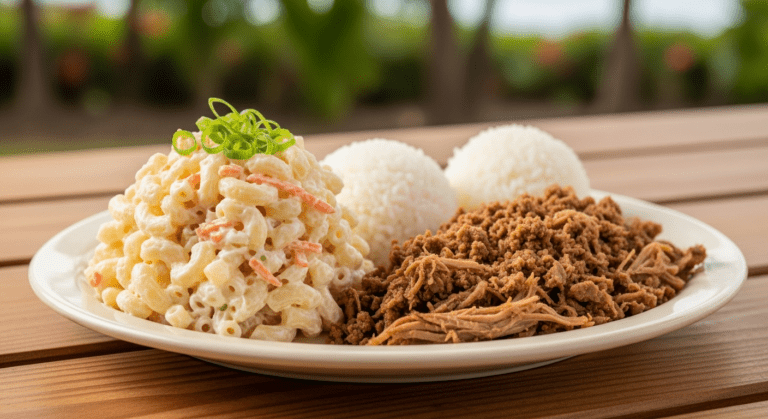
A proper plate lunch has three components: the main (in this case, shoyu chicken), two scoops of white rice, and mac salad. That’s the template. You don’t mess with it.
Spoon the rice onto the plate first — it’s the foundation. Place the chicken on top or next to the rice, then spoon the sauce over everything. The rice should soak up the sauce. That’s the whole point. Add a generous scoop of mac salad on the side, and you’re done.
Some people add steamed vegetables or a side of kimchi. That’s fine, but it’s not traditional. The classic plate lunch is chicken, rice, mac salad, and nothing else.
Make-Ahead and Storage Tips
Shoyu chicken is one of those dishes that tastes better the next day. The flavors meld, the chicken gets even more tender, and the sauce thickens slightly as it cools. Store it in an airtight container in the fridge for up to four days.
When you reheat it, do it on the stove, not in the microwave. Add a splash of water to the pan, cover it, and heat over medium-low until warmed through. The microwave dries out the chicken and turns the sauce gummy. The stove keeps everything tender and silky.
The sauce will thicken in the fridge — that’s normal. If it gets too thick, just thin it out with a little water when you reheat.
Tips for the Best Shoyu Chicken
Use bone-in, skin-on thighs. The bone adds flavor to the sauce, and the skin crisps up during browning, then softens and enriches the braise. Boneless, skinless thighs are fine if that’s what you have, but the dish won’t taste as rich.
Don’t skip the browning step. Searing the chicken before braising adds a layer of caramelized flavor to the sauce. If you skip it, the dish tastes flat.
The sauce should coat the back of a spoon. That’s the test for the right consistency. If you can draw a line through the sauce on the spoon and it stays, it’s ready. If it runs back together, keep reducing.
If the sauce gets too thick, add water. It’s easier to thin a sauce than to thicken it. Add water a tablespoon at a time until you get the right consistency.
This tastes better after sitting overnight. The chicken absorbs more of the sauce, and the flavors deepen. If you’re making this for a party or meal prep, cook it a day ahead.
Reheat on the stove, not the microwave. Low heat, covered, with a splash of water. This keeps the chicken tender and the sauce silky.
Explore More Hawaiian Recipes
If you’re looking for more island comfort food, try Huli Huli Chicken, another sweet-savory chicken dish with that same sticky glaze, or Mochiko Chicken, which is crispy on the outside and juicy on the inside. For the full plate lunch experience, make Hawaiian Macaroni Salad and learn how to make perfect rice. And if you want to understand what makes Hawaii’s lunch culture so special, read What Is a Plate Lunch?
For more quick and satisfying meals, check out Chicken Long Rice, a ginger-scented noodle soup that’s pure comfort, or Saimin, Hawaii’s one-and-only noodle soup. And if you’re in the mood for something crispy and fried, Chicken Katsu is the move.