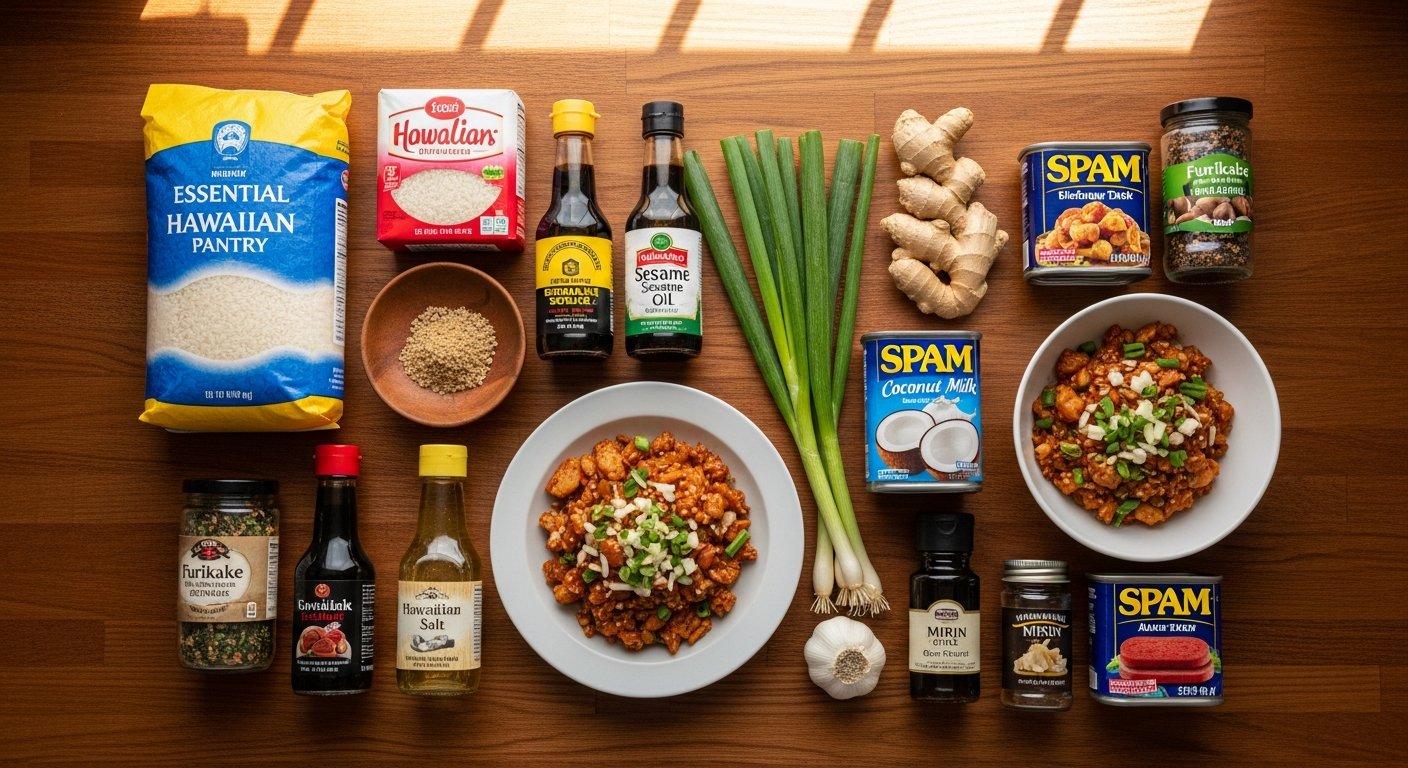
If you want to cook Hawaiian food — real, local-style Hawaiian food — you need to stock your pantry right. You don’t need a lot of exotic ingredients. In fact, one of the beautiful things about local cuisine is that it’s built from simple, accessible staples. But there are certain items that show up again and again in Hawaiian cooking, and having them on hand means you can throw together a plate lunch, a poke bowl, a stir-fry, or a proper Hawaiian feast without a last-minute trip to the store.
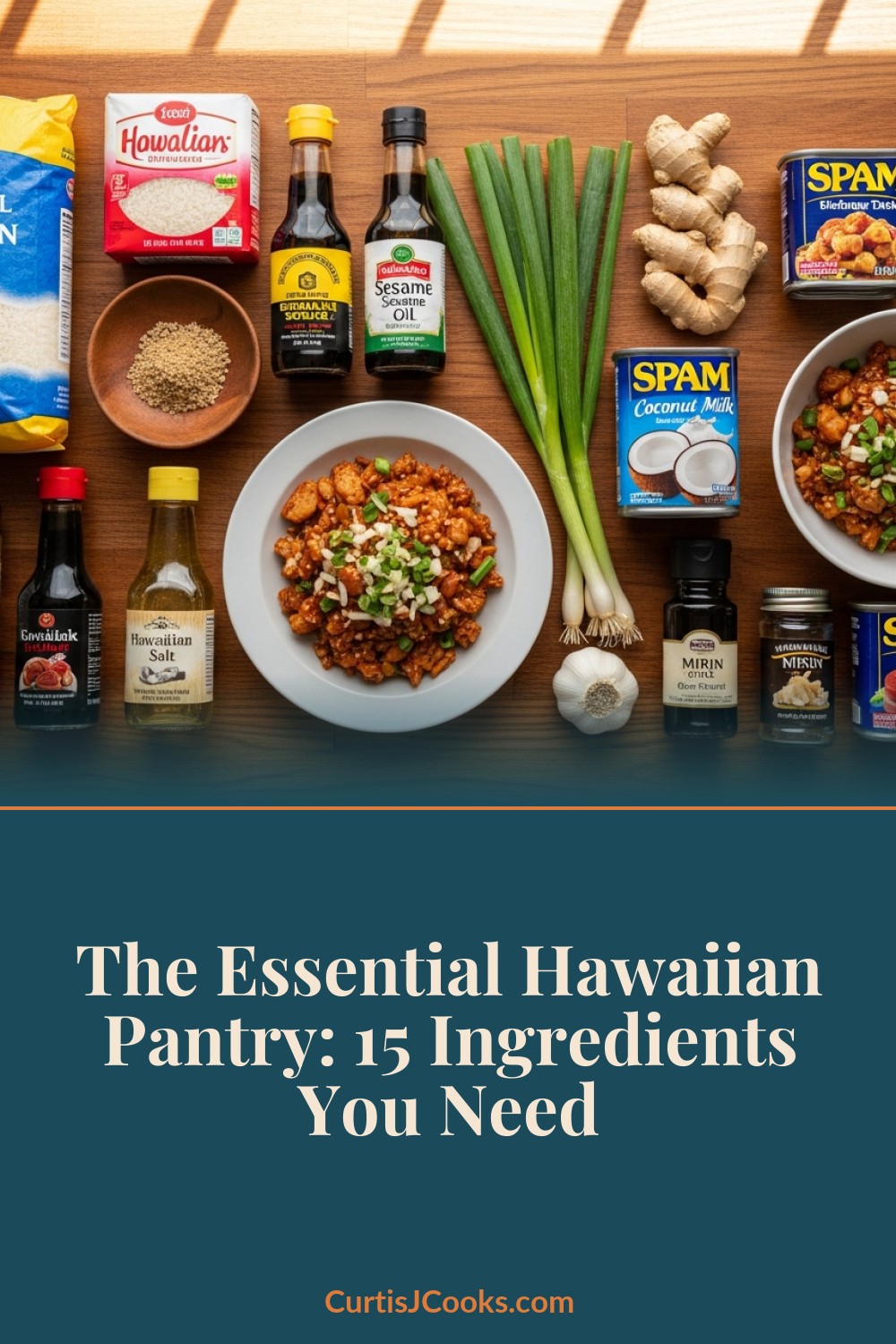
Here are the 15 ingredients I always have in my kitchen. Stock these, and you’re ready to cook just about anything on this site.
1. Short-Grain White Rice
This is number one for a reason. Rice is the foundation of Hawaiian food — not a side dish, not an afterthought, but the center of the plate. You need short-grain or medium-grain white rice (Calrose is the standard in Hawaii). Not jasmine, not basmati, not long-grain. Short-grain rice has the right stickiness to pair with saucy proteins, to pack into musubi, and to scoop with chopsticks.
Free: Hawaiian Cooking Starter Kit
Get 5 essential island recipes + a printable pantry checklist — everything you need to start cooking Hawaiian at home.
No spam, ever. Unsubscribe anytime.
Buy it in large bags — 10 or 15 pounds. You’ll go through it faster than you think. And invest in a good rice cooker. In Hawaii, the rice cooker is the most important appliance in the kitchen, including the stove. Check out our guide to cooking perfect rice if you need to get your technique dialed in.
2. Soy Sauce (Shoyu)
In Hawaii, we call it shoyu, the Japanese word, and it’s in nearly everything. Marinades, sauces, dips, stir-fries, soups — shoyu is the backbone of local flavor. Aloha Shoyu is the local Hawaiian brand and it has a slightly different flavor profile than mainland soy sauces, but Kikkoman is the widely available standard and works perfectly.
Keep both regular and low-sodium on hand. Use regular for cooking and marinades where you’re controlling the salt. Use low-sodium when the dish already has salty components (like when you’re adding shoyu to something with Spam or salted fish).
3. Sesame Oil
Toasted sesame oil is one of the most important finishing flavors in Hawaiian cooking. A few drops transform poke, fried rice, noodles, and marinades with that deep, nutty, aromatic punch. It’s used in small quantities — sesame oil is a seasoning, not a cooking fat. Buy a good quality toasted (dark) sesame oil and store it in the fridge after opening to keep it from going rancid.
4. Hawaiian Salt (Alaea Salt)
Hawaiian salt is coarser and more mineral-rich than regular table salt, and it has a distinctive flavor that’s central to traditional Hawaiian dishes like kalua pig, poke, lomi lomi salmon, and pipikaula. Traditional alaea salt gets its red color from volcanic clay (alaea) and has a subtle earthy flavor.
For everyday cooking, coarse Hawaiian sea salt works great. For finishing and traditional dishes, try to find authentic alaea salt. Kosher salt is a reasonable substitute if you can’t find Hawaiian salt, but the flavor won’t be quite the same.
5. Rice Vinegar
Mild, slightly sweet rice vinegar shows up constantly in Hawaiian cooking — in sushi rice seasoning, poke marinades, mac salad, pickled vegetables, and dipping sauces. It’s less harsh than white vinegar and more versatile. The seasoned variety (which has sugar and salt already added) works well for sushi rice and quick applications. Unseasoned is better for cooking where you want to control the sweetness.
6. Oyster Sauce
This thick, savory, slightly sweet sauce made from oyster extract is essential for stir-fries, noodle dishes, and many local marinades. It adds a depth of umami flavor that’s hard to replicate with other ingredients. A tablespoon of oyster sauce in a stir-fry makes everything taste more like restaurant food. Lee Kum Kee Premium is the standard brand.
7. Mirin
Japanese sweet rice wine is the secret ingredient in many Hawaiian marinades and glazes — teriyaki sauce, Spam musubi glaze, char siu marinade. It provides a subtle sweetness and depth that sugar alone can’t achieve. Real mirin (hon mirin) has alcohol and a complex flavor. Mirin-style seasoning (aji mirin) is sweeter and less complex but works fine for most recipes.
8. Furikake
This Japanese rice seasoning — typically a mix of dried seaweed, sesame seeds, dried fish, sugar, and salt — is a pantry essential in Hawaii. Sprinkle it on rice, mix it into poke, crust it onto salmon, or just eat it straight from the jar (no judgment). The Nori Komi Furikake variety by JFC is the most common in Hawaii, but there are dozens of varieties. Stock at least one jar at all times.
9. Spam
Yes, Spam is a pantry staple in Hawaii. Keep a few cans on hand for musubi, fried rice, breakfast plates, and emergency “what’s for dinner” moments. Spam Classic is the standard, but Low Sodium and Teriyaki are popular variations. A can of Spam, some rice, and a couple eggs — that’s a full meal in under 10 minutes.
10. Coconut Milk
Full-fat canned coconut milk is essential for haupia (coconut pudding), coconut-based curries, and many Hawaiian desserts. It’s the base for mochi and tropical drinks, and it adds richness to soups and sauces. Buy the full-fat variety — the lite versions don’t have enough coconut fat to set properly in desserts. Chaokoh and Aroy-D are reliable brands.
11. Mochiko (Sweet Rice Flour)
This glutinous rice flour is used for mochi, butter mochi, mochiko chicken, and many Hawaiian desserts. Koda Farms Blue Star brand is the one you’ll see in every Hawaiian pantry. It creates that distinctive chewy texture that’s central to so many local treats. Regular rice flour is NOT a substitute — mochiko is specifically glutinous (sweet) rice flour and has completely different properties.
12. Ginger
Fresh ginger root is non-negotiable. It appears in marinades, stir-fries, soups, dipping sauces, and teas throughout Hawaiian cooking. Keep a knob in the fridge at all times. It lasts for weeks. You can also freeze it — frozen ginger is actually easier to grate than fresh. Powdered ginger is NOT a substitute for fresh in most Hawaiian recipes.
13. Green Onions
In Hawaii, green onions (scallions) are used as a garnish, a cooking ingredient, and a seasoning — often in the same dish. They go on poke, fried rice, noodles, soups, plate lunches, and just about everything else. Buy them every time you go to the store. You’ll use them.
14. Sambal Oelek or Chili Pepper Water
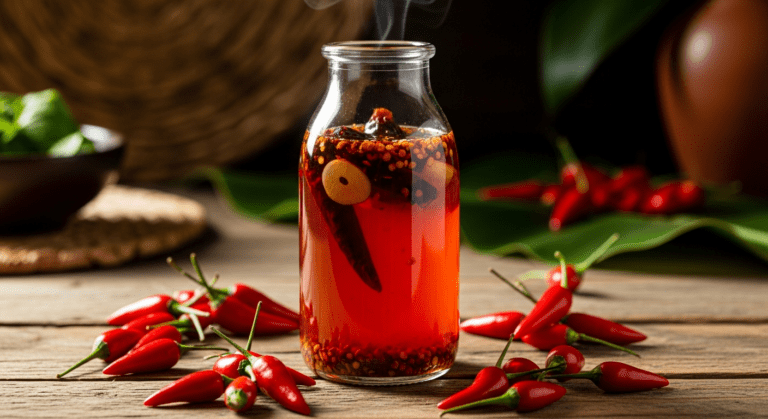
Hawaiian food isn’t generally spicy, but a little heat is always welcome. Hawaiian chili pepper water is the traditional condiment — a simple mixture of Hawaiian chili peppers, vinegar, garlic, and salt that sits on every local table. If you can’t find Hawaiian chili peppers, sambal oelek (Indonesian chili paste) or sriracha are widely used alternatives in local kitchens.
15. Hoisin Sauce
This thick, sweet-savory Chinese sauce is essential for char siu, manapua dipping, and many Chinese-Hawaiian dishes. It’s a foundational flavor in the Chinese culinary tradition that’s deeply embedded in Hawaiian cooking. Lee Kum Kee is the standard brand.
Bonus: The Fresh Essentials
Beyond the pantry staples, keep these fresh items in rotation:
- Garlic — Whole heads, always. Pre-minced is fine in a pinch, but fresh is better.
- Maui onions — Sweet onions for poke, lomi lomi salmon, and anything that calls for raw onion. Vidalia works as a substitute.
- Eggs — For loco moco, fried rice, eggs Benedict, and a thousand other things.
- Butter — Real butter, unsalted. Essential for baking and finishing sauces.
Where to Find These Ingredients
If you’re in Hawaii, every grocery store carries all of these. Foodland, Times, Don Quijote, Marukai — you’re covered.
On the mainland, Asian grocery stores are your best friend. Most of these items are standard stock at stores like H Mart, 99 Ranch, Marukai (if you’re lucky enough to live near one), or any well-stocked Asian market. For specialty items like Hawaiian salt and furikake, Amazon and Hawaiian food websites ship nationwide.
Stock these 15 ingredients, and you’re ready to cook your way through this entire site. Let’s get started.