Before you cook
The plate lunch is a format, not a recipe.
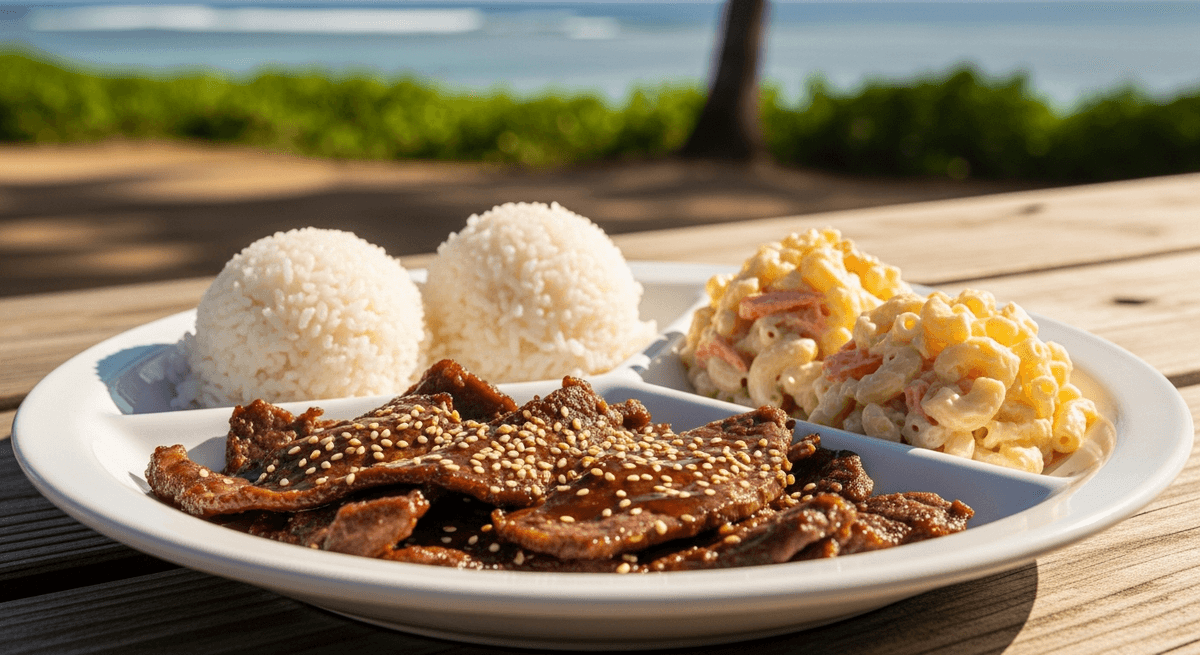
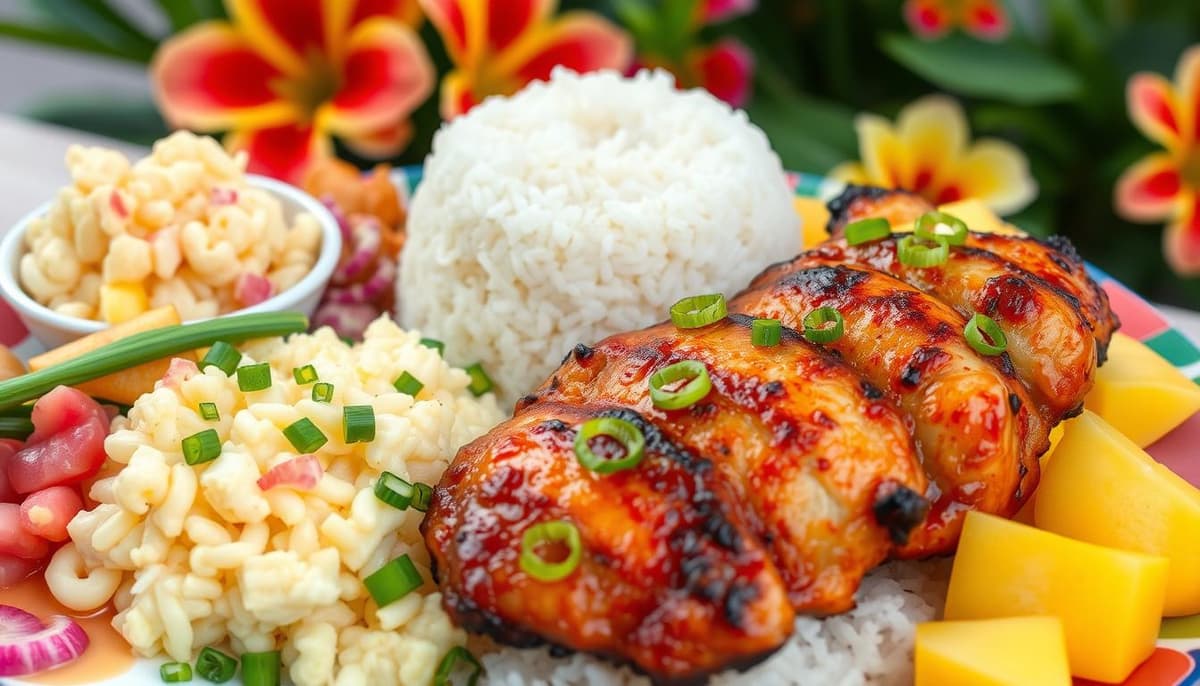
Two scoops of rice, one scoop of mac salad, one protein. Every Hawaii plate lunch lives inside that rule. The protein is where you choose your own adventure. The rice and the mac are non-negotiable.
A plate lunch is the most honest meal in Hawaii. Plantation-era workers needed something filling, portable, and cheap. Japanese bento culture provided the three-compartment format, Chinese cooks brought the protein variety, Portuguese and Filipino families added their own main dishes, and rice was already the anchor. What came out the other end is the dish locals still eat for lunch in 2026.
The point is balance: a starchy carb, a cold creamy side, and something hot and salty to carry the whole plate. If any one of those three components is weak, the plate feels off. Below are the recipes that make the plate work at home, plus the rules for rice, mac salad, and the sauce drawer that separates a real plate lunch from an approximation.
What goes on a plate lunch
The classic three:
- Two scoops of rice. Medium-grain Calrose, cooked plain, served warm. Not basmati, not jasmine. Calrose is the Hawaii standard and the texture matters.
- One scoop of mac salad. Cold, creamy, slightly sweet, loose enough to spread a little. It balances the heat and salt of the protein.
- One protein. Teriyaki chicken, kalua pork, beef teriyaki, chicken katsu, loco moco, Spam and eggs, or something seasonal. One is the rule. Two is generosity. Three is a mixed plate (ask for it by name).
Presentation is usually a foam or styrofoam takeout container with three compartments or a round paper plate divided into sections. This is not fussy food. The point is the meal, not the service.
Where the plate lunch came from
The plate lunch goes back to the 1880s. Sugar-plantation workers on Oahu, Maui, and Kauai needed a mid-day meal that travelled well and filled them up for an afternoon of cane-field labor. Japanese immigrant workers brought their bento tradition, which provided the portable three-compartment format. Chinese cooks at plantation stores made chow fan, stir-fries, and roast-pork plates. Portuguese and Filipino families contributed sausage, adobo, and rice-heavy meals. Within a generation, the components were fused into a single plate.
Today the plate lunch sits at the center of Hawaii lunch culture. Drive-in restaurants like Rainbow Drive-In, Zippy's, and L&L serve thousands a day. Home cooks make them for weeknight dinners. The format still works because it still solves the same problem: a filling meal that holds together for an hour on a lanai table or in a cooler at the beach.
The classic proteins
Teriyaki chicken
Probably the single most-ordered plate lunch protein. Boneless skin-on thighs, marinated overnight in shoyu, brown sugar, garlic, and fresh ginger. Grilled until the edges char and the skin crisps. Sliced across the grain and laid on the plate with the char marks showing.
The marinade matters more than the cut. A good teriyaki is salty first, sweet second, never cloying. If the sauce is ketchup-heavy, it is not teriyaki — it is American barbecue in disguise.
Kalua pork
Shredded smoky pork, seasoned with Hawaiian salt and (for the at-home version) liquid smoke or smoked paprika. Slow-cooked until it shreds. Serves as the protein on a plate lunch or as a filling for manapua, loaded fries, or nachos.
The shortcut version is a slow cooker with pork shoulder, salt, and a teaspoon of liquid smoke. The full version is a smoker or an imu. Both land close enough that the plate lunch holds up.
Chicken katsu
Japanese-style breaded chicken cutlet, pounded thin and panko-coated, fried until golden. Sliced into strips and drizzled with katsu sauce (thick, dark, tangy — Bulldog brand is the store standard). See the full chicken katsu recipe.
Beef teriyaki
Thin-sliced beef (sirloin or short rib), marinated in the same shoyu-sugar-garlic base as the chicken, grilled fast over high heat. Served sliced across the grain. Richer than the chicken and holds up well with extra mac salad.
Loco moco
The breakfast-all-day variant. Hamburger patty over rice, brown gravy poured over both, a fried egg on top. Full recipe at Hawaiian loco moco.
Spam and eggs
For a lighter plate lunch or a breakfast plate. Two or three slices of caramelized Spam, two fried eggs over easy, rice, mac salad. Cheap, filling, and still on every diner menu in Honolulu.
Mac salad: the detail that makes or breaks the plate
Hawaii mac salad is not the pasta salad at a mainland barbecue. It is different in three specific ways:
- The pasta is overcooked on purpose. Soft, almost mushy. Al dente is wrong here; the salad needs to absorb dressing and the texture is supposed to be comforting, not toothy.
- Mayo is the binder, not a garnish. Best Foods / Hellmann's, full fat, more than you think you need. The dressing should coat every noodle and leave a pool in the bowl.
- Subtle sweetness. Grated onion, shredded carrot, a teaspoon of sugar or a splash of rice vinegar. Never chunks of raw onion. Never mustard as a dominant flavor.
Make the salad the morning of. Chill hard before serving. See the full Hawaiian mac salad recipe for the exact ratios.
The rice
Two scoops. That is the rule. Use a rice-cooker ice-cream-scoop dispenser for a true local plate. If you do not have one, a spring-release ice cream scoop makes clean half-dome scoops that slide off the plate in one piece.
Medium-grain Calrose is the standard. Short-grain sushi rice is stickier than you want; long-grain loses the cohesion. The scoop should hold its shape without being gummy.
Sauces and condiments
Most plate lunches are complete as-is, but a handful of additions earn their place:
- Shoyu on the side. For the rice, especially with Spam and eggs.
- Hot mustard. Paired with char siu or katsu.
- Katsu sauce. Thick, dark, tangy. Store-bought Bulldog is fine.
- Chili pepper water. A bright hot sauce of Hawaiian chili peppers, garlic, and water. See the chili pepper hot sauce guide.
- Furikake. Sprinkled on rice, especially under the egg in a loco moco or on a Spam plate.
Vegetarian adaptations
The format is protein-agnostic. The vegetarian plate lunch swaps the main without breaking the rule.
- Tofu teriyaki — firm tofu, pressed, marinated in the same shoyu-sugar-garlic base, pan-seared or grilled. Hold up to the mac salad just fine.
- Eggplant katsu — thick eggplant rounds panko-coated and fried. Served with katsu sauce, reads almost identically to chicken katsu on the plate.
- Grilled vegetable skewers — pineapple, bell pepper, onion, zucchini, marinated in teriyaki sauce. Lighter but still salty-sweet enough to carry the plate.
The mac salad recipe is already vegetarian. Swap mayo for plant-based mayo if you need the plate fully vegan.
How to build a plate lunch at home
Twenty-minute weeknight version:
- Start the rice first (rice cooker; 40 minutes including soak and rest).
- While the rice cooks, make the mac salad so it can chill.
- Last fifteen minutes: marinate and grill or pan-sear the protein.
- Plate: two scoops of rice on one side, one scoop of mac salad on the other, the protein across the middle.
For a party or potluck: scale the proteins to two or three options, set them up as a build-your-own plate, and let people stack their own mixed plate. This is the easiest crowd-feeding format in Hawaii.
Frequently asked questions
What is a Hawaiian plate lunch?
A plate lunch is the standard format for Hawaii lunch: two scoops of medium-grain rice, one scoop of creamy mac salad, and one hot protein — usually teriyaki chicken, kalua pork, beef teriyaki, chicken katsu, or loco moco. It comes from plantation-era cooks blending Japanese bento, Chinese stir-fry, Portuguese and Filipino proteins in a portable three-compartment container.
What proteins go on a plate lunch?
The classics are teriyaki chicken, kalua pork, beef teriyaki, chicken katsu, loco moco (hamburger patty with gravy and a fried egg), and Spam and eggs. Seasonal fish, short ribs, and kalbi also show up at specific drive-ins.
What makes Hawaii mac salad different from regular pasta salad?
Three things: the macaroni is cooked soft (not al dente), the dressing is heavier on mayonnaise, and it leans slightly sweet from grated onion, shredded carrot, and a small amount of sugar or rice vinegar. Full-fat Best Foods / Hellmann's is the mayo standard.
Can I make a vegetarian plate lunch?
Yes. Keep the two-scoops-rice and mac salad components. Swap the protein for tofu teriyaki, eggplant katsu, or grilled vegetable skewers marinated in the teriyaki base. Use plant-based mayo in the mac salad for a fully vegan plate.
What rice should I use for a plate lunch?
Medium-grain Calrose rice. Not jasmine, not basmati, not short-grain sushi rice. Calrose holds a scoop shape without being overly sticky.
Where did the plate lunch originate?
The plate lunch grew out of Hawaii's sugar-plantation workforce in the 1880s. Japanese bento, Chinese stir-fry, Portuguese sausage, and Filipino adobo all contributed components. The three-compartment format stuck because it was cheap to produce, portable, and filling enough for a day of cane-field work.