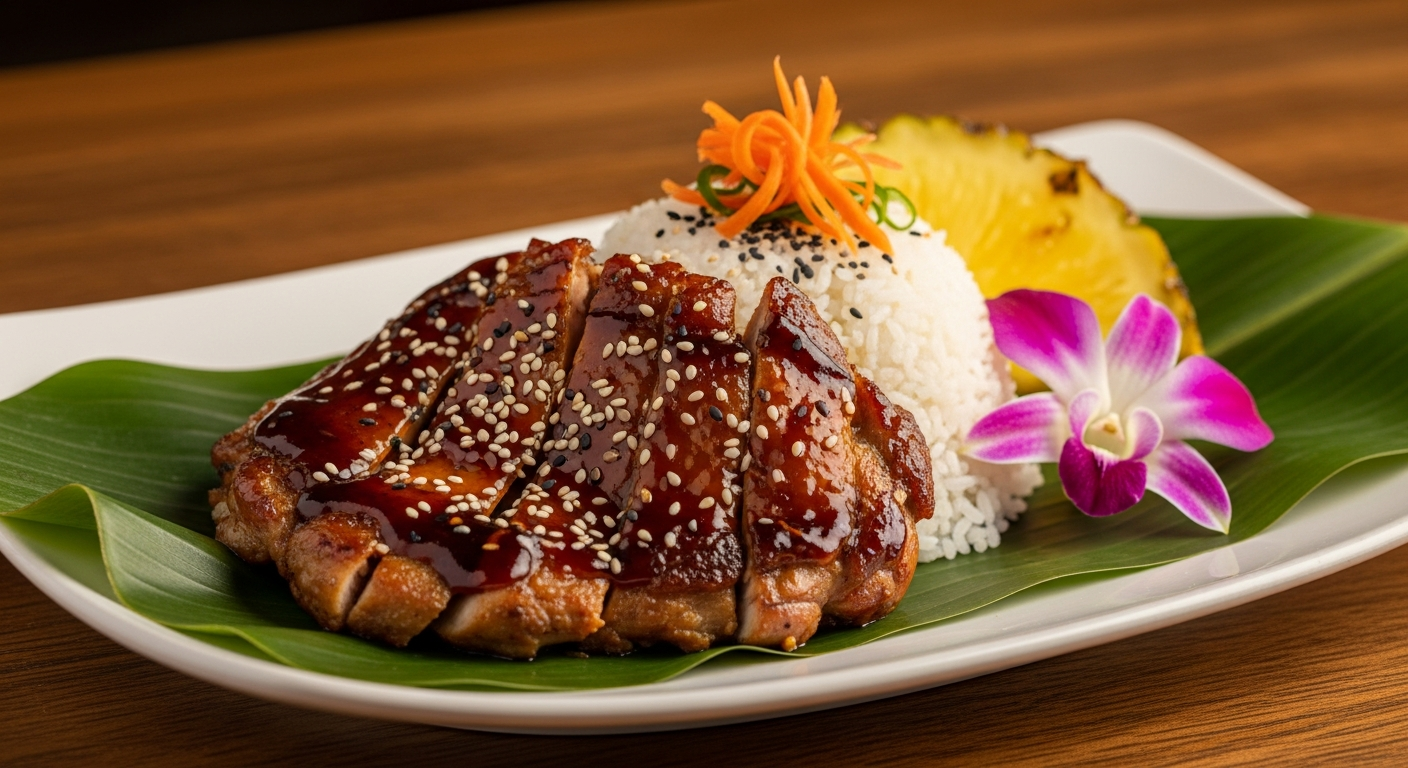
Every Thursday at Rainbow Drive-In, I’d watch the same guy ahead of me order Hawaiian teriyaki chicken. Not katsu. Not kalua pig. Teriyaki chicken, extra sauce, every single week. I finally asked him why. He looked at me like I was crazy: “Because when they get the glaze right, nothing else comes close.” He was right. That glossy, caramelized coating — sweet but not cloying, salty enough to make you crave rice — is what separates a good plate lunch from one you dream about.
Hawaiian teriyaki chicken isn’t some trendy fusion experiment. It’s been a plate lunch staple since the 1960s, when Japanese immigrants and their children started running lunch wagons across the islands. They took teriyaki — a cooking technique, not a sauce — and adapted it for the speed and scale of plate lunch service. The result is something that looks simple but demands precision: chicken that stays tender under high heat, and a glaze that coats every surface without burning or sliding off.
Why Hawaiian Teriyaki Chicken Isn’t Like Mainland Teriyaki
Mainland teriyaki is often grilled and brushed with bottled sauce at the end. Hawaii’s version is cooked in a pan or on a flat-top griddle, and the glaze is part of the cooking process — it reduces and caramelizes directly on the meat. This creates a sticky, lacquered surface that’s almost candy-like in its intensity.
Free: Hawaiian Cooking Starter Kit
Get 5 essential island recipes + a printable pantry checklist — everything you need to start cooking Hawaiian at home.
No spam, ever. Unsubscribe anytime.
The sweetness level is higher than traditional Japanese teriyaki. That’s intentional. Local palates in Hawaii lean toward sweeter flavors, influenced by the plantation-era practice of using sugar as a preservative and flavor enhancer. But the best Hawaiian teriyaki balances that sweetness with enough shoyu (Japanese soy sauce) and ginger to keep it from tasting like dessert.
The other key difference: it’s almost always made with bone-in, skin-on chicken thighs. Breasts dry out too easily under the high heat needed to caramelize the glaze. Thighs stay juicy, and the skin — when rendered properly — becomes crispy before the sauce goes on, giving you both texture and flavor in every bite.
This isn’t a dish you marinate overnight. Quick-service plate lunch operations don’t have time for that, and neither should you. The glaze does the work. Thirty minutes of marinating is enough to season the meat without breaking down the texture. Any longer and the acid from the shoyu starts to make the chicken mushy.
Hawaiian teriyaki chicken became a plate lunch standard because it’s fast, it travels well, and it makes people want to scrape every bit of sauce off their plate with their rice. That’s the test. If your rice is still white after you’re done eating, the glaze wasn’t sticky enough.
The Sauce Is Everything — Here’s How to Get It Right
The teriyaki glaze is a reduction of shoyu, sugar, mirin, and aromatics. That’s it. No bottled teriyaki sauce. No shortcuts. The ratio matters: roughly 1 part mirin to 2 parts shoyu to 1 part sugar. Too much sugar and it burns before it caramelizes. Too little and it never develops that glossy sheen.
Use Japanese shoyu, not Chinese soy sauce. Chinese soy sauce is saltier and less nuanced. Japanese shoyu — specifically Kikkoman or Aloha Shoyu if you can find it — has a rounder, slightly sweeter flavor that’s essential to the balance. If you’re on the mainland and need guidance on which brand to buy, check out this guide to soy sauces for Hawaiian cooking.
Mirin is sweet rice wine, and it adds depth that sugar alone can’t replicate. It also helps the glaze cling to the chicken. If you can’t find mirin, substitute with 1 tablespoon of sake plus 1 teaspoon of sugar per 2 tablespoons of mirin called for. It’s not identical, but it’s close enough.
Fresh ginger and garlic are traditional but optional. They add aromatic complexity, but they also burn easily when you’re reducing the sauce. If you use them, grate them fine so they dissolve into the glaze rather than sitting on the surface where they’ll char.
The cornstarch slurry is the secret weapon. Mix 1 tablespoon of cornstarch with 2 tablespoons of cold water, then stir it into the simmering sauce. This thickens the glaze so it coats the chicken instead of pooling at the bottom of the pan. Without it, you have teriyaki-flavored chicken. With it, you have Hawaiian teriyaki chicken.
Reduce the sauce separately first, before adding the chicken back in. This prevents burning. You want the sauce to simmer and thicken to a syrup-like consistency — it should coat the back of a spoon and leave a trail when you drag your finger through it. If it’s too thin, it won’t stick. If it’s too thick, it’ll clump and burn.
The final glaze happens over medium-high heat, not high. You’re looking for caramelization, not char. The chicken should sizzle when it hits the pan, and the glaze should bubble and reduce around it. Turn the pieces frequently so every surface gets coated. The glaze will go from shiny and wet to glossy and slightly tacky. That’s when it’s done.
The Ingredients You’ll Need
This recipe uses bone-in, skin-on chicken thighs because they stay tender under high heat and the skin crisps up beautifully before the glaze goes on. If you can only find boneless thighs, they’ll work — just reduce the cooking time by a few minutes. Chicken breasts will dry out, so avoid them unless you’re willing to watch the heat constantly.
For the sauce, use white granulated sugar, not brown. Brown sugar has molasses, which adds a caramel flavor that competes with the shoyu. You want clean sweetness. Mirin is sold in the Asian section of most grocery stores — look for Hon Mirin if you want the real thing, or Aji-Mirin if you’re on a budget. Both work.
Fresh ginger and garlic are optional but recommended. They add a brightness that cuts through the richness of the glaze. Grate them on a Microplane so they melt into the sauce. If you mince them, they’ll burn.
- 2 lbs bone-in, skin-on chicken thighs (about 6-8 pieces)
- 1/2 cup shoyu (Japanese soy sauce)
- 1/4 cup mirin (sweet rice wine)
- 1/4 cup white granulated sugar
- 1 tablespoon cornstarch
- 2 tablespoons cold water
- 1 tablespoon fresh ginger, grated (optional)
- 2 cloves garlic, grated (optional)
- 1 tablespoon vegetable oil for cooking
- Sesame seeds and sliced green onions for garnish
How to Make Hawaiian Teriyaki Chicken
Start by scoring the chicken skin. Use a sharp knife to make shallow cuts in a crosshatch pattern across each thigh. This helps the skin render its fat and allows the glaze to penetrate the meat. Pat the chicken dry with paper towels — moisture is the enemy of crispy skin.
Marinate the chicken for 30 minutes, no longer. Combine 1/4 cup of the shoyu, half the ginger, and half the garlic in a shallow dish. Add the chicken, turn to coat, and let it sit at room temperature. While it marinates, make the glaze.
Combine the remaining shoyu, mirin, sugar, and aromatics in a small saucepan. Bring to a simmer over medium heat, stirring until the sugar dissolves. Let it reduce for 5-7 minutes until it thickens slightly. Mix the cornstarch and cold water in a small bowl, then stir it into the sauce. Simmer for another 2 minutes until the glaze coats the back of a spoon. Remove from heat and set aside.
Heat a large cast iron skillet or flat-top griddle over medium-high heat. Add the vegetable oil and let it shimmer. Remove the chicken from the marinade, shake off the excess, and place it skin-side down in the pan. Don’t crowd the pan — work in batches if necessary. Cook for 6-8 minutes without moving the chicken, until the skin is golden brown and crispy. Flip and cook for another 6-7 minutes, until the internal temperature reaches 165°F.
Transfer the chicken to a plate and pour off most of the fat from the pan, leaving about 1 tablespoon. Return the pan to medium-high heat and pour in the glaze. Let it bubble for 30 seconds, then add the chicken back in, turning each piece to coat it completely. The glaze will reduce and thicken around the chicken, becoming sticky and glossy. Keep turning the pieces for 2-3 minutes until every surface is coated and the glaze has caramelized slightly.
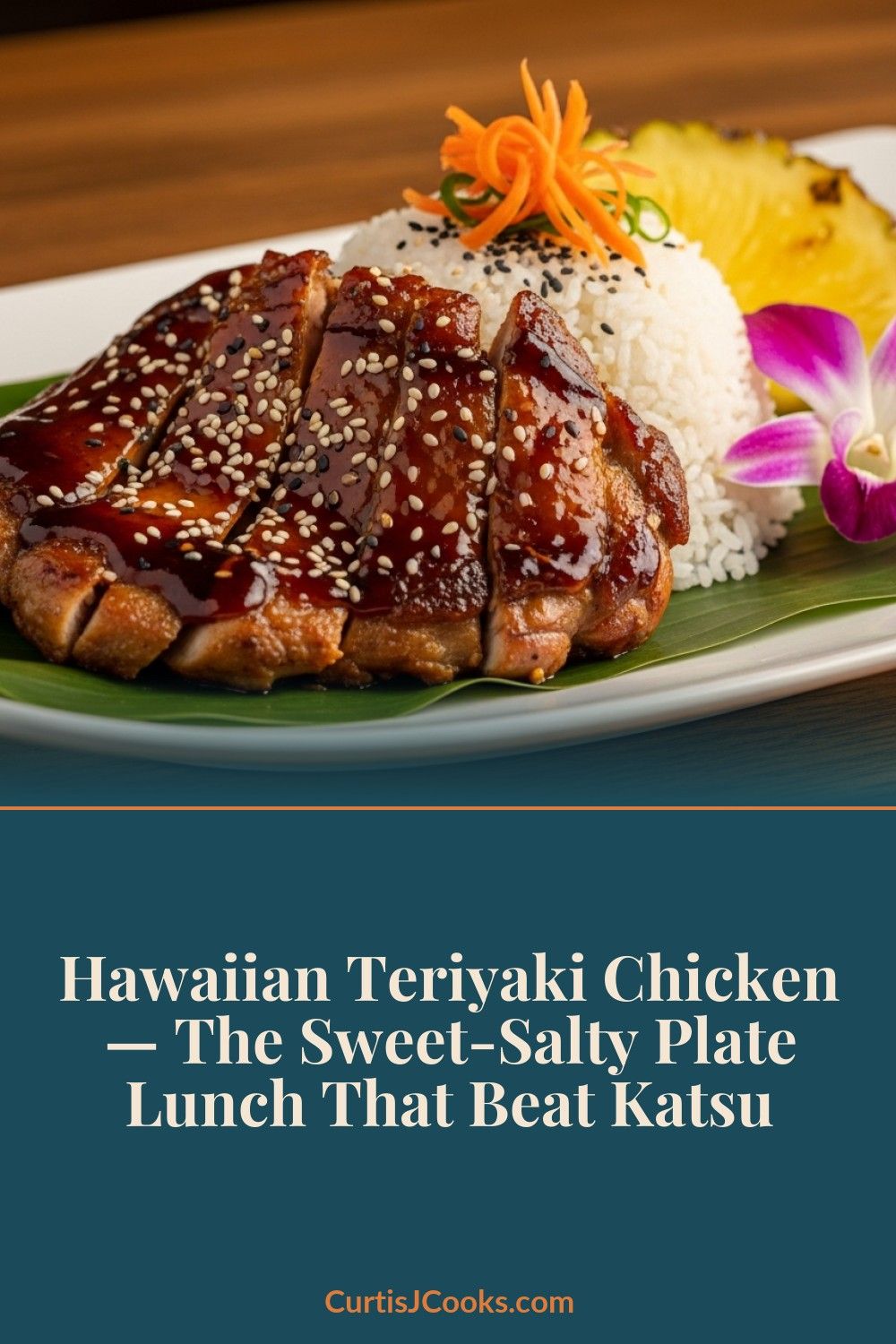
Remove from heat and let the chicken rest for 3-4 minutes. This allows the glaze to set so it doesn’t slide off when you slice or serve. Garnish with sesame seeds and sliced green onions.
Prep Time: 10 minutes | Cook Time: 25 minutes | Total Time: 35 minutes
Serves: 4
- Score the chicken skin in a crosshatch pattern. Pat dry with paper towels.
- Marinate chicken in 1/4 cup shoyu, half the ginger, and half the garlic for 30 minutes at room temperature.
- Combine remaining shoyu, mirin, sugar, ginger, and garlic in a saucepan. Simmer 5-7 minutes until slightly thickened.
- Mix cornstarch and cold water, stir into sauce. Simmer 2 minutes until glaze coats the back of a spoon. Remove from heat.
- Heat cast iron skillet over medium-high heat. Add oil.
- Place chicken skin-side down. Cook 6-8 minutes without moving until golden and crispy.
- Flip chicken. Cook 6-7 minutes until internal temperature reaches 165°F.
- Remove chicken. Pour off most fat, leaving 1 tablespoon.
- Return pan to medium-high heat. Pour in glaze and let it bubble for 30 seconds.
- Add chicken back in. Turn pieces constantly for 2-3 minutes until fully coated and glaze is sticky and caramelized.
- Remove from heat. Let rest 3-4 minutes. Garnish with sesame seeds and green onions.
Serving This the Right Way
Hawaiian teriyaki chicken is served over white rice — usually short-grain or medium-grain, cooked until it’s sticky enough to clump but not mushy. The rice absorbs the excess glaze, which is the whole point. Plate lunch portions are generous: one or two thighs per person, a full scoop of rice, and two sides.
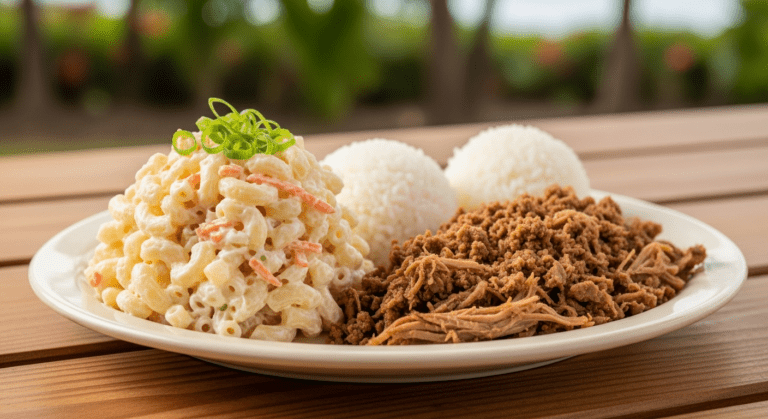
The classic sides are Hawaiian macaroni salad and either shredded cabbage or a simple green salad. The mac salad’s creaminess balances the intensity of the glaze, and the cabbage adds crunch and cuts through the richness. Don’t skip the garnish — sesame seeds and green onions add visual appeal and a slight bitterness that rounds out the sweetness.
To prevent the glaze from making everything soggy, keep the chicken slightly elevated on the rice rather than letting it sit flat. The steam from the hot rice can thin the glaze if you’re not careful. If you’re packing this for lunch, store the chicken and rice in separate compartments of a bento box until you’re ready to eat.
Tips for the Best Teriyaki Chicken Every Time
Score the skin deeply enough to matter. Shallow cuts won’t help the fat render. You want to cut through the skin into the fat layer without reaching the meat. This creates channels for the fat to escape and the glaze to settle.
Don’t marinate for more than 30 minutes. The acid in the shoyu will start to break down the protein structure, making the chicken mushy. If you need to prep ahead, marinate for 30 minutes, then pat the chicken dry and refrigerate it uncovered for up to 4 hours. The surface will dry out, which helps with crisping.
Reduce the sauce separately before glazing. This is the most common mistake. If you try to reduce the sauce while the chicken is in the pan, the sugars will burn before the sauce thickens. Make the glaze first, set it aside, cook the chicken, then combine them at the end.
Use medium-high heat for the final glaze, not high. High heat will char the sugars before they caramelize. You want a slow, controlled reduction that coats the chicken evenly. If you see black spots forming, your heat is too high.
Let it rest before slicing or serving. The glaze needs 3-4 minutes to set. If you slice or serve immediately, it’ll pool at the bottom of the plate instead of clinging to the chicken. Resting also allows the juices to redistribute, so the meat stays moist.
For meal prep, store components separately. Cooked teriyaki chicken will keep for 3-4 days in the refrigerator, but the glaze can dry out or become gummy. Store the chicken and rice in separate containers. When you’re ready to reheat, add the chicken to a covered pan with a splash of water over medium heat. The steam will revive the glaze without drying out the meat. Avoid the microwave — it turns the skin rubbery.
What Does Hawaiian Teriyaki Chicken Taste Like?
The first thing you notice is the glaze — thick, glossy, and almost lacquered. It tastes intensely sweet at first, then the shoyu comes through with a deep, fermented saltiness that cuts the sugar. The ginger and garlic add a sharpness that keeps it from being one-note. The chicken itself is tender and juicy, with crispy bits of caramelized skin where the glaze has reduced to near-candy.
When you eat it over rice, the flavors balance out. The starchy rice absorbs the excess glaze, mellowing the sweetness and turning each bite into something savory and satisfying. The sesame seeds add a nutty crunch, and the green onions bring a fresh, slightly bitter note that keeps you coming back for more.
It’s richer than shoyu chicken, which is braised and saucy, and less crispy than chicken katsu, which is breaded and fried. Hawaiian teriyaki chicken sits somewhere in between — tender meat with a crispy exterior, coated in a glaze that’s both a sauce and a crust. It’s the kind of food that makes you understand why that guy at Rainbow Drive-In ordered it every single week.
Explore More Hawaiian Recipes
- What Is a Plate Lunch? Hawaii’s Iconic Meal Explained
- Chicken Katsu – Hawaii’s Crispy Plate Lunch Favorite
- Shoyu Chicken – Hawaii’s Sweet Soy-Braised Plate Lunch Classic
- Mochiko Chicken – Hawaii’s Crispy, Sticky Fried Chicken
- Huli Huli Chicken – Hawaii’s Famous Rotisserie-Style Grilled Chicken
- Hawaiian Macaroni Salad – The Only Mac Salad Recipe You’ll Ever Need
- How to Make Perfect Rice Every Time
- Hawaii Plate Lunch Recipes – Your Complete Guide to the Islands’ Most Iconic Meal