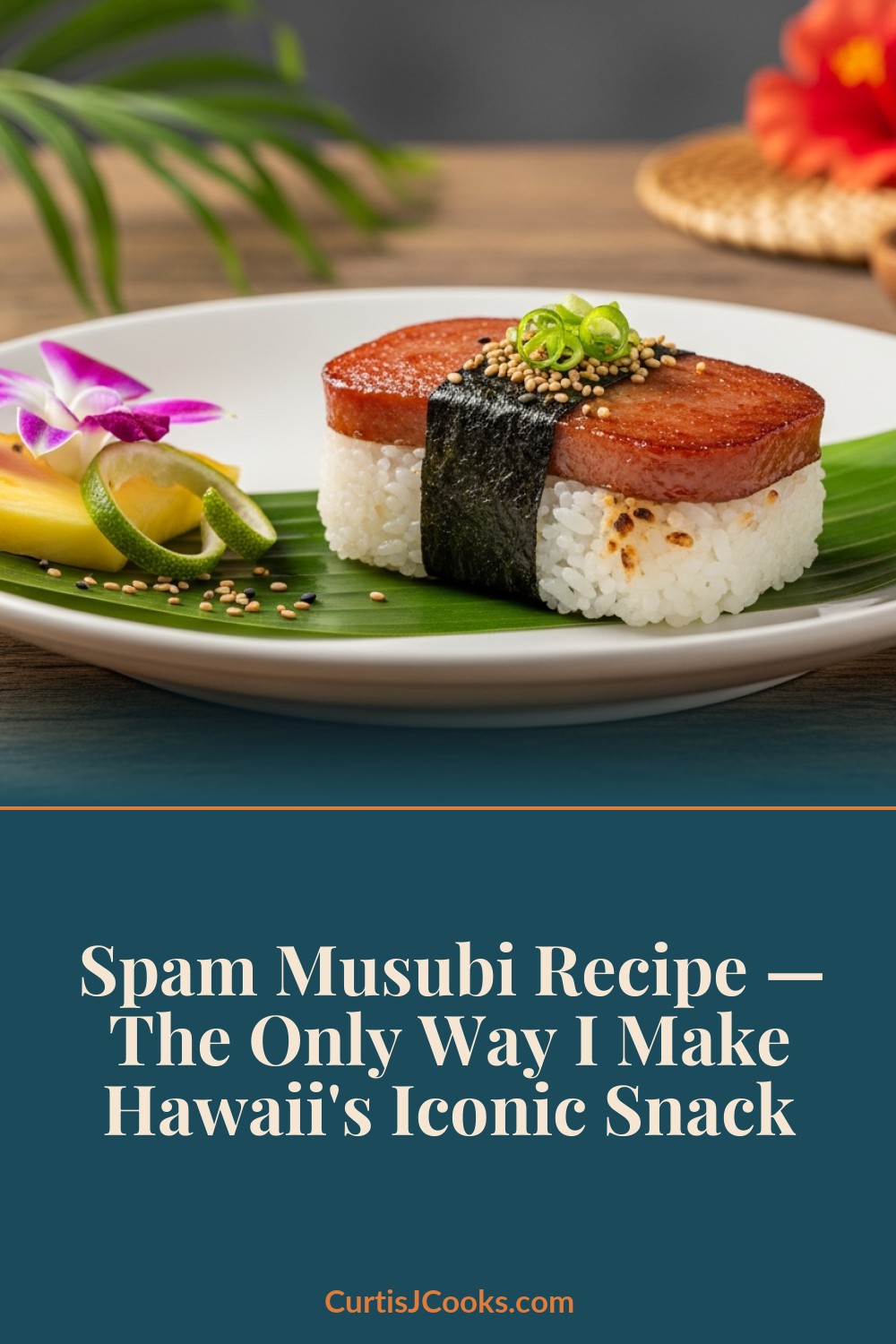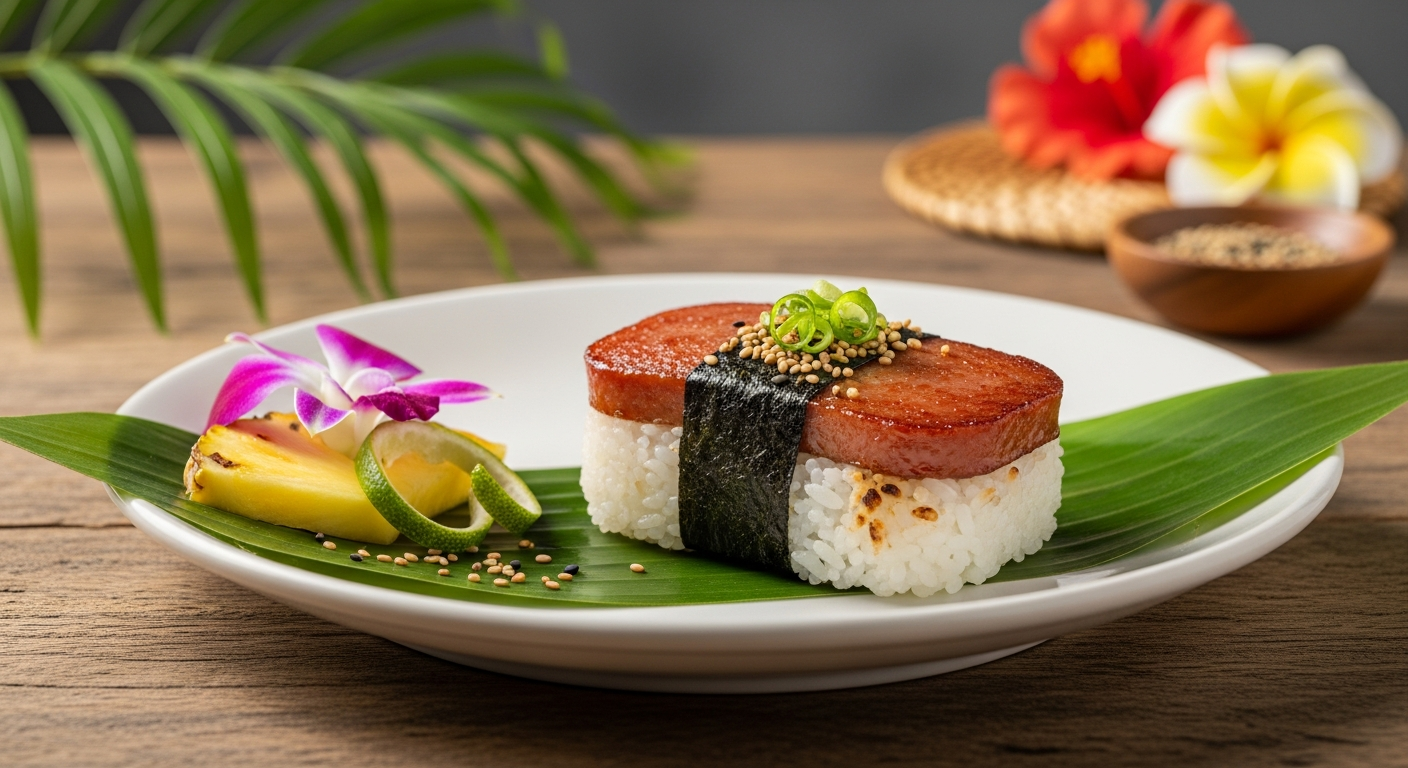
The best spam musubi I ever had wasn’t from a convenience store or a food truck — it was from my aunty’s kitchen in Kalihi, watching her work the stove with a practiced rhythm. She’d fry the Spam in its own teriyaki glaze until the edges crisped dark and caramelized, then press the rice so it held together but didn’t turn into mush. The nori she wrapped while the rice was still warm, so it sealed itself without needing water or tricks. That’s the spam musubi recipe I make now — the one that tastes like home, not like something you grab at the gas station because you’re desperate.
If you’re new to musubi, start with our guide to what spam musubi is and why it matters in Hawaii. This post is for people ready to make it — with the technique, ratios, and details that separate good musubi from the stuff that falls apart in your hands.
Why This Spam Musubi Recipe Works
Most spam musubi recipes treat it like assembly-line work: cook rice, fry Spam, wrap, done. That’s how you get musubi that tastes like an afterthought. The version I learned in Kalihi treats each component with respect. The rice gets seasoned with the right ratio of vinegar, sugar, and salt — not so much that it tastes pickled, but enough that it balances the salty Spam. The Spam itself gets fried in a soy-sugar glaze that caramelizes the surface without burning. And the assembly happens while the rice is still warm, so the nori sticks naturally and the whole thing holds together.
Free: Hawaiian Cooking Starter Kit
Get 5 essential island recipes + a printable pantry checklist — everything you need to start cooking Hawaiian at home.
No spam, ever. Unsubscribe anytime.
This isn’t complicated cooking. It’s about understanding why each step matters and doing it with intention. Get the rice texture right, caramelize the Spam properly, and wrap it while everything’s still warm — that’s the difference between musubi you’re proud to serve and musubi you eat because you’re hungry.
The Ingredients You’ll Need
Good spam musubi starts with the right ingredients — not expensive, just specific. You need short-grain white rice, the kind that gets sticky when cooked. Long-grain or jasmine rice won’t hold together. You need actual Spam, preferably the classic flavor, though Lite or Teriyaki work if you want a different profile. You need rice vinegar, sugar, and salt to season the rice. You need soy sauce and sugar for the Spam glaze. And you need nori — roasted seaweed sheets cut to the right size.
A musubi mold isn’t required, but it makes the job easier, especially if you’re new to this. You can use the empty Spam can as a mold, but a proper musubi press gives you more control over the rice compression. See our guide to the best musubi molds and accessories if you want to invest in the right tools.
Here’s what you need:
- 3 cups uncooked short-grain white rice (makes about 6 cups cooked)
- 1 can (12 oz) Spam, classic flavor
- 3 tablespoons rice vinegar
- 2 tablespoons sugar (for rice seasoning)
- 1 teaspoon salt
- 3 tablespoons soy sauce
- 2 tablespoons sugar (for Spam glaze)
- 4-5 sheets nori (roasted seaweed), cut in half lengthwise
- Neutral oil for frying (vegetable or canola)
The rice vinegar you use matters. Get actual rice vinegar, not white vinegar or apple cider vinegar. The flavor is milder and slightly sweet, which is what you want. For the Spam, the classic flavor has the right salt-to-fat ratio. Lite Spam works but tastes leaner. Teriyaki Spam is already sweet, so adjust your glaze accordingly.
How to Season the Rice (The Part Most Recipes Get Wrong)
This is where most homemade spam musubi fails. The rice either tastes like plain steamed rice — which makes the whole thing one-dimensional — or it’s so vinegary you can’t taste anything else. The ratio I use is 3 tablespoons rice vinegar, 2 tablespoons sugar, and 1 teaspoon salt for 3 cups uncooked rice. That gives you rice that tastes subtly seasoned, with a hint of sweetness and acidity that balances the salty Spam without overpowering it.
Cook your rice first. If you don’t know how to make proper short-grain rice, read our guide on how to make perfect rice every time — it covers the fundamentals. Once the rice is done, let it sit covered for 10 minutes, then transfer it to a large bowl. Mix your vinegar, sugar, and salt in a small bowl until the sugar dissolves, then drizzle it over the rice. Use a rice paddle or wooden spoon to fold it in gently — don’t stir aggressively or you’ll break the grains.
The rice should be warm when you season it. Warm rice absorbs the seasoning better and stays pliable for pressing. Cold rice turns hard and won’t compress properly, which means your musubi falls apart. Season the rice right before you’re ready to assemble, and keep it covered with a damp towel so it doesn’t dry out.
How to Cook the Spam (Caramelized, Not Rubbery)
Raw Spam straight from the can is edible, but it’s not what you want in musubi. You want Spam that’s been fried until the surface caramelizes — crispy edges, sticky glaze, deep umami flavor. That happens when you cook it in a mixture of soy sauce and sugar over medium heat, flipping it at the right moment so the glaze doesn’t burn.
Slice your Spam lengthwise into 8-10 pieces, each about ¼ inch thick. Heat a tablespoon of oil in a large skillet over medium heat — not high, or the glaze will scorch before the Spam browns. Lay the slices in the pan without crowding them. Let them cook for 2-3 minutes on the first side without moving them. You’ll see the edges start to brown and crisp.
While the first side cooks, mix your soy sauce and sugar in a small bowl. When the Spam is golden on the bottom, flip each slice and immediately drizzle half the glaze over the cooked side. Let the second side cook for another 2-3 minutes, then flip again and add the remaining glaze. The sugar will bubble and caramelize, coating the Spam in a sticky, glossy layer. Pull the pan off the heat as soon as the glaze thickens — if you wait too long, it’ll burn and turn bitter.
How to Assemble Spam Musubi
Assembly is where technique matters most. You’re building a compact bundle that holds together without turning into a dense brick. The rice needs to be pressed firmly enough to stick, but not so hard that it loses its texture. The Spam needs to sit centered so every bite gets equal coverage. And the nori needs to be wrapped while the rice is still warm, or it won’t seal.
Set up your workspace: a cutting board, your musubi mold, a small bowl of water, and your components — seasoned rice, fried Spam, nori strips. Lay a nori strip shiny-side down on the board. Place your musubi mold on top, centered lengthwise on the nori. Wet your hands lightly so the rice doesn’t stick to them.
Scoop about ½ cup of rice into the mold. Use the press to compress it evenly — you want it firm enough to hold shape, but not so compressed that it turns hard. Lay a slice of Spam on top of the rice, centered. Add another thin layer of rice on top of the Spam if you want a fully enclosed musubi, or leave the Spam exposed — both styles work.
Lift the mold off carefully. Fold the nori up and over the rice block, wrapping it snugly. The ends should overlap slightly. If the nori won’t stick, dab the edge with a tiny bit of water using your finger. The warmth of the rice usually does the job on its own, but older nori sometimes needs help. Flip the musubi seam-side down and let it sit for a minute so the nori sets.
Instructions
Here’s the full process from start to finish. Follow the steps in order and you’ll have restaurant-quality spam musubi at home.
Prep Time: 15 minutes | Cook Time: 25 minutes | Total Time: 40 minutes
Yield: 8-10 musubi
- Cook 3 cups short-grain white rice according to package directions. Let it rest covered for 10 minutes after cooking.
- While rice cooks, mix rice seasoning: 3 tablespoons rice vinegar, 2 tablespoons sugar, 1 teaspoon salt. Stir until sugar dissolves.
- Transfer warm rice to a large bowl. Drizzle seasoning over rice and fold gently with a rice paddle. Cover with a damp towel.
- Slice Spam lengthwise into 8-10 pieces, about ¼ inch thick each.
- Heat 1 tablespoon oil in a large skillet over medium heat. Add Spam slices in a single layer.
- Cook Spam for 2-3 minutes on first side until golden and edges start to crisp.
- Mix Spam glaze: 3 tablespoons soy sauce and 2 tablespoons sugar.
- Flip Spam slices and drizzle half the glaze over the cooked side. Cook 2-3 minutes.
- Flip again and add remaining glaze. Cook until glaze caramelizes and coats Spam, about 1-2 minutes. Remove from heat.
- Cut nori sheets in half lengthwise to create strips about 2 inches wide and 7-8 inches long.
- Place a nori strip shiny-side down on your work surface. Center musubi mold on top.
- Wet hands lightly. Add ½ cup seasoned rice to mold and press firmly but gently with the press.
- Place one slice of glazed Spam on top of rice, centered.
- Lift mold off carefully. Fold nori up and over the rice-Spam block, wrapping snugly. Overlap ends slightly.
- If nori doesn’t stick, dab edge with water. Flip musubi seam-side down and let set for 1 minute.
- Repeat with remaining ingredients. Serve immediately or wrap individually for storage.
How to Store and Reheat Spam Musubi
Fresh musubi tastes best within 4 hours of making it. The rice is still soft, the nori has just the right amount of chew, and the Spam hasn’t had time to dry out. If you’re making musubi for a party or a potluck, make them the morning of and keep them at room temperature, wrapped individually in plastic wrap.
If you need to store them longer, refrigerate them wrapped tightly in plastic wrap. They’ll keep for up to 24 hours, but the texture changes — the rice gets firmer, the nori gets chewier, and the whole thing loses some of its appeal. To reheat, unwrap the musubi and microwave it for 20-30 seconds on medium power. Don’t overheat it or the rice will dry out.
Don’t freeze musubi. The rice texture degrades completely when frozen and thawed, turning grainy and dry. Make what you’ll eat within a day, and make it fresh when you can.
Common Spam Musubi Mistakes (and How to Avoid Them)
Rice falls apart when you pick it up. You didn’t press it firmly enough, or your rice was too dry. Use warm, freshly seasoned rice and press it with steady, even pressure — not aggressive, just firm.
Rice is too wet or mushy. You overseasoned it or added too much liquid. Stick to the 3:2:1 ratio (vinegar:sugar:salt) and fold the seasoning in gently without mashing the rice.
Spam tastes bland or rubbery. You didn’t caramelize it properly. Fry it in the soy-sugar glaze over medium heat until the surface crisps and the glaze thickens.
Nori won’t seal or falls off. You wrapped it after the rice cooled. Assemble musubi while the rice is still warm — the heat helps the nori stick. If it still won’t seal, dab the edge with a tiny bit of water.
Musubi is too dense and hard. You pressed the rice too aggressively. Use firm but gentle pressure — you want the rice to hold together, not turn into a brick.
Glaze burned or tastes bitter. Your heat was too high or you left it on too long. Cook the Spam over medium heat and pull the pan off as soon as the glaze caramelizes.
Explore More Hawaiian Recipes
Once you’ve mastered the classic spam musubi, try our ultimate spam musubi variations for spicy, teriyaki, and furikake versions. For more island snacks, check out mochiko chicken, manapua, and lumpia. Learn why Spam became a staple in our post on how Spam became Hawaii’s favorite meat, and see every Hawaiian appetizer you need to know in our complete guide to pupus.