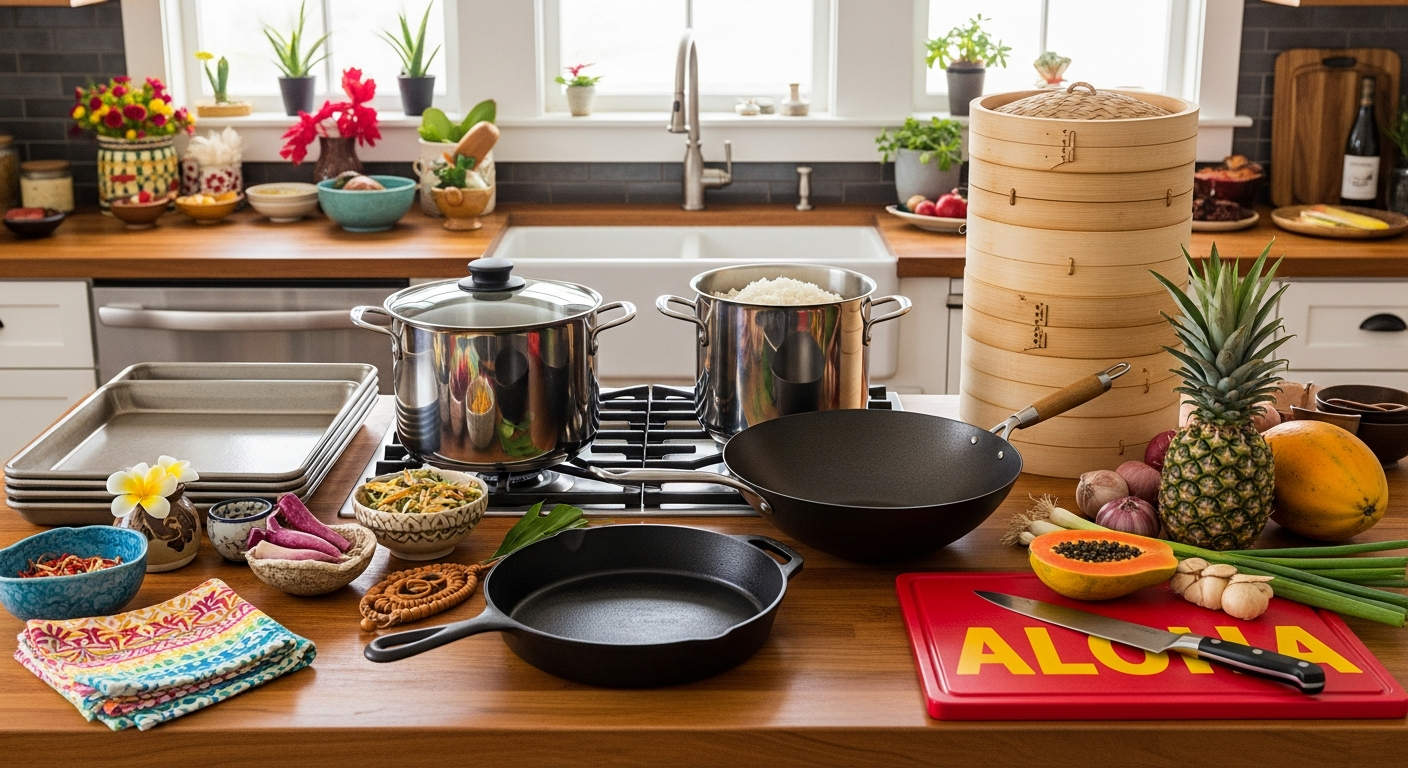
If you grew up in a Hawaiian kitchen, you know the soundtrack: the click of the rice cooker, the sizzle of Spam hitting a hot pan, the steady bubbling of a big pot of oxtail soup on the stove. The cookware in a local kitchen tells the story of the food we love — a beautiful mix of Hawaiian, Japanese, Chinese, Filipino, Portuguese, and Korean influences, all coming together in one place.
Over the years, I’ve collected quite the lineup of pots and pans. Some are fancy. Most are not. But every single piece earns its spot because it helps me cook the food I grew up eating. Here’s my guide to the cookware that every Hawaiian kitchen truly needs.
The Rice Cooker: The Heart of the Kitchen
Let’s start with the most important piece of equipment in any local kitchen. The rice cooker isn’t just an appliance — it’s family. In Hawai’i, rice goes with everything. Loco moco, kalua pork, shoyu chicken, beef stew — you name it, there’s rice on the plate.
Free: Hawaiian Cooking Starter Kit
Get 5 essential island recipes + a printable pantry checklist — everything you need to start cooking Hawaiian at home.
No spam, ever. Unsubscribe anytime.
A good rice cooker means you never have to think about your rice. You wash it, add water, press the button, and focus on everything else. I grew up with a basic Zojirushi, and honestly, that’s all you need. The fuzzy logic models are nice, but even a simple one with a keep-warm function will serve you well for years.
Pro tip: if you’re cooking for a big family or love having leftover rice for fried rice the next day (and you should), go with at least a 10-cup model. Trust me on this one.
A Big Stock Pot: For Soups, Stews, and Feeding the Ohana
Hawaiian cooking means big pots of food. We cook for the whole family, for potlucks, for neighbors who just happened to stop by. A heavy-bottomed 12-quart stock pot is something you’ll reach for constantly.
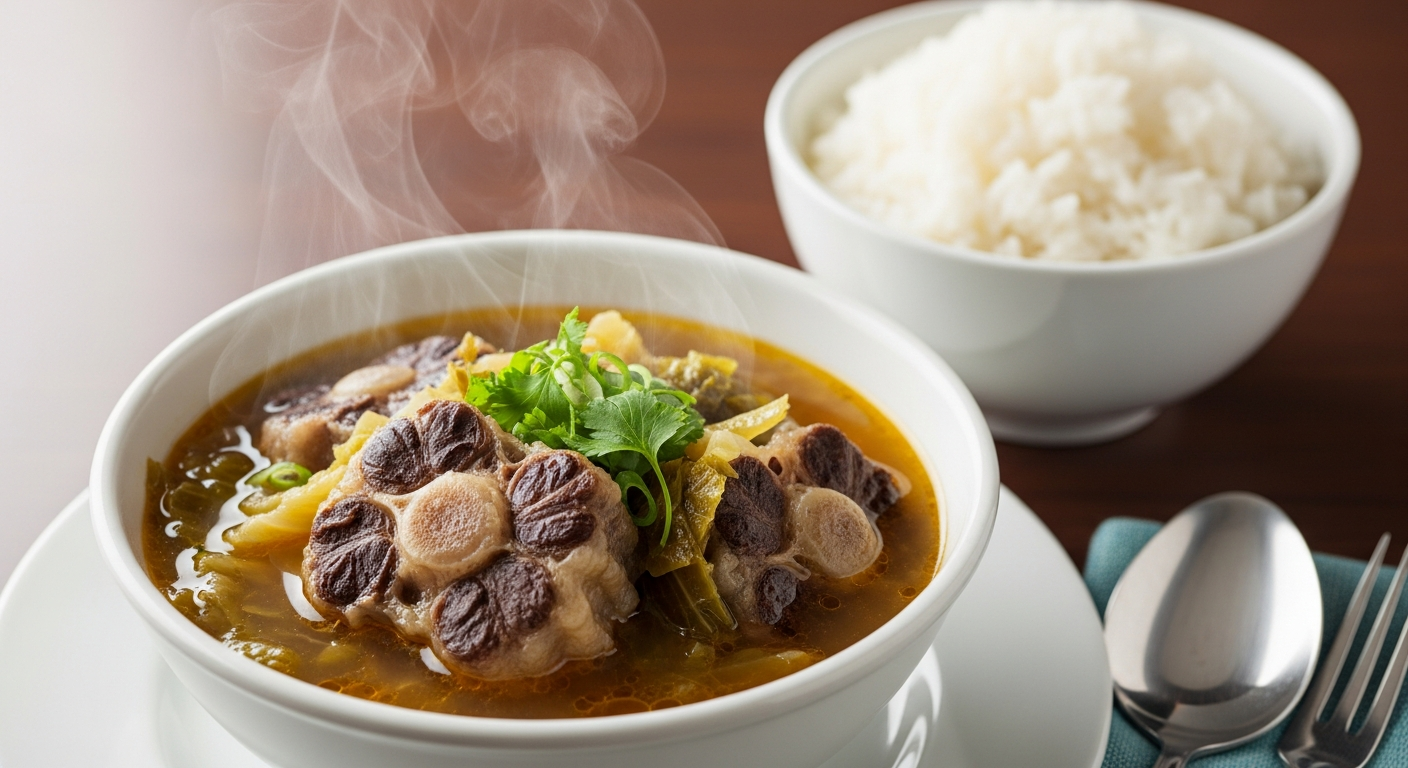
Think about all the dishes that need a big pot: oxtail soup simmering for hours until the meat falls off the bone. Portuguese bean soup loaded with ham hocks, Portuguese sausage, and kidney beans. Saimin broth made from scratch. Chicken long rice with its silky, gingery broth. All of these need room to cook low and slow.
I like stainless steel for my stock pot because it heats evenly, doesn’t react with acidic ingredients like tomatoes, and cleans up well. Look for one with a thick bottom — it makes a huge difference when you’re building flavors over hours of cooking.
The Cast Iron Skillet: Your Hardest-Working Pan
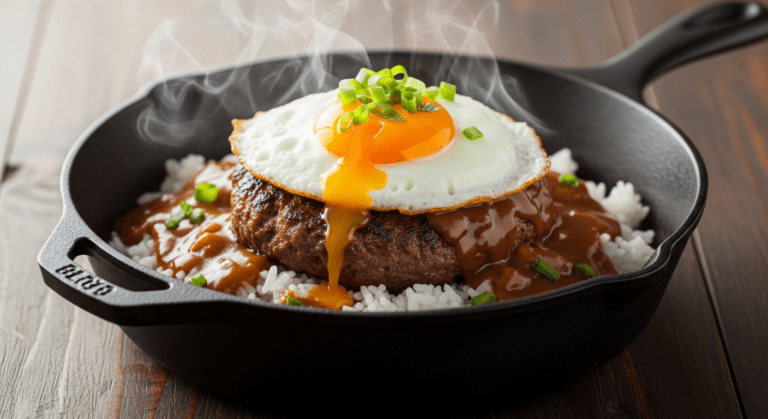
If I could only keep one pan in my kitchen, it would be my 12-inch cast iron skillet. Nothing else gives you the kind of sear you need for a proper loco moco burger patty — that deep, caramelized crust that makes the whole dish sing. It’s also perfect for frying up Spam and eggs in the morning, getting a beautiful crust on mochiko chicken, or making fried rice with that coveted wok hei-style char.
Cast iron holds heat like nothing else, which is exactly what you want when you’re searing proteins or cooking at high heat. Plus, it only gets better with age. My grandma’s cast iron is still the best pan I’ve ever used.
I go into a lot more detail about cast iron in my dedicated post, but for now just know this: every Hawaiian kitchen needs at least one good cast iron skillet. Period.
A Carbon Steel Wok: For Stir-Fry and So Much More
Hawai’i’s food culture owes a huge debt to Chinese immigrants who brought their cooking traditions to the islands. That influence shows up everywhere — in our love for char siu, chow fun, fried rice, manapua, and crispy gau gee. And the best tool for a lot of those dishes is a wok.
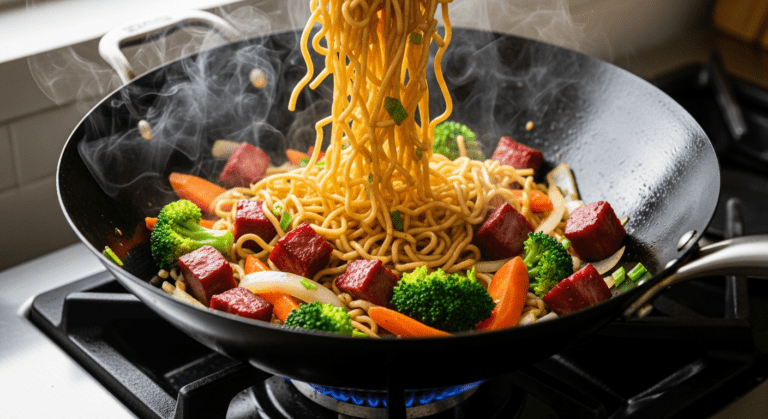
A 14-inch carbon steel wok with a flat bottom is my recommendation for most home cooks. It gets screaming hot, it’s lightweight enough to toss food around, and like cast iron, it develops a beautiful seasoning over time. I use mine for stir-frying beef broccoli, tossing chow fun noodles, making garlic shrimp, and even deep-frying chicken katsu.
Carbon steel beats non-stick here because you actually want that high heat and the fond (the browned bits) that build up during cooking. That’s where flavor lives.
Sheet Pans: The Unsung Hero
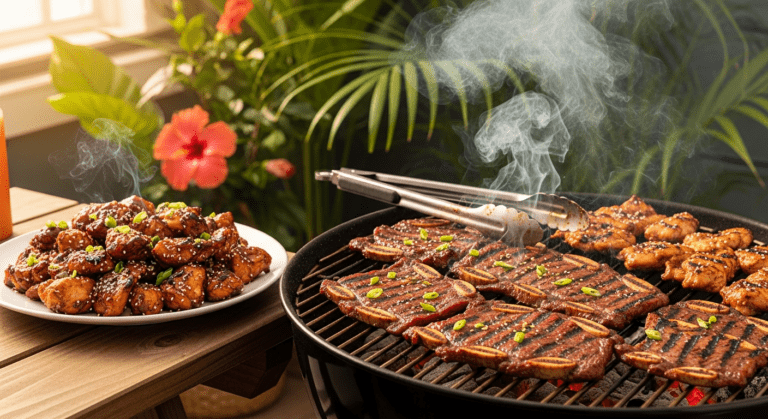
Half-sheet pans might not be glamorous, but they’re essential. I use them constantly for making chicken katsu (a wire rack on top of a sheet pan is the secret to keeping that panko coating crispy), roasting kalua-style pork in the oven, or just catching drips under a rack of teriyaki-glazed meat.
Get at least two or three heavy-duty aluminum half-sheet pans. The cheap, thin ones warp in a hot oven — spend a few extra dollars on commercial-grade pans and they’ll last forever. I also keep a couple of wire cooling racks that fit inside them. That combo is endlessly useful.
A Steamer Setup: Bamboo or Metal
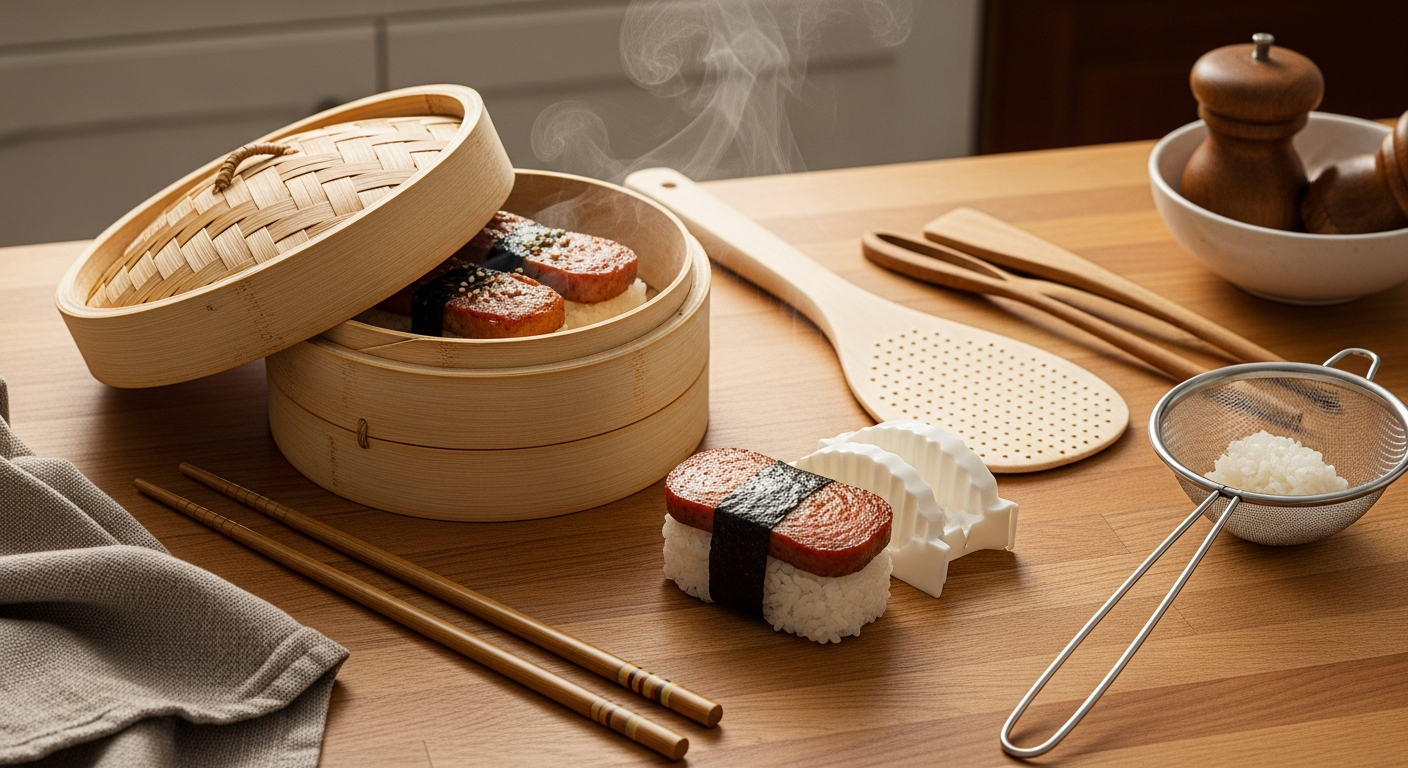
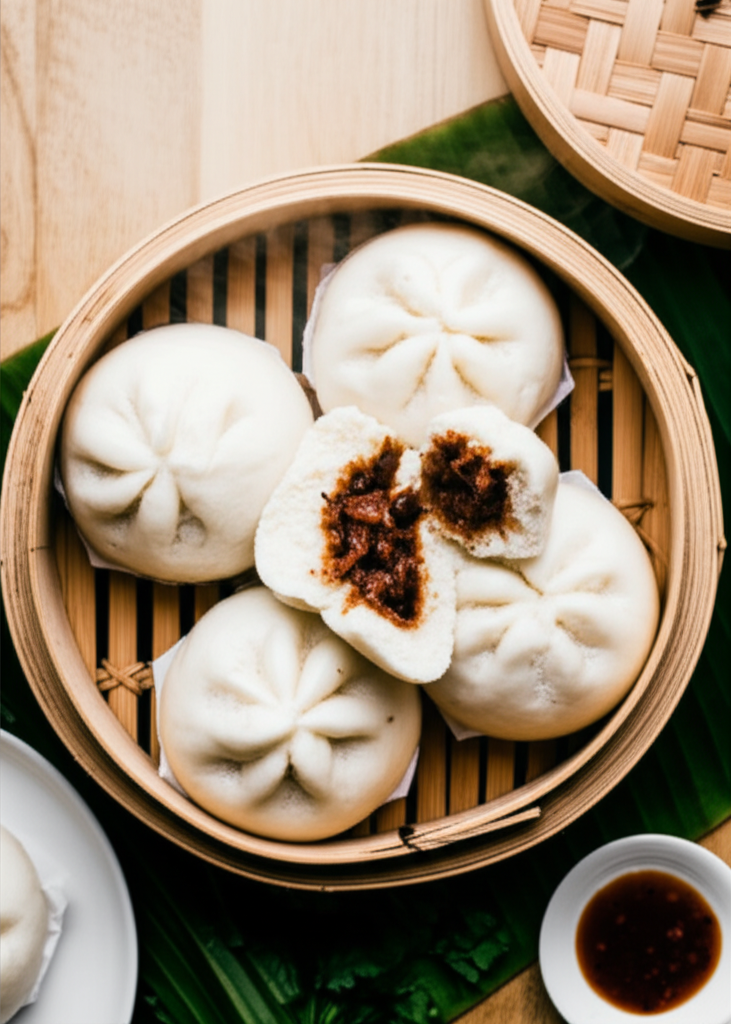
Steaming is a huge part of island cooking. Laulau, char siu bao (manapua), steamed fish with ginger and green onion, even reheating leftover rice — a good steamer setup is something you’ll use all the time.
You can go with stackable bamboo steamers that sit in your wok (they’re affordable and work beautifully), or a metal steamer insert that fits into your stock pot. I actually have both and use them for different things. The bamboo steamers are great for dim sum and manapua because they absorb excess moisture. The metal insert is better for bigger items like a whole fish or a batch of laulau.
If you’re just getting started, a set of 10-inch bamboo steamers is the best bang for your buck.
A Dutch Oven: Low and Slow
An enameled Dutch oven is a luxury, but once you have one, you’ll wonder how you lived without it. It’s perfect for braising — shoyu short ribs, kalbi jjim, beef stew with carrots and potatoes the way Mom used to make it. The heavy lid traps in moisture, and the even heat distribution means everything cooks gently and uniformly.
A 5.5 to 7-quart Dutch oven handles most tasks perfectly. I use mine on the stovetop to brown meat, then transfer the whole thing straight into the oven. One pot, one delicious meal, and easy cleanup. It also makes incredible chili, which — while not exactly Hawaiian — is always welcome at a potluck.
A Non-Stick Pan: For the Delicate Stuff
I know, I know — cast iron and carbon steel can do almost everything. But a good non-stick pan still has its place. Eggs over easy for your loco moco, delicate fish fillets, or making a quick batch of fried noodles when you don’t want to deal with sticking — sometimes non-stick is just easier.
I treat non-stick pans as somewhat disposable. I buy a decent mid-range one, use it gently with silicone or wooden utensils, and replace it every couple of years. Don’t spend a fortune here — save your money for the cast iron and the wok.
Putting It All Together
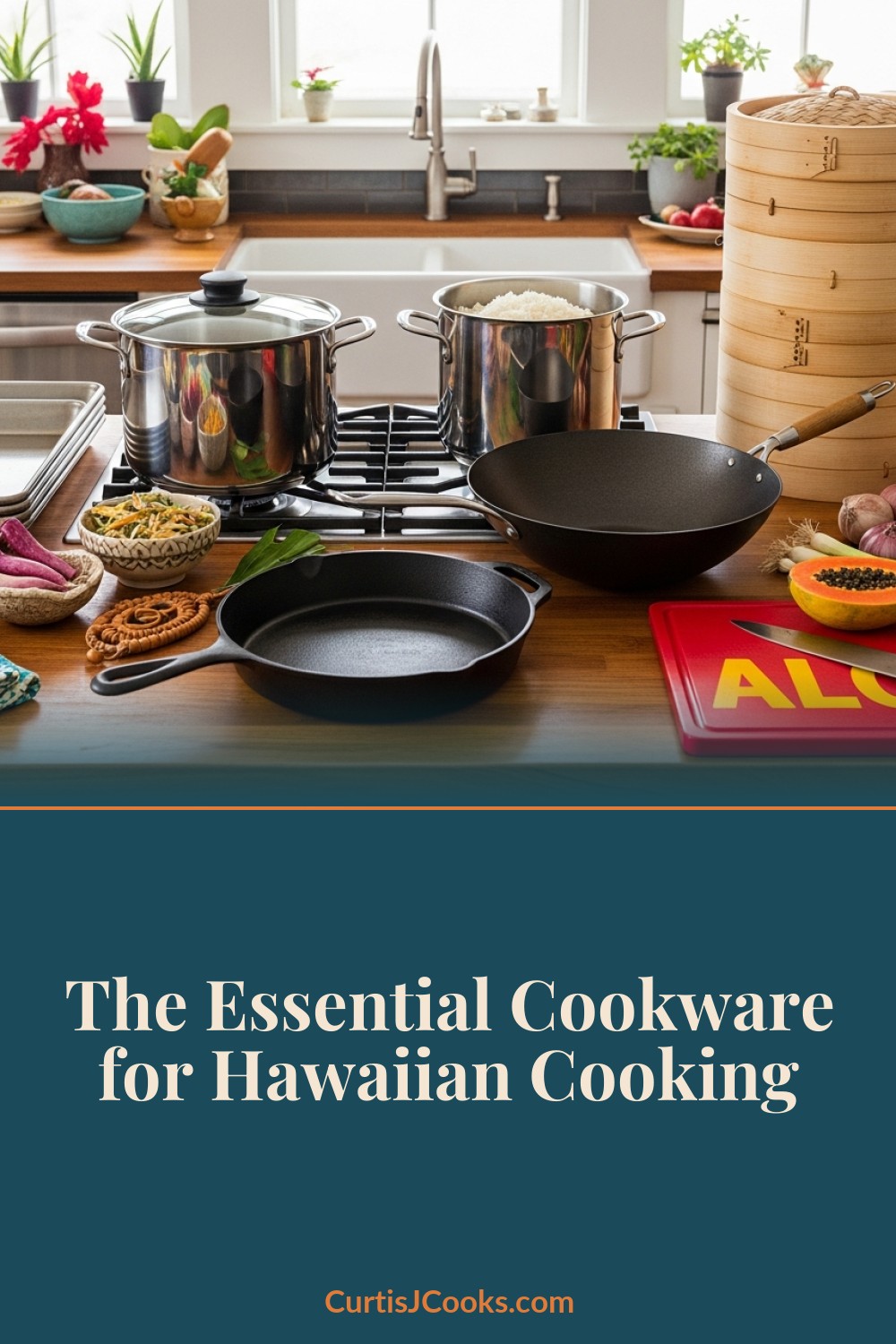
You don’t need to buy everything at once. If I were starting from scratch, here’s the order I’d build my Hawaiian kitchen:
- Rice cooker — non-negotiable.
- Cast iron skillet (12-inch) — your everyday workhorse.
- Large stock pot (12-quart) — for soups, stews, and big-batch cooking.
- Carbon steel wok (14-inch) — opens up a whole world of stir-fry.
- Sheet pans and wire racks — cheap and endlessly useful.
- Steamer setup — bamboo steamers are affordable and effective.
- Dutch oven — when you’re ready to invest in slow braising.
- Non-stick pan — for eggs and delicate items.
The beauty of a Hawaiian kitchen is that it reflects the diversity of the islands themselves. Every pot, every pan, every tool tells a story about the cultures that came together to create the food we love. Build your cookware collection piece by piece, cook with aloha, and the rest will take care of itself.