
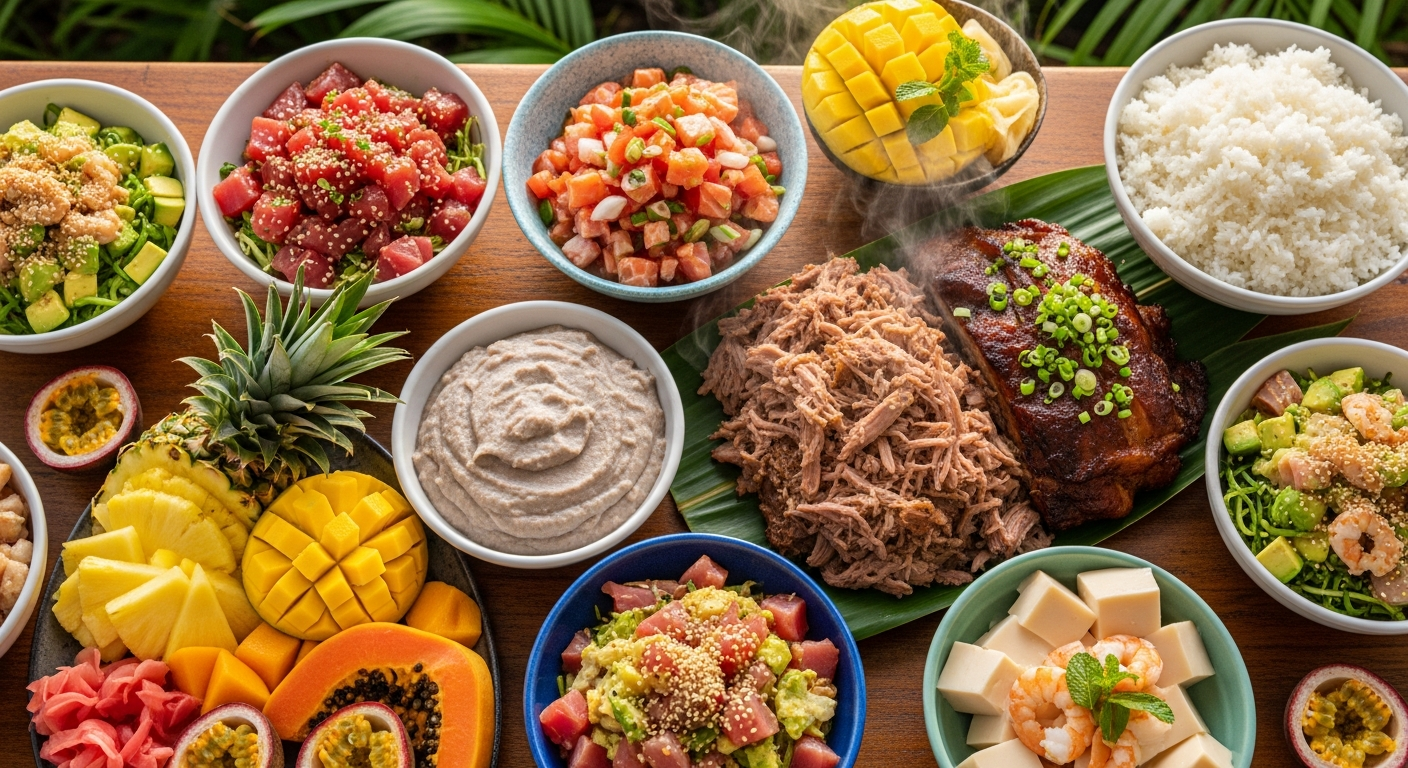
Hawaiian food is unlike anything else in the world. It’s the product of over a thousand years of Polynesian tradition, layered with the flavors of every culture that has called the islands home — Japanese, Chinese, Filipino, Korean, Portuguese, and more. The result is a cuisine that’s deeply rooted in the land and sea, shaped by community, and built around the idea that food is how you take care of people.
This guide explains every major Hawaiian food tradition, from the ancient staples served at luaus to the plate lunch counter favorites that fuel the islands today. Each section links to a full deep-dive article so you can explore as far as your appetite takes you.
The Ancient Hawaiian Table
These are the foods that have been part of Hawaiian culture for centuries — the dishes that were here long before sugar plantations, tourism, or fusion cuisine. They’re still the heart of every luau and traditional gathering.
What Is Poi?
Poi is the most sacred and ancient food in Hawaii — a smooth, starchy paste made from cooked taro root (kalo) that has been pounded and mixed with water. For Hawaiians, poi isn’t just food — the taro plant is considered the elder sibling of the Hawaiian people. Mild and slightly sweet when fresh, tangy when fermented, poi is the foundation that every other dish at the table is built around.
What Is Kalua Pig?
Kalua pig is Hawaii’s most iconic whole-hog preparation — a whole pig slow-cooked in an imu (underground oven) lined with hot lava rocks and wrapped in banana and ti leaves. The result is impossibly tender, smoky, salty pork that shreds at the touch. It’s the centerpiece of every traditional luau and the standard against which all other pulled pork is measured. The home oven version gets remarkably close.
What Is Laulau?
Laulau is one of the oldest Hawaiian dishes — pork (and sometimes butterfish) wrapped in taro leaves, then wrapped again in ti leaves and steamed for hours until everything is meltingly tender. The taro leaves break down into something rich and almost spinach-like, infusing the meat with an earthy depth you can’t get any other way.
Lomilomi Salmon
Lomilomi salmon (lomi-lomi) is a traditional Hawaiian side dish of salt-cured salmon “massaged” by hand with fresh tomatoes, sweet Maui onion, and green onions. Served cold, it’s the bright, refreshing counterpoint to all the rich, smoky proteins on the luau table. The name comes from lomilomi, meaning “to massage” in Hawaiian — and that’s exactly how you make it.
Squid Luau
Squid luau is squid simmered with taro leaf tops (luau) in rich coconut milk — earthy, creamy, and deeply traditional. It’s one of the great Hawaiian dishes that most visitors never encounter, but it’s a staple at family gatherings and one of the most satisfying things you’ll ever eat.
The Plate Lunch — Hawaii’s Iconic Meal
The plate lunch is Hawaii’s signature everyday meal: one protein, two scoops rice, one scoop mac salad. It came from the plantation era, when workers from different cultures shared their lunches, and it evolved into the most democratic meal in the islands. Every neighborhood has a plate lunch counter, and everyone has a favorite.
Our complete plate lunch recipe guide covers every classic protein and side, from chicken katsu to kalbi short ribs to shoyu chicken.
What Is Loco Moco?
Loco moco is Hawaii’s ultimate comfort food — a bed of white rice topped with a hamburger patty, a fried egg, and brown gravy ladled over everything. Born in Hilo in the 1940s, it started as a cheap, filling meal for hungry teenagers and became one of the most beloved dishes in the islands. It’s served at diners, plate lunch counters, and five-star restaurants alike.
Breakfast in Hawaii
Breakfast in Hawaii doesn’t look like breakfast on the mainland. Rice replaces toast. Portuguese sausage replaces bacon. And Spam is on everything.
The Ultimate Guide to Hawaiian Breakfast covers every morning tradition, but here are the essentials:
- Portuguese Sausage, Eggs & Rice — The local breakfast plate. Sweet, smoky sausage with over-easy eggs and rice, drizzled with shoyu.
- Spam and Eggs — Exactly what it sounds like, and exactly as satisfying as you’d imagine.
- Loco Moco — Rice, hamburger patty, fried egg, brown gravy. Breakfast, lunch, or dinner.
- Açaí Bowls — The North Shore’s contribution to island breakfast culture.
- Taro Waffles — Purple, slightly sweet, and distinctly Hawaiian.
Pupus — Hawaiian Appetizers & Snacks
Pupu (pronounced poo-poo) is the Hawaiian word for appetizer, snack, or any small bite served before or alongside a meal. In Hawaii, nobody just “comes over” — you come over and you eat, and the eating starts with pupus.
The Complete Hawaiian Pupus Guide covers every classic island appetizer, from spam musubi and fried wontons to hurricane popcorn and mochiko chicken. It also covers how to build a pupu spread for every occasion.
What Is Spam Musubi?
A block of rice, a slice of teriyaki-glazed Spam, wrapped in nori seaweed — spam musubi is Hawaii’s most portable and beloved snack. Found at every convenience store and gas station in the islands, it’s the food that best represents how Hawaii takes something simple and makes it extraordinary.
What Is Poke?
Poke (pronounced poh-keh) is Hawaii’s famous raw fish dish — cubed fresh ahi tuna seasoned with soy sauce, sesame oil, seaweed, and other toppings. It started as a fisherman’s snack and became a global phenomenon. Our complete poke guide covers every style from traditional Hawaiian to modern shoyu and spicy versions.
Spicy Ahi Sushi Bake
The newest addition to the Hawaiian potluck canon — sushi bake is a casserole-style deconstructed sushi roll that went from TikTok trend to island staple. The Hawaiian version uses fresh ahi tuna with sriracha mayo, furikake, and seasoned sushi rice, scooped with crispy nori sheets. It’s already earned its place on the pupu table.
Hawaiian Side Dishes
In Hawaiian food, the sides aren’t an afterthought — they’re half the meal. The Hawaiian Side Dishes Guide covers every essential, including:
- Hawaiian Macaroni Salad — Creamy, simple, made the day before. The plate lunch essential.
- Lomilomi Salmon — Cold, bright, and refreshing against rich proteins.
- White Rice — The foundation of every Hawaiian meal. Two scoops, always.
- How to Make Perfect Rice — The technique behind the most important side on the plate.
Hawaiian Desserts & Sweets
Hawaiian desserts draw from every island culture — Japanese mochi, Portuguese malasadas, Hawaiian haupia, and tropical fruits that grow nowhere else. The Hawaiian Desserts Guide covers every island sweet, including:
- Haupia — Silky coconut pudding, the essential luau dessert
- Chocolate Haupia Pie — The legendary two-layer pie from Ted’s Bakery
- Malasadas — Portuguese donuts, hot and sugar-coated
- Butter Mochi — Chewy, buttery, distinctly Hawaiian
- Kulolo — Ancient taro-coconut pudding
Shave Ice — Hawaii’s Iconic Frozen Treat
Hawaiian shave ice (not “shaved” — locals will correct you) is a finely shaved ice dessert drenched in tropical fruit syrups, often served over a scoop of vanilla ice cream or with a sweet azuki bean bottom. Brought to Hawaii by Japanese plantation workers who adapted their kakigōri tradition, it evolved into something uniquely island. The texture is what sets it apart — paper-thin shavings of ice that absorb the syrup completely, nothing like a mainland snow cone. Read our full What Is Shave Ice? guide for the history, best flavors, famous shops, and how to make it at home.
Explore our Shave Ice Syrup Guide for making your own tropical flavors at home, and our Best Shave Ice Machines guide for getting the right equipment.
Hawaiian Drinks & Cocktails
From tiki classics to local favorites, Hawaiian drink culture is as rich as the food. The Island Drinks Guide covers everything from Blue Hawaii cocktails and Mango Mai Tais to POG juice and lilikoi lemonade.
Essential Hawaiian Ingredients
Hawaiian cooking relies on a handful of ingredients you won’t find in most mainland pantries. Our Essential Hawaiian Ingredients Guide covers everything from Hawaiian sea salt and kukui nut to limu seaweed and taro, including where to source them.
For condiments and seasonings, see our guides to soy sauces and Asian condiments, Hawaiian seasonings and spices, and Hawaiian chili peppers and hot sauces.
Explore More
- 10 Hawaiian Foods You Must Try — The ultimate island bucket list
- Must-Try Hawaiian Delicacies — Traditional foods every food lover needs to know
- Traditional Hawaiian Flavors — A journey through classic island tastes
- Hawaiian Fish Guide — What to buy for poke, grilling, and more
- Hawaiian Thanksgiving Menu — Island-style holiday feast planning
- Hawaiian Backyard Party Guide — How to throw your own luau