
Best Cast Iron Skillets for Island-Style Cooking
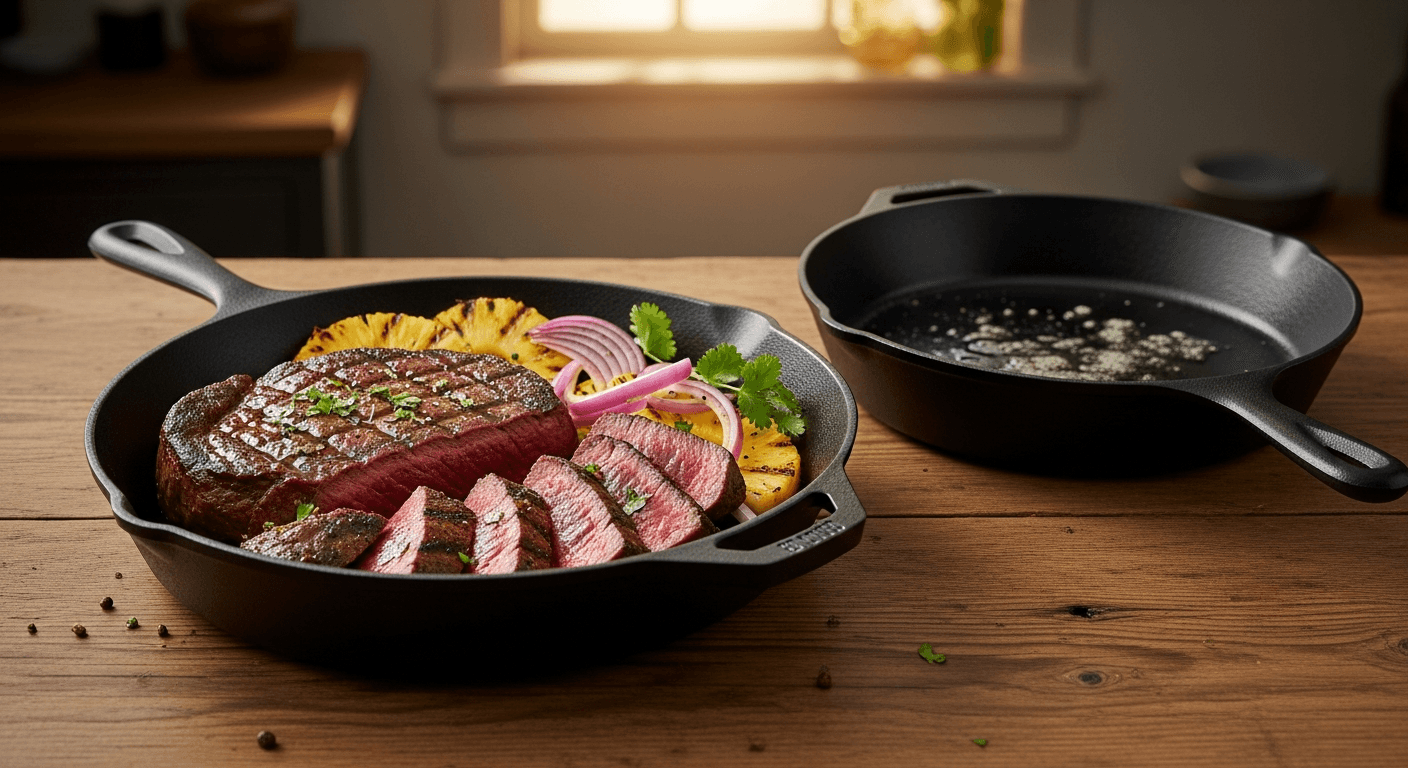
Cast iron is the most important pan in my kitchen. Not the most expensive, not the flashiest, but the one I reach for more than any other. When I'm searing ahi steaks at screaming-hot temperatures, making a batch of cornbread to go with chili, crisping up spam for musubi, or cooking a full breakfast of Portuguese sausage and eggs — it's always the cast iron.
For Hawaiian cooking specifically, cast iron makes more sense than almost any other cookware. We cook at high heat. We go from stovetop to oven constantly. We need pans that can handle acidic marinades, heavy proteins, and years of daily use without complaining. Cast iron does all of that, and a good one will outlast you.
Why Cast Iron Works for Hawaiian Cooking
Let me break down why this particular material is so well-suited for the way we cook in Hawaii.
High heat retention. When you lay a thick ahi steak in a pan, the surface temperature drops. In a thin stainless steel or aluminum pan, the temperature drops a lot, and your fish steams instead of sears. Cast iron is massive and dense — it holds onto heat and recovers quickly. That means you get a proper sear with a dark, caramelized crust every time.
Stovetop to oven. So many Hawaiian dishes start on the stove and finish in the oven. Loco moco with baked gravy, braised short ribs, frittatas with Portuguese sausage. Cast iron handles the transition effortlessly. No transferring to a different dish, no worrying about handles melting.
Nonstick when seasoned. A well-seasoned cast iron pan is naturally nonstick. Eggs slide around, fish releases cleanly, and rice doesn't stick. It takes a little time to build up that seasoning, but once you have it, you won't miss your Teflon pans.
Virtually indestructible. I have a Lodge skillet that belonged to my grandma. It's at least 40 years old and it cooks better now than it did new. You can't say that about any nonstick pan on the market. Cast iron is a lifetime purchase, and often a multi-generation one.
1. Lodge Classic 12-Inch Cast Iron Skillet
The Lodge 12-inch skillet is the one I recommend to everyone, especially if you're new to cast iron. It costs less than a nice lunch, it works beautifully, and there's a reason it's been the best-selling cast iron pan in America for over a century.
Lodge pans come pre-seasoned from the factory. The seasoning isn't as smooth as what you'll build up over time, but it's functional out of the box. After a month of regular cooking — especially frying, searing, and cooking with oil — the surface becomes noticeably slicker.
The 12-inch size is the most versatile. It's big enough for 4 ahi steaks, a full batch of fried rice, or a dozen eggs. It's heavy — about 8 pounds — but that weight is part of what makes it work. The thick walls distribute heat evenly, with no hot spots.
If you're only going to own one cast iron pan, this is the one. I have three Lodge pans in different sizes and they all get used weekly.
Best for: Everyone. Best value in cast iron, period.
2. Stargazer 12-Inch Cast Iron Skillet
The Stargazer 12-inch skillet is a step up from Lodge in every way — and the price reflects that. It's machined smooth on the cooking surface, which means it starts out much slicker than Lodge's pebbly texture. Food releases more easily from day one.
Stargazer pans are lighter than Lodge despite being the same size, because the walls are slightly thinner and the design is more refined. The handle is longer and more ergonomic, which helps when you're maneuvering a heavy pan. The pour spouts are wider and more functional.
I've been using a Stargazer for about two years now and the seasoning on it is incredible. Eggs genuinely slide around like it's nonstick. The smooth surface builds seasoning faster and more evenly than the rougher Lodge texture.
The downside is availability — Stargazer is a small American company and they sell out frequently. If you can get one, it's worth every penny.
Best for: The cook who wants a premium, smooth-surface skillet. Excellent egg pan.
3. Field Company No. 10 Cast Iron Skillet
The Field Company No. 10 is the lightest cast iron skillet of this size you'll find. At about 5 pounds for a 10.25-inch pan, it's noticeably easier to handle than Lodge or even Stargazer. For anyone who loves cast iron but hates the weight, Field is the answer.
Like Stargazer, Field uses a machined smooth cooking surface. The seasoning is beautiful out of the box and gets better with use. The walls are thinner, which means it heats up and cools down faster than a Lodge. That's an advantage for temperature-sensitive cooking (like fish) but a slight disadvantage for applications where you want maximum heat retention (like searing thick steaks).
Field pans are made in the USA and beautifully finished. They feel like a precision tool in your hand. The handle shape is particularly good — more like a modern design than the chunky Lodge handle.
My one complaint: the smaller cooking surface. The No. 10 is 10.25 inches, which is fine for 2-3 servings but tight for a family of four. They make a No. 12 (11.5 inches) that's closer to Lodge's 12-inch, but the price goes up accordingly.
Best for: People who want light weight without sacrificing smooth-surface performance. Great for fish.
4. Finex 12-Inch Cast Iron Skillet
The Finex 12-inch skillet is the most distinctive-looking pan on this list. It has an octagonal shape, a coiled stainless steel handle, and a thick, heavy build. It looks like a piece of industrial art.
But it's not just aesthetics. That octagonal shape gives you 8 pour points instead of 2, which makes pouring off fat or sauce much more controlled. The stainless steel spring handle stays cooler than solid cast iron handles — though I still use a towel or mitt out of habit.
Finex pans are heavy. Heavier than Lodge, which is saying something. The thick walls and base give you excellent heat retention and distribution. For high-heat searing — ahi, kalbi short ribs, skin-on chicken — this pan is a beast.
The cooking surface is lightly textured, somewhere between Lodge's rough surface and the smooth finish of Stargazer or Field. It seasons well but takes a bit longer to become truly nonstick.
This is a great pan for someone who wants a statement piece that also performs at a high level. It's not the most practical daily driver because of the weight, but for special occasions and serious searing, it's hard to beat.
Best for: Serious searing, high-heat cooking, and anyone who appreciates design.
5. Victoria 12-Inch Cast Iron Skillet
The Victoria 12-inch skillet is the budget alternative to Lodge — and in some ways, I think it's actually better. Victoria is a Colombian company that's been making cast iron since 1939. Their pans are seasoned with flaxseed oil (which creates a harder, more durable initial seasoning) and have a slightly smoother cooking surface than Lodge.
The Victoria is lighter than Lodge at the same size, with a longer handle that's more comfortable for flipping and tossing. The helper handle on the opposite side is also larger, which makes lifting easier.
I picked one of these up on a whim and was genuinely impressed. It heats evenly, the pre-seasoning is solid, and the price is extremely reasonable. For someone on a tight budget or looking for a second cast iron pan, Victoria is an excellent choice.
The only downside is that Victoria pans can be harder to find in stores. You'll most likely be ordering online.
Best for: Budget-conscious cooks who want something a step above Lodge. Great second pan.
Cast Iron Care for Humid Climates
If you live in Hawaii — or anywhere humid — cast iron care is slightly different from what you'll read in most mainland guides.
- Rust prevention is key. Humidity is the enemy of bare iron. After washing, dry your pan completely on a burner over low heat for 2-3 minutes. Then apply a thin coat of oil with a paper towel. This prevents surface rust between uses.
- Don't store with the lid on. Trapped moisture causes rust. If you stack pans, put a paper towel between them to absorb any moisture.
- Cook with it often. The best thing you can do for your seasoning is use the pan. Every time you cook with oil, you're adding another layer of seasoning. A pan that sits unused for weeks is more likely to develop rust spots.
- Avoid soaking. Never leave a cast iron pan soaking in water. Wash it promptly after cooking, dry it immediately, and oil it lightly. The whole process takes 2 minutes.
- Soap is fine. The old advice about never using soap on cast iron is outdated. Modern dish soap is mild enough that it won't strip your seasoning. Use a small amount, a non-abrasive sponge, and you're good.
Which One Should You Buy?
Here's my honest take:
If you've never owned cast iron: Get the Lodge. It's cheap, it works, and if you decide cast iron isn't for you, you're out less than the cost of a pizza. But you won't decide that — you'll be hooked.
If you want the best daily driver: Stargazer or Field, depending on whether you prioritize heat retention (Stargazer) or light weight (Field). Both have smooth surfaces that are a pleasure to cook on.
If you want a showpiece: Finex. It's beautiful, it performs, and it makes a great gift for the cook who has everything.
If you're on a budget: Victoria. Better seasoning than Lodge out of the box, lighter, and often less expensive.
Whatever you choose, take care of it and it'll take care of you. Cast iron is one of those rare things in life that actually gets better the more you use it. Start cooking, build that seasoning, and in a year you'll wonder why you ever used anything else.