
Bibingka — Hawaiian-Filipino Coconut Rice Cake
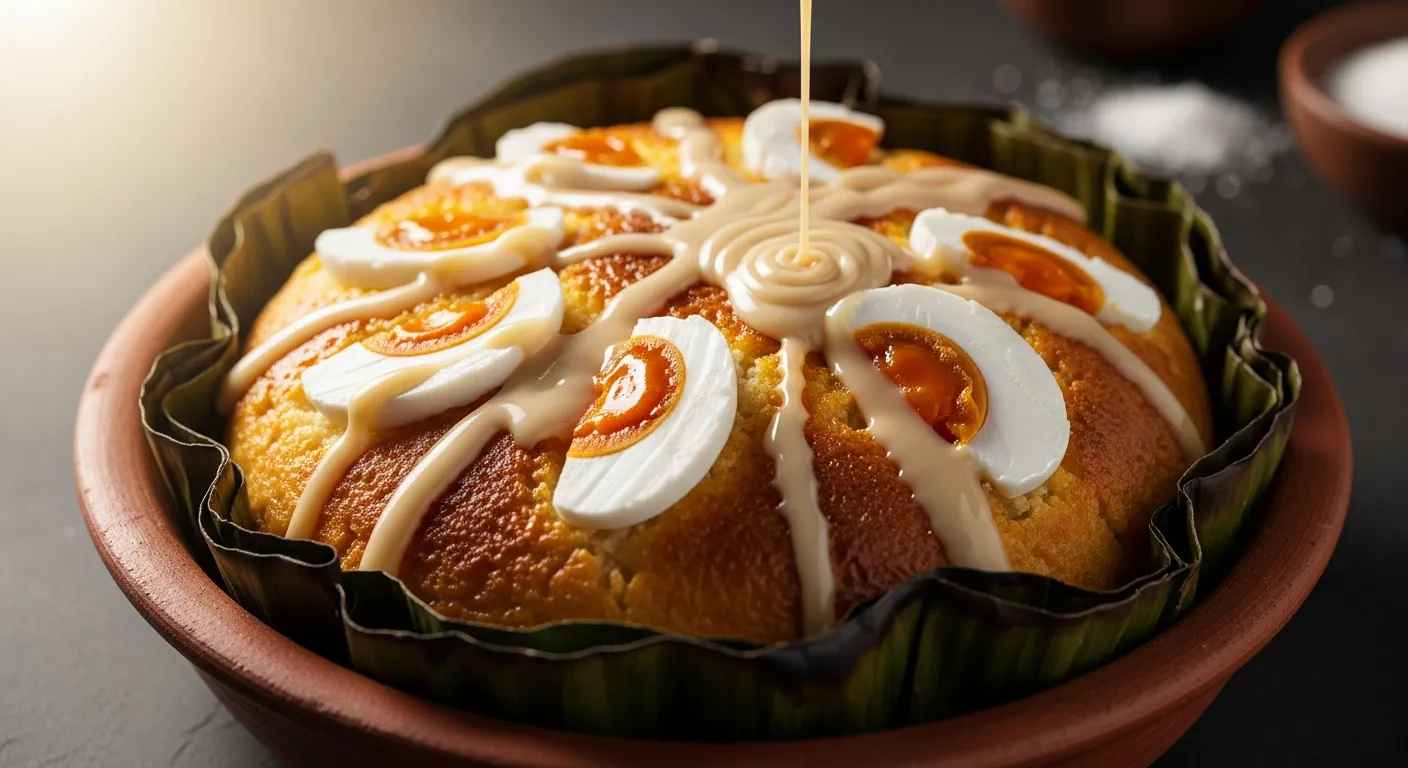
If you've ever walked through the KCC Farmers Market on a Saturday morning, you've smelled bibingka before you saw it. That sweet, toasted coconut aroma drifting through the crowd — you follow your nose and end up at a booth where somebody's aunty is pulling golden rice cakes out of foil pans lined with banana leaves. You buy one, eat it standing up, and immediately get back in line for another.
That's bibingka in Hawaii. It came here with the Filipino plantation workers over a century ago, and it became as much a part of the local food landscape as spam musubi or plate lunch. Every Filipino family has their version. Some make it for Christmas (Simbang Gabi, the nine-day novena), some make it for potlucks year-round, and the good ones show up at every farmers market across the islands.
This is my version — simple, reliable, and it tastes like the ones I grew up eating at church bazaars and neighborhood parties.
What Makes Bibingka Different
If you've never had bibingka, imagine a cross between a mochi and a cake. The sweet rice flour (mochiko) gives it that slightly chewy, sticky texture that's completely different from regular cake. It's dense but not heavy, sweet but not cloying, and the coconut milk makes it incredibly rich without feeling like too much.
The banana leaves are optional but they're what makes it authentic. They char slightly around the edges during baking, and that faint smoky, herbal aroma gets into the cake. It's subtle but you notice when it's missing. You can find banana leaves in the freezer section at most Asian grocery stores, or sometimes fresh at the farmers market.
The Salted Egg Situation
Traditional bibingka in the Philippines is topped with salted duck eggs and sometimes cheese — specifically a white cheese called queso de bola. In Hawaii, most people either do the salted egg, grated cheddar, or nothing. All versions are correct.
If you haven't had salted egg on a sweet rice cake, I know it sounds weird. But it's one of those sweet-salty combinations that just works. The egg is briny and rich, the cake is sweet and chewy, and together they balance each other perfectly. Try it at least once.
Salted duck eggs are available at most Asian grocery stores, usually in the refrigerated section near the regular eggs. They come pre-cooked — just peel and slice.
Tips for the Best Bibingka
The Batter
The batter is supposed to be thin. Don't panic when you pour it and it looks like pancake batter. The sweet rice flour absorbs the liquid as it bakes and puffs up into a dense, chewy cake. If your batter is thick, you added too much flour or not enough liquid.
Use full-fat coconut milk. The fat is what gives bibingka its richness and tender texture. Light coconut milk will give you a drier, less flavorful cake. Shake the can well before opening — you want the cream and the water mixed together.
Baking Tips
The top should be golden brown, almost caramelized in spots. If your oven has a broil setting, you can switch to broil for the last 2-3 minutes to get that classic charred-top look. Watch it closely though — it goes from golden to burnt fast under a broiler.
Let it cool in the pan before slicing. Hot bibingka is soft and tends to fall apart. After 15 minutes of cooling, it firms up enough to slice cleanly but is still warm enough to enjoy.
Serving and Storage
Bibingka is best eaten the day you make it, ideally still slightly warm. Brush the top with melted butter right after it comes out of the oven — it soaks in and adds another layer of richness.
Leftovers keep at room temperature for a day or in the fridge for up to 3 days. Reheat slices in the microwave for 15-20 seconds or in a toaster oven. The texture firms up when cold, but warming it brings back the chewiness.
For potlucks, make it in disposable foil pans so you don't have to worry about getting your baking dish back. Line with banana leaves, pour, bake, bring. It travels well and it's always one of the first things gone.
Variations
- Ube bibingka: Add 2 tablespoons of ube extract or 1/4 cup ube jam to the batter for a purple version that's stunning and slightly nuttier in flavor.
- Macapuno bibingka: Fold in 1/2 cup of macapuno (coconut sport) strings for extra coconut intensity.
- Cheese-topped: Skip the salted egg and cover the top with grated mild cheddar or queso de bola before the final bake.
- Mini bibingka: Use a muffin tin lined with small squares of banana leaf. Reduce baking time to 20-25 minutes.
This is one of those recipes that connects you to the history of Hawaii — the waves of immigration, the plantation era, the way different cultures brought their food and it became everybody's food. When you make bibingka at home, you're making something that Filipino families have been making in these islands for generations. That's pretty special.