
Purple Sweet Potato Pie — Hawaiian Ube Dessert
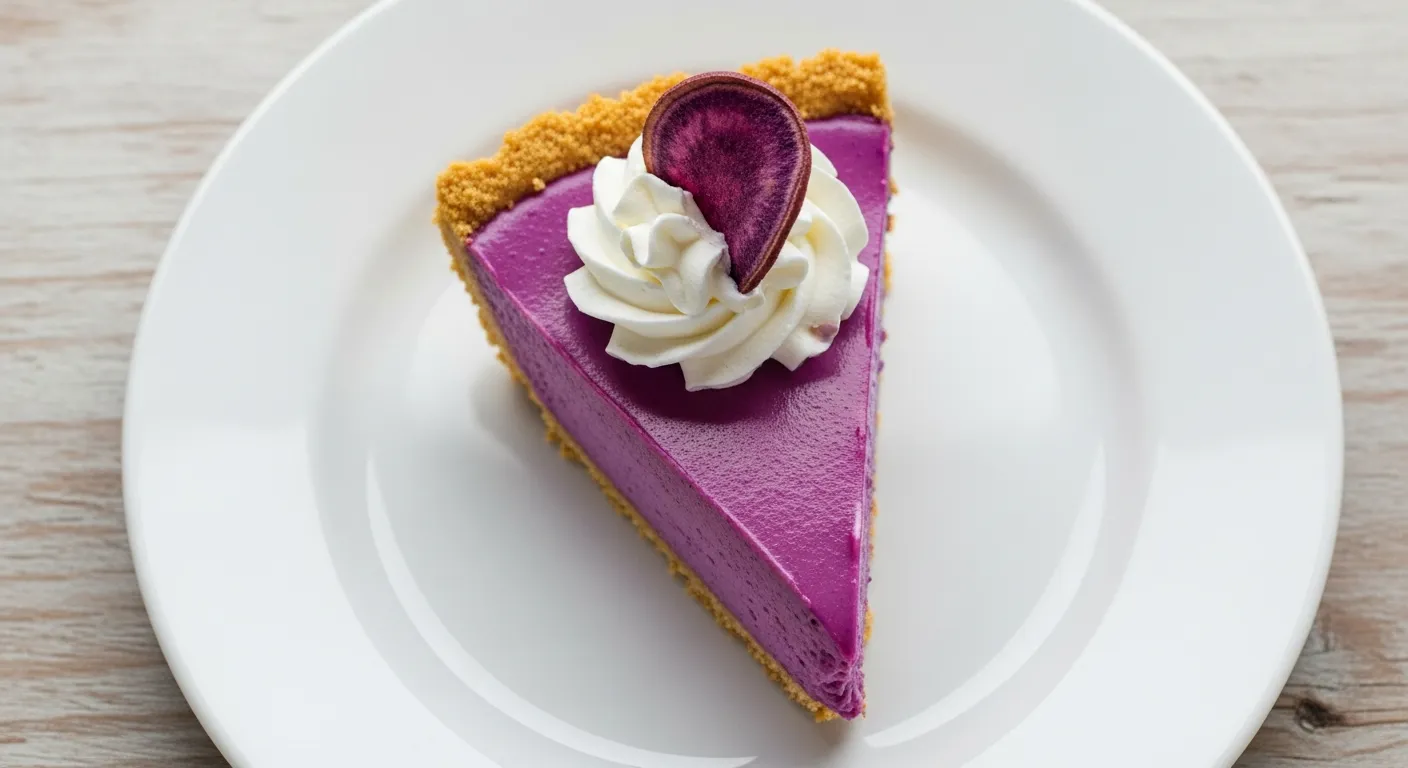
Let me clear something up right away because this confuses people all the time. The purple sweet potato we use in Hawaii — the Okinawan sweet potato — is not the same thing as Filipino ube. They're both purple, they're both delicious, but they're different plants. The Okinawan sweet potato (Ipomoea batatas) is a sweet potato. Filipino ube (Dioscorea alata) is a purple yam. Different family, different taste, different texture.
In Hawaii, when somebody says they're making purple sweet potato pie, they mean the Okinawan kind. It came to the islands with the Okinawan immigrants, just like andagi, and it grows incredibly well here. The flesh is a deep, vivid purple that doesn't fade when you cook it. You can find it at farmers markets, Costco sometimes, and definitely at any Asian grocery store. On the mainland, it's getting easier to find — check Whole Foods, H Mart, or 99 Ranch.
This pie is one of my all-time favorites. The filling is silky, creamy, and naturally that show-stopping purple color. No food coloring, no ube extract — just the potato itself. It tastes like a sweeter, more floral version of regular sweet potato pie, with a hint of vanilla and coconut that makes it unmistakably Hawaiian.
Choosing Your Purple Sweet Potatoes
Look for potatoes that are firm, heavy for their size, and free of soft spots. The skin is usually tan or grayish on the outside — you won't see the purple until you cut into them. When you peel them and cut them open, the flesh should be a rich, deep purple. If it's more white-ish purple, the color and flavor will be less intense.
Don't confuse them with Stokes Purple sweet potatoes, which are a different variety that's more common on the mainland. Stokes work in a pinch, but the color is more muted and the flavor isn't quite as sweet. If you can find the Okinawan variety, go with that.
The Coconut Milk Factor
Coconut milk is what sets this apart from mainland-style sweet potato pie, which typically uses evaporated milk or heavy cream. The coconut adds a subtle tropical richness that pairs perfectly with the purple sweet potato's natural flavor. Use full-fat canned coconut milk — not the carton stuff you put in coffee. The fat content matters for texture and richness.
Shake the can well before opening. You want the cream and water mixed together, not a block of solid coconut cream sitting on top of thin water.
Getting the Filling Smooth
The biggest mistake I see with this pie is a lumpy filling. Purple sweet potatoes are denser than regular sweet potatoes, so they need more processing to get smooth. A food processor is the best tool for this — it creates a completely silky puree. A blender works too, but you might need to add the coconut milk first to get things moving.
If you're mashing by hand, you need to push the cooked potatoes through a fine mesh strainer or a potato ricer. It's more work, but it removes all the fibrous bits and gives you a smooth filling. Don't just mash with a fork — you'll have chunks, and the pie will look rustic instead of elegant.
Baking Notes
The pie is done when the edges are set and the center still has a slight jiggle — about a 2-inch circle in the middle that looks barely underset. It'll firm up as it cools. If you bake until the center is completely firm, the pie will be overcooked and the texture will be dry and crumbly instead of creamy.
Let it cool completely before you cut it. I know it's hard to wait, but a hot pie will not hold its shape. Room temperature gives you clean slices. Refrigerating for an hour after cooling gives you even cleaner slices and a texture that's almost like cheesecake.
Serving Suggestions
A dollop of whipped cream on top is the classic move. The white against the purple is gorgeous. Some people add a sprinkle of toasted coconut flakes, which adds texture and reinforces the coconut flavor.
For a fancier presentation, pipe the whipped cream in a rosette and dust with a tiny bit of ground cinnamon. But honestly, a big messy spoonful is just as good.
Variations
- Haupia topping: Instead of whipped cream, pour a thin layer of haupia (coconut pudding) over the top of the cooled pie. Refrigerate until set. The combination of purple and white layers is stunning.
- Macadamia crust: Replace 1/2 cup graham cracker crumbs with finely ground macadamia nuts for a nuttier, more Hawaiian crust.
- Spiced version: Add 1/4 teaspoon nutmeg and a pinch of cloves to the filling for a more warming, holiday-style pie.
- Bars: Use a 9x13 pan instead of a pie dish, double the crust, and cut into squares for easier potluck servings.
This pie shows up at every Thanksgiving and Christmas in our family. It sits right next to the pumpkin pie and the sweet potato pie, and it's always the first one gone. Something about that purple color draws people in, and the flavor keeps them coming back for seconds. Make it once and it'll become part of your rotation too.