
Furikake Salmon — 15-Minute Hawaiian Sheet Pan Dinner
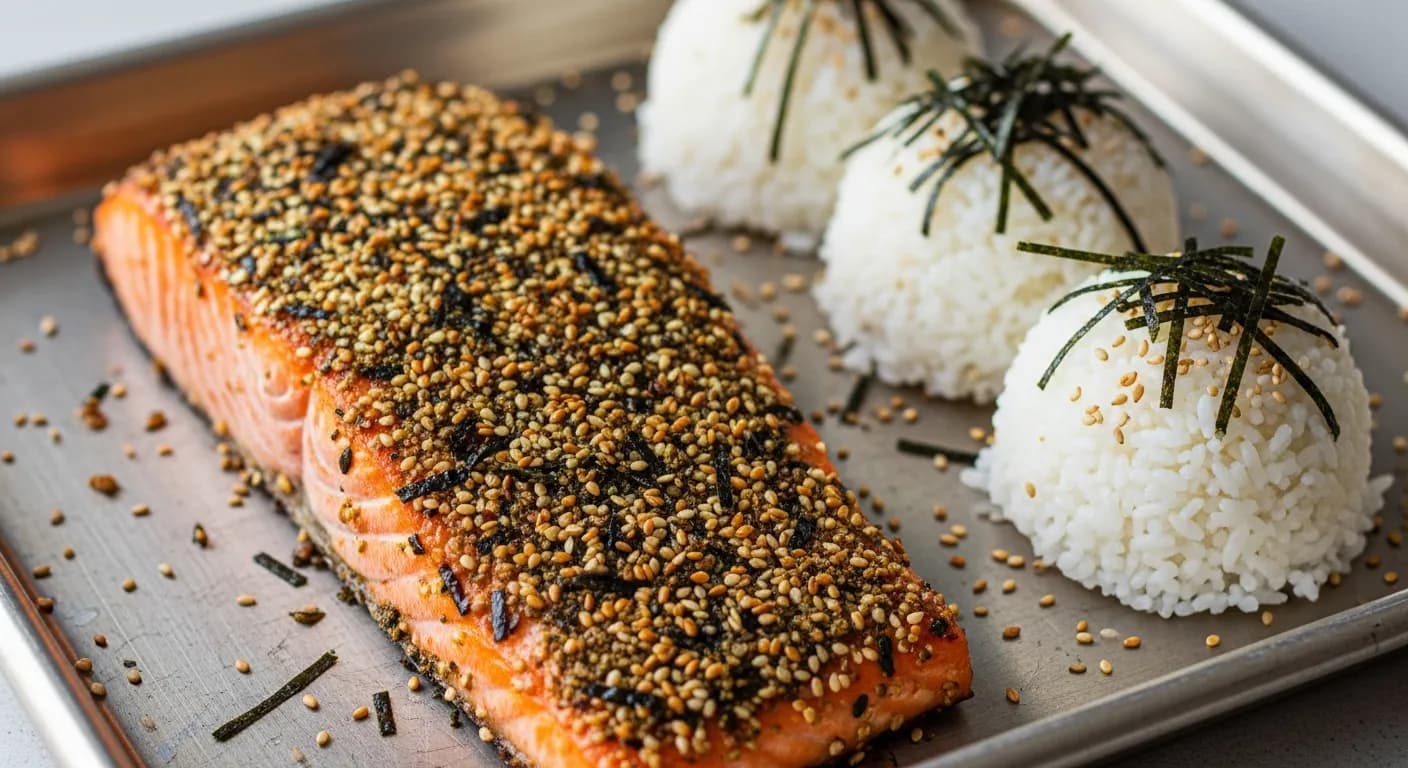
If you need dinner on the table in 15 minutes and you want it to taste like you actually tried, this is your recipe. Furikake salmon is one of those local-style dishes that every family in Hawaii makes their own way, but the core concept is always the same: salmon, mayo, furikake, oven, done.
It's technically a mainland technique — baked salmon is universal — but the Hawaii twist is the furikake crust. Furikake is that Japanese rice seasoning you see on every table in Hawaii. The seaweed, sesame, and salt mixture turns into a savory, crispy crust on the salmon that's absolutely addictive. One sheet pan, barely any prep, and you've got a dinner that tastes restaurant-quality.
The Mayo Glaze
I know putting mayonnaise on fish sounds strange if you haven't done it before. Trust me on this. The mayo serves two purposes: it acts as the glue that holds the furikake in place, and it creates a creamy, moisture-sealing layer that keeps the salmon from drying out in the oven.
Japanese mayonnaise — Kewpie brand — is the move here. It's richer and slightly sweeter than American mayo, made with egg yolks only (no whites) and rice vinegar instead of distilled vinegar. The flavor is more subtle and it caramelizes better in the oven. You can find it at any Asian grocery store, or even at most regular supermarkets these days.
Regular mayo works if that's what you've got. Hellmann's or Best Foods are fine. Just use a light hand — you want a thin, even layer, not a thick glob.
Choosing Your Furikake
There are dozens of furikake varieties. For this recipe, I like nori komi furikake — the one with seaweed, sesame seeds, salt, and sugar. It's the most common variety and the flavor is balanced enough to complement the salmon without overpowering it.
Other good options: wasabi furikake for a little heat, shiso furikake for an herbal note, or salmon furikake for a meta salmon-on-salmon situation. Avoid the ones with bonito flakes (katsuobushi) — they tend to burn under the broiler.
Be generous with the furikake. You want a thick, even coating on top of the mayo. Don't be shy. The furikake crust is the whole point of this dish.
The Cooking Method
High heat, short time. 425°F for 10-12 minutes is the sweet spot for 6-ounce fillets that are about an inch thick. You want the salmon just cooked through — still slightly translucent in the very center. It'll carry-over cook for another minute or two after you pull it from the oven.
If you want a crispier furikake crust, switch to broil for the last 1-2 minutes. Keep the oven door cracked and watch it like a hawk. Furikake goes from crispy to charcoal in about 30 seconds under a broiler. The moment the seaweed turns dark green and the sesame seeds are golden, pull it.
Skin-on salmon works best — the skin crisps up on the bottom against the hot sheet pan and adds another textural element. But skinless is fine too. Just make sure the bottom of the pan is lined so the fish doesn't stick.
Serving
White rice. Always white rice. Medium-grain calrose rice, the sticky kind. The furikake-crusted salmon sitting on top of a mound of steamed rice is one of the most satisfying plates in Hawaiian home cooking.
Sliced green onions on top add color and a fresh bite. A drizzle of sriracha or sweet chili sauce if you want some heat. Some people do a squeeze of lemon, which brightens everything up nicely.
For a complete plate lunch, add a side of mac salad or a simple cucumber salad dressed with rice vinegar, sugar, and sesame oil.
Variations
- Miso-mayo version: Mix 1 tablespoon white miso paste into the mayo mixture. Adds a deep umami layer.
- Panko-furikake crust: Mix equal parts furikake and panko breadcrumbs for an even crunchier topping.
- Furikake ahi: Works great with ahi tuna steaks too — sear in a hot pan for 1 minute per side instead of baking.
- Sheet pan dinner: Surround the salmon with broccoli florets, snap peas, or mushrooms tossed in sesame oil. Everything cooks together.
This is the recipe I text to friends when they ask what to make for dinner tonight. It requires almost nothing, it takes barely any time, and every single person who tries it makes it again the next week. It's that good and it's that easy.