Left side
Saimin
Hawaii · plantation-era pan-Asian creation
A clear shrimp-and-pork broth with thin wheat noodles, char siu, kamaboko, green onion, and a halved hard-boiled egg. The Hawaii plantation noodle soup.
Hawaii vs Japan
Both are noodle soup. Saimin is what happened when Japanese, Chinese, and Filipino plantation workers cooked together for forty years.
UPDATED APR 2026
Left side
Hawaii · plantation-era pan-Asian creation
A clear shrimp-and-pork broth with thin wheat noodles, char siu, kamaboko, green onion, and a halved hard-boiled egg. The Hawaii plantation noodle soup.
Right side
Japan · evolved from Chinese lamian, 1900s-onward
Wheat noodles in a long-simmered broth (tonkotsu, shoyu, miso, or shio), with regional toppings: chashu, soft egg, menma, scallion, nori.
Saimin is not a dialect of ramen. It is its own dish, born on Hawaii sugar plantations when Japanese, Chinese, and Filipino workers shared cookhouses and pooled cooking ideas. The broth is light — dashi-and-shrimp, not the long-simmered tonkotsu pork-bone of a modern Japanese ramen — and the toppings (Filipino-influenced char siu, Japanese kamaboko, green onion) are pan-Asian by accident of history. Calling saimin "Hawaiian ramen" misses the point. Saimin predates ramen’s globalization.
The noodle is the second giveaway. Saimin noodles are thin, pale, and slightly chewy — closer to a Cantonese egg noodle than a hakata-style ramen noodle. Most saimin is sold from a vending machine or a drive-in counter, eaten in fifteen minutes flat. Modern ramen is an event — a four-hour broth, a two-hour assembly, a forty-minute meal at a counter. Different food, different rhythm, different culture.
Saimin is not Hawaiian ramen. Saimin is what plantation workers made when Japanese, Chinese, and Filipino cookhouses shared a stove. It came first.
You want a light, Hawaii plantation-style noodle soup that eats fast and pairs with a hamburger. The drive-in classic.
You want a long-simmered Japanese broth and toppings that take two hours to set up. The full ramen-ya experience.
Read next
Recipes and guides on the CurtisJ side of the argument.
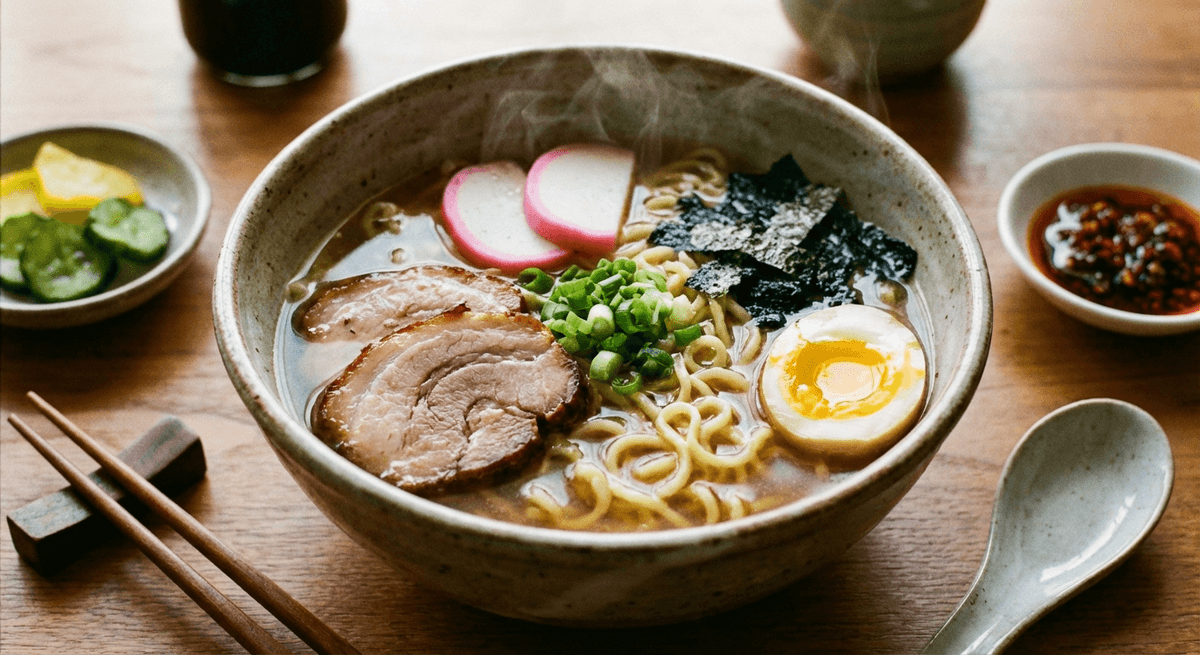
Saimin is Hawaii’s noodle soup: light broth, springy noodles, and a plantation history that no mainland ramen bowl can copy.

Hawaii's noodle dishes are a plantation-era pan-Asian crossroads — saimin, fried saimin, pancit, chow fun, and how each one ended up on the local menu.

This saimin recipe is about broth, noodle texture, and topping balance, so the bowl tastes light, local, and worth making at home.