In Hawaii, nobody just “comes over.” You come over and you eat. And the eating starts before anyone sits down for the real meal—it starts with pupus. Pupu (pronounced poo-poo, and yes, mainland visitors giggle every time) is the Hawaiian word for appetizer, snack, hors d’oeuvre—basically any small bite that pairs with good drinks and better conversation. A spam musubi grabbed from the kitchen counter while someone tells a story. A bowl of fresh poke with crackers while the grill heats up. Hurricane popcorn during the game. Fried wontons at every single graduation party.
Growing up, I didn’t know there was a difference between “appetizers” and “pupus.” To me, pupus were just what appeared on every table before the main event—this massive, chaotic spread of fried things, fresh things, salty things, and sweet things that represented every culture in the islands. Japanese, Chinese, Filipino, Portuguese, Korean, Hawaiian—everyone contributed their best small bites. This guide covers every pupu I grew up loving, from the classics to the modern creations, with recipes you can make at home.
How to Pronounce Pupu
Pupu is pronounced “POO-poo” (rhymes with “voodoo”). Both syllables get equal stress. In Hawaiian, every vowel is pronounced: pu (poo) + pu (poo). You’ll also see it written as pūpū with macrons (the lines over the u’s), which indicate the long vowel sound. The plural is the same — pupus in casual English, or just pūpū in Hawaiian.
Don’t be embarrassed about the pronunciation. Every mainlander laughs the first time, and every local is used to it. What matters is that you know what it means: it’s time to eat.
The Cultural Tradition of Pupu
The tradition of pupu runs deeper than appetizers before dinner. In Hawaiian culture, sharing food is how you show aloha — love, care, and welcome. When someone arrives at your home, the first thing you do is feed them. It doesn’t matter if dinner is two hours away. You put something out — crackers and poke, a plate of musubi, a bowl of hurricane popcorn — because letting a guest go without food is unthinkable.
This tradition goes back to ancient Hawaii, where sharing food was a fundamental expression of community. When families gathered for celebrations, the food came first and the talking came second. The modern pupu spread at a Hawaiian party is a direct descendant of this — a communal table where everyone contributes, everyone eats, and the conversation flows around the food.
What makes Hawaiian pupus unique is the multicultural blend. During the plantation era (1850s–1940s), workers from Japan, China, the Philippines, Portugal, Korea, and Puerto Rico lived and worked alongside Native Hawaiians and each other. They shared food across cultural lines, and over time, each culture’s best small bites became part of the shared pupu vocabulary. Chinese fried wontons, Japanese mochiko chicken, Filipino lumpia, Chinese-Hawaiian manapua, Korean fried chicken — all of these are Hawaiian pupus now, belonging to everyone.
For the full story of traditional Hawaiian food culture and how these traditions evolved, explore our complete guide.
Spam Musubi – The King of Hawaiian Snacks
If there’s one pupu that defines Hawaii, it’s spam musubi. A block of rice, a slice of teriyaki-glazed Spam, wrapped in nori seaweed—it’s portable, satisfying, and found at literally every convenience store, gas station, and potluck in the islands. My original spam musubi recipe gives you the technique for that perfect rice-to-Spam ratio and extra caramelization on the meat.
Once you’ve nailed the classic, the variations are endless. My 5 spam musubi variations shows you how to level up with different glazes and toppings. The bacon avocado spam musubi is the modern twist that converts even Spam skeptics. And for plant-based eaters, the veggie spam musubi actually delivers on flavor—no compromises.
For the full history of how a canned meat from Minnesota became Hawaii’s most beloved food, read Talk Story: How Spam Became Hawaii’s Favorite Meat. And if you’re making musubi regularly (you will be), invest in a proper musubi maker and accessories—it makes the process so much faster.
Poke – Hawaii’s Gift to the Appetizer World
Poke started as a fisherman’s snack—fresh catch, cut into cubes, seasoned with whatever was on the boat. Now it’s a global phenomenon, but the real thing is still best made at home with quality fish. As a pupu, poke is unbeatable: light, flavorful, and perfect for sharing with crackers, on wonton chips, or in lettuce cups.
Start with classic Hawaiian-style ahi poke—the original with kukui nut and limu seaweed. Then try shoyu poke (the soy sauce version most people know), spicy ahi poke with sriracha mayo, or salmon poke for something different. Tako poke (octopus) is the local’s choice for something special, and tofu poke is the vegetarian option that actually works.
For a pupu that doubles as a showpiece, ahi tuna poke stacks turn your kitchen into a fine-dining experience, and poke nachos—wonton chips topped with fresh ahi, avocado, spicy mayo, and eel sauce—are the modern fusion pupu that disappears first at every party. The ahi poke for two is perfect for date night. For the complete deep dive, see our Complete Guide to Hawaiian Poke and Talk Story: The Art of Poke.
Fried & Crispy Pupus
Every good pupu spread needs something fried. It’s not negotiable. These are the crispy, golden, impossibly satisfying bites that people cluster around at parties.
Mochiko Chicken
Mochiko chicken is Hawaiian-style fried chicken that’s in a league of its own. The secret is mochiko (sweet rice flour) in the marinade, which creates this impossibly crispy, almost shattering exterior while keeping the meat ridiculously juicy inside. Marinated overnight in soy sauce, ginger, garlic, and sugar, each bite is sweet, savory, and garlicky. This is the fried chicken that shows up at every local potluck, and for good reason—once you’ve had mochiko chicken, regular fried chicken feels like it’s missing something.
Korean Fried Chicken Wings
Korean fried chicken wings are the island-style game day pupu. Double-fried for maximum crunch, then tossed in a sticky sweet-spicy glaze that clings to every crevice. Hawaii’s Korean community brought this technique to the islands, and local cooks ran with it. These wings are the reason nobody leaves a party early.
Fried Wontons
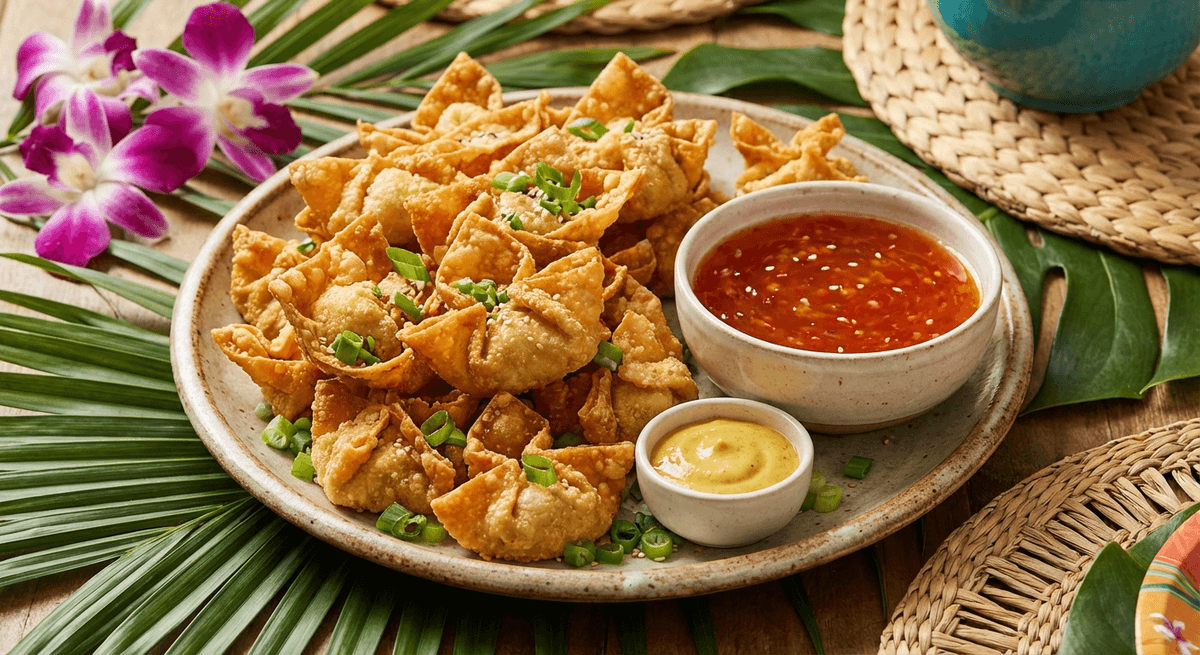
Fried wontons are the local party pupu that everyone’s aunty makes. Pork-filled wonton wrappers fried until golden and shattery, served with hot mustard or sweet chili sauce. They’re cheap to make, easy to scale up for a crowd, and consistently the first thing to disappear from the table. My recipe makes enough for a party—trust me, you’ll need them all.
Ahi Katsu
Ahi katsu is panko-crusted seared ahi—golden and crunchy on the outside, ruby-red and rare in the center. Slice it thin, fan it on a plate with wasabi and ponzu, and you’ve got the elegant pupu that makes everyone think you went to culinary school. Japanese technique meets Hawaiian fish, and the result is stunning.
Pork & Shrimp Dumplings
Pork and shrimp dumplings are the Chinese-Hawaiian pupu that shows up at Lunar New Year celebrations and stays on the table year-round. Pan-fried, steamed, or boiled—all three methods work, and each gives you a different texture experience. Making them is a family affair in Hawaii, where folding dumplings together around the kitchen table is as much about the togetherness as the food.
Coconut Shrimp
Coconut shrimp — crispy, golden, and impossibly tropical. Jumbo shrimp coated in shredded coconut and panko, fried until the exterior shatters and the shrimp stays sweet and tender inside. Served with a sweet chili dipping sauce, these are the pupu that bridges Hawaiian and mainland appetizer culture. Everyone loves them.
Handheld & Stuffed Pupus
Manapua
Manapua is Hawaii’s version of char siu bao—fluffy steamed (or baked) buns stuffed with sweet BBQ pork. The name literally means “delicious pork thing” in Hawaiian, which tells you everything about local priorities. You can make them steamed for the traditional pillowy-soft texture, or baked for a golden, slightly sweet crust that’s uniquely local. Either way, a tray of warm manapua at a gathering disappears in minutes.
The filling inside is char siu pork—that lacquered, sweet-savory Chinese BBQ that Hawaii adopted as its own. Make a big batch of char siu and you’ve got manapua filling, plate lunch protein, and fried rice topping all in one cook.
Lomi Salmon on Taro Chips
Lomi salmon on taro chips takes the traditional Hawaiian side dish and reimagines it as a modern pupu. Lomilomi salmon—that bright, fresh mixture of diced salt salmon, tomato, onion, and chili pepper—scooped onto crispy taro chips. It’s like Hawaiian bruschetta, and it bridges old traditions with new presentations.
Lumpia
Lumpia — crispy Filipino spring rolls that are a staple at every Hawaiian potluck and party. Thin wrappers filled with seasoned pork and vegetables, rolled tight and fried until golden and shatteringly crisp. Hawaii’s large Filipino community made lumpia a permanent fixture on the pupu table, and once you’ve had them fresh from the fryer, store-bought egg rolls will never satisfy again.
Snack & Munchie Pupus
Hurricane Popcorn
Hurricane popcorn is local-style popcorn that will ruin regular popcorn for you forever. Fresh-popped kernels tossed with melted butter, furikake (Japanese rice seasoning), and arare (crunchy rice crackers). The combination of buttery, salty, umami, and crunchy is so addictive that the name refers to how fast it disappears—like a hurricane swept through the bowl. This is the easiest pupu you’ll ever make and consistently the most popular.
Pipikaula
Pipikaula is Hawaiian dried beef that’s been around since the paniolo (Hawaiian cowboy) days. Think jerky’s more sophisticated cousin—salt-cured, sun-dried, then pan-fried or grilled until the edges crisp up while the center stays chewy and flavorful. It’s the pupu that paniolo families have been making for generations, and it pairs perfectly with cold beer.
Crossover Pupus – Plate Lunch Favorites Turned Small Bites
Some of Hawaii’s best pupus are really just plate lunch classics served in bite-sized form. Skewer them, slider them, or just put them on a toothpick and call it a pupu:
- Huli huli chicken skewers – Cut that legendary grilled chicken into chunks, thread on bamboo skewers, and brush with extra glaze. Smoky, sweet, and perfect for standing around the grill.
- Kalua pig sliders – Pile smoky shredded pork on sweet Hawaiian rolls with a smear of coleslaw. The most popular slider at any backyard party.
- Teriyaki chicken bites – Local-style teriyaki cut into cubes with toothpicks. Simple, crowd-pleasing, gone in minutes.
- Kalbi short ribs – Already the perfect finger food shape. Grill, serve on a platter, watch people fight over the last one.
- Garlic shrimp – Serve North Shore-style with crusty bread to soak up that buttery garlic sauce. Pupu perfection.
- Char siu bites – Slice that lacquered BBQ pork thin, fan on a plate with hot mustard. Classic Chinese-Hawaiian pupu.
Building the Perfect Pupu Spread
A great pupu table isn’t just a pile of snacks—it’s a balanced spread that gives everyone something they love. Here’s how locals build one:
- Something fried – Mochiko chicken, fried wontons, or Korean fried chicken wings
- Something fresh – Poke with crackers, lomilomi salmon, or fresh tropical fruit
- Something savory/meaty – Huli huli chicken skewers, kalbi ribs, or pipikaula
- Something handheld – Spam musubi, manapua, or dumplings
- Something for munching – Hurricane popcorn, arare rice crackers, or taro chips
The rule of thumb: at least one item from each category. For a big party, two from each. And always make more than you think you need—pupus disappear faster than you expect.
For complete party planning, see our Hawaiian Backyard Party Guide, which covers the full menu from pupus through dessert. And don’t miss Talk Story: The Luau for the cultural traditions behind Hawaiian entertaining.
Pupus for Every Occasion
Pau Hana (After Work)
Keep it simple. This is about unwinding, not cooking all afternoon:
- Hurricane popcorn – 10 minutes, max
- Spam musubi – batch from the morning, grab and eat
- Shoyu poke with crackers – if you have fresh fish
- Pair with cold beer or a Mango Mai Tai
Luau or Big Party
Go all out. This is where you impress:
- Full poke spread: Hawaiian-style, spicy ahi, and salmon
- Mochiko chicken platter
- Kalua pig sliders
- Fried wontons
- Garlic shrimp
- Batch cocktails: Hawaiian rum punch or a scorpion bowl
Game Day
Hearty, shareable, easy to grab with one hand:
- Poke nachos – the crowd favorite
- Korean fried chicken wings
- Manapua
- Hurricane popcorn (make a double batch)
- Pipikaula for the serious snackers
Date Night
Elegant small bites for two:
- Ahi poke for two
- Ahi katsu – stunning presentation
- Lomi salmon on taro chips
- Pair with a Li Hing Mui Margarita or Chi Chi
Pairing Pupus with Drinks
The right drink takes pupus from good to unforgettable. Here’s what actually works, from our Island Drinks Guide:
- With poke: Japanese beer, crisp white wine, or fresh POG juice for non-drinkers
- With fried pupus: Cold beer (always) or a refreshing Chi Chi—the creamy sweetness cuts through the oil
- With spicy food: Blue Hawaii or Lava Flow—something frozen and sweet to cool the heat
- With smoky/grilled pupus: Mango Mai Tai or the bold Okolehao Sour
- For a crowd: Hawaiian Rum Punch (batch cocktail, done) or a Scorpion Bowl for sharing
- Non-alcoholic: Lilikoi lemonade, guava nectar punch, or coconut water mocktails
Essential Pupu Pantry
Keep these stocked and you can throw together an impressive pupu spread on short notice. For sourcing and details, see our Essential Hawaiian Ingredients Guide and the Hawaiian Pantry Essentials list.
- Spam – Classic, reduced sodium, or flavored varieties. The foundation of musubi and a dozen other pupus.
- Furikake – Japanese rice seasoning for hurricane popcorn, musubi, and everything else. Furikake musubi is its own thing.
- Shoyu (soy sauce) – For marinades, dipping, and the right brand matters.
- Mochiko flour – Sweet rice flour for that incredible mochiko chicken batter.
- Wonton wrappers – For fried wontons, dumplings, and a hundred other appetizer possibilities.
- Nori seaweed – For musubi and garnishes. Buy the large sheets.
- Sesame oil – The finishing touch for poke, marinades, and dipping sauces.
- Hawaiian chili peppers or chili water – See our chili pepper guide and hot sauce picks.
Kitchen Gear for Pupus
The right tools make pupu prep faster and the results better:
- Musubi maker – Essential if you’re making spam musubi regularly. Our musubi maker guide covers the best options.
- Deep fryer or heavy Dutch oven – For mochiko chicken, wontons, and anything fried. Temperature control is everything.
- Good wok – For stir-frying, quick searing, and versatile cooking. See our wok guide.
- Sharp knife and cutting board – Poke demands clean, precise cuts. Our cutting board guide covers the best options for fish prep.
- Grill or smoker – For huli huli chicken, kalbi, and all the grilled pupus. See our smoker and grill guide.
- Rice cooker – You can’t make musubi without perfectly cooked rice. Our rice cooker guide has the best picks.
For the full kitchen setup, check our essential Hawaiian kitchen utensils guide and best kitchen appliances for Hawaiian cooking.
Where to Buy Hawaiian Pupu Ingredients
Many key ingredients—Spam, furikake, mochiko flour, nori, sesame oil—are available at most grocery stores these days, especially those with an Asian foods section. For harder-to-find items like fresh poke-grade fish, Hawaiian chili peppers, or specialty condiments, check local Asian markets first.
Can’t find what you need locally? Our Hawaiian snacks and treats ordering guide covers the best online sources for shipping authentic island ingredients and snacks to your door.
Frequently Asked Questions
What are pupus in Hawaiian?
Pupus (pūpū) is the Hawaiian word for appetizers, snacks, or hors d’oeuvres — any small bite of food served before or alongside a meal. In Hawaii, pupus are an essential part of any gathering, from casual pau hana (after-work) drinks to large luaus and family celebrations. The word comes from the Hawaiian language and has been adopted into everyday local English across the islands.
How do you pronounce pupu?
Pupu is pronounced “POO-poo” — two syllables, both with the “oo” sound as in “food.” In Hawaiian, the word is written pūpū with macrons (lines over the u’s) to indicate the long vowel sound. Yes, mainland visitors often find the pronunciation funny — locals are used to it and won’t bat an eye.
What is a pupu platter?
A pupu platter is a shared appetizer plate featuring an assortment of small bites. In Hawaii, a traditional pupu platter might include poke, fried wontons, spam musubi, mochiko chicken, and other island favorites. The concept is similar to a mainland appetizer sampler but draws from Hawaii’s multicultural food traditions — Japanese, Chinese, Filipino, Korean, Portuguese, and Native Hawaiian dishes all sharing the same plate.
What are traditional Hawaiian appetizers?
Traditional Hawaiian appetizers (pupus) include poke (seasoned raw fish), lomi salmon on taro chips, pipikaula (Hawaiian dried beef), and various preparations of fresh seafood. Modern Hawaiian pupus also include cultural contributions from the islands’ diverse communities: spam musubi (Japanese-Hawaiian), manapua (Chinese-Hawaiian), fried wontons (Chinese), mochiko chicken (Japanese), lumpia (Filipino), and Korean fried chicken wings. All of these are considered “local” Hawaiian pupus today.
What food is served at a Hawaiian luau?
A traditional Hawaiian luau features kalua pig (whole pig cooked in an underground oven) as the centerpiece, alongside poi (taro paste), lomilomi salmon, chicken long rice, squid luau, macaroni salad, rice, and haupia (coconut pudding) for dessert. Poke is often served as a pupu before the main feast. For a complete menu with recipes, see our Hawaiian Thanksgiving Menu guide.
What is the difference between pupus and appetizers?
Functionally, pupus and appetizers are the same thing — small bites served before or alongside a meal. The difference is cultural. In Hawaii, pupus are less formal than mainland appetizers. They’re not individual plated courses — they’re communal, often set out on the kitchen counter or a table for people to graze on while talking story. The pupu tradition emphasizes sharing, generosity, and the idea that feeding people is how you show love. A pupu spread reflects Hawaii’s multicultural heritage, with bites from every island culture represented on the same table.
Explore More Hawaiian Food
Pupus are just the beginning of the meal. Dive deeper into island cooking with our complete guide collection:
- Traditional Hawaiian Foods Explained – The complete guide to every Hawaiian food tradition
- The Plate Lunch Guide – Hawaii’s iconic meal: protein, rice, mac salad, and the stories behind every classic
- The Complete Poke Guide – Deep dive into every poke style, technique, and tradition
- Hawaiian Breakfast Guide – Spam musubi, loco moco, poi pancakes, and everything that starts a local morning
- Island Drinks Guide – Tiki cocktails, tropical smoothies, Kona coffee, and all the drinks to pair with your pupus
- Hawaiian Desserts Guide – Butter mochi, chocolate haupia pie, malasadas, and every island sweet
- Essential Hawaiian Ingredients – Your complete guide to sourcing and using island pantry staples
For the cultural stories behind these foods, explore our Hawaiian Foods Bucket List, Must-Try Hawaiian Delicacies, and Traditional Hawaiian Flavors. And read Talk Story: Tiki Culture and Hawaii for the complicated history behind the cocktails you’ll be pairing with your pupus.