Before you read
Treat the table like a mix, not a single cuisine.
One of the best things about pupus is that they show Hawaii's food culture in miniature. You can see immigrant kitchens, local inventions, party classics, and old standbys sharing the same table without anyone needing to explain the logic. That mix is not confusion. It is the point.
Walk up to any pupu table in Hawaii and you’re looking at a edible history lesson. That plate of mochiko chicken? Japanese. The lumpia stacked next to it? Filipino. The poke bowl in the center? Native Hawaiian, going back centuries. Every type of pupu on the table traces back to a specific community that brought it to the islands and over time, all of it became local.
If you’re trying to understand the different types of pupus served in Hawaii, the best way is through the cultures that created them. Here’s every major category, where it came from, and why it belongs on your table. For the full history of how pupus became Hawaii’s multicultural appetizer tradition, start there.
Native Hawaiian Pupus
These are the originals, the small bites that existed in Hawaii long before any immigrant group arrived. Native Hawaiian pupus are defined by the ocean and the land, simple preparations that let the ingredients speak.
- Poke: The most famous Hawaiian food in the world started as a fisherman’s snack. Fresh-caught fish, cut into cubes, seasoned with sea salt, limu (seaweed), and kukui nut. Traditional Hawaiian-style poke has no soy sauce, no sesame oil — those came later with Japanese influence. Today you’ll find shoyu poke, spicy ahi poke, salmon poke, and tako poke, but the original is still the purest expression of island cooking.
- Pipikaula: Hawaiian dried beef from the paniolo (cowboy) tradition. Salt-cured, sun-dried, then pan-fried or grilled until the edges crisp. Think beef jerky’s more sophisticated cousin — chewy, salty, and perfect with cold beer.
- Lomilomi salmon: Diced salt salmon massaged (lomi means “to massage”) with tomato, onion, and chili pepper. Technically a post-contact creation since salmon isn’t native to Hawaii, but the preparation technique is purely Hawaiian. Served cold, it’s one of the most refreshing pupus on any table.
Japanese-Hawaiian Pupus
Japanese immigrants arrived in Hawaii starting in the 1880s, and their influence on island food is arguably the deepest of any immigrant group. Rice, shoyu, furikake, nori, mochiko flour — these became foundational Hawaiian pantry items, and the pupus they created are now the backbone of every local gathering.
- Spam musubi: The undisputed king of Hawaiian snacks. A block of rice, a slice of teriyaki-glazed Spam, wrapped in nori seaweed. It’s a fusion of Japanese onigiri technique with American canned meat, born during WWII when Spam flooded the islands. Found at every convenience store, gas station, and potluck in Hawaii. See all 5 spam musubi variations for ways to level it up.
- Mochiko chicken: Hawaii’s answer to fried chicken, and it’s in a different league. Chicken marinated overnight in soy sauce, ginger, garlic, and sugar, then coated in mochiko (sweet rice flour) and fried until impossibly crispy. The mochiko creates a shattering exterior that regular flour can’t match. This is the fried pupu that shows up at every single local potluck.
- Ahi katsu, Panko-crusted seared ahi tuna, golden and crunchy outside, ruby-red and rare in the center. Slice it thin and fan it on a plate with wasabi and ponzu for the elegant pupu that makes everyone think you trained at a culinary school. Japanese technique applied to Hawaiian fish.
Chinese-Hawaiian Pupus
Chinese workers were the first major immigrant group to arrive in Hawaii’s plantations, starting in the 1850s. They brought dim sum traditions, wok techniques, and a gift for turning simple wrappers and fillings into addictive small bites.
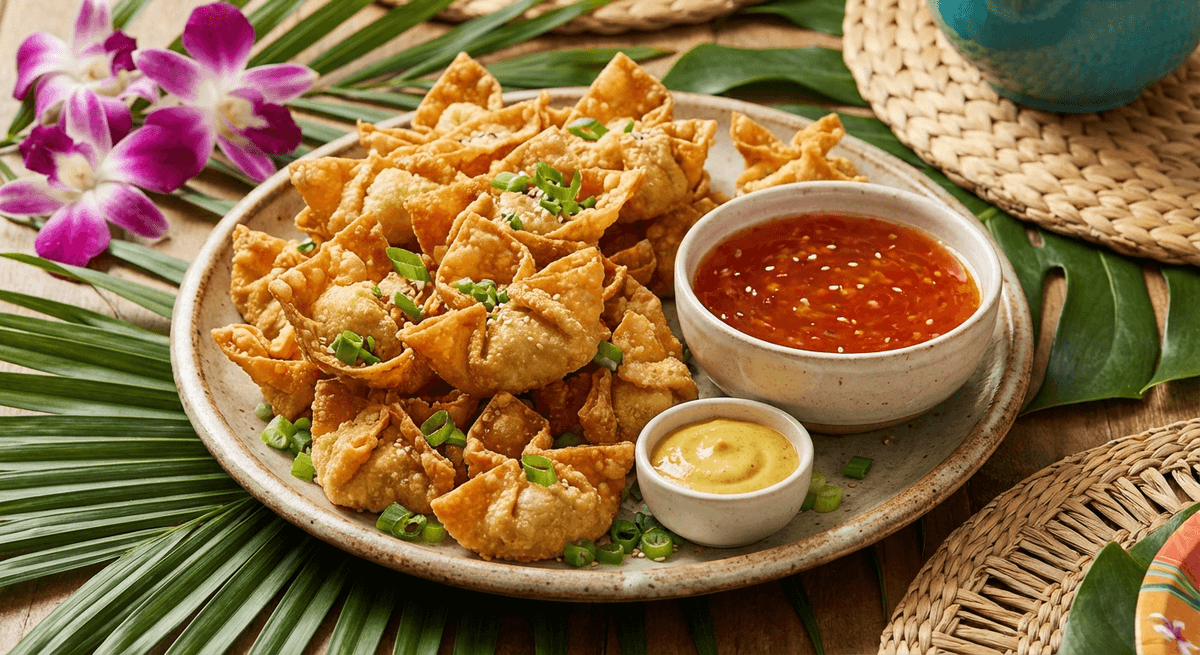
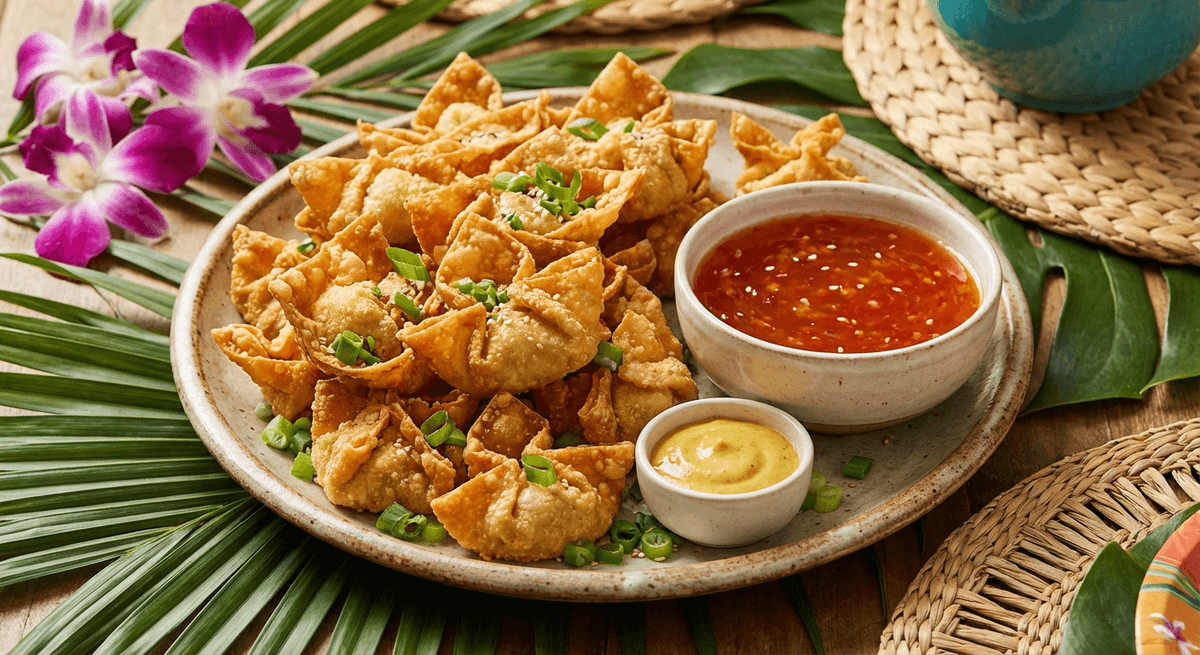
- Fried wontons: Pork-filled wonton wrappers fried until golden and shattery, served with hot mustard or sweet chili sauce. These are the local party pupu that everyone’s aunty makes, and they’re consistently the first thing to disappear from the table. Cheap to make, easy to scale up, impossible to stop eating.
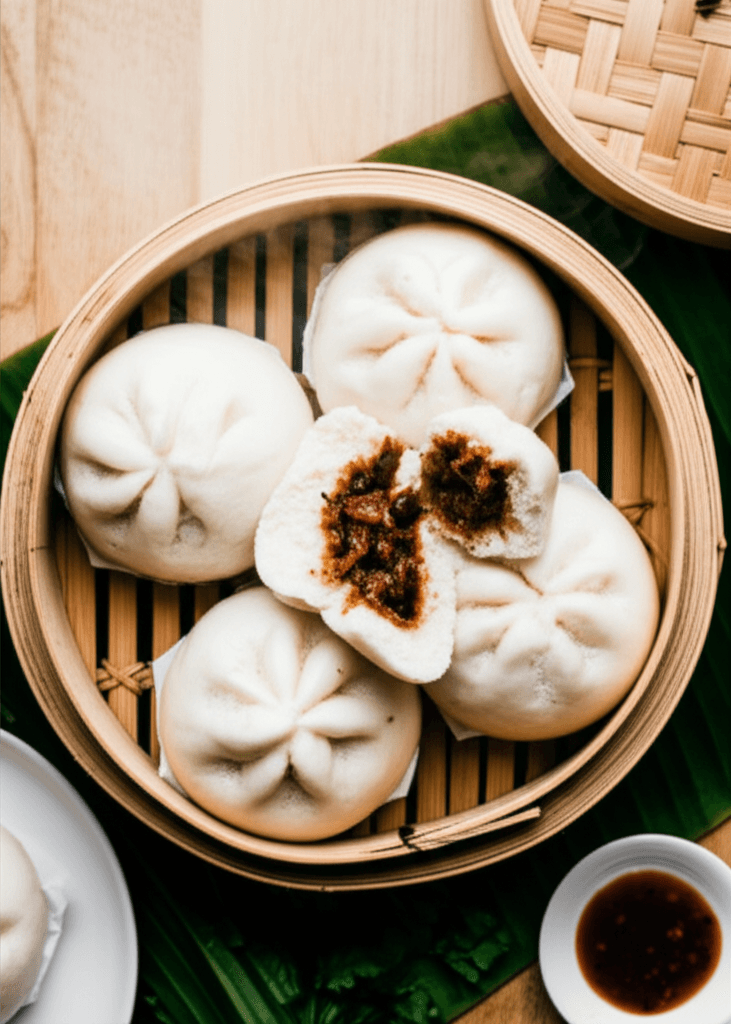
- Manapua, Hawaii’s version of char siu bao, fluffy steamed or baked buns stuffed with sweet BBQ pork. The name literally means “delicious pork thing” in Hawaiian. The filling is char siu pork, that lacquered sweet-savory Chinese BBQ that Hawaii adopted as its own. A tray of warm manapua at any gathering disappears in minutes.
- Pork and shrimp dumplings, Pan-fried, steamed, or boiled, all three methods work. Making dumplings is a family affair in Hawaii, where folding them together around the kitchen table is as much about togetherness as food.
Filipino-Hawaiian Pupus
Filipino workers arrived in large numbers starting in 1906 and quickly became the largest ethnic group in Hawaii’s plantation workforce. Their food contributions are bold, savory, and deeply satisfying.
- Lumpia: Crispy Filipino spring rolls filled with seasoned pork and vegetables, rolled tight in thin wrappers and fried until shatteringly crisp. Hawaii’s large Filipino community made lumpia a permanent fixture on the pupu table. Once you’ve had them fresh from the fryer, store-bought egg rolls will never satisfy again.
- Adobo bites, Chicken or pork adobo, braised in vinegar, soy sauce, garlic, and bay leaves — cut into bite-size pieces and served on toothpicks. Not as well-known as lumpia on the pupu table, but every Filipino family has their version, and it’s always requested at potlucks.
Korean-Hawaiian Pupus
Korean workers arrived in Hawaii in a concentrated wave from 1903 to 1905, a relatively small group that had an outsized impact on island food culture. Korean flavors, gochujang, sesame, garlic, fermented vegetables, blended naturally with existing Hawaiian and Japanese influences.
- Korean fried chicken wings: Double-fried for maximum crunch, then tossed in a sticky sweet-spicy glaze. Hawaii’s Korean community brought the double-fry technique, and local cooks ran with it. These wings are the reason nobody leaves a party early.
- Kalbi short ribs: Already the perfect finger food shape. Thin-cut beef short ribs marinated in soy, sugar, garlic, sesame, and pear, then grilled until caramelized. Serve on a platter, watch people fight over the last one. Kalbi is equally at home as a pupu or as the main protein on a plate lunch.
Snack and Munchie Pupus
Not every pupu requires cooking. Some of Hawaii’s most beloved pupus are the casual, grab-and-munch snacks that appear during movie nights, game days, and lazy afternoons on the lanai.
- Hurricane popcorn: Fresh-popped popcorn tossed with melted butter, furikake, and arare (crunchy rice crackers). Named for how fast it disappears. The easiest pupu you’ll ever make and consistently the most popular. Ten minutes, start to finish.
- Arare (rice crackers), Japanese rice crackers in dozens of flavors, shoyu, wasabi, nori, mixed. Sold in huge bags at every grocery store in Hawaii and consumed by the handful during any casual gathering.
- Crack seed, Chinese-Hawaiian preserved fruit snacks, li hing mui (dried plum), rock salt plum, lemon peel, and dozens of other sweet-sour-salty varieties. More of a candy than a food, but it’s on every pupu-adjacent snack table in Hawaii.
Modern Fusion Pupus
Hawaiian food has always been fusion — every generation adds new combinations. These modern pupus build on traditional flavors with contemporary presentations.
- Poke nachos: Wonton chips topped with fresh ahi poke, avocado, spicy mayo, and eel sauce. The modern fusion pupu that disappears first at every party. Traditional poke meets nachos presentation, and it works beautifully.
- Ahi tuna poke stacks: Layered towers of sushi rice, seasoned ahi, avocado, and crispy wontons. Restaurant-quality presentation from your home kitchen.
- Lomi salmon on taro chips: Traditional lomilomi salmon reimagined as a modern pupu, scooped onto crispy taro chips. Hawaiian bruschetta that bridges old traditions with new presentations.
- Coconut shrimp: Jumbo shrimp coated in shredded coconut and panko, fried until golden. Not strictly Hawaiian in origin, but fully adopted by island cooks and now a standard on any upscale pupu spread.
Building a Balanced Pupu Spread
The best pupu tables draw from multiple categories. A good rule of thumb: include at least one item from each tradition — something Japanese, something Chinese or Filipino, something native Hawaiian, and something for casual munching. For the complete guide to building your spread with recipes for every dish mentioned above, see our Hawaiian Pupus Guide.
Frequently Asked Questions
What are the main types of pupus in Hawaii?
Hawaiian pupus fall into several categories based on their cultural origins: Native Hawaiian pupus (poke, pipikaula, lomilomi salmon), Japanese-Hawaiian pupus (spam musubi, mochiko chicken, ahi katsu), Chinese-Hawaiian pupus (fried wontons, manapua, dumplings), Filipino-Hawaiian pupus (lumpia, adobo bites), Korean-Hawaiian pupus (Korean fried chicken wings, kalbi short ribs), and casual snack pupus (hurricane popcorn, arare, crack seed). Most pupu spreads include items from multiple categories.
What is the most popular pupu in Hawaii?
Spam musubi is widely considered the most popular pupu in Hawaii. Found at every convenience store, gas station, and potluck across the islands, spam musubi combines Japanese onigiri technique with American Spam — rice, a teriyaki-glazed Spam slice, and nori seaweed. Poke is a close second, especially at parties and gatherings where a fresh poke bowl is almost always the centerpiece of the pupu table.
What is a traditional Hawaiian pupu platter?
A traditional Hawaiian pupu platter is a shared appetizer spread featuring an assortment of small bites from Hawaii’s diverse food cultures. A typical platter might include poke (raw seasoned fish), spam musubi, fried wontons, mochiko chicken, lumpia (Filipino spring rolls), and hurricane popcorn. Unlike mainland appetizer platters that usually represent one cuisine, a Hawaiian pupu platter reflects the multicultural heritage of the islands — Japanese, Chinese, Filipino, Korean, Portuguese, and Native Hawaiian dishes all sharing the same plate.
Are pupus the same as appetizers?
Pupus and appetizers both refer to small bites of food, but the Hawaiian pupu tradition is distinct. Mainland appetizers are typically a single-cuisine course served before dinner. Hawaiian pupus are a communal, multicultural spread meant for casual grazing and socializing — they’re not cleared away when dinner arrives. A pupu table at a Hawaiian gathering often features dishes from five or six different cultural traditions, reflecting the islands’ plantation-era history of food sharing across ethnic lines.
What pupus should I serve at a Hawaiian-themed party?
For an authentic Hawaiian pupu spread, include items from multiple food traditions: something fried (mochiko chicken or fried wontons), something fresh (a poke bowl with crackers), something handheld (spam musubi or manapua), something for munching (hurricane popcorn), and something grilled (kalbi short ribs or huli huli chicken skewers). Plan for at least one item per category and make more than you think you need — pupus always disappear faster than expected.