Before you read
Poke does not need a reinvention campaign.
If you understand poke as seasoned raw fish first, the rest of the conversation gets cleaner. CurtisJ's view is that the best poke stays close to the fish, uses seasoning with a light hand, and does not ask rice, mayo, or crunch to do all the work. That is the frame to keep in mind while you read the history and the ingredient breakdown below.
Poke (pronounced POH-keh) is Hawaii’s classic raw fish dish — cubed fresh fish seasoned with soy sauce, sesame oil, and other simple ingredients. If you’ve eaten at any poke shop in the last decade, you’ve had some version of it. But the poke you find in mainland poke bowl chains and the poke that Hawaii has been eating for centuries are often very different things.
Understanding what poke actually is, where it comes from, what makes it Hawaiian, and why simplicity is the whole point — will change the way you think about making it at home.
Poke in 30 Seconds
At its most basic, poke is cubed raw fish mixed with seasonings. The word “poke” means “to slice” or “to cut crosswise into pieces” in Hawaiian. That’s it. It’s not a bowl with rice and fifteen toppings. It’s not a mainland health food trend. It’s seasoned raw fish, and it’s been a staple in Hawaii for as long as anyone can remember.
Traditional poke starts with the freshest fish available, usually ahi (yellowfin tuna), cut into bite-sized cubes and mixed with sea salt, limu (seaweed), and inamona (roasted kukui nut). That original version predates any Asian influence and connects directly to ancient Hawaiian fishing culture.
A Short History
Hawaiians have been eating raw fish since long before Western contact. Fishermen would season their catch with whatever was at hand: sea salt, limu from the reef, and inamona from the kukui tree. This wasn’t “cuisine”, it was practical, delicious, and connected to the ocean that defined island life.
When Japanese, Korean, and other Asian immigrants arrived in the 1800s and 1900s, they brought soy sauce, sesame oil, and chili peppers. These flavors merged with the existing Hawaiian tradition, creating the shoyu poke and spicy poke variations that dominate poke counters today.
By the 1970s, poke had become a fixture at every supermarket, gas station, and potluck in Hawaii. Locals would stop at the fish counter, pick up a pound of poke, and eat it straight from the container — no rice, no bowl, no presentation. Just good fish, well seasoned.
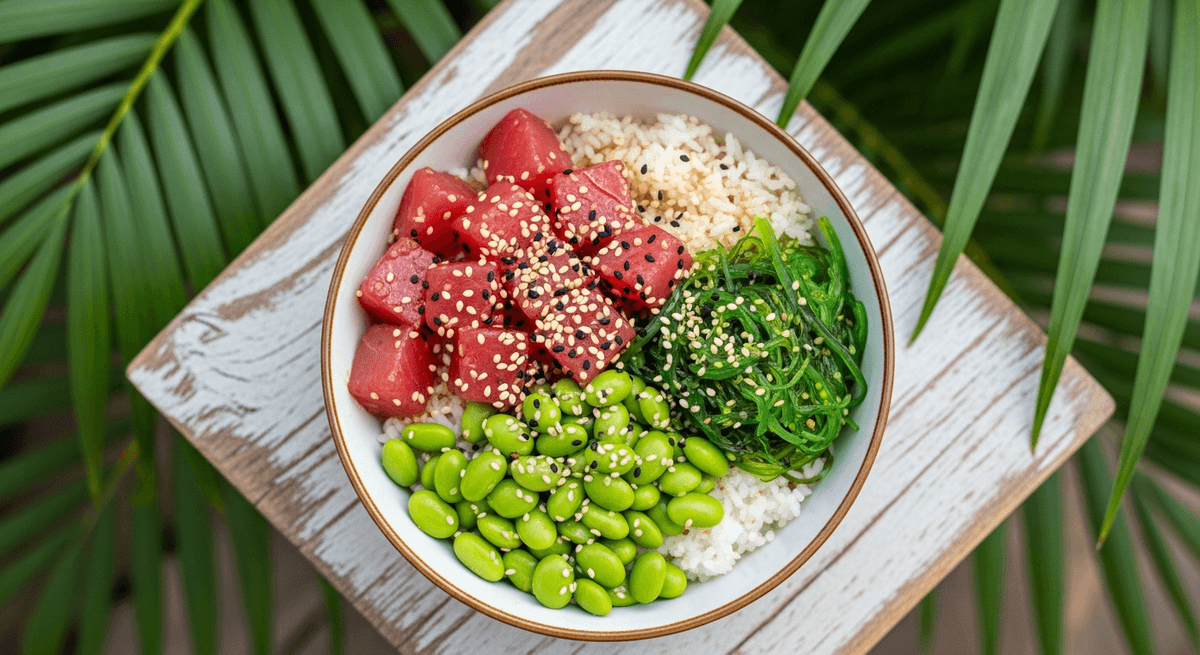
The mainland poke bowl craze hit around 2015, and suddenly poke shops were everywhere from Portland to New York. Many of these took the basic concept and added rice, avocado, mango, edamame, sriracha mayo, and crispy onions. Which is fine, but it’s not really poke anymore. It’s a rice bowl inspired by poke.
The Main Styles of Poke
Hawaiian Style (Traditional)
The original. Ahi cubed with sea salt, limu kohu (a type of red seaweed), and inamona. No soy sauce, no sesame oil — just the pure flavor of fresh fish with salt and the briny, mineral taste of the seaweed. This is the version that connects most directly to Hawaiian heritage, and it’s worth seeking out if you’ve never had it.
Shoyu Poke
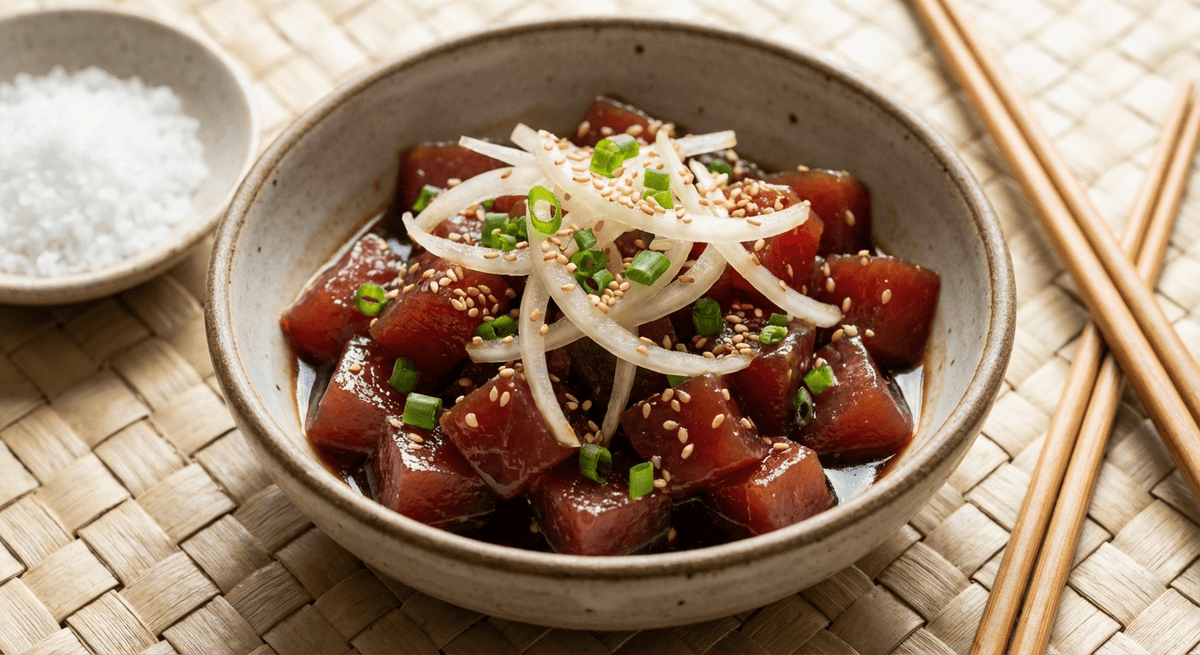
The most popular style today. Ahi cubed and mixed with soy sauce, sesame oil, sliced sweet onion (preferably Maui onion), and a sprinkle of sesame seeds. The Japanese influence is obvious, and the result is umami-rich and deeply savory. This is what most people think of when they hear “poke.”
Spicy Poke
A more recent variation. Ahi mixed with a spicy mayo (usually Kewpie mayonnaise with sriracha or sambal), sesame oil, and green onions. Creamier and hotter than the other styles, this is the version that translates most easily to mainland poke bowls.
Limu Poke
Sometimes listed separately from Hawaiian style. This emphasizes the seaweed — usually ogo (a crunchy green seaweed that’s more widely available than limu kohu) mixed with the fish, soy sauce, and sesame oil. The seaweed adds a fresh ocean flavor and satisfying crunch.
The Fish
Ahi (yellowfin tuna) is king. It has the right texture — firm enough to hold its shape when cubed but tender enough to melt on your tongue. The deep red color is beautiful, and the clean flavor takes seasoning well without being overpowered.
Other fish used in poke:
- Aku (skipjack tuna): Darker, more assertive flavor than ahi. Traditional and less expensive.
- Salmon: Not traditional in Hawaii (salmon isn’t native), but increasingly popular. The fattier texture works well with shoyu and spicy preparations.
- Tako (octopus): Cooked, not raw. Sliced and seasoned like fish poke. A different texture — chewy and satisfying.
- He’e (squid): Similar to tako poke, cooked and seasoned.
- Mussels and other shellfish: Less common but found at some poke counters.
The most important rule: The fish must be sashimi-grade and fresh. Poke is only as good as the fish. If the fish isn’t fresh enough to eat raw, no amount of seasoning will save it. Buy from a fishmonger you trust, or look for “sashimi-grade” or “previously frozen” (flash-frozen at sea is actually excellent for poke). For a deep dive into sourcing and handling fish for poke, check out the Complete Poke Guide.
How Poke Is Eaten in Hawaii
In Hawaii, poke is not always served in a bowl over rice. Here’s how locals actually eat it:
- Straight from the container. Stop at Foodland, Tamura’s, or any poke counter. Pick a pound. Eat it with a fork or chopsticks. Done.
- As a pupu. A bowl of poke at a party or luau, eaten with crackers or just with toothpicks. See the Pupus Guide for more appetizer ideas.
- Over rice. Yes, poke bowls exist in Hawaii too. But the Hawaii version is simpler: rice, poke, maybe some furikake. Not the loaded bowls you see on the mainland.
- In a poke bowl (mainland style). Rice base, poke on top, various toppings and sauces. This is fine, it’s just a different thing from traditional poke.
Making Poke at Home
The beautiful thing about poke is how simple it is. A basic shoyu poke takes 10 minutes:
- Cut 1 pound of sashimi-grade ahi into 3/4-inch cubes
- Toss gently with 3 tablespoons soy sauce, 1 tablespoon sesame oil, 1/2 sliced sweet onion, 1 sliced green onion, and a sprinkle of sesame seeds
- Let it sit for 5-10 minutes so the fish absorbs the seasoning
- Eat immediately
That’s it. Don’t overthink it. The less you add, the more the fish shines.
For detailed recipes, variations, and everything you need to know about making poke at home, including where to buy the right fish, the traditional Hawaiian preparation, and how to build poke bowls — read the Complete Guide to Hawaiian Poke.
Poke Etiquette (What Not to Do)
Don’t drown it in sauce. Poke is about the fish. If you can’t taste the fish through all the sriracha mayo, you’ve gone too far.
Don’t use stale fish. No amount of seasoning fixes fish that’s past its prime. If it smells “fishy,” it’s not poke-grade.
Don’t call it “poh-KEY.” It’s “POH-keh.” Two syllables, emphasis on the first. The ‘e’ at the end is pronounced like the ‘e’ in “bet.”
Don’t let it sit too long. Poke is best within an hour of making it. The soy sauce starts to “cook” the fish after too long, changing the texture from silky to firmer. Mix and eat.
Explore More Hawaiian Seafood
Poke is just the beginning of Hawaii’s seafood tradition:
- The Complete Guide to Hawaiian Poke — Everything you need to master poke at home
- North Shore Garlic Shrimp — Butter-drenched shrimp, North Shore style
- Coconut Shrimp — Crispy, golden, and impossibly tropical
- Misoyaki Butterfish — Miso-glazed black cod that melts on your tongue
- Lomilomi Salmon — Salted salmon, tomato, and onion, massaged together
- The Plate Lunch Guide, Where seafood meets rice and mac salad
- Hawaiian Ingredients Guide — Learn about the pantry essentials behind these dishes