Before you cook
A good pupu spread does not need twelve fussy recipes.
Pupus work when they feel abundant, not overengineered. CurtisJ's rule is to mix one or two hot items with a few fast crowd-pleasers, keep refills easy, and make sure every tray has something people can grab without asking for instructions. That is what makes the table feel alive.
You don’t need to live in Hawaii to put out a legitimate pupu spread. You don’t even need a full day of prep. Some of the best pupus, the ones that actually get made on a Tuesday night, not just bookmarked for someday — are the simple ones. The ones where you open a can of Spam, cook some rice, and have musubi in your hands twenty minutes later. The ones where a bag of popcorn and a jar of furikake turn into the most addictive snack anyone at your house has ever tasted.
This guide focuses on the pupus you can actually pull off at home with grocery store ingredients, minimal equipment, and real-world time constraints. No specialty shops required, no all-day projects. For the full breakdown of every type of pupu and the cultural history behind them, start there. This is the practical playbook.
5-Minute Pupus: Almost No Effort
These are the pupus you make when someone’s coming over in ten minutes, when you want a snack while watching a movie, or when you just want to eat something that tastes like the islands without any real cooking.
Hurricane Popcorn
Time: 10 minutes | Difficulty: None
Hurricane popcorn is the easiest pupu that exists and consistently the most popular. Pop a bag of popcorn (microwave is fine — no judgment), toss with melted butter, a generous shake of furikake, and a handful of arare rice crackers. That’s it. The combination of buttery, salty, umami, and crunchy is so addictive it got its name from how fast it disappears.
Mainland tip: Furikake is available at most grocery stores in the Asian foods aisle, or on Amazon. Arare (rice crackers) can be found at Asian markets or ordered online. Once you buy these two things, you’ll use them constantly.
Quick Shoyu Poke
Time: 10 minutes | Difficulty: Easy (if you can dice, you can make poke)
The key to shoyu poke at home is finding sushi-grade ahi tuna. Most decent grocery stores and all fish markets sell it — just ask for “sushi-grade” or “sashimi-grade” ahi. Dice into half-inch cubes, toss with soy sauce, sesame oil, a pinch of sugar, sliced green onion, and sesame seeds. Serve with rice crackers or tortilla chips. Done.
Mainland tip: If you can’t find fresh ahi, frozen sushi-grade tuna works perfectly — thaw in the fridge overnight. Salmon poke is another option since sushi-grade salmon is easier to find in many mainland cities.
Spam Musubi (Simplified)
Time: 20 minutes | Difficulty: Easy
Spam musubi sounds intimidating if you’ve never made it, but it’s genuinely simple: cook rice, slice and fry Spam with a soy sauce-sugar glaze, press rice into a mold, add Spam, wrap in nori. The whole process takes 20 minutes once the rice is done.
Shortcut: Use a rice cooker and start the rice first. While it cooks, slice and fry the Spam. No musubi mold? Use the Spam can itself — remove both ends and you’ve got a free press. Or just shape the rice by hand. It doesn’t have to be perfect to taste good.
Mainland tip: Spam is available everywhere. Nori sheets are in the Asian foods aisle. Short-grain sushi rice is the only rice that works, it needs to be sticky enough to hold together.
30-Minute Pupus: Worth the Effort
These take a little more work but are still completely doable on a weeknight. Each one is impressive enough to serve at a party but simple enough to make just because you’re hungry.
Mochiko Chicken
Time: 30 minutes active (plus overnight marinating) | Difficulty: Moderate
Mochiko chicken is the one pupu that requires planning ahead, the chicken needs to marinate overnight (or at least 4 hours) in a mixture of soy sauce, sugar, garlic, ginger, egg, and mochiko flour. But the actual cooking is just pan-frying or deep-frying for a few minutes per side. The mochiko flour creates a crispy, shattering crust that regular flour can’t replicate.
Mainland tip: Mochiko flour (sweet rice flour) is the one specialty ingredient you need. It’s available at Asian grocery stores, many mainstream grocery stores in the baking aisle, or on Amazon. There is no substitute — regular flour won’t give you the same crunch. Buy a box; it lasts forever.
Fried Wontons (Shortcut Version)
Time: 30 minutes | Difficulty: Moderate
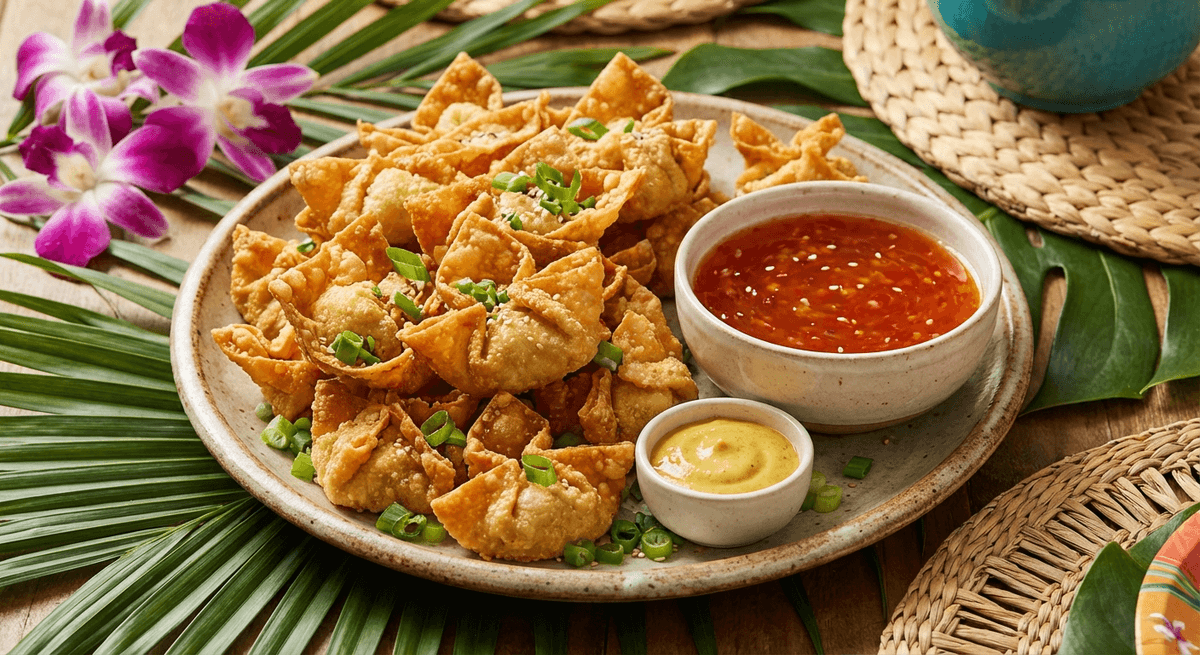
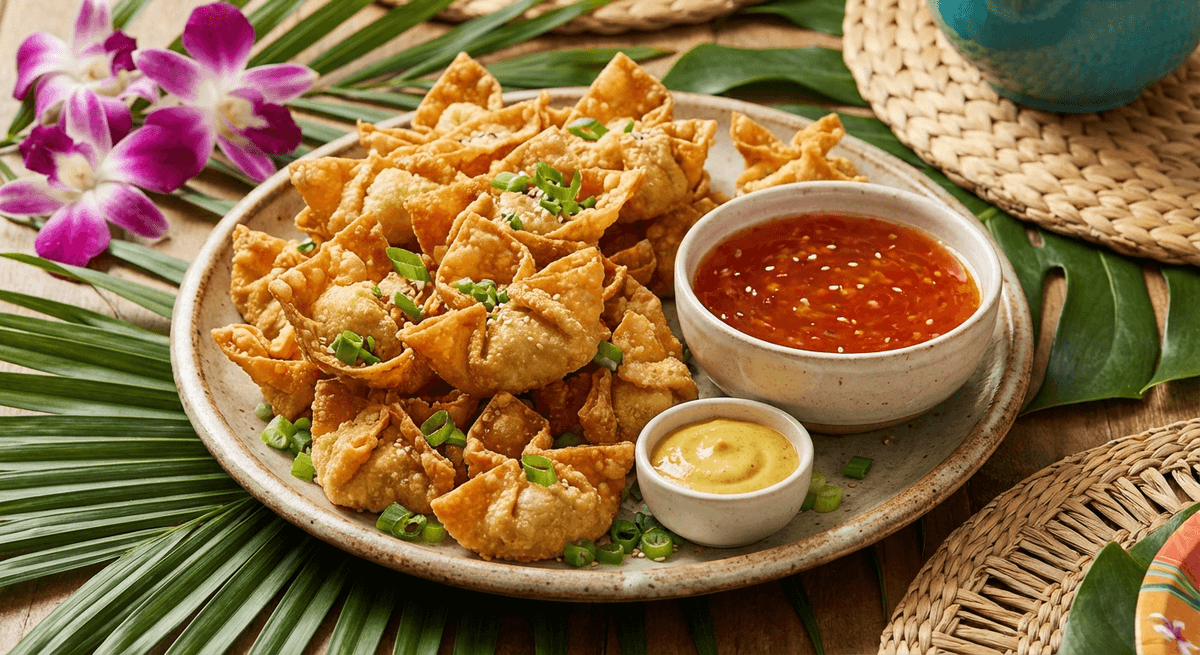
Fried wontons from scratch involve making the filling, wrapping each one, and frying. For the shortcut version: buy frozen pork wontons or potstickers from any grocery store’s freezer section, skip the boiling/steaming instructions, and deep-fry them instead. Three inches of oil at 350°F, three minutes until golden, drain on paper towels. Serve with hot mustard and sweet chili sauce. They won’t be as good as homemade, but they’ll be 80% of the way there in a fraction of the time.
From scratch: If you want the real thing, the filling is just ground pork, green onion, soy sauce, sesame oil, ginger, and water chestnuts mixed together and wrapped in store-bought wonton wrappers. The wrapping takes practice but isn’t hard. Make a big batch and freeze extras.
Coconut Shrimp
Time: 25 minutes | Difficulty: Moderate
Coconut shrimp looks fancy but follows a simple dredging pattern: flour, then egg, then a mix of shredded coconut and panko breadcrumbs. Fry for 2-3 minutes until golden. The coconut toasts in the oil and creates a sweet, crunchy coating that shatters when you bite through it. Serve with sweet chili sauce.
Mainland tip: Everything for this recipe is at any grocery store. Use large or jumbo shrimp — anything smaller gets lost under the coating. Peel and devein them yourself or buy them pre-prepped to save time.
Ingredient Swaps for the Mainland
Most Hawaiian pupu ingredients are available at mainland grocery stores, especially those with an Asian foods section. But if you’re having trouble finding something, here are the swaps that work:
| Hawaiian Ingredient | Mainland Substitute | Notes |
|---|---|---|
| Sushi-grade ahi tuna | Sushi-grade salmon, or frozen ahi (thawed) | Salmon poke is just as good |
| Mochiko flour | No real substitute | Order online, it’s worth it |
| Furikake | No real substitute | Available on Amazon, Asian grocery stores |
| Arare (rice crackers) | Rice Chex cereal (in a pinch) | Not the same but adds crunch to popcorn |
| Hawaiian chili peppers | Thai bird chili or serrano peppers | Similar heat level, slightly different flavor |
| Limu (seaweed) | Wakame or nori strips | Different texture but works in poke |
| Kukui nut (inamona) | Macadamia nuts, crushed | For traditional-style poke |
| Wonton wrappers | Available everywhere | Check the produce cooler section |
| Nori sheets | Available everywhere | Asian foods aisle, look for sushi nori |
For a comprehensive sourcing guide, see our Essential Hawaiian Ingredients page and the Hawaiian Pantry Essentials list. If you’d rather order ingredients online, our Hawaiian snacks and treats guide covers the best sources.
The Easiest Pupu Spread: 5 Items, 1 Hour
If you want to put out an impressive Hawaiian party spread without spending all day in the kitchen, here’s the most efficient menu — five items, one hour of total work, and you’ll look like you know what you’re doing:
- Hurricane popcorn (10 min) — Make last, serve in a big bowl
- Spam musubi (20 min) — Start rice first, fry Spam while it cooks
- Shoyu poke (10 min) — Dice fish, toss with sauce, serve with crackers
- Frozen wontons, deep-fried (10 min) — Buy frozen, fry at 350°F for 3 min
- Cut tropical fruit (10 min) — Pineapple, mango, whatever looks good
The timeline: Start rice (0:00). While rice cooks, dice poke fish and prep sauce (0:05). Slice and fry Spam (0:15). Assemble musubi (0:25). Heat oil and fry wontons (0:35). Cut fruit (0:45). Make hurricane popcorn (0:50). Done by 1:00.
That’s a five-item multicultural pupu spread — something fried, something fresh, something handheld, something for munching, and something light — assembled in one hour with zero specialty equipment. Pair with cold beer or a batch of Hawaiian rum punch and you’ve got a proper Hawaiian evening, wherever you are.
For the complete pupu collection with every recipe, see our Hawaiian Pupus Guide. And for the story of how all these traditional and modern pupus ended up on the same table, that’s worth reading too.
Frequently Asked Questions
What is the easiest Hawaiian pupu to make?
Hurricane popcorn is the easiest pupu, it takes 10 minutes and requires just popcorn, butter, furikake, and arare rice crackers. Pop the popcorn, toss with melted butter and furikake, add arare, and serve. No cooking skill required, and it’s consistently one of the most popular pupus at any gathering. Spam musubi is the next easiest, taking about 20 minutes once you have cooked rice.
Can I make Hawaiian pupus on the mainland?
Yes. Most Hawaiian pupu ingredients are available at mainland grocery stores, especially those with an Asian foods section. Spam, nori, wonton wrappers, soy sauce, and short-grain rice are widely available everywhere. The only specialty items you may need to order online are furikake, arare rice crackers, and mochiko flour — all available on Amazon. Sushi-grade fish for poke can be found at fish markets and many grocery stores.
What equipment do I need to make pupus at home?
For most pupus, you only need standard kitchen equipment: a rice cooker (or pot), a frying pan, and a pot for deep frying. A musubi mold makes spam musubi easier but isn’t required, you can use the Spam can with both ends removed, or shape the rice by hand. No special appliances or tools are needed for hurricane popcorn, poke, or most other easy pupus.
How do I make poke without sushi-grade fish?
If you can’t find sushi-grade ahi tuna, you have several options: use sushi-grade salmon (often easier to find), buy frozen sushi-grade tuna and thaw overnight in the fridge, or try tofu poke as a no-fish alternative. The key is that any fish used for poke must be labeled “sushi-grade” or “sashimi-grade” — regular cooking-grade fish should not be eaten raw.
What is the best pupu for beginners to try first?
Start with hurricane popcorn, it requires no cooking skill, uses just four ingredients, and introduces you to furikake, which is a foundational Hawaiian flavor. Once you’re comfortable, try spam musubi next, it teaches you to work with sushi rice and nori, which are skills that transfer to many other Hawaiian dishes. From there, shoyu poke is the natural next step if you can source sushi-grade fish.