Before you read
Start from a strong base musubi.
Variation is fine. Losing the point is not. Every twist still has to eat cleanly, hold together, and respect the original snack enough that it still feels like musubi and not a gimmick.
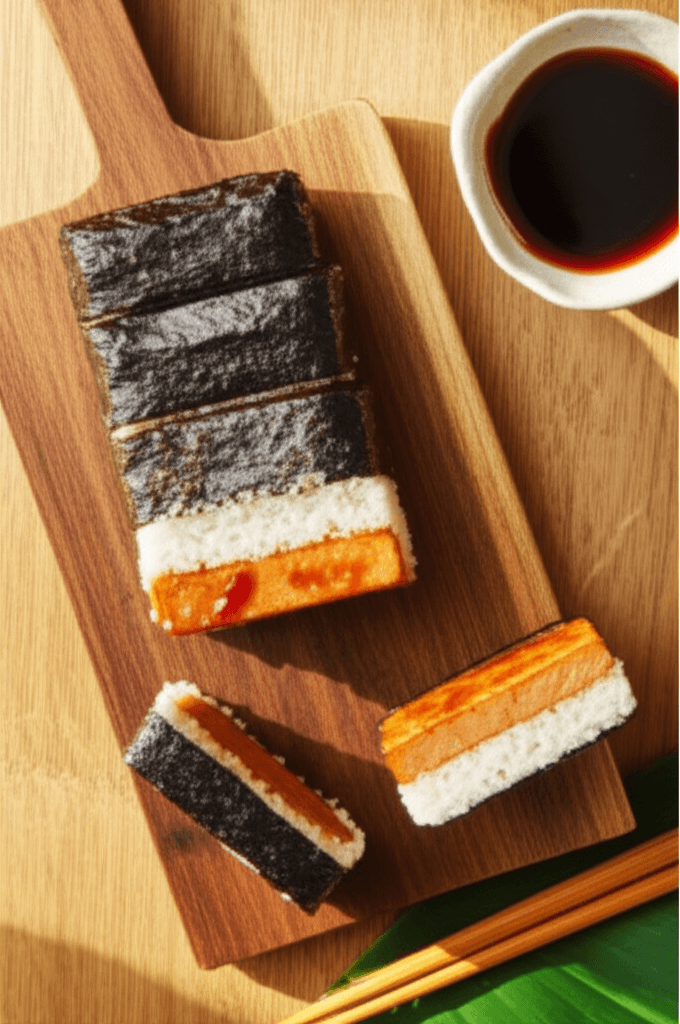
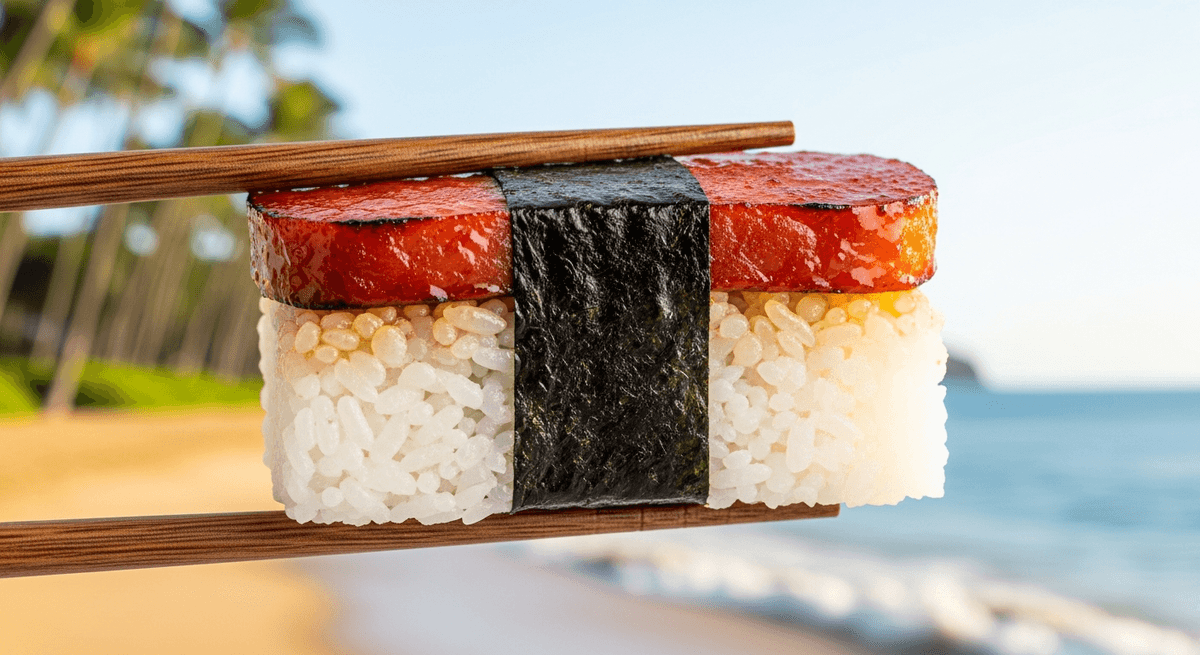
Spam musubi is the gas-station grab, the beach-day snack, the after-school bite that raised a generation of local kids. Salty Spam, sticky rice, crispy nori. Three ingredients, one rule: the rice and the nori do the structural work, the Spam does the flavor.
The variations below all start from the same base and only add what pays its own way. No kitchen-sink musubi, no novelty twists that fall apart in your hand. If you want the backstory on how Spam became the most-used meat in Hawaii, read the history of Spam in Hawaii.
The base musubi (before any variation)
Every musubi starts with the same four things. Get the base right and the variations land.
- 1 can Spam Classic (12 oz), sliced into 6 pieces
- 3 cups cooked short-grain sushi rice, still warm
- 3 sheets nori, cut in half lengthwise
- 2 tablespoons soy sauce
- 1 tablespoon brown sugar
- A musubi mold, or a Spam can with both ends removed (see the musubi maker guide)
Method: Mix the soy sauce and brown sugar. Pan-fry the Spam 2-3 minutes per side until the edges crisp, then glaze with the soy-sugar mix in the last minute. Lay the nori shiny-side down, set the mold in the center, press rice, add fillings, press more rice, wrap, seal the nori edge with a dab of water.
1. Veggie Spam Musubi (greens in the wrap)
For a lighter beach-day musubi or for guests who do not eat meat. The nori-and-rice structure stays; the protein gets replaced or lightened.
The swaps:
- Spam Lite, or full-plant OmniPork Luncheon (glaze it exactly like regular Spam; the caramelization is what sells it)
- A layer of sautéed spinach or kale, squeezed dry so it does not soak the rice
- Thin slices of Japanese cucumber for crunch
- Toasted sesame seeds on the rice
The greens cut through the Spam richness; the cucumber adds snap. Still a one-hand snack, just not one that will send you straight into a beach nap.
2. Spicy mayo musubi (the crowd pleaser)
If you have eaten poke from an island shop, you know spicy mayo. It does the same thing to musubi.
The additions:
- Homemade spicy mayo: 3 Tbsp Kewpie + 1 Tbsp sriracha + 1 tsp sesame oil + a squeeze of lime
- Drizzled inside the musubi, between the Spam and the top rice layer
- A layer of thinly sliced green onion
- Optional: a few drops of chili crisp for extra heat
Use Kewpie, not American mayo. The rice-vinegar profile is richer and tangier, and it emulsifies with the sriracha instead of sitting on top of it. Most Asian groceries stock it.
3. Teriyaki egg musubi (the breakfast one)
Spam, eggs, and rice is already a Hawaii breakfast standard, right alongside loco moco. This is the portable version.
The additions:
- Swap the soy-sugar glaze for teriyaki sauce (store-bought is fine, or use equal parts soy, mirin, and brown sugar)
- A thin fried egg, cooked in the Spam pan after the Spam comes out; break the yolk, press it flat to mold size, fold it like tamagoyaki
- Furikake, generously, on the rice
The egg has to be thin. A thick fried egg makes the musubi too tall to wrap properly. Pour the beaten egg flat in the pan, let it set, fold it to mold width, slide it onto the rice.
4. Bacon avocado musubi (eat it fresh)
The full recipe has its own page. Quick version below.
The additions:
- Thick-cut bacon, cooked first; the rendered fat is what you fry the Spam in
- Ripe avocado slices, still firm enough to hold shape
- Optional sriracha mayo drizzle
- Rice vinegar mixed into the rice for a subtle tang
Eat these within the hour. Avocado does not travel. This is a make-and-eat-now musubi, not a pack-for-the-beach one.
5. Kimchi cheese musubi (the late-night one)
Korean-Hawaiian food runs deep here. Korean families have been part of Hawaii’s story since the early 1900s, and the flavors have been mixing since. This musubi sits in that lineage.
The additions:
- Chopped kimchi (squeeze out the liquid first), layered on the Spam
- A thin slice of sharp cheddar or American cheese, laid over the Spam while it is still hot in the pan so it melts
- Drizzle of gochujang mayo: 2 Tbsp Kewpie + 1 Tbsp gochujang
- Optional: toasted sesame oil mixed into the rice
Use well-fermented kimchi, not the fresh mild version. You want the funk; the aged flavor stands up to the Spam and melted cheese. Same principle as Korean fried chicken: funk plus fat plus heat is the balance.
Rules for any variation
- Wet your hands before touching the rice. Every time.
- Do not overstuff. If you cannot wrap the nori around the stack with an inch to spare, you have gone too far.
- Warm rice, room-temp Spam. Cold rice will not stick; screaming-hot Spam will wilt the nori. Let the Spam cool for a minute after frying.
- Wrap tight, cut clean. Rest the musubi for 2-3 minutes after wrapping so the nori softens and seals. A sharp wet knife cuts cleanly if you are halving them for appetizers.
- Plastic wrap for travel. Wrap each one individually for beach days, road trips, or potlucks. Three to four hours at room temperature is fine. The avocado version does not travel.
Which one to make first
Start with the spicy mayo if you have never strayed from classic. Smallest leap, biggest payoff.
If you are already comfortable with variations, go to the kimchi cheese. It sounds wild and ends up in permanent rotation.
If you are feeding a crowd, make all five. Label each one, let people try them all. It is the most fun pupu spread you can put out. Need the right tools? The musubi maker guide.
Musubi is already the island snack. Five more reasons to make it is the whole point.