Before you cook
Do not make it polite.
A plant-based musubi still needs salt, texture, and a reason to exist beyond substitution. CurtisJ's rule is to build it so it feels satisfying in the hand and convincing on the first bite, not just acceptable by comparison.
I’ll be honest, when someone first told me about veggie Spam musubi, I raised an eyebrow. Musubi without Spam? That’s like a plate lunch without rice. But here’s the thing: after watching my vegetarian cousin stare longingly at our family musubi spread during a backyard lu’au, I knew I had to figure this out.
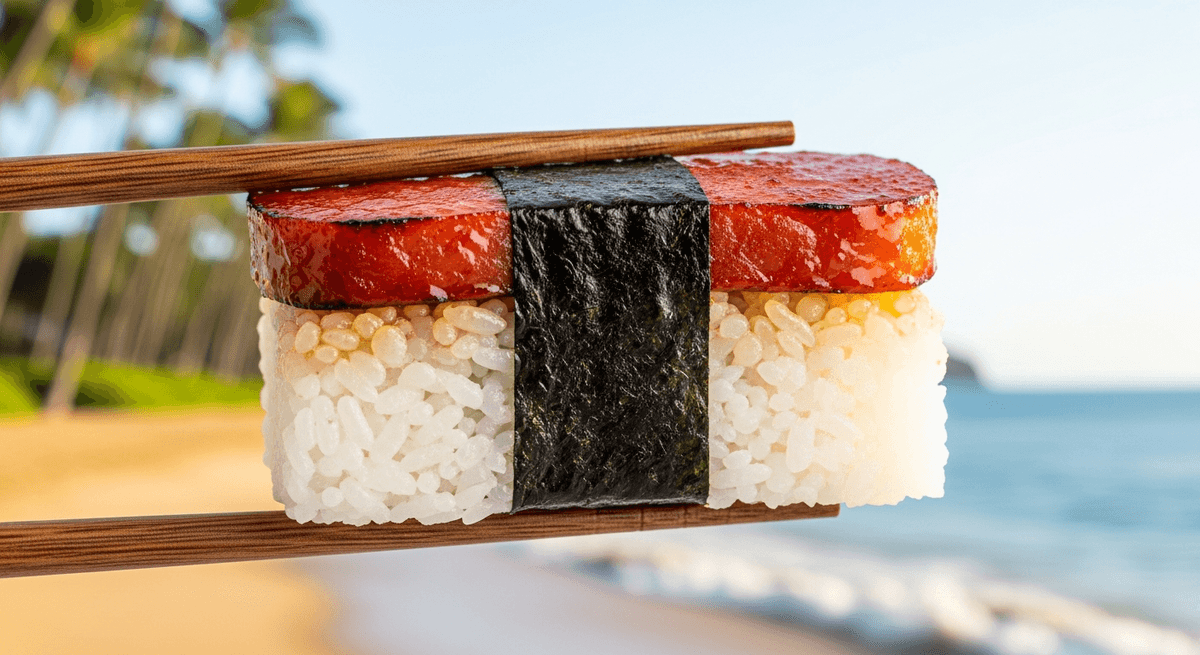
And I did. This veggie version uses thick-sliced, marinated tofu that gets pan-fried until it’s golden and caramelized — salty, sweet, and just a little smoky. Wrapped in warm sushi rice and nori, it hits all the same notes that make regular musubi so addictive. Even my uncle, the most devoted Spam fan on O’ahu, admitted it was “pretty good, for no-meat.”
What Makes This Veggie Musubi Work
The secret isn’t trying to make tofu taste exactly like Spam — that’s a losing battle. Instead, we lean into the flavors that make musubi irresistible: the teriyaki glaze, the salty-sweet balance, and that satisfying contrast between warm rice, crispy-edged protein, and snappy nori. Extra-firm tofu, pressed and sliced to musubi dimensions, takes on the marinade beautifully and develops a caramelized crust that has real substance.
If you’ve been making classic Spam musubi for years, you already know the technique. This is the same build — just a different star ingredient. And if you’re looking for more creative twists, check out our 5 ways to level up musubi.
The Cultural Significance
Musubi is more than a snack in Hawai’i, it’s a cultural staple you’ll find at every convenience store, gas station, and family gathering. The dish reflects the islands’ Japanese heritage, adapted with American ingredients during the plantation era. Making a vegetarian version isn’t about replacing tradition, it’s about making sure everyone at the table can share in it. That’s the aloha spirit.
How It’s Traditionally Served
- As a grab-and-go snack wrapped in plastic wrap
- In bento boxes for school or work lunches
- At potlucks and family gatherings alongside the classic Spam version
- Room temperature — musubi is best eaten within a few hours, not cold from the fridge
Key Things to Know
- Press your tofu well: the drier it is, the better it absorbs marinade and the crispier it gets in the pan
- Extra-firm is essential: soft or silken tofu will fall apart during assembly
- Don’t skip the smoked paprika: it adds a subtle smokiness that helps bridge the gap from Spam’s flavor profile
- A musubi mold helps but isn’t required, you can shape the rice with wet hands or use a clean, lined Spam can with both ends cut off
- For more protein options, try our Bacon Avocado Spam Musubi or the complete pupus guide