Before you read
The joke outsiders make is the least interesting part.
Pupus matter because they change how people gather. They come out before dinner, stretch a party longer, and turn one tray of food into a whole table of grazing, talking, and going back for more. CurtisJ's view is that once you understand that social role, the word starts carrying a lot more weight.
The first time a mainland visitor hears the word pupu, they laugh. Every single time. And every local in the room just waits, because we’ve heard the joke a thousand times. But once you get past the giggling and actually taste what pupus are, those impossibly good small bites that appear the moment you walk into any Hawaiian gathering, you’ll never think of the word the same way again.
So what does pupu actually mean? Where did the word come from? And how did a simple Hawaiian concept turn into one of the most multicultural food traditions in the world? The story goes back centuries, through ancient Hawaiian culture, the plantation era, and into the modern potluck tables where every family brings their best.
What Does Pupu Mean? The Hawaiian Word Explained
Pupu (pronounced “POO-poo,” written pūpū with macrons in Hawaiian) means appetizer, snack, or hors d’oeuvre — any small bite of food served before or alongside a meal. But the word’s roots go deeper than that.
In the Hawaiian language, pūpū originally referred to shells and shellfish: the small ocean treasures gathered along the shoreline. Think about it: the earliest “appetizers” in Hawaii were literally what you picked up from the reef while walking the coast. Small poke-style bites of raw fish and shellfish, eaten casually before the main meal was prepared. Over time, the word expanded from the food itself to the concept — any small bite meant for grazing and sharing.
The plural in casual English is pupus. In Hawaiian, the word stays the same, pūpū, whether you mean one appetizer or twenty. You’ll hear both versions across the islands, and nobody corrects anyone. What matters isn’t the grammar. What matters is that when someone says “come, we get pupus,” you show up.
Pupus in Ancient Hawaii: Food as Sacred Connection
To understand pupus, you have to understand how ancient Hawaiians thought about food. It wasn’t fuel. It wasn’t entertainment. Food was a direct connection to the land, the gods, and each other.
Before European contact, Hawaiian society operated under the kapu system: a strict set of sacred laws that governed every aspect of daily life, including what you ate and who you ate with. Men and women ate separately. Certain foods, pork, certain fish, bananas, coconuts, were kapu (forbidden) for women. The act of eating together was regulated because food carried spiritual significance.
But even within these restrictions, the tradition of sharing small bites existed. When fishermen returned with their catch, the first portions were offered to the gods, and then small pieces were shared among the community before the formal meal. When families gathered for celebrations, food appeared in waves — small tastes first, then the feast. Poi, made from taro, was the sacred staple at the center of every meal, but the small bites that preceded it were their own tradition.
This practice, offering food immediately as an expression of welcome and care, is the cultural root of the modern pupu. When you arrive at a Hawaiian home today and someone pushes a plate of spam musubi toward you before you’ve even sat down, that instinct goes back generations. Letting a guest go unfed, even for a few minutes, is unthinkable. It always has been.
The Plantation Era: How Pupus Became the World’s Best Potluck
The kapu system was abolished in 1819, and the arrival of Christian missionaries and Western traders in the decades that followed transformed Hawaiian food culture dramatically. But the real revolution came with the sugar plantations.
Starting in the 1850s and accelerating through the early 1900s, plantation owners recruited workers from around the world to harvest sugarcane and pineapple. They came in waves:
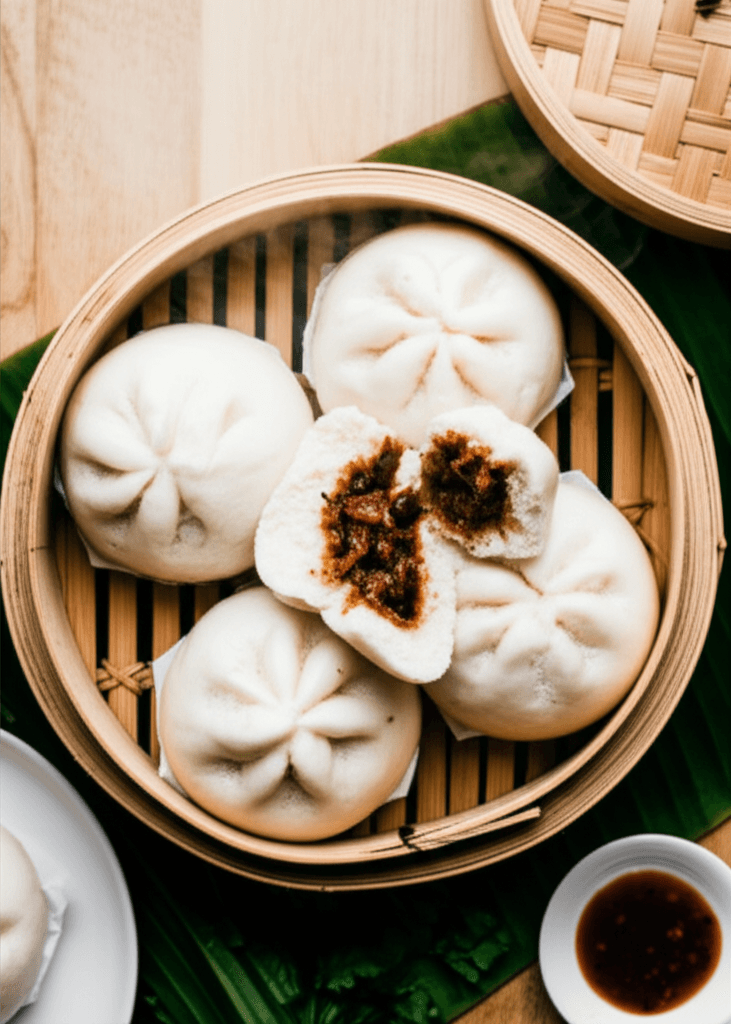
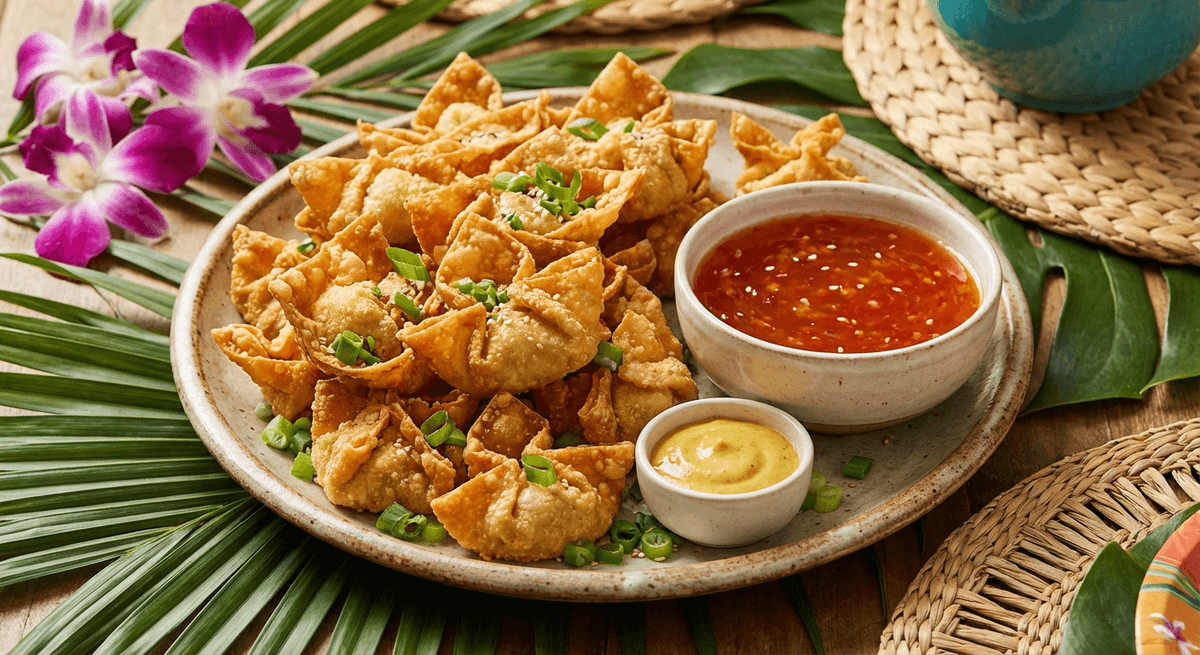
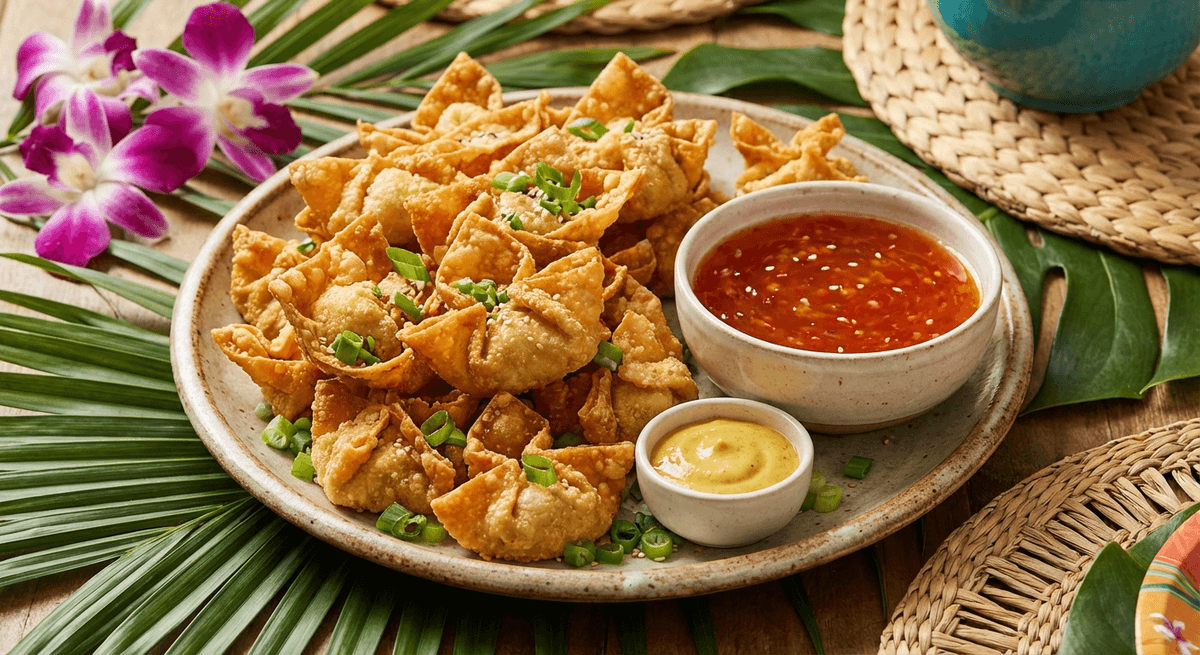
- Chinese workers (1850s–1880s) — bringing wonton wrappers, char siu, dim sum traditions
- Portuguese workers (1870s–1880s) — bringing malasadas, sweet bread, sausage
- Japanese workers (1880s–1920s) — bringing rice, shoyu, furikake, mochiko, musubi-making techniques
- Korean workers (1903–1905) — bringing kalbi, kimchi, gochujang, fried chicken techniques
- Filipino workers (1906–1940s) — bringing lumpia, adobo, pancit, bold vinegar-based flavors
- Puerto Rican workers (1900s) — bringing pasteles, sofrito, spice blends
These communities lived side by side in plantation camps, often separated by ethnicity but connected by proximity and shared labor. And here’s where the magic happened: they shared food across cultural lines.
A Japanese family would bring musubi to a gathering. The Chinese family next door contributed fried wontons. The Filipino family brought lumpia. The Hawaiian family brought poke and lomilomi salmon. Everyone put their best small bites on the same table, everyone tried everything, and over the span of decades, all of these foods became Hawaiian.
This is what makes the Hawaiian pupu tradition fundamentally different from appetizer culture anywhere else in the world. A pupu spread isn’t one cuisine. It’s five or six cuisines on the same table, all belonging to everyone equally. Mochiko chicken is as Hawaiian as poke. Manapua is as local as pipikaula. The plantation era didn’t erase cultural identities, it wove them together around a shared table.
From WWII to Today: The Modern Pupu Table
World War II added another layer. When the U.S. Military flooded Hawaii with canned goods, especially Spam, local cooks didn’t reject it. They absorbed it, the same way they’d absorbed every other ingredient that arrived on the islands. Spam got sliced, glazed with teriyaki, pressed onto rice, wrapped in nori, and became spam musubi — arguably the most classic pupu in Hawaii today. That’s the Hawaiian food tradition in action: take what arrives, make it local, make it better.
The postwar tourism boom introduced another shift. Hotels and restaurants began presenting pupus in a more polished, “appetizer” format for visitors — ahi katsu on fine plates, poke nachos with artistic drizzles. But at home, at backyard parties, at every graduation and baby luau, the pupu table stayed exactly what it had always been: a chaotic, generous, multicultural spread where the only rule is that there’s always too much food.
Today, the pupu tradition shows up everywhere in Hawaii:
- Pau hana (after work) — hurricane popcorn and cold beer on the lanai
- Potlucks: every family brings their signature pupu; you’re judged (lovingly) on what you contribute
- Tailgates and game days: Korean fried chicken wings and poke nachos
- Family gatherings: three generations, ten different dishes, one table
- Backyard parties: the Hawaiian backyard party is built around the pupu spread
Why Pupus Are More Than Just Appetizers
On the mainland, appetizers are a course. They come before the main event, and when dinner arrives, they’re cleared away. In Hawaii, pupus aren’t a course, they’re a culture.
The pupu table is where conversations happen. It’s where you catch up with cousins you haven’t seen in months. It’s where kids sneak extra coconut shrimp when no one’s looking. It’s where Aunty’s famous char siu sits next to Uncle’s shoyu poke, and everyone knows whose is whose. The food isn’t just something you eat while you wait for dinner — the food is the point.
This is what “pupus meaning” really comes down to. Yes, the word means appetizer. But the tradition means something much bigger: sharing food is how you show aloha: love, care, and welcome. When someone arrives at your home, the first thing you do is feed them. When someone is hurting, you bring food. When there’s something to celebrate, the table overflows. In Hawaiian culture, generosity isn’t measured in words. It’s measured in how much food you put out.
For the complete guide to every pupu, from classic recipes to party planning tips, see our Hawaiian Pupus Guide. And to explore the broader food traditions that shaped these small bites, start with Traditional Hawaiian Foods Explained.
Frequently Asked Questions
What does pupu mean in Hawaiian?
Pupu (pūpū) is the Hawaiian word for appetizer, snack, or small bite of food. The word originally referred to shells and shellfish, the small ocean treasures gathered along Hawaii’s shoreline that served as the earliest casual snacks. Over centuries, the meaning expanded to encompass any small food served before or alongside a meal, from traditional poke to modern favorites like spam musubi and mochiko chicken.
Why is it called pupu?
The word pūpū comes from the Hawaiian language, where it originally meant “shell” or “shellfish.” Ancient Hawaiians would gather small shellfish from the reef as casual snacks, the original pupus. As Hawaiian food culture evolved and absorbed influences from Japanese, Chinese, Filipino, Korean, and Portuguese immigrants during the plantation era, the word expanded to mean any appetizer or small bite shared at gatherings.
What is the difference between pupus and appetizers?
Functionally, pupus and appetizers both refer to small bites served before a meal. The difference is cultural. Mainland appetizers are typically a single cuisine served as a formal course before dinner. Hawaiian pupus are a communal, multicultural spread — often featuring dishes from five or six different cultural traditions on the same table — meant for casual grazing and socializing. Pupus aren’t cleared when dinner arrives; they’re the social center of any Hawaiian gathering.
How do you pronounce pupu in Hawaiian?
Pupu is pronounced “POO-poo” — two syllables, both with the “oo” sound as in “food.” In Hawaiian, the word is written pūpū with macrons (lines over the u’s) indicating long vowels. Both syllables receive roughly equal stress. The plural in casual English is “pupus,” though in Hawaiian the word remains pūpū regardless of number.
What are the most popular pupus in Hawaii?
The most popular pupus in Hawaii include spam musubi (rice and teriyaki Spam wrapped in nori), poke (seasoned raw fish), mochiko chicken (Hawaiian-style fried chicken), fried wontons, hurricane popcorn (popcorn with furikake and arare), manapua (Hawaiian steamed buns), lumpia (Filipino spring rolls), and Korean fried chicken wings. A well-rounded pupu spread typically includes something fried, something fresh, something savory, and something handheld — reflecting Hawaii’s multicultural food heritage.