Before you read
Make more than you think you need.
Lumpia has no patience for small batches. CurtisJ's advice is to get the wrapper tight, fry until truly crisp, and assume the first tray will vanish before you sit down.
If you’ve ever been to a party in Hawaii, a birthday, a baby luau, a graduation, a random Saturday get-together, you’ve had lumpia. It’s not a question of if, it’s a question of how many trays deep you went. These crispy, golden Filipino spring rolls are the undisputed champion of the Hawaiian pupu table, and once you learn to make them at home, you’ll understand exactly why.
What Is Lumpia?
Lumpia are Filipino-style spring rolls — savory, meat-and-vegetable-filled parcels wrapped in a paper-thin wrapper and deep fried until they shatter with every bite. Think of them as the crispier, more addictive cousin of Chinese egg rolls. The wrapper is thinner, the filling is more finely textured, and the result is a roll that’s all about that crunch.
There are many styles of lumpia across the Philippines, but the version you’ll find at every Hawaiian party is Lumpia Shanghai: the thinner, tighter rolls made with a seasoned pork (and often shrimp) filling. They’re pencil-thin, golden-fried, and dangerously easy to eat by the handful. Some families make the larger lumpia with a full-sized wrapper, but Shanghai-style is what you’ll see stacked on platters at potlucks across the islands.
The Filipino-Hawaiian Connection
To understand why lumpia is everywhere in Hawaii, you need to understand the deep roots of the Filipino community in the islands. Starting in the early 1900s, Filipino workers, primarily from the Ilocos and Visayas regions, came to Hawaii to work on the sugar and pineapple plantations. They brought with them their language, their traditions, and most importantly, their food.
Today, Filipinos are one of the largest ethnic groups in Hawaii, making up roughly 25% of the state’s population. Their culinary influence is woven into the fabric of everyday Hawaiian eating. You’ll find Filipino food at local plate lunch spots, at every family gathering, and in the coolers that aunties bring to the beach. Lumpia, adobo, pancit, pork and peas, these aren’t “ethnic food” in Hawaii. They’re just food.
And lumpia? Lumpia might be the single most beloved crossover dish. It doesn’t matter if you’re Hawaiian, Japanese, Chinese, Portuguese, or any mix of the above — everybody reaches for the lumpia first. It transcends every cultural line at the potluck table.
Why Lumpia Is the Ultimate Party Pupu
There’s a reason lumpia disappears from the table faster than anything else. Think about it: they’re crispy, savory, handheld, and endlessly snackable. They’re the perfect finger food. No plate needed, no utensils required — just grab a few, dip, and eat. They work at room temperature (though they’re best hot), they travel well, and one batch makes enough to feed a crowd.
In Hawaii, a party without lumpia is like a luau without poi — technically possible, but nobody’s going to be happy about it. The host who shows up with two trays of fresh-fried lumpia? That’s the person everyone remembers.
The Dipping Sauce Game
Lumpia is good on its own, but the dipping sauce is where you get to express yourself. There are three classic routes:
- Sweet chili sauce: The most popular choice in Hawaii. That perfect balance of sweet, tangy, and just a little heat. You can buy it bottled (Mae Ploy or Thai Kitchen are staples) or make a quick homemade version with rice vinegar and garlic.
- Banana ketchup: A Filipino classic. It’s sweeter and more mellow than regular ketchup, with a distinct flavor that’s unmistakably Filipino. Jufran is the brand you want.
- Spiced vinegar (sukha): Vinegar with crushed garlic, black pepper, and sometimes chili. This is the old-school Filipino way, and it’s the perfect bright, acidic counterpoint to the rich, fried rolls.
Honestly? Put out all three and let people choose. That’s the Hawaiian way.
Tips for Perfect Lumpia Every Time
Making lumpia isn’t hard, but there are a few tricks that separate good lumpia from great lumpia:
Don’t Overfill
This is the number one mistake. You want about 2 tablespoons of filling per roll, placed in a thin line along one edge of the wrapper. Too much filling and the wrapper won’t seal properly, the rolls will be fat and floppy, and they’ll burst open in the oil. Thin and tight is the goal.
Roll Tightly
Think of it like rolling a burrito — tuck in the sides first, then roll away from you, keeping it snug. A tight roll means a crispier result because there’s no air trapped inside. Use beaten egg to seal the edge so it stays closed during frying.
Get Your Oil Temperature Right
350°F is your target. Too cool and the lumpia will absorb oil and turn greasy. Too hot and the outside will burn before the filling cooks through. Use a thermometer — don’t guess. Fry in small batches so the oil temperature doesn’t drop too much, and let it recover between batches.
Drain on a Wire Rack
Skip the paper towels. A wire rack set over a sheet pan lets air circulate around the lumpia so the bottoms stay crispy instead of getting soggy from sitting in their own steam.
Make-Ahead and Freezing Tips
Here’s the beautiful thing about lumpia, they’re one of the best make-ahead party foods in existence. You can assemble them hours ahead and keep them covered in the fridge until you’re ready to fry. But the real game-changer is the freezer.
Lay your assembled (unfried) lumpia in a single layer on a parchment-lined sheet pan and freeze until solid, about 2 hours. Then transfer them to a freezer bag. They’ll keep for up to 3 months. When you’re ready to serve, fry them straight from frozen: no thawing needed. Just add an extra minute or two to the frying time. This means you can roll a massive batch on a Sunday afternoon and have party-ready lumpia in your freezer for months.
Trust me, once you have a freezer stash of lumpia, you’ll feel like the most prepared host in Hawaii.
Serve Them Up
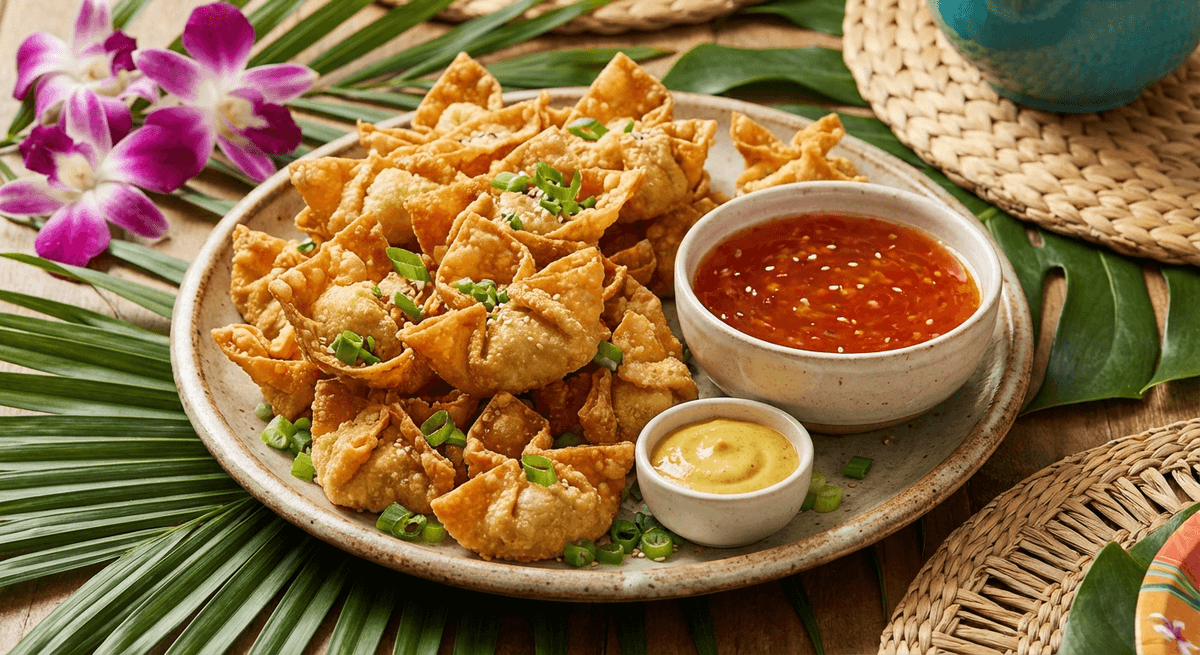
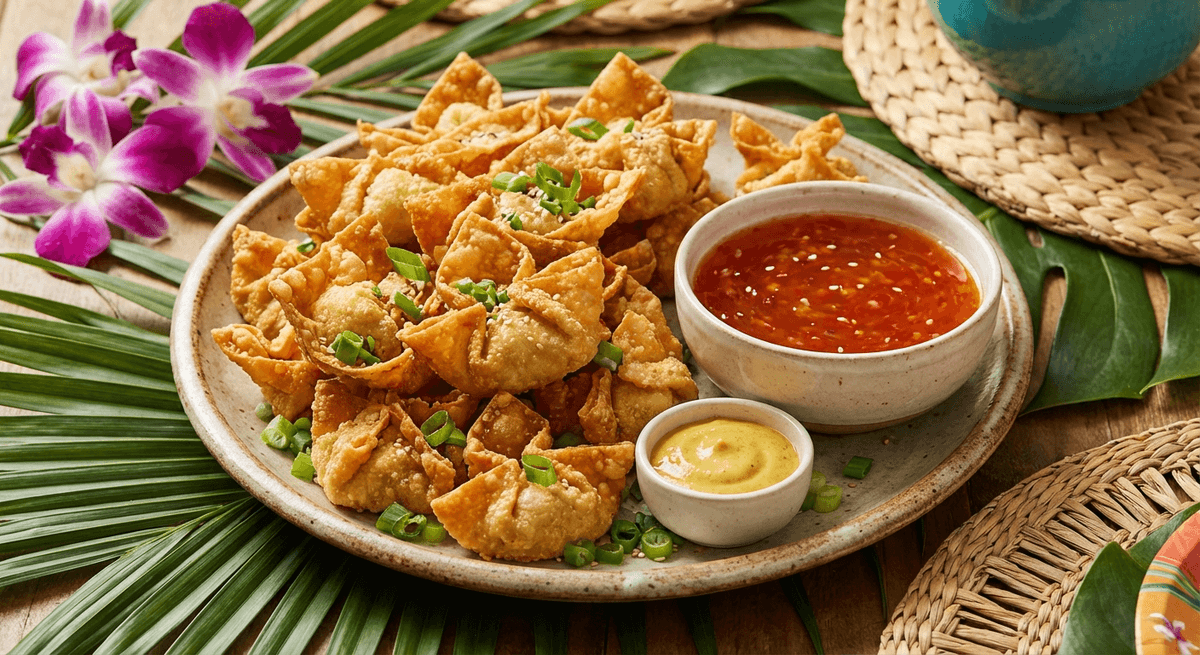
Pile your golden, crackling lumpia on a platter, put out your dipping sauces, and watch them vanish. Serve them as a pupu before dinner, as part of a Filipino-Hawaiian spread with pancit and adobo, or honestly just make a whole meal out of them with some steamed rice and a simple side salad. Nobody will judge you. In Hawaii, a plate full of lumpia is a meal, and a good one at that.