Before you read
Start with respect before you start judging the flavor.
Poi is easy to flatten into a dare, a novelty, or a quick travel anecdote. CurtisJ's view is that you understand it better when you begin with its cultural weight, then learn how the taste and texture fit into the plate.
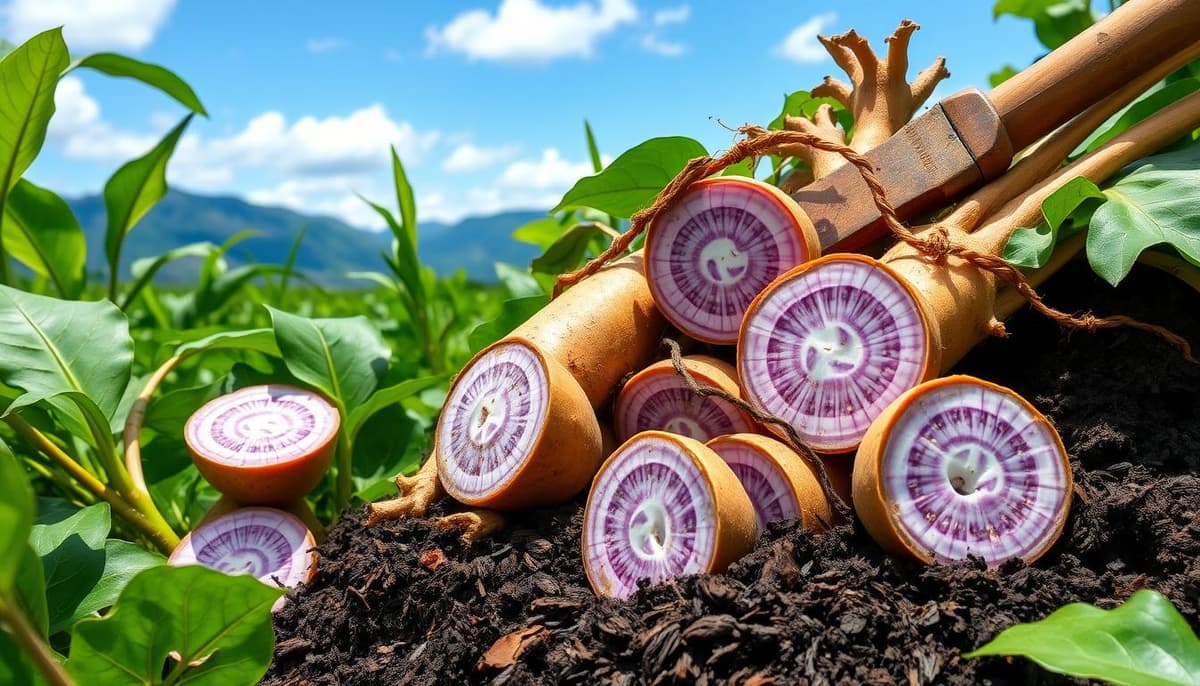
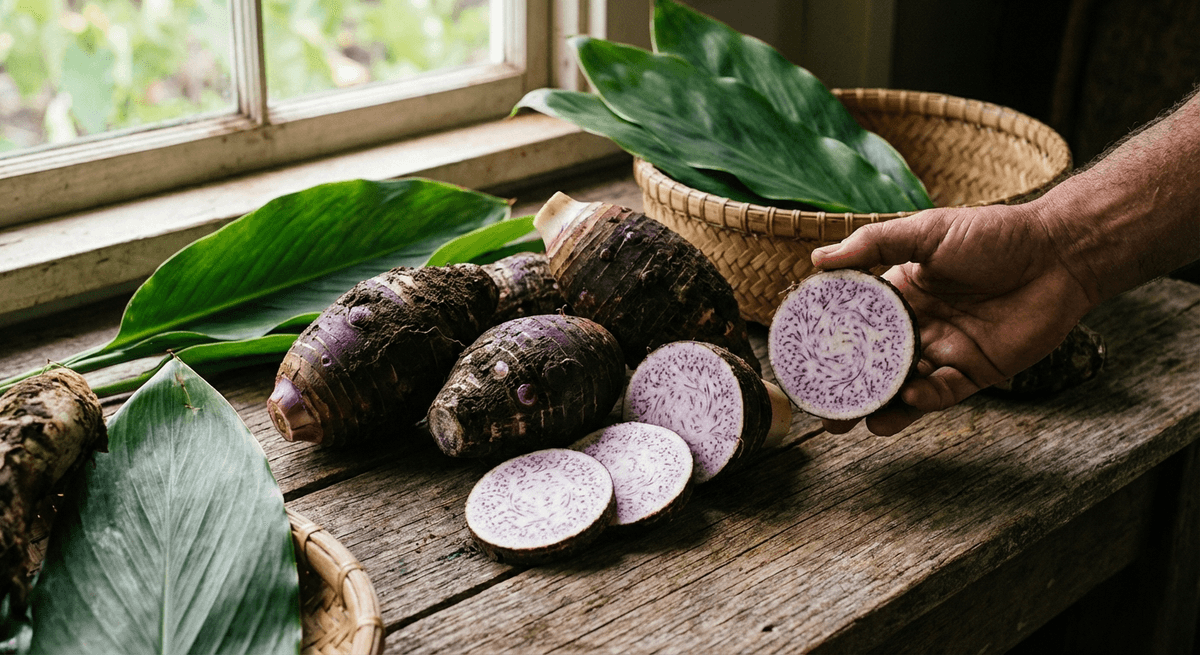
Poi is the most ancient and culturally significant food in Hawaii, a smooth, starchy paste made from cooked taro root (kalo) that has been pounded and mixed with water. It’s been the staple food of the Hawaiian people for over a thousand years, and it holds a place in Hawaiian culture that goes far beyond nutrition.
To Hawaiians, poi isn’t just food. According to Hawaiian creation mythology, the taro plant is the older sibling of the Hawaiian people. Eating poi is, in a very real cultural sense, being nourished by family. This is why traditional protocol calls for no arguing at a table where poi is present, you don’t fight in front of your elders.
What Poi Tastes Like
This is the question everyone asks, and it’s the hardest to answer. Poi has a mild, slightly sweet, slightly earthy flavor that doesn’t taste like much of anything else. Fresh poi (one-finger poi, thick enough to eat with one finger) is smooth and slightly sweet. As it ferments over a few days (becoming “sour poi”), it develops a pleasant tanginess similar to yogurt or sourdough.
Most first-time tasters find poi bland on its own. That’s by design — poi is meant to be eaten alongside strongly flavored foods. A bite of salty kalua pig followed by a scoop of cool, mild poi is a combination that has satisfied Hawaiians for centuries. The poi cleanses the palate and provides a starchy, filling base, much like rice does in a plate lunch.
How Poi Is Made
Traditional poi-making is a physical, labor-intensive process:
- Grow the taro. Kalo (taro) grows in flooded paddies called lo’i kalo. It takes 12-18 months to mature.
- Cook the taro. The taro corms are pressure-cooked or steamed until soft. Raw taro contains calcium oxalate crystals that cause intense itching and irritation — cooking neutralizes them completely.
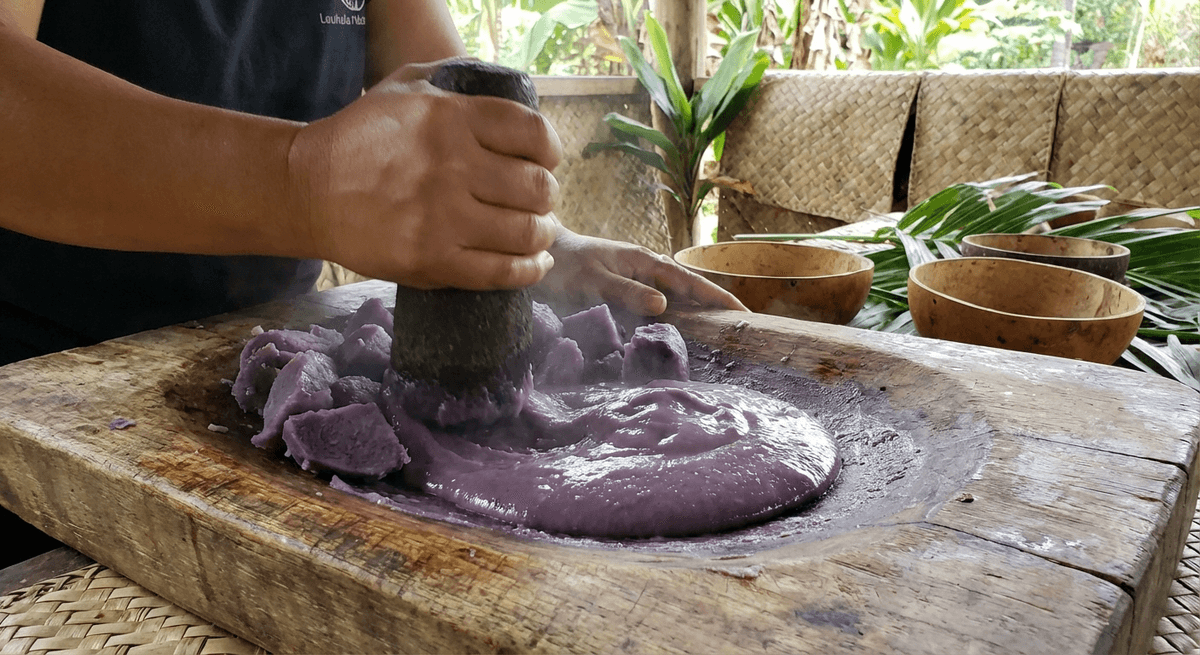
- Pound the taro. Traditionally, cooked taro is pounded on a wooden board (papa ku’i ‘ai) with a stone pounder (pohaku ku’i ‘ai) until smooth. This is hard physical work.
- Add water. Water is gradually added during pounding to reach the desired consistency — from thick “one-finger” poi to thin “three-finger” poi.
Today, most commercial poi is made with mechanical grinders, but the traditional hand-pounding method is still practiced at cultural events and by families who maintain the tradition.
Types of Poi
- Fresh poi (poi hou): Just made, sweet, smooth, and thick. Best eaten within a day or two.
- Day-old poi: Starting to develop a slight tang. Many locals prefer this stage.
- Sour poi (poi ‘awa’awa): Fermented for 3-5 days. Tangy and complex, like a thick yogurt. Some people love sour poi; others prefer it fresh.
- One-finger poi: Thick enough to scoop with one finger. The traditional consistency.
- Two-finger / three-finger poi: Progressively thinner. Three-finger poi is almost drinkable.
Where to Find Poi
In Hawaii, poi is available at:
- Supermarkets: Every grocery store in Hawaii carries poi, usually in plastic bags near the deli section.
- Hawaiian food restaurants: Helena’s, Highway Inn, and other Hawaiian food spots serve fresh poi.
- Luaus: Always on the luau table, right next to the kalua pig.
- Farmers markets: Fresh, hand-pounded poi from local producers.
On the mainland, poi can be harder to find. Some Asian grocery stores carry frozen poi, and several Hawaiian producers ship nationwide. You can also make it from taro root if you can find fresh taro at an Asian market.
Get the full recipe: How to Make Poi
Poi and Health
Poi is one of the most hypoallergenic foods known, it’s naturally gluten-free, dairy-free, and very rarely causes allergic reactions. It’s often recommended as a first food for babies in Hawaii. It’s also easily digestible, making it a traditional food for the elderly and sick.
Nutritionally, poi provides complex carbohydrates, fiber, and small amounts of vitamins and minerals. The fermented version (sour poi) contains beneficial probiotics, similar to yogurt or kefir.
Poi in Hawaiian Culture
Poi’s cultural significance can’t be overstated. In the Hawaiian creation chant (Kumulipo), the taro plant grows from the body of Hāloa, the first-born son of the gods. The Hawaiian people are Hāloa’s younger siblings. Taro, and by extension, poi, is literally family.
This relationship shapes how poi is treated:
- No arguing at the poi table. Fighting in the presence of poi disrespects the elder sibling.
- Poi is placed face-up on the table: never upside down, which is considered disrespectful.
- Sharing poi is sharing aloha. Offering someone poi is a gesture of welcome and kinship.
Explore More Traditional Hawaiian Food
- Poi Recipe — Make it at home from taro root
- What Is Kalua Pig?, The smoky pork that pairs perfectly with poi
- What Is Laulau? — Traditional leaf-wrapped pork and fish
- Squid Luau — Squid simmered in coconut milk with taro leaves
- Lomilomi Salmon — Another essential luau table companion
- Hawaiian Ingredients Guide — Deep dive into taro and other Hawaiian staples
- Talk Story: The Luau, The feast where poi takes center stage