One Board Is Never Enough
Here’s something I learned the hard way: if you’re cooking Hawaiian food regularly, you need more than one cutting board. A typical plate lunch involves prepping raw fish, slicing vegetables, cutting cooked meat, and maybe dicing up some garnishes — all in the same cooking session. Using one board for everything isn’t just inconvenient, it’s a food safety issue.
Hawaiian cooking pulls from so many traditions, Japanese, Chinese, Filipino, Korean, Portuguese, native Hawaiian, and that means a lot of different ingredients, a lot of different prep techniques, and a lot of reasons to have the right surface under your knife. So let’s break down the three main options and figure out where each one belongs in your kitchen.
Wood Cutting Boards: The Heart of the Kitchen
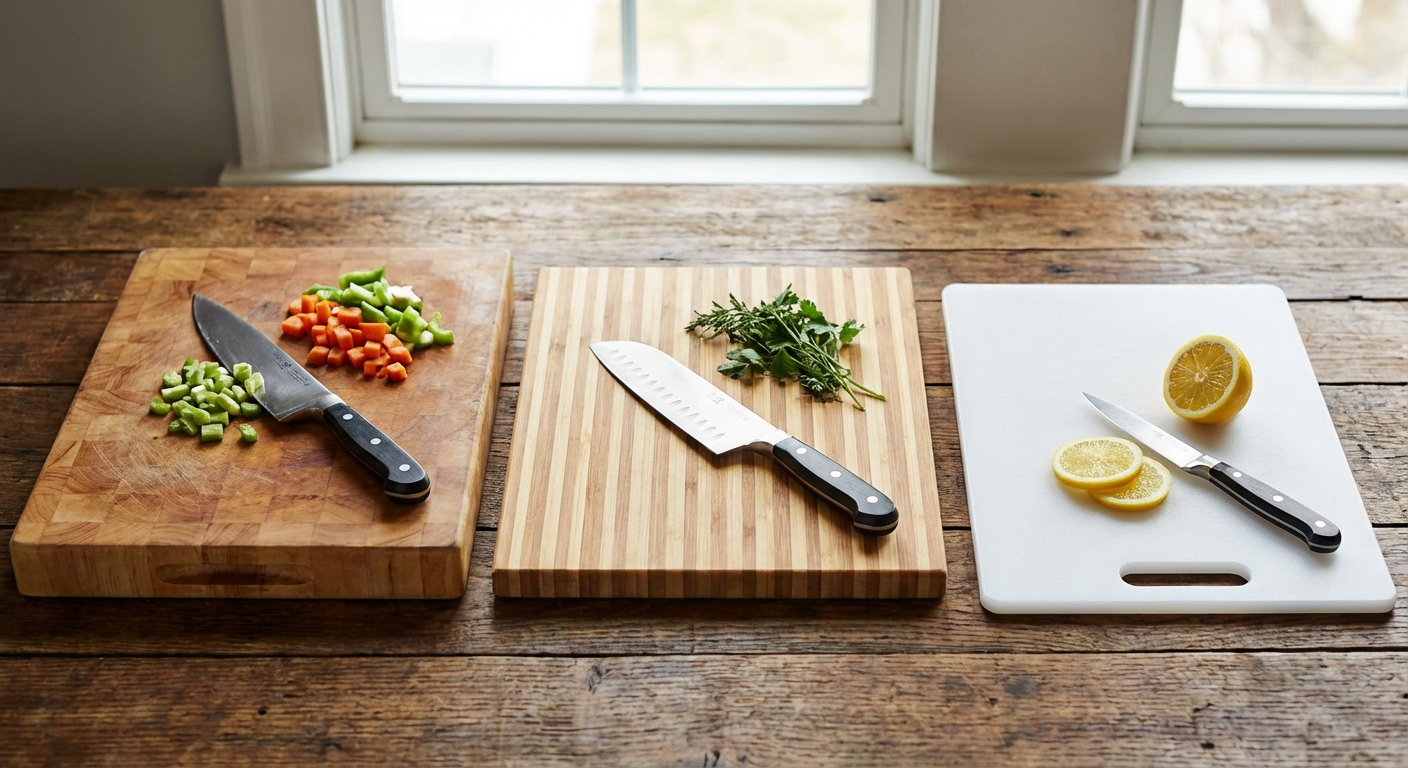
There’s a reason wooden cutting boards have been around for centuries. A good hardwood board is gentle on your knives, beautiful to look at, and gets better with age. In a Hawaiian kitchen where you might be prepping for hours — chopping vegetables for namasu, slicing char siu, dicing onions for lomi lomi salmon, a wood board makes the whole process more enjoyable.
Why Wood Works
Wood has a natural give to it that’s kind to your knife edges. Every time you cut on a hard surface like glass or granite, you’re dulling your blade faster. Wood absorbs the impact, which means your knives stay sharper longer. If you’ve invested in a good yanagiba or chef’s knife, you owe it to yourself to use a board that won’t wreck the edge.
Wood also has natural antimicrobial properties. Studies have shown that bacteria actually get drawn down into wood fibers and die off, rather than sitting on the surface the way they do on plastic. That said, wood boards still need proper cleaning — warm soapy water and a good dry after each use.
Best Uses
Wood boards are ideal for general vegetable prep, slicing cooked meats, cutting bread, and as a beautiful serving board for pupus at a gathering. I keep a large maple board as my main prep surface. It’s where I do the bulk of my cutting, and it’s become one of my favorite things in the kitchen.
Care Tips
- Oil your wood board monthly with food-grade mineral oil to keep it from drying out and cracking.
- Never put a wood board in the dishwasher. The heat and moisture will warp and split it.
- Stand it upright to dry after washing so both sides get airflow.
- Sand out deep cuts or stains with fine-grit sandpaper, then re-oil.
Bamboo Cutting Boards: Sustainable and Strong
Bamboo boards have become hugely popular, and for good reason. They’re hard, durable, lightweight, and, here’s the part that resonates with Hawaiian values, they’re one of the most sustainable materials you can use in the kitchen.
Why Bamboo Connects to Hawaiian Values
In Hawaiian culture, malama ‘aina, caring for the land, is a core value. Bamboo grows incredibly fast, requires no pesticides, and regenerates without replanting. Choosing a bamboo cutting board is a small way to bring that spirit of sustainability into your daily cooking.
Bamboo is also naturally harder than most wood species, which means it resists cuts and scratches well. It holds up to heavy use and doesn’t absorb odors as easily as softer woods.
The Trade-Offs
That hardness is a double-edged sword (pun intended). Because bamboo is so dense, it’s tougher on knife edges than softer woods like maple or walnut. If you’re using expensive Japanese knives, you might want to save the bamboo board for lighter tasks and use a wood board for your primary cutting.
Bamboo boards are also made from strips of bamboo glued together, and over time, those seams can separate if the board isn’t cared for properly. The same maintenance rules apply as wood — oil it regularly, keep it dry, and never put it in the dishwasher.
Best Uses
Bamboo is great as a secondary prep board for lighter tasks — slicing fruits, prepping herbs and garnishes, cutting cooked items. It also makes an excellent serving board for pupus since it looks clean and natural.
Plastic Cutting Boards: Essential for Food Safety
Plastic cutting boards might not have the warmth or beauty of wood and bamboo, but they play a critical role in any kitchen that handles raw fish and meat and that means every Hawaiian kitchen.
Why Plastic Is Non-Negotiable for Raw Fish
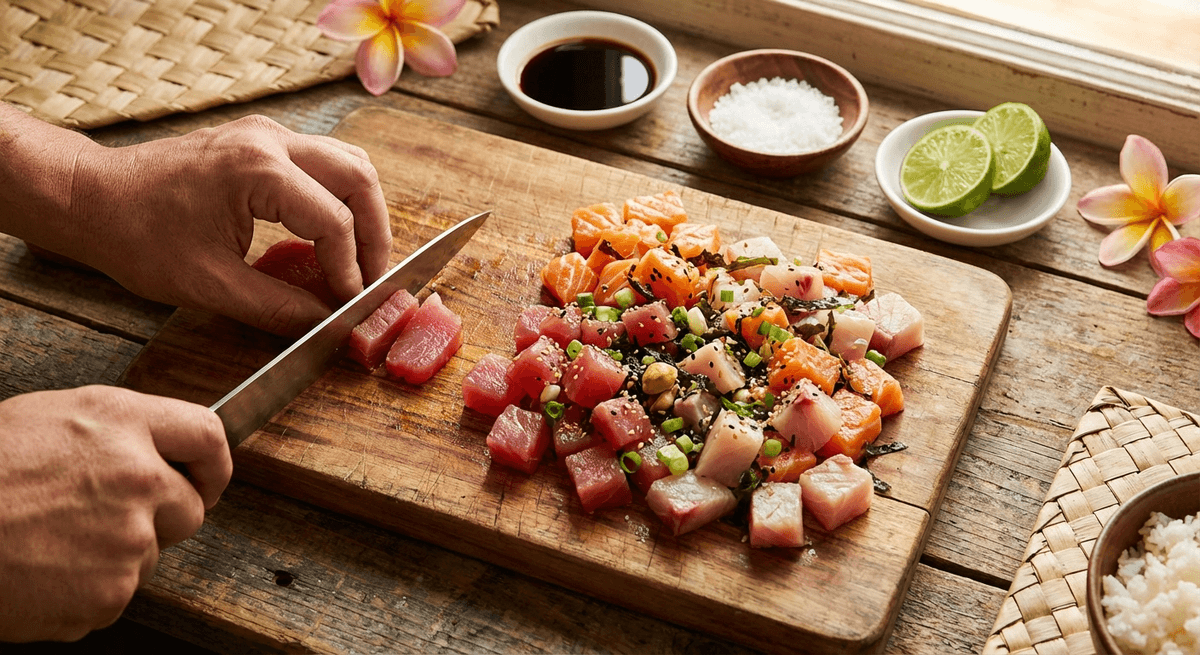
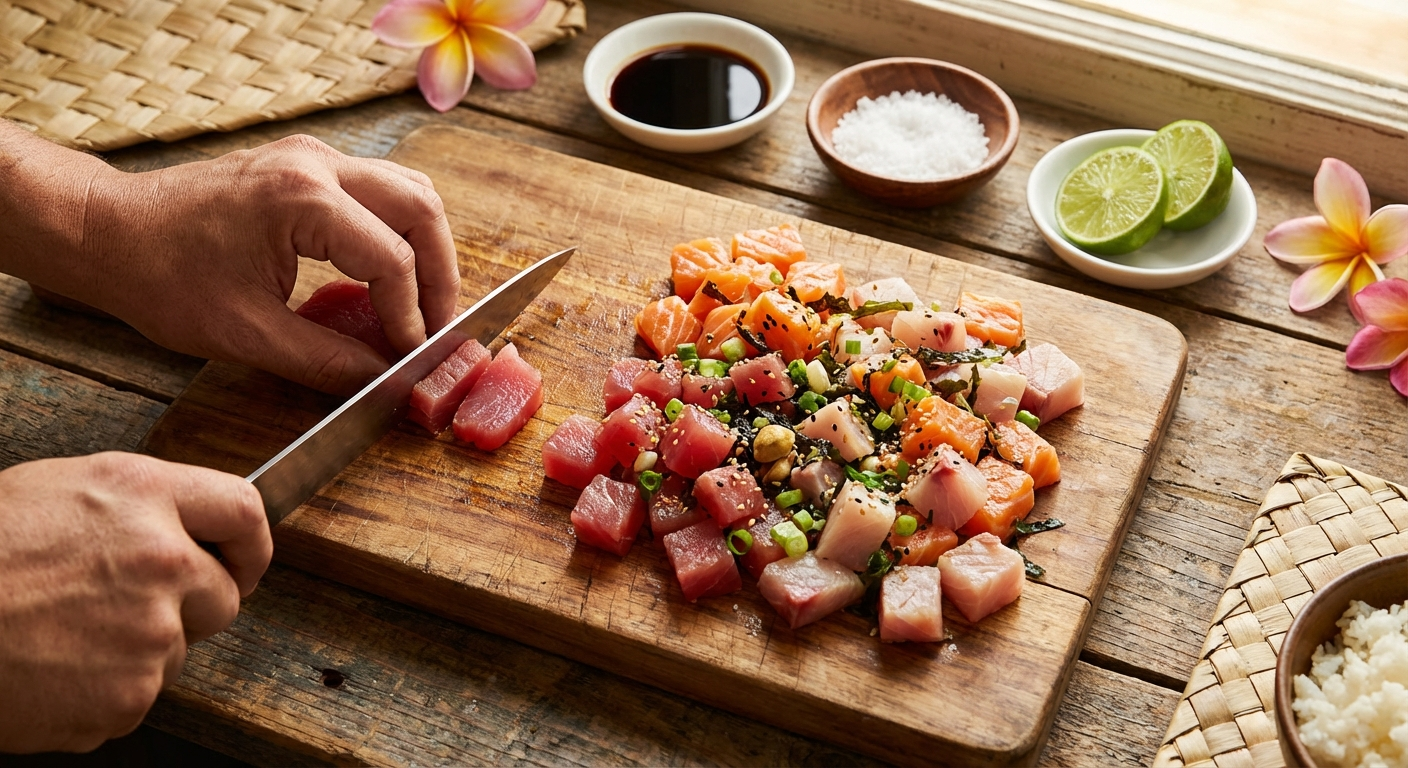
When you’re making poke, sashimi, or prepping any raw seafood, food safety is paramount. Plastic boards can be sanitized in the dishwasher, bleached, and scrubbed aggressively without damaging them. Wood and bamboo, while naturally antimicrobial, can develop deep grooves over time that harbor bacteria and are impossible to fully sanitize.
For raw fish prep, a dedicated plastic board that you can throw in the dishwasher after every use gives you peace of mind. And when that fish is going to be eaten raw, like in poke or sashimi, you want every possible layer of food safety working in your favor.
Color-Coding Your Boards
A smart practice is to use different colored plastic boards for different tasks. Many professional kitchens do this, and it’s easy to adopt at home:
- White: Raw fish and seafood
- Red: Raw meat
- Green: Vegetables and fruits
This way, you never accidentally cross-contaminate. When you’re prepping a full Hawaiian spread with poke, kalbi, mac salad, and rice, having designated boards for each keeps everything safe and organized.
The Downsides
Plastic is hard on knives — harder than wood, similar to bamboo. It also scars easily, and those deep knife grooves can eventually become a hygiene issue of their own. Replace your plastic boards when they get deeply scarred. They’re inexpensive enough that this shouldn’t be a big deal.
Plastic also lacks the warmth and character of wood. It slides around on the counter more (put a damp towel underneath to fix that) and doesn’t feel as satisfying to work on. But that’s not what it’s there for, it’s there to keep your food safe.
My Recommended Setup for a Hawaiian Kitchen
After years of cooking local-style food at home, here’s the cutting board setup I’ve landed on and would recommend:
- One large wood board (maple or walnut) as your main prep surface. This is where you’ll do most of your vegetable chopping, slice cooked meats, and handle general prep. Get the biggest one that fits comfortably in your kitchen.
- One dedicated plastic board for raw fish. This is your poke and sashimi board. It goes in the dishwasher after every use, no exceptions. Keep it separate from everything else.
- One plastic board for raw meat. For chicken, pork, and beef prep — separate from your fish board and your veggie board.
- One bamboo or smaller wood board for light prep and serving. Perfect for slicing fruit, cutting herbs, or putting out a spread of pupus for friends.
This setup keeps your food safe, your knives happy, and your workflow smooth. When you’re cooking a big Hawaiian meal with multiple components all happening at once, having the right board for each task makes everything flow better.
Take Care of Your Boards and They’ll Take Care of You
Whatever combination you go with, the key is maintenance. Oil your wood and bamboo boards, replace plastic boards when they’re worn, and always, always, use separate boards for raw proteins and everything else.
A cutting board is the foundation of every meal you make. It’s the first thing that hits the counter when you start cooking and the last thing you wash when you’re done. Pair it with the right knife and you’ve got the foundation for great prep work. Get the right ones for your kitchen, treat them well, and they’ll be part of every plate lunch, every poke bowl, and every family gathering for years to come. And if you’re ready to think beyond your boards, check out my guide to the essential cookware for Hawaiian cooking to build out the rest of your kitchen.