Before you read
The difference is not novelty. It is priorities.
Breakfast in Hawaii is built to carry you through the morning, not just satisfy an idea of what breakfast is supposed to look like. Rice stays. Protein matters. Salt is not treated like a mistake. That practical difference is what makes the plate feel so distinct from most mainland breakfasts.
I’ve eaten breakfast on the mainland. I’ve had the diner grand slam — scrambled eggs, bacon, hash browns, white toast with those little butter packets. It’s fine. It fills you up. But after growing up eating Hawaiian breakfast, the mainland version feels like it’s missing something fundamental.
It’s missing rice.
Hawaiian breakfast and mainland breakfast start from completely different assumptions about what a morning meal should be. Neither is wrong, exactly, but once you understand the differences, and why they exist, you’ll see why locals in Hawaii have no interest in switching.
The Starch: Rice vs Toast
This is the biggest difference, and everything else flows from it.
On the mainland, toast is the default breakfast starch. White bread, wheat bread, sourdough, English muffins — all variations on the same theme. Toast is crispy, dry, and designed to hold butter or jam. It sits next to the eggs. It’s a supporting player.
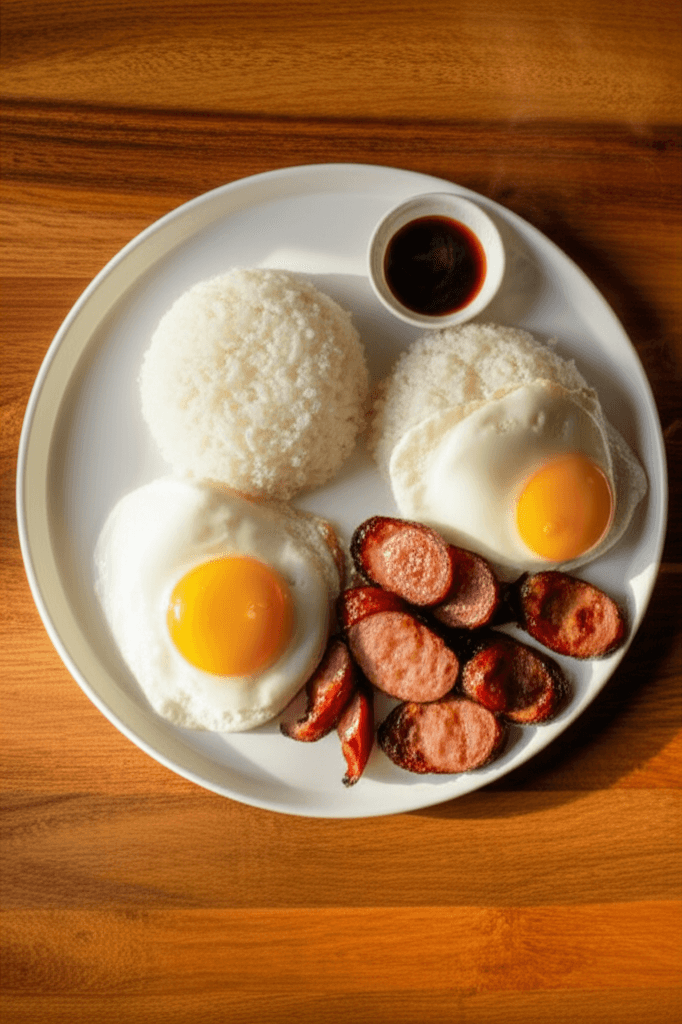
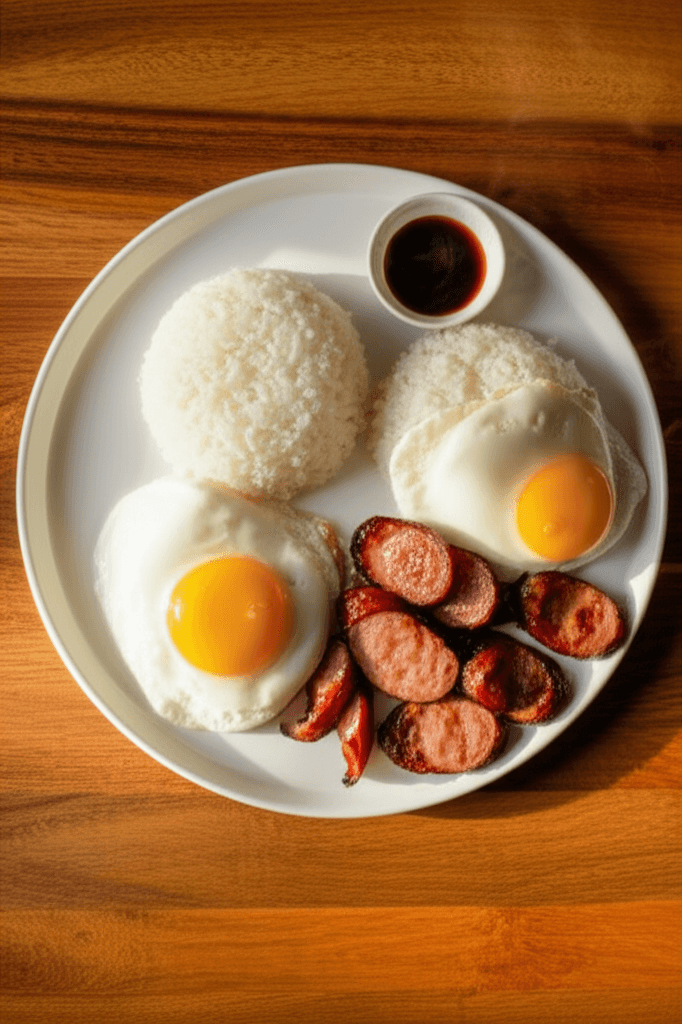
In Hawaii, rice is the foundation. Two scoops of sticky, medium-grain Calrose rice. It’s not a side, it’s the base that everything else sits on. The egg goes on top of the rice. The protein sits next to the rice. The shoyu goes on the rice. Rice doesn’t just accompany the meal; it absorbs and unifies every other flavor on the plate.
The difference matters more than you’d think. Toast is one-dimensional — crispy, then gone. Rice has texture, body, and the ability to soak up runny egg yolk, sausage drippings, and shoyu simultaneously. It turns every bite into a combination bite. That’s why locals will tell you that Hawaiian breakfast is more satisfying, the rice ties everything together in a way toast never could.
The Protein: Spam vs Bacon
Mainland breakfast runs on bacon. Crispy strips of smoked pork belly, salty and fatty. It’s good. Nobody’s arguing that bacon isn’t good.
But Hawaii runs on Spam. Pan-fried until the edges caramelize and get slightly crispy while the inside stays tender. Spam has a different flavor profile than bacon — meatier, more savory, with a satisfying density that bacon’s thin crispiness can’t match.
And Spam isn’t the only option. Hawaii’s breakfast protein rotation includes:
- Portuguese sausage: Smoky, slightly sweet, mildly spicy. Nothing like mainland breakfast sausage links
- Kalua pig: Leftover smoky pulled pork crisped up in a skillet
- Vienna sausage: Pan-fried from the can. Simple, cheap, beloved
- Corned beef hash: Canned, crisped up with onions
- Spam musubi: The grab-and-go option that doubles as breakfast and snack
Mainland breakfast protein is basically bacon or sausage links. Maybe ham. That’s it. Hawaiian breakfast gives you five or six strong options on any given morning, all of them pairing perfectly with rice and eggs.
The Eggs: Runny Yolk vs Scrambled
Mainland diners default to scrambled. Fluffy, safe, inoffensive. They work fine on toast with a side of hash browns.
In Hawaii, the default is over easy and this isn’t a preference, it’s a philosophy. The runny yolk is the whole point. When you break into that egg and the golden yolk spills out over the rice, mixing with the sausage drippings and a drizzle of shoyu, you’ve created something greater than the sum of its parts. Every bite of rice becomes coated in rich, eggy, savory flavor.
Scrambled eggs on toast? Fine. Over easy eggs on rice with Spam drippings and shoyu? Transcendent.
The Drink: POG vs Orange Juice
Mainland breakfast comes with orange juice. Sometimes apple juice. Coffee. That’s the rotation.
Hawaii has POG — Passion Orange Guava. It’s been the island breakfast drink since Haleakala Dairy created it in the 1970s. POG is sweeter and more complex than orange juice, the passion fruit gives it tang, the guava gives it body, and the orange ties it all together. Once you’ve had POG with breakfast, regular OJ tastes flat and one-note.
Coffee in Hawaii means Kona coffee — grown on the Big Island, rich and smooth. Not Folgers. Not even Starbucks. Real, single-origin Hawaiian coffee that’s worth paying attention to. Local-style iced coffee is the afternoon version, but plenty of people drink it in the morning too.
The Sweet Side: Poi Pancakes vs IHOP Stacks
Mainland sweet breakfast means pancakes, waffles, or French toast — all from the same basic batter family, piled high with butter and maple syrup. It’s one flavor: sweet on sweet on sweet.
Hawaiian sweet breakfasts have more going on:
- Poi pancakes: Made with taro, turning them purple with an earthy, slightly nutty sweetness that’s nothing like a buttermilk flapjack
- Taro waffles: Same gorgeous purple color, crispy outside, tender inside, with a flavor profile that doesn’t need maple syrup
- Sweet bread French toast: Made with King’s Hawaiian or homemade sweet bread. The bread is already slightly sweet, so the French toast has more depth than a regular version
- Malasadas: Portuguese donuts rolled in sugar. No hole, all pillowy interior. Better than any donut chain
- Acai bowls: Thick frozen acai topped with granola and tropical fruit. The healthy option that actually tastes good
The difference is variety and flavor complexity. Mainland sweet breakfast is one-dimensional. Hawaiian sweet breakfast brings taro, coconut, haupia, tropical fruits, and Portuguese baking traditions into the mix.
The Condiments: Shoyu vs Ketchup
On the mainland, the breakfast condiment is ketchup. Maybe hot sauce if you’re feeling adventurous. Salt and pepper, obviously.
A Hawaiian breakfast table has a different spread:
- Shoyu: A drizzle over the rice is standard. It adds salty umami that ketchup can’t touch
- Furikake: Japanese rice seasoning with nori, sesame, and dried fish. Sprinkled on rice, it adds crunch and ocean-y umami
- Chili pepper water: Hawaii’s homemade hot sauce, made with Hawaiian chili peppers, vinegar, and salt. More nuanced than Tabasco
- Sriracha: Widely adopted, especially on eggs
The condiment game in Hawaii is built around umami — savory depth that enhances rather than covers. Mainland ketchup is sweet and acidic, which works on hash browns but clashes with the flavors Hawaiian breakfast is built on.
The Side-by-Side
| Category | Mainland | Hawaii |
|---|---|---|
| Starch | Toast, English muffin, hash browns | Two scoops rice |
| Protein | Bacon or sausage links | Spam, Portuguese sausage, kalua pig, Vienna sausage, corned beef hash |
| Eggs | Scrambled or over hard | Over easy (runny yolk mandatory) |
| Juice | Orange juice | POG (Passion Orange Guava) |
| Coffee | Drip, Starbucks | Kona coffee |
| Sweet option | Pancakes, waffles | Poi pancakes, taro waffles, malasadas, acai bowls |
| Condiment | Ketchup | Shoyu, furikake, chili pepper water |
| Grab-and-go | Granola bar, drive-thru McMuffin | Spam musubi |
| Keeps you full until | 10:30 AM | Dinner |
Why Hawaiian Breakfast Wins
I’m biased. I grew up eating this food. But the case is pretty straightforward:
Hawaiian breakfast is more filling. Rice and a dense protein like Spam or Portuguese sausage will carry you through a full day of work, surfing, hiking — whatever. A mainland breakfast of bacon, eggs, and toast burns off by mid-morning. There’s a reason locals don’t snack between breakfast and lunch.
Hawaiian breakfast has more flavor variety. Five or six protein options, multiple condiments, sweet and savory branches. Mainland breakfast is the same three items in slightly different configurations.
Hawaiian breakfast has more cultural depth. Every ingredient represents a different chapter of Hawaiian history — Japanese rice traditions, Portuguese sausage, American military Spam, Native Hawaiian taro. It’s a multicultural story on a plate. Mainland breakfast is just… breakfast.
Hawaiian breakfast is more practical. A rice cooker on a timer means the hardest part of breakfast is done before you wake up. Slice some Spam, crack two eggs, and you’re eating in ten minutes. No toaster, no hash brown prep, no pancake batter.
The mainland has great food. Incredible food, in many regions. But for breakfast specifically, Hawaii figured out something the rest of the country hasn’t caught on to yet: rice is better than toast, Spam is better than you think, and over easy is the only way to cook an egg.
Ready to try it yourself? Our complete Hawaiian breakfast guide has every recipe you need to build a proper island morning at home.