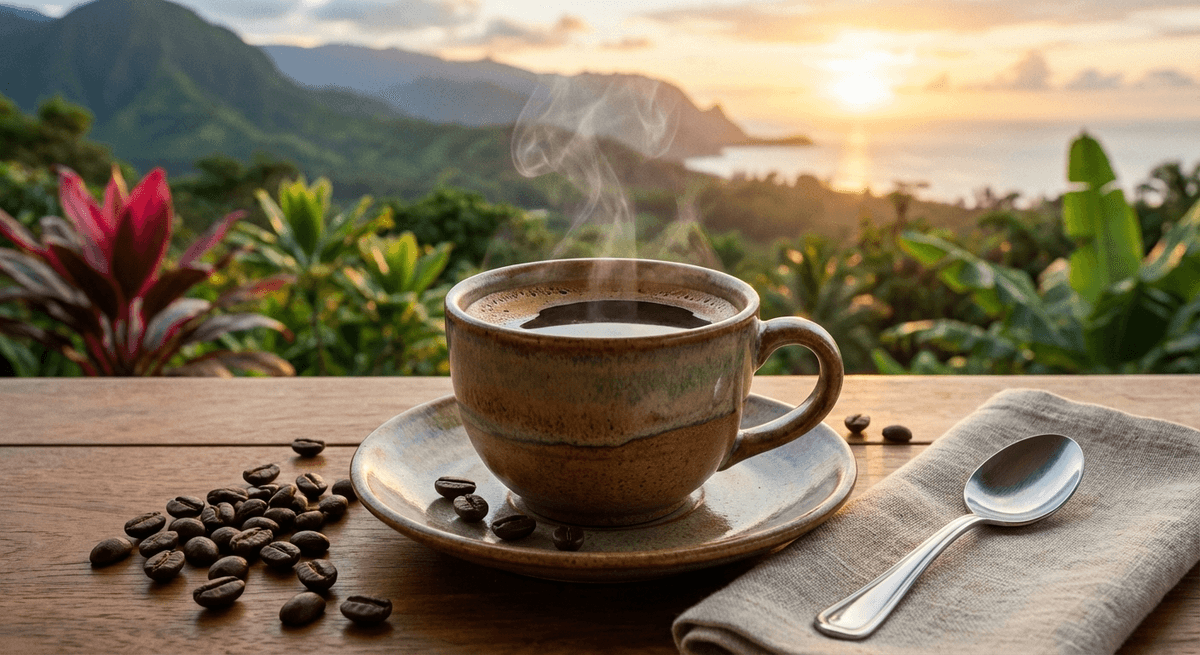
The first time I had real Kona coffee—I mean actually fresh, single-estate Kona brewed by a farmer who grew it himself—I understood why people make such a fuss about it. We were visiting a small farm on the slopes of Hualalai on the Big Island, and the farmer, a third-generation grower, handed us cups of coffee that had been picked, processed, and roasted within a quarter mile of where we were standing. The flavor was unlike anything I’d had before: smooth, rich, with this bright acidity and a sweetness that lingered long after the last sip.
That experience ruined me for gas station coffee forever. But it also started a journey of learning how to properly brew Kona coffee at home—because if you’re going to spend the money on the good stuff, you’d better know how to do it justice.
What Is Kona Coffee?
Kona coffee is coffee grown in the Kona district on the western coast of the Big Island of Hawaii (Hawai’i Island). Specifically, it comes from a narrow belt of land along the slopes of Hualalai and Mauna Loa volcanoes, roughly between 800 and 2,500 feet elevation. This area—the “Kona Coffee Belt”—is only about 2 miles wide and 30 miles long, making it one of the smallest premium coffee-growing regions in the world.
The coffee variety grown is primarily Kona Typica, a strain of Arabica coffee that was originally brought to Hawaii from Brazil in 1828 by Samuel Reverend Ruggles. Nearly 200 years later, the descendants of those original plants (and newer varietals) produce some of the most sought-after coffee on Earth.
True “100% Kona Coffee” must be grown entirely within the Kona district. Beware of “Kona Blend” coffees—these are required to contain only 10% Kona beans, with the rest being cheaper coffee from elsewhere. Always look for the “100% Kona” label.
The Cultural Significance
Coffee farming has been part of Hawaii’s identity for nearly two centuries. The story of Kona coffee is deeply intertwined with the stories of immigrant communities who built Hawaii. In the late 1800s and early 1900s, Japanese immigrant families took over many of the coffee farms, bringing meticulous farming practices and a dedication to quality that defined Kona coffee’s reputation. Many of today’s established Kona coffee farms have been in Japanese-American families for three, four, even five generations.
Coffee also became central to Hawaii’s social fabric. “Talk story over coffee” is as Hawaiian as it gets—sitting on the lanai in the morning, cup in hand, catching up with neighbors and family. It’s not rushed. It’s not a to-go cup gulped in traffic. Hawaiian coffee culture is about savoring the moment, the company, and the cup.
Today, Hawaii is the only U.S. State that commercially grows coffee, and the industry supports thousands of families across the islands. Beyond Kona, excellent coffee is now grown on Maui, Kauai, Oahu, and Molokai, each with its own distinct flavor profile. But Kona remains the flagship—the name that put Hawaiian coffee on the world map.
Why Hawaiian Coffee Tastes Different
Hawaiian coffee’s distinctive flavor comes from a unique combination of factors that can’t be replicated anywhere else:
- Volcanic soil: The mineral-rich, well-draining volcanic soil of the Kona slopes gives the coffee complex flavor notes you won’t find elsewhere. The soil is porous, providing excellent drainage while retaining the minerals that coffee plants need.
- Microclimate: The Kona Coffee Belt has a unique weather pattern—sunny mornings, afternoon clouds and rain, mild nights. This gives the coffee cherries a long, slow maturation period, which develops deeper, more complex flavors.
- Elevation: Growing between 800-2,500 feet provides the ideal temperature range for Arabica coffee. Cool nights slow the ripening process, concentrating sugars and flavor compounds in the beans.
- Hand-picking: Most Kona coffee is still hand-picked, allowing farmers to select only perfectly ripe cherries. Machine harvesting grabs everything—ripe, unripe, and overripe—but hand-picking ensures only the best beans make it to your cup.
- Small-batch processing: Many Kona farms process their own coffee in small batches, maintaining quality control from tree to bag.
How to Brew Kona Coffee at Home
Good coffee deserves good brewing. Here’s how to get the most out of your Kona beans.
What You’ll Need
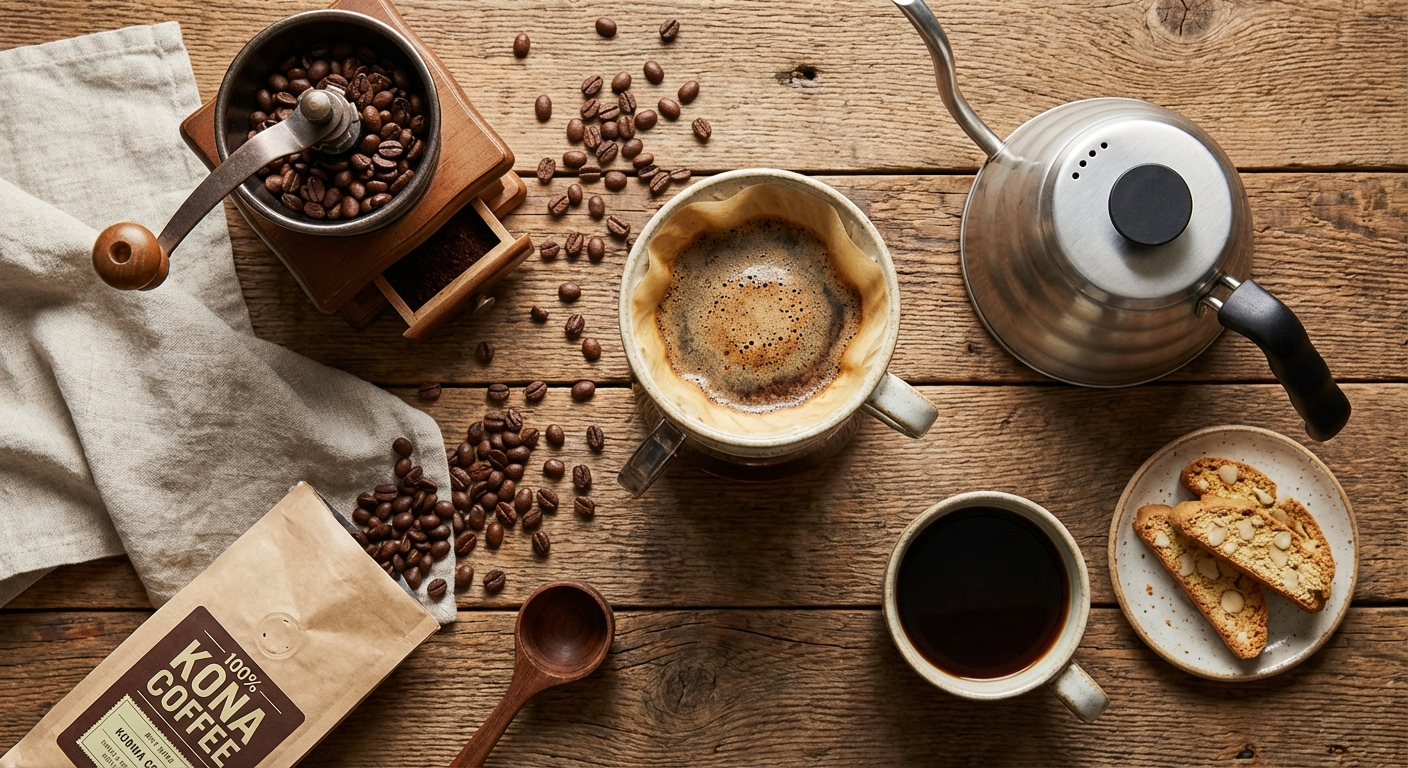
- 100% Kona coffee beans (whole bean, medium roast recommended)
- Burr grinder (blade grinders create uneven grounds)
- Brewing device: pour-over, French press, or drip machine
- Filtered water
- Kitchen scale (optional but recommended)
- Kettle (gooseneck for pour-over)
Fresh vs. Store-Bought Guidance
Direct from a Kona farm is the gold standard. Many farms ship within days of roasting. Some reputable farms include Greenwell Farms, Kona Joe Coffee, Holualoa Kona Coffee Company, and Hula Daddy Kona Coffee. Buying direct supports Hawaiian farming families and gets you the freshest possible product. For a picked list of trusted sources, see our best Kona coffee brands guide.
Specialty retailers and online are your next best option. Look for a roast date on the bag—coffee is best within 2-4 weeks of roasting. If there’s no roast date, be cautious.
Grocery store Kona coffee can be hit or miss. The biggest thing: make sure it says “100% Kona” and not “Kona Blend.” Kona Blend is a marketing trick—you’re paying Kona prices for a bag that’s 90% cheaper beans. Lion Coffee and Royal Kona are decent brands available in many mainland stores, but check that it’s the 100% Kona product.
Always buy whole bean. Pre-ground coffee starts losing flavor within minutes of grinding. If you’re investing in Kona coffee, grinding fresh is non-negotiable.
Pour-Over Method (Recommended)
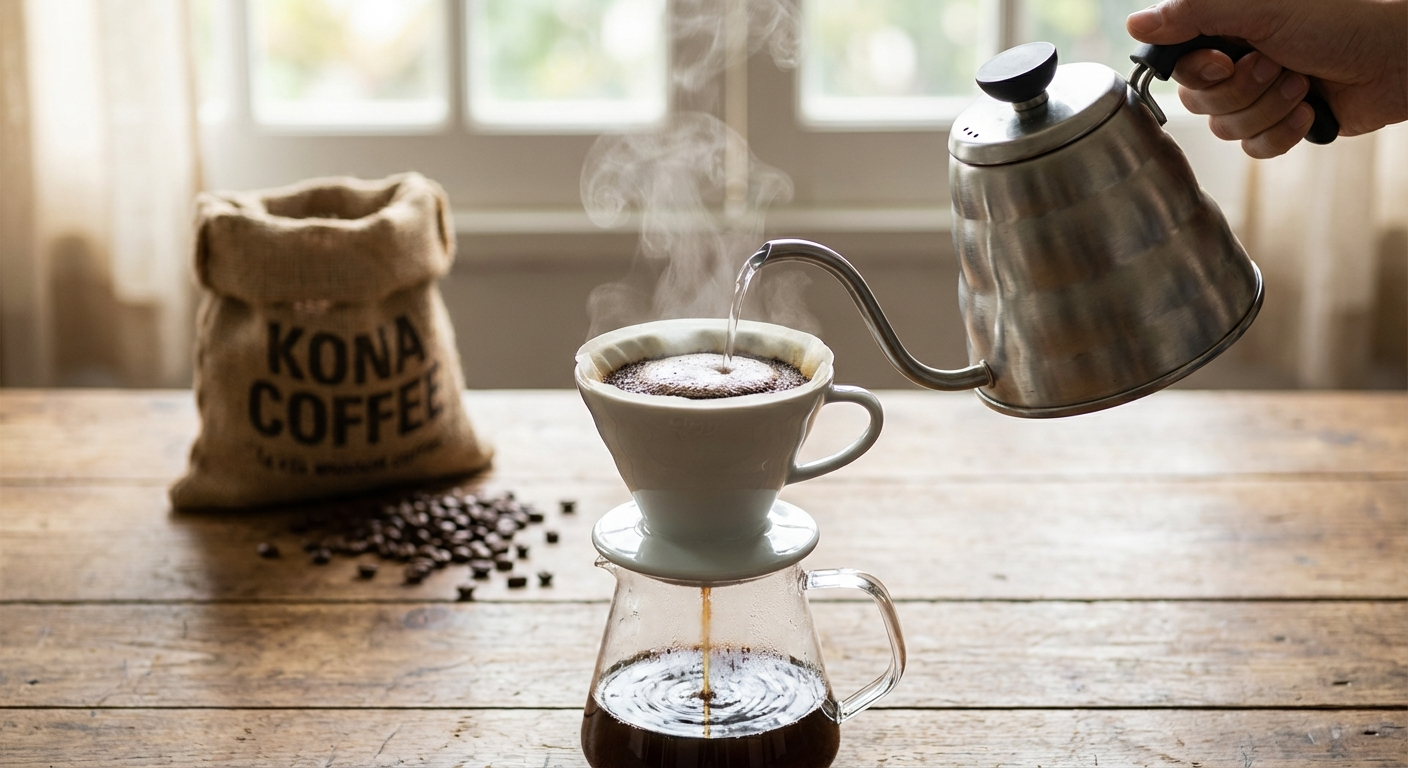
Pour-over is my preferred method for Kona coffee because it highlights the delicate flavor notes—the bright acidity, the sweetness, the subtle fruit and nut undertones.
- Heat water to 200-205°F (just off the boil). If you don’t have a thermometer, bring water to a boil and let it sit for 30 seconds.
- Grind beans to a medium-fine consistency, like table salt. Use about 2 tablespoons (10-12 grams) per 6 oz cup.
- Rinse your filter with hot water. This removes papery taste and preheats your mug or carafe.
- Bloom the grounds: Add grounds to the filter, then pour just enough water to saturate them (about twice the weight of the coffee). Wait 30-45 seconds. You’ll see the grounds “bloom”—puff up and release gas. This means they’re fresh.
- Pour slowly in concentric circles, starting from the center and moving outward. Pour in stages, keeping the water level consistent. Total brew time should be 3-4 minutes.
- Enjoy it black first. Before adding anything, taste the coffee on its own. Good Kona coffee has enough natural sweetness and complexity that it doesn’t need cream or sugar. You can always add them after, but try it straight at least once.
French Press Method
French press produces a fuller-bodied cup that emphasizes Kona’s richness and chocolate notes.
- Grind beans coarse—like raw sugar or breadcrumbs. Too fine and you’ll get sludgy, over-extracted coffee.
- Use a 1:15 ratio—1 gram of coffee to 15 grams of water. For a standard 4-cup French press, that’s about 4 tablespoons of coffee to 2 cups of water.
- Pour water at 200°F over the grounds, stir gently, and place the lid on without pressing.
- Steep for 4 minutes. No more, no less. Over-steeping makes it bitter.
- Press slowly and steadily. Pour immediately—don’t let it sit in the press or it’ll keep extracting.
Hawaiian Coffee Beyond Kona
While Kona gets all the fame, Hawaii’s other islands produce excellent coffee worth exploring:
- Ka’u (Big Island): Grown south of Kona, Ka’u coffee has been winning international awards. Often fruitier and more complex than Kona, and usually more affordable.
- Maui: MauiGrown Coffee produces smooth, balanced beans from the slopes of Haleakala. Try their Mokka variety—it’s rare and exceptional.
- Kauai: Kauai Coffee Company is the largest coffee estate in Hawaii, producing approachable, consistent coffees at reasonable prices. Great for everyday drinking.
- Oahu: Waialua Estate on Oahu’s North Shore grows coffee on former sugar cane land. Their beans have distinctive chocolate and caramel notes.
Pairing Kona Coffee with Hawaiian Treats
A great cup of Kona deserves the right companion. Try it alongside a batch of freshly fried malasadas, the warm, sugary donuts are the perfect match for coffee’s bright acidity. For an afternoon pick-me-up, a slice of butter mochi with its chewy coconut sweetness pairs beautifully with a hot pour-over. And when the weather heats up, switch to our Iced Kona Coffee for a refreshing local-style cold brew.
Key Things to Know
- Always buy 100% Kona, never “Kona Blend.” Kona Blend is legally only 10% Kona beans. You’re paying premium prices for non-premium coffee. Check the label carefully.
- Look for a roast date. Fresh-roasted coffee is best consumed within 2-4 weeks. If the bag doesn’t have a roast date, move on.
- Store beans properly. Keep them in an airtight container at room temperature, away from light and heat. Don’t freeze or refrigerate—moisture is coffee’s enemy.
- Grind just before brewing. This is the single biggest improvement you can make to your coffee. A decent burr grinder costs $30-50 and changes everything.
- Water quality matters. Use filtered water. Coffee is 98% water—if your water tastes off, your coffee will too.
- Medium roast is king for Kona. Dark roast burns away the delicate flavors that make Kona special. A medium roast lets you taste the terroir—the volcanic soil, the island climate, the careful farming.
- Support Hawaiian farmers. When you buy direct from Kona farms, you’re supporting multi-generational family operations that are the backbone of Hawaiian agricultural culture.
Hawaiian coffee is more than a beverage—it’s a connection to the land, the people, and the culture of the islands. Whether you’re sipping it on a lanai overlooking the Kona coast or at your kitchen table on the mainland, brewing it with care is a way of honoring the generations of farmers who made it possible. Slow down, savor the cup, and talk story. That’s the Hawaiian way.
If you’re looking for something cold and tropical, try our Lilikoi Lemonade or Guava Nectar Punch.